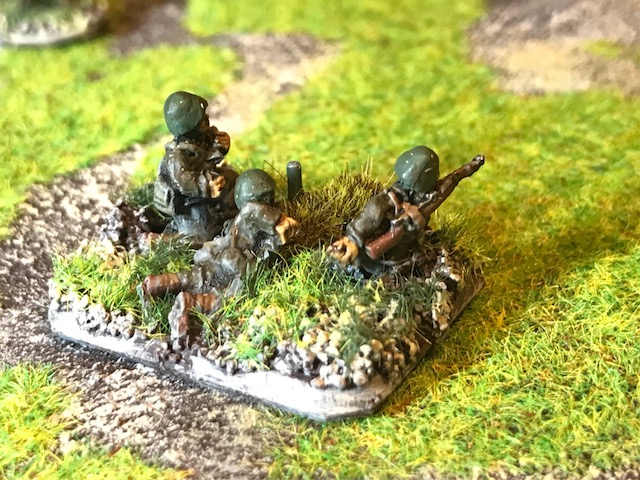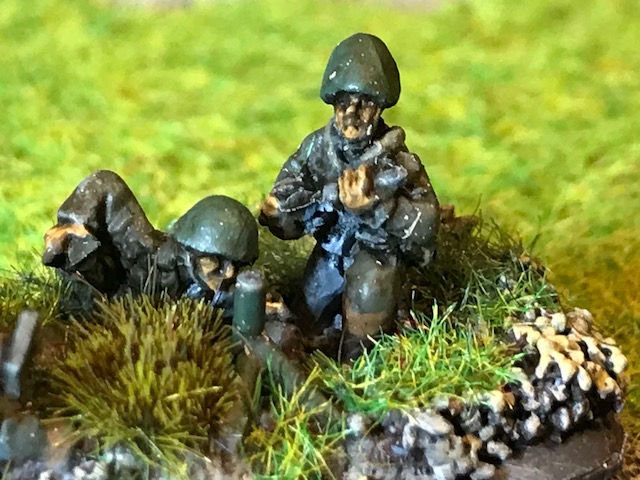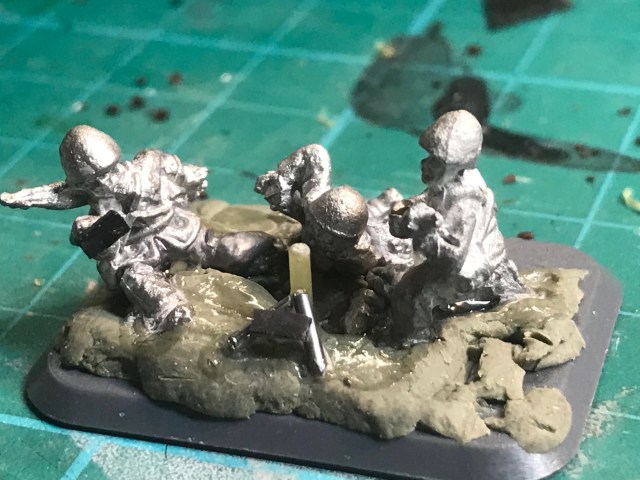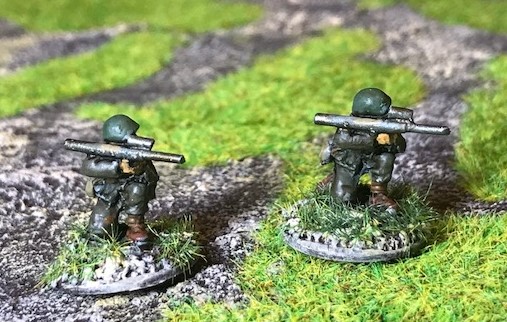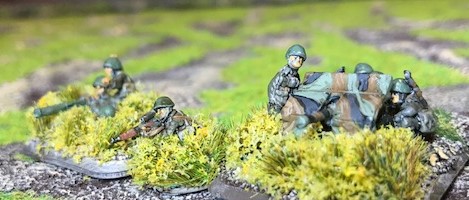
Featured

GNW, Little One, Sweden 1943, Mutant 1984 and Podcasts – a review of 2019

It has been a little bit of a strange year with a lot of pressures making it difficult to devote as much time as I would like to the hobby – but in retrospect and upon reflection I seem to have been doing a lot more than I thought. I had lots of fun with the hobby and that is what it is there for!

This is a summary blog of the year and contain some additional pictures not covered in any published blogs.  I hope you will find this review interesting.  I take my hat off for all of you who engage with the blog directly, follow the roll a one page on faceboook (Roll a One, @rollaonepage) or the Per at RollaOne feed on twitter – It really matters to me – so thank you very much. I had as an unwritten rule to do a blog every week, this year I have managed to do 41 blog posts – so I failed the objective but I am happy with that. I could easily have dragged this one out over a few blogs with the extra material but wanted to make a long one of this last one.
Capture
This is my Twitter Feed and probably the best place to follow the going-ons!

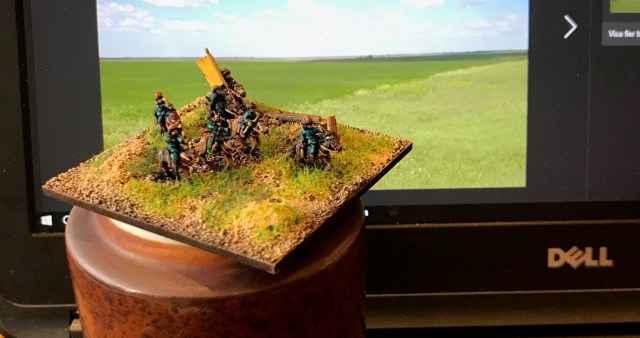
The most popular blog post this year was this one detailing how you can enhance your 6mm, or any scale, pictures using your computer screen.  Bleeding obvious to me but a lot of people have found it useful!

Background to your Miniatures – a little trick
img_2650.jpg


This blog post has a lot of pictures and links (these are the underlined sections, they lead directly to the blog post I am talking about) and basically covers:

  • Poltava 1709 and Joy of Six 2019
  • Battle of Lund 1676 project
  • Gaming with the Little One and a book from Henry Hyde
  • WW2 What-if Invasion of Sweden in 1943 and roundpole fences
  • The Mutant 1984 Project and our Christmas Mutant Dinosaur Hunt
  • Being on Podcasts and some other stuff

Poltava 1709 at Joy of Six 2019

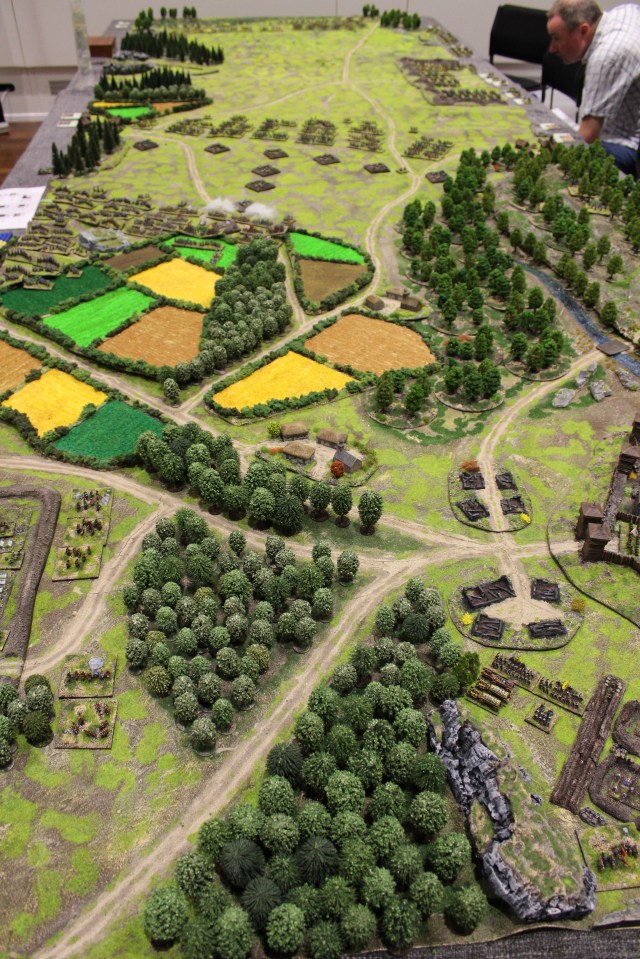
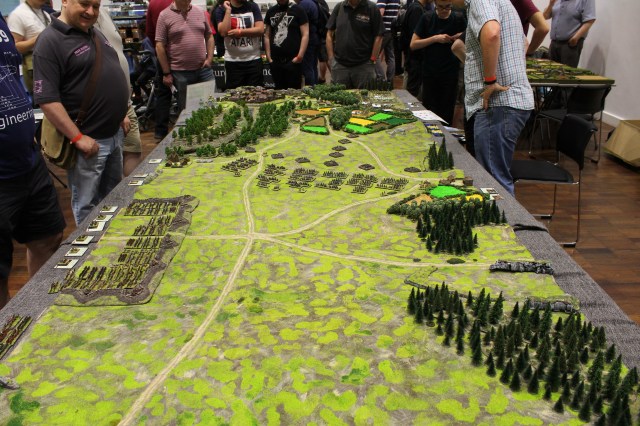
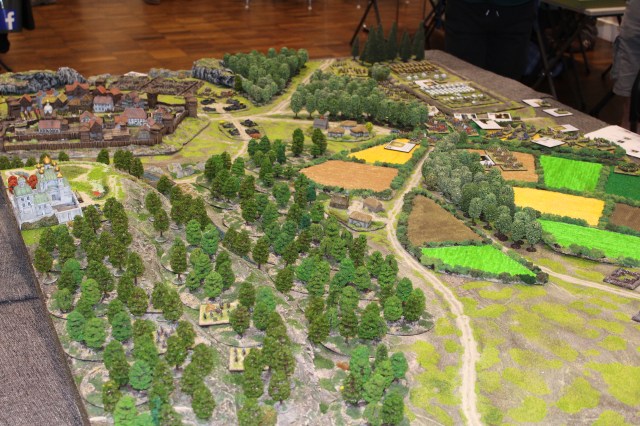
This was the culmination of a three year project covering the Russian Campaign of the Great Northern War and this year I presented Poltava 1709 at Joy of Six show in Sheffield.  This has been a fantastic project and this 16 by 5 feet table actually made me somewhat emotional when I first put it up on the Show (but then each one is pretty special at the time). I did plenty of blog posts about the project this year, you can find them below.  We will put up the table again in 2020 at Salute in April.  This project was done using 6mm Baccus miniatures.
IMG_7860
Overview of Poltava, the Monastery and the Swedish Camp
IMG_7878
Overview of the Redoubts and field outside the Russian Camp

IMG_7856

IMG_7936
Detail of the Swedish Camp
IMG_7870
I was really happy with the Poltava model

Here are some of the blog-posts covering this topic ( The last few are the finished article the others about how various elements were done).

Some progress on the Poltava Battle and Grand Thoughts (TMT)

Poltava Town done (TMT)

Progress on the Poltava 1709 Project – the Swedish Camp (TMT)

Progress on the Poltava 1709 Project – Redoubts and Casualty Markers (TMT)

Progress on the Poltava 1709 Project – Playing with Matches (TMT)

Progress on the Poltava 1709 Project – Plush Foam Fields (TMT)

Progress on the Poltava 1709 Project – Total Battle Village Tiles (TMT)

Progress on the Poltava 1709 Project – Trees, tree Bases and small rocks (TMT)

Progress on the Poltava 1709 Project – Siege Lines and the King (TMT)

All revved up and ready to go to Joy of Six (2019)!

Poltava 1709 at Joy of Six 2019 – the Grand Finale of the Towards Moscow Trilogy (TMT)

Passing through Joy of Six 2019

What is up next? Great Northern War, Scanian War and some Bonus Pictures of Poltava 1709

Battle of Lund 1676

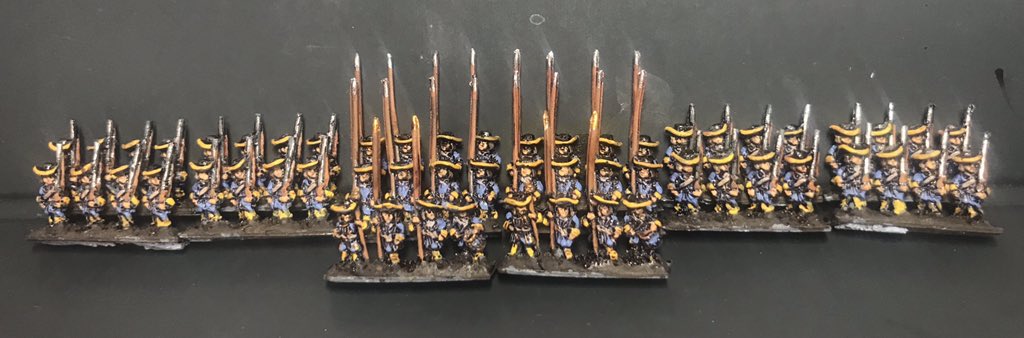
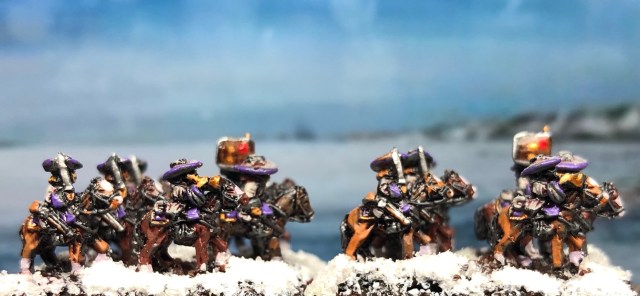
My next bigger 6mm project is the Battle of Lund in 1676. This is one of the most famous battles of the Scanian Wars.  I am doing this using the fantastic Wars of the Sun King range by Baccus 6mm.
IMG_0708
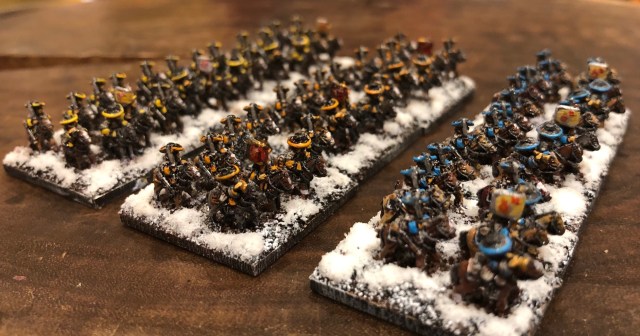
Rauch’s Geworbne Cavalry Regiment
Image
Prince Georg’s Regiment – a Danish regiment looking more Swedish than meatballs!

img_0866.jpg

Sea, Six and Scanian War – and a few Podcasts

Forces at the Battle of Lund 1676 (Scanian War) Part 1 – Danish Cavalry

Forces at the Battle of Lund 1676 (Scanian War) Part 2 – Danish Cavalry

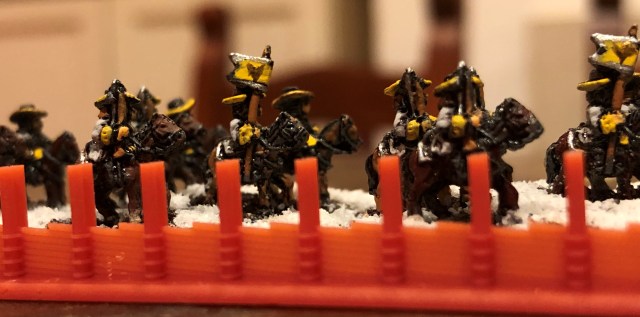
Forces at the Battle of Lund 1676 (Scanian War) Part 3 – Danish Cavalry and a note on Winter Basing

Forces at the Battle of Lund 1676 (Scanian War) Part 4 – Danish Cavalry and some Aerosans

Gaming with the Little One and a book from Henry Hyde

I have had immense pleasure in engaging with the Little One yet again this year in painting, playing games and going to a few events together.  He even wrote a review of the Airfix Battles Rules and about his day at Salute on the Blog.  When I asked him about the highlights this year he told me that it was the book he was sent by Henry Hyde, the day we had playing Mike Whitaker’s Omaha game and doing the Star Wars Legion miniatures (more in the links at the end of this section).

The Little One and I met Henry Hyde at Salute (who of course wrote the Wargames Compendium, was the editor for Miniature Wargames & Battlegames and now runs the Battlegames Patreon Site that I am a supporter of, see link here https://battlegames.co.uk/patreon-supporters/ . Please check it out as there is a lot of good stuff there in terms of podcasts, videos and articles – whether you are a supporter or not).

On the way back Max realised that the Henry we had met was the same guy that had written the Wargames Compendium, a book he really loves, and said that he should have asked for an autograph.  I mentioned this to Henry and a few days later, to our great surprise and delight, a parcel arrived with a letter and a book.
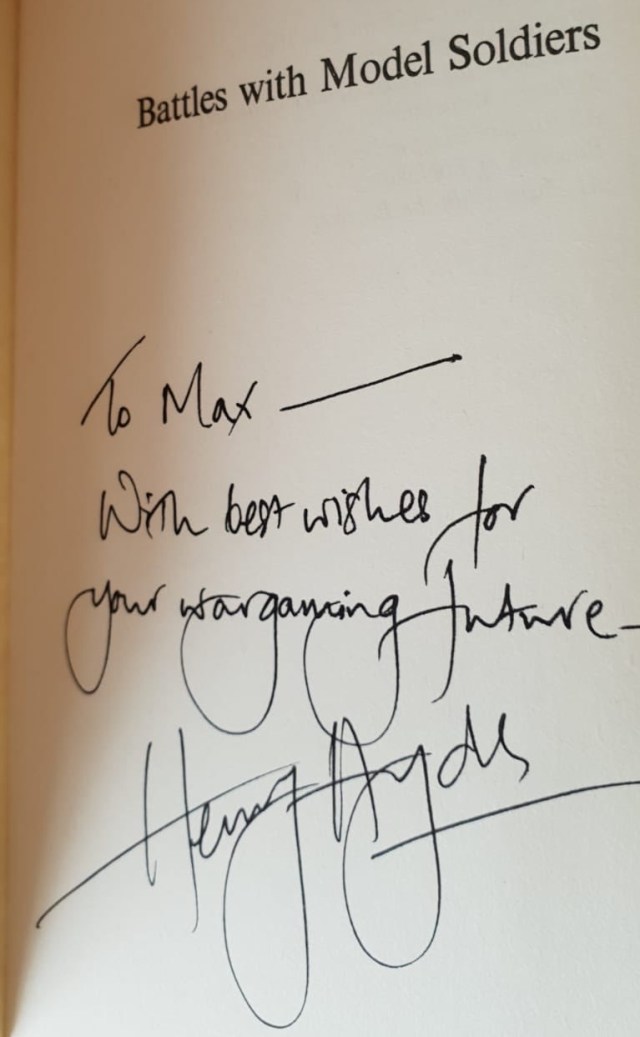
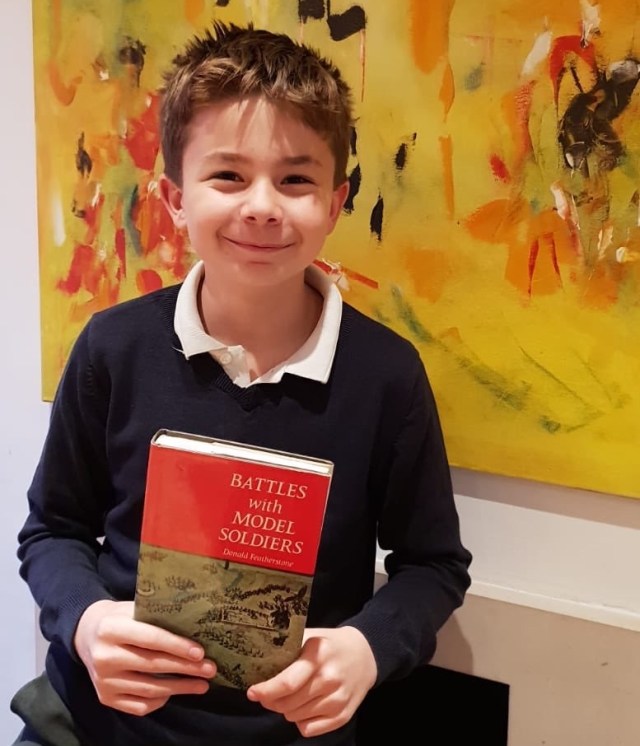
photo-26-12-2019-18-18-38.jpgPhoto 26-12-2019, 18 18 31Photo 26-12-2019, 18 18 46

It is was an enormously generous gesture and one of those moments I think the Little One will carry with him for his whole life – many thanks Henry!  The Little One then read the Featherstone book and wrote a letter he sent to Henry that made me really proud.

Dear Henry,

Many thanks for sending me the Donald Featherstone book, it was very kind of you and it made me feel very special. I like the words you wrote and I will keep this book forever. It has taken me some time to finish the book as I have had a few other things going on.
I enjoyed the introduction where he writes about ‘what wargaming is’ and also the overview of the different periods for wargaming – my favourite period is WW2. You have so many different aspects of things going on – on land, in the air, on and under the water and you are not sitting around in a trench for four years as in the Great War. At the very end of the book he writes something I really liked!
“General Sherman, of American Civil War fame, is quoted as saying, ‘War is Hell’. So it is, and perhaps the wargamer, seeing just how helpless his little plastic figures are against the dice simulated effects of cannon and muskets, will appreciate more than ever the utter futility of real war.”

I also have a copy of your book, The Wargaming Compendium, and I think it is the best book a wargamer can get as it covers everything you need to know. In particular I like the chapter on understanding sizes, scales and chance. I love the picture on page 17 showing the different scales.

I hear you are writing another one and I hope it is going really well!
I know you like the Horse and Musket period so I thought you might like this Kings Carabineer from the Battle of Blenheim 1704 and a book about the Battle of Poltava.

Hope to see you again soon,

Max

We also went to Mike Whitaker’s house and played on his fantastic Omaha Beach board, and we wrote about it here https://rollaone.com/2019/11/18/omaha-beach-iabsm-with-the-little-one/ .
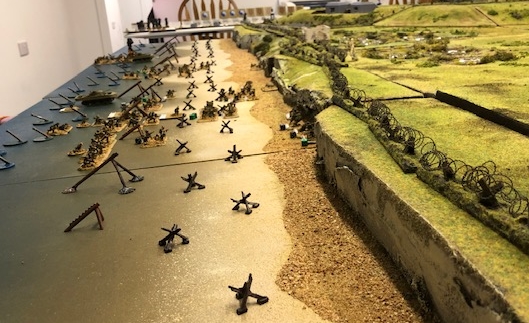
IMG_1968
It was an absolute privilege playing on Mike’s table

We also painted up a lot Star Wars legion miniatures and terrain that we wrote a few blog posts about (more in the links below).

IMG_0665


The Little One’s review of Airfix Battles

Some Platoons for France 1940 and a kind of a review by the Little One of Airfix Battles

Star Wars Legion:

Painting Star Wars Legion with the Little One

Painting Star Wars Legion with the Little One – Part 2 (+ Basing and Mats)

Readers Digest version Feb-19 – Star Wars Legion and Great Northern War

The Little One’s review of Salute 2019

Salute 2019 by the Little One


WW2 What-if Invasion of Sweden in 1943 and roundpole fences

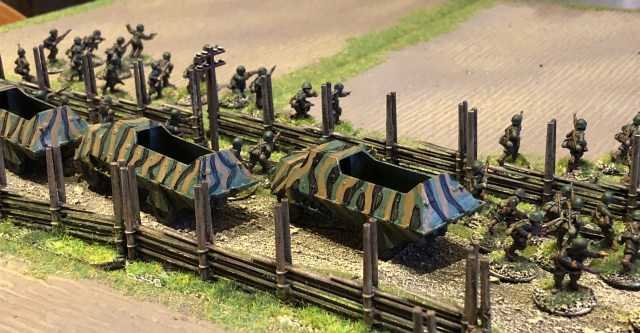
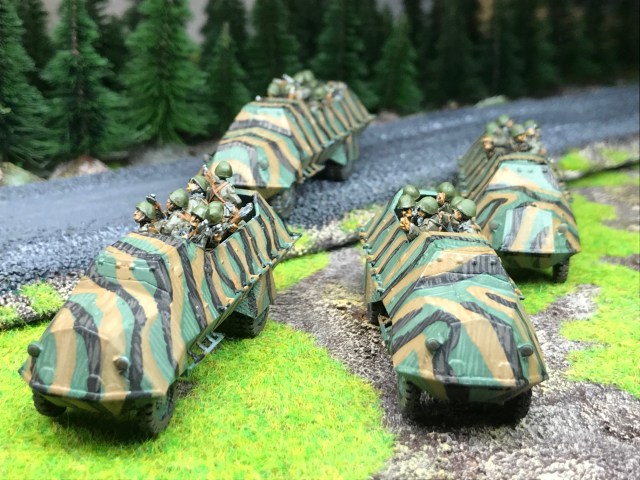
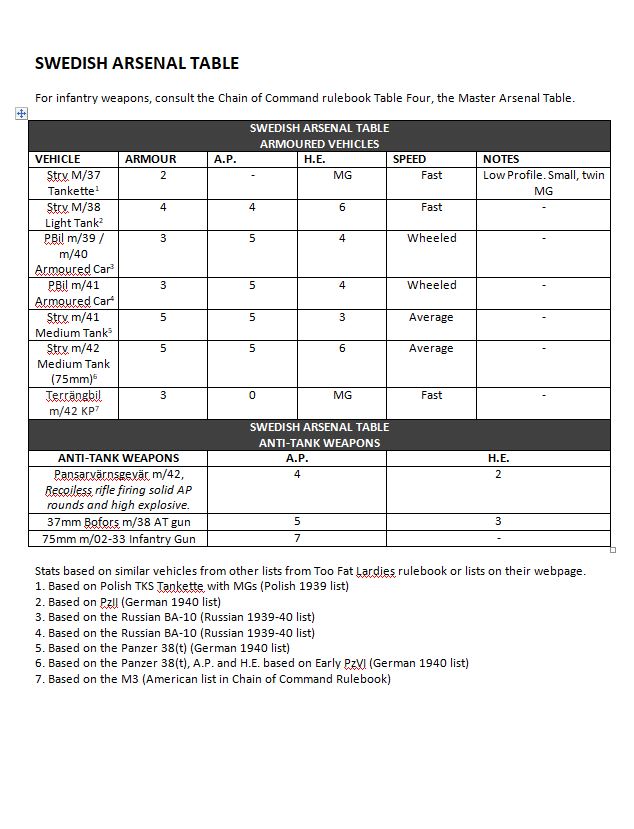
Some further works was done for the 1943 German invasion forces and defending Swedes. Making some transports for the Swedes with some tanks (including conversions) and a large number of German soldiers and vehicles. I also updated the Chain of Command list for the Swedes. More in the blog posts below (that is also including a note on the visit I did to Dulwich playing Chain of Command at the Warlords Lardy Day – thanks Iain!).

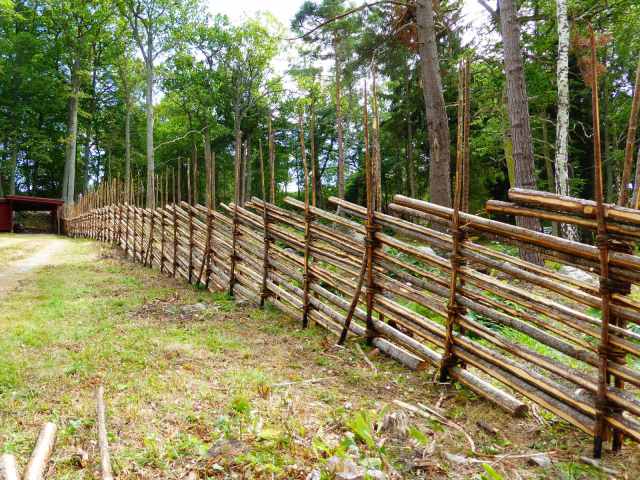
One of the best things that happened to this project this year was the roundpole fences developed by Paul Edwards (@Amaz_ed on Twitter if you want to contact him, or let me know and I will pass it on) that will enable me to give that special feel of gaming in Scandinavia/Nordic much in the same way as Snake Rail fencing indicate a wargame in North America.

How is this relevant to you if you do not play anything in Norway, Finland, Sweden or Estonia (where these fences are common) – well according to some theories they were in use during Viking times so if you are doing Dark Age wargaming (or Colonials as we Norse call it). So if you want to create that little Norse settlement in your Saga game or some other game including some Vikings and want to make it feel a little bit special than maybe this beautiful fencing will be an idea.

Roundpole fencing (picture borrowed from Wikipedia – link here https://en.wikipedia.org/wiki/Roundpole_fence )

I asked Paul if he could help me out and quicker than I could say Gärdsgård – the name of the fence in Swedish – I now have 4-5 meters of it and I hope you agree it looks good.

Photo 07-12-2019, 16 16 04
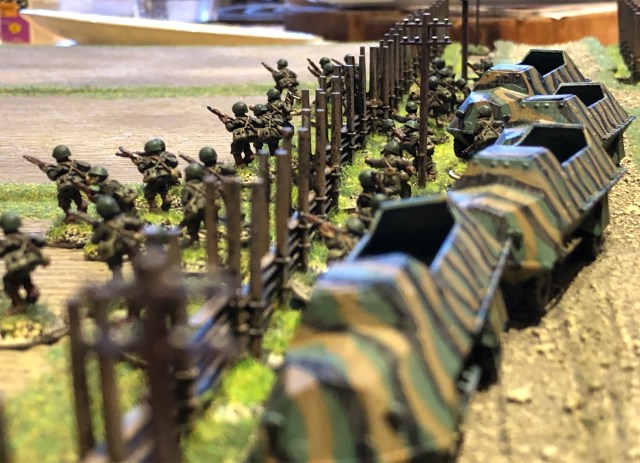
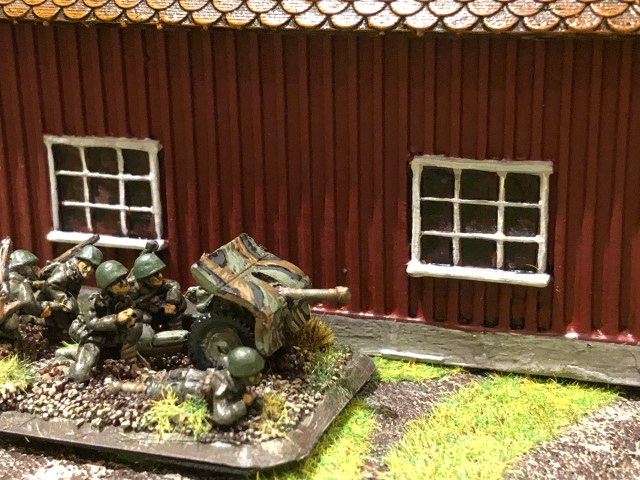
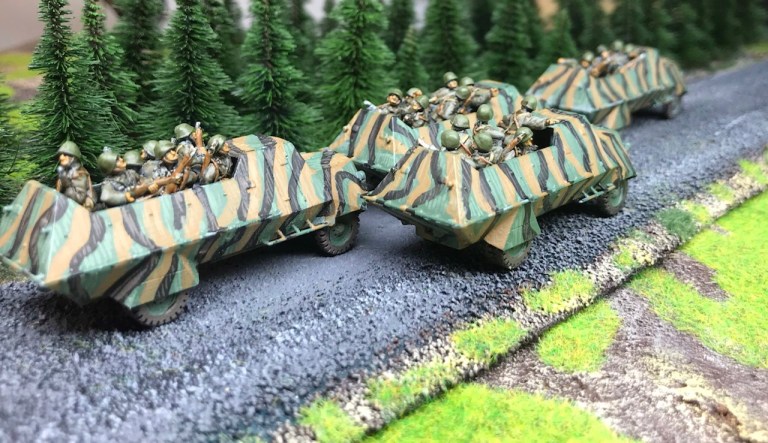
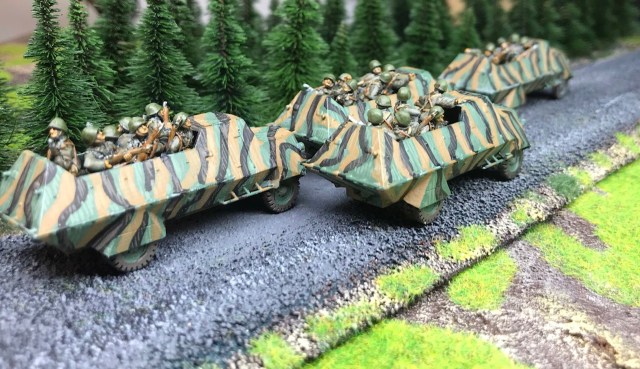
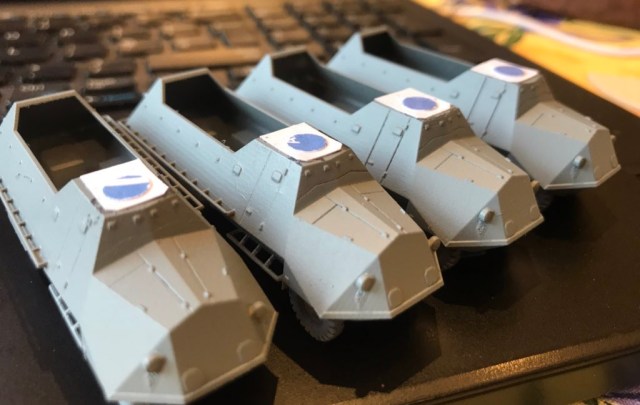
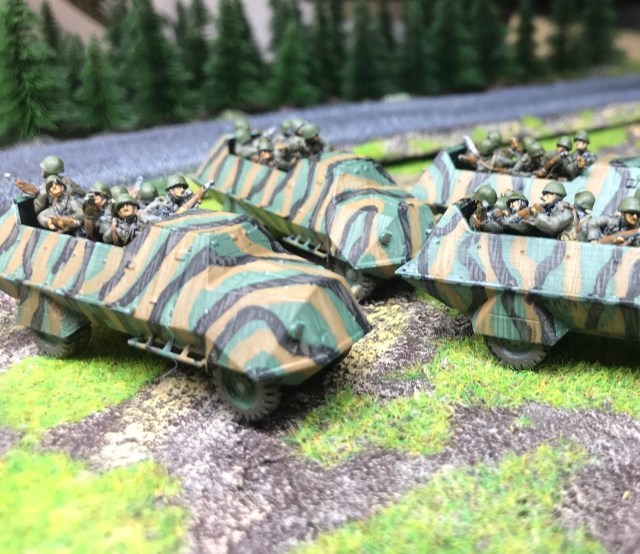
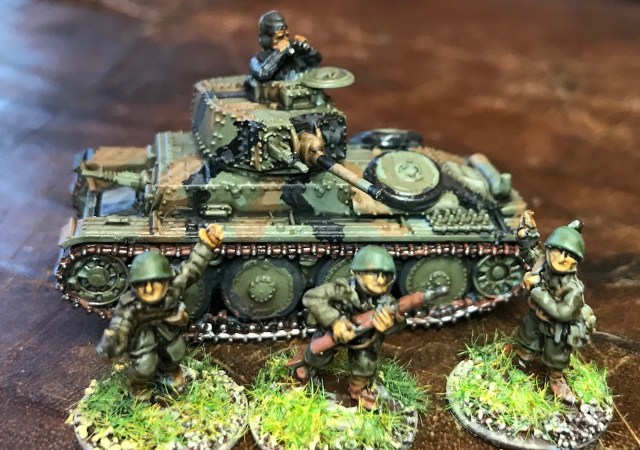
A Mechanised Platoon is getting into position to defend against advancing Germans in 1943 (the KP-bil, was not taken into service until 1944 as the initial batch was rejected due to the weak armour plating – in this what if whatever was available was pressed into service – as they look too cool to not be part of this project).

Photo 07-12-2019, 16 16 13

Photo 07-12-2019, 16 24 09
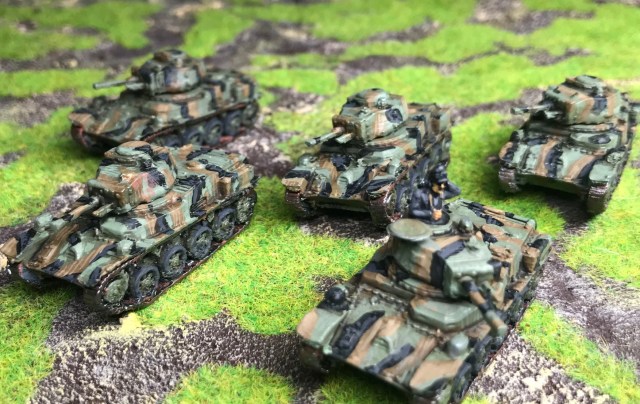
Some tanks in support!
Photo 07-12-2019, 16 24 19
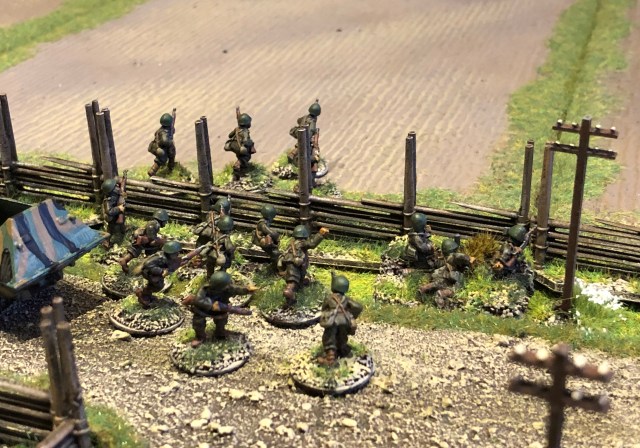
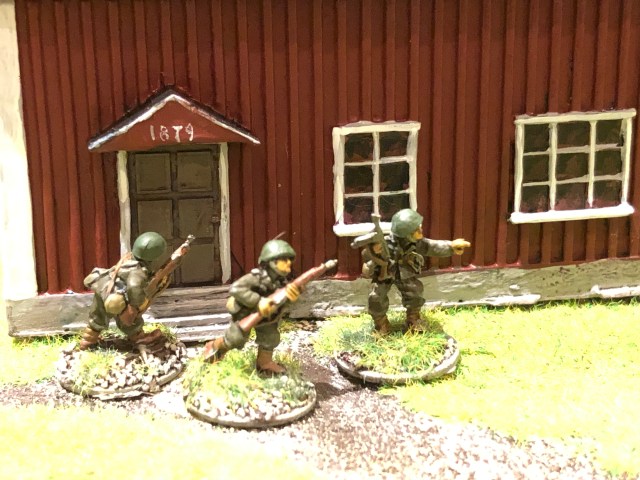
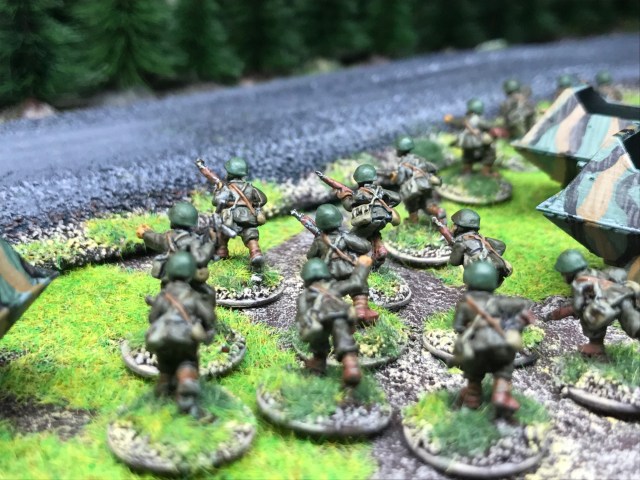
Troops embarking and jumping over the roundpole fences – it does not get more Swedish than this!
Photo 07-12-2019, 16 24 39
Tysken Kommer! (The German is coming!)

Photo 07-12-2019, 16 25 07

Photo 07-12-2019, 16 26 05
Granatkastargrupp i Position, skjut mot skogsdungen! (Mortargroup in position, fire against the trees!)
Photo 07-12-2019, 16 25 24
Target Spotted! Get ready to Fire!

The ones I have has been made for 15mm but Paul can make some in 6mm and 28mm too.

These are the ones I will be using for my Scanian War project.


photo-18-12-2019-21-18-44.jpgphoto-18-12-2019-21-19-35.jpg

These are a few in 28mm with some Mutant 1984 characters.

Photo 07-12-2019, 17 25 02

Paul also does some gate options.

I have also found a reasonable Vallejo mix for Falu Rödfärg.

Photo 08-12-2019, 13 49 12
50/50 of Bloody Red and Burnt Cadmium Red…
Photo 07-12-2019, 21 42 09
…gives that dark red old style colour that was more common around 1943 than the brighter red colour being popular today…
Photo 07-12-2019, 21 41 48
I think if works really well….
Photo 07-12-2019, 21 41 15
Beautiful design by Paul Edwards

Here are some postings for the Swedish WW2 project (as in all my posts there is plenty of pictures in each of them).  The next step is to produce two half-sized campaign for Chain of Command (or any other Platoon based set of rules).
Capture
The two half-pint campaigns

Swedish Rifle Platoon in WW2 for Chain of Command – Getting a Ride
IMG_2708.jpg

25th Panzer Division for the What-if Swedish Invasion 1943 – Part 1

IMG_2796.jpg

Swedish Rifle Platoon in WW2 for Chain of Command – Getting some Heavier Support, Part 1

IMG_8595

Swedish Rifle Platoon in WW2 for Chain of Command – Updated Listzz1

German Infantry Platoon(s) for the What-if attack of Sweden in 1943
IMG_0974

Germans for the Swedish 1943 Tourist Season and CoC in Dulwich
IMG_1151

The Mutant 1984 Project and our Christmas Mutant Dinosaur Hunt

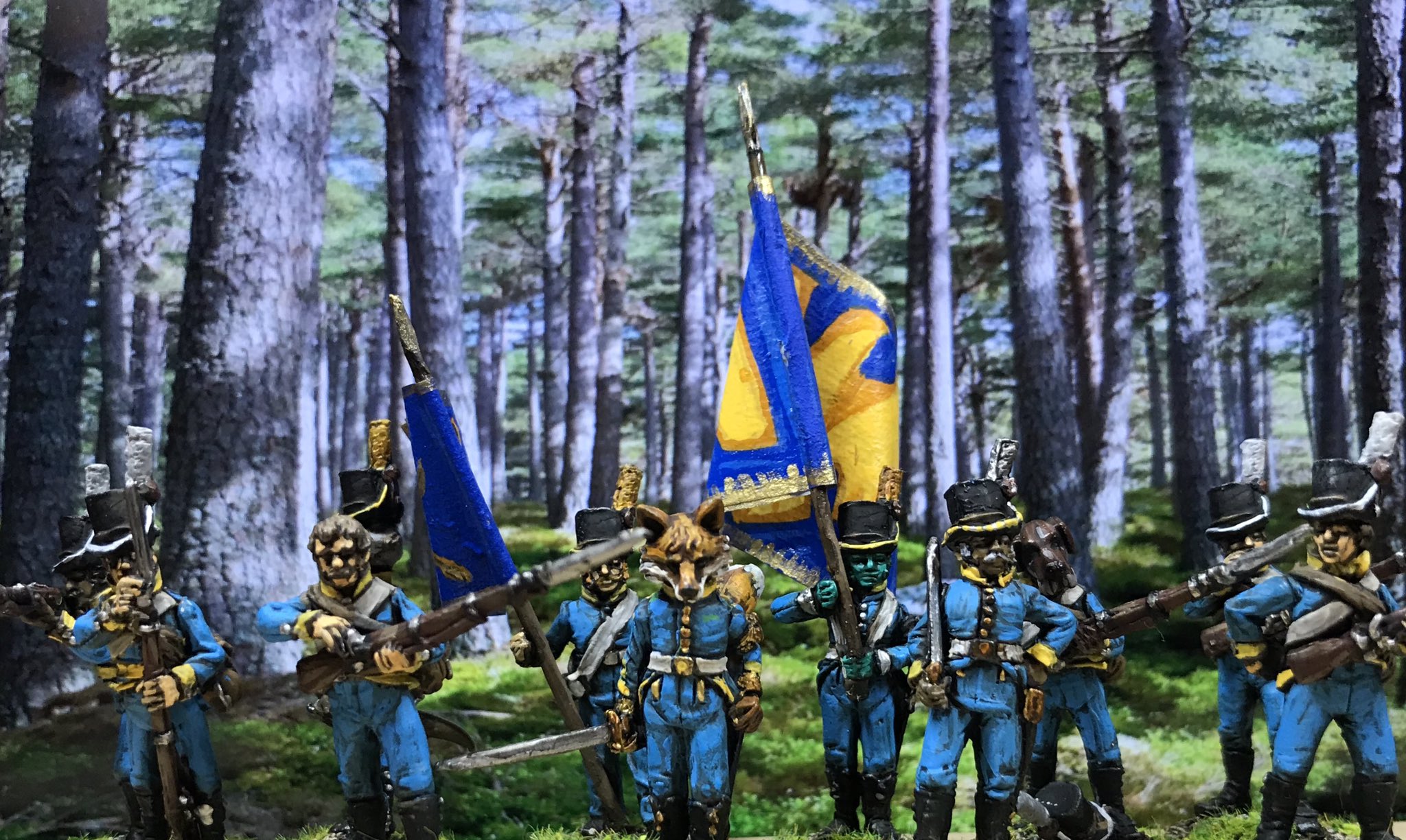
This project is my Post-Apocalyptic homage to the old 1984 RPG Mutant – anything goes.

Järnringen / The Iron Ring (Mutant 1984) – Part 3 – Nordholmia Infantry Regiment
Image

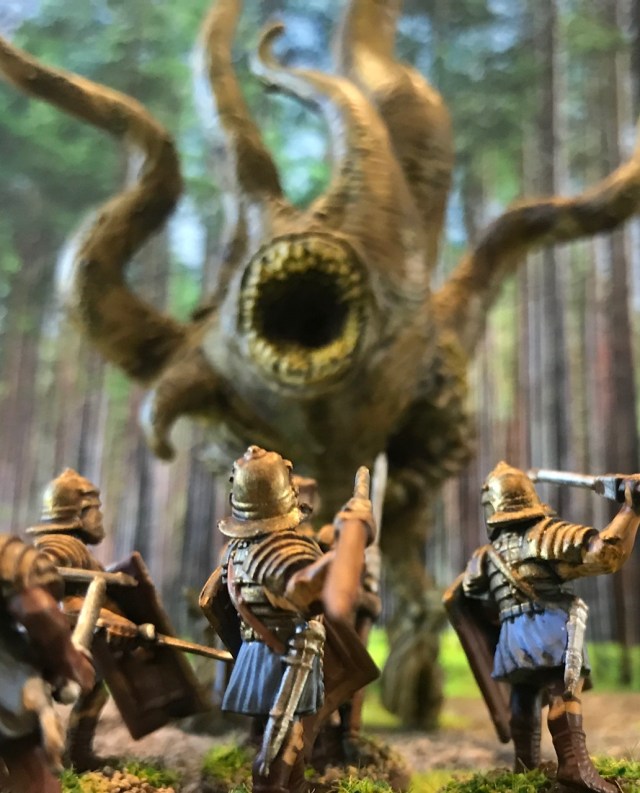
A Sharp Practice Force for the Mutant 1984 project and Colour Sergeant Bourne from Zulu
IMG_5825

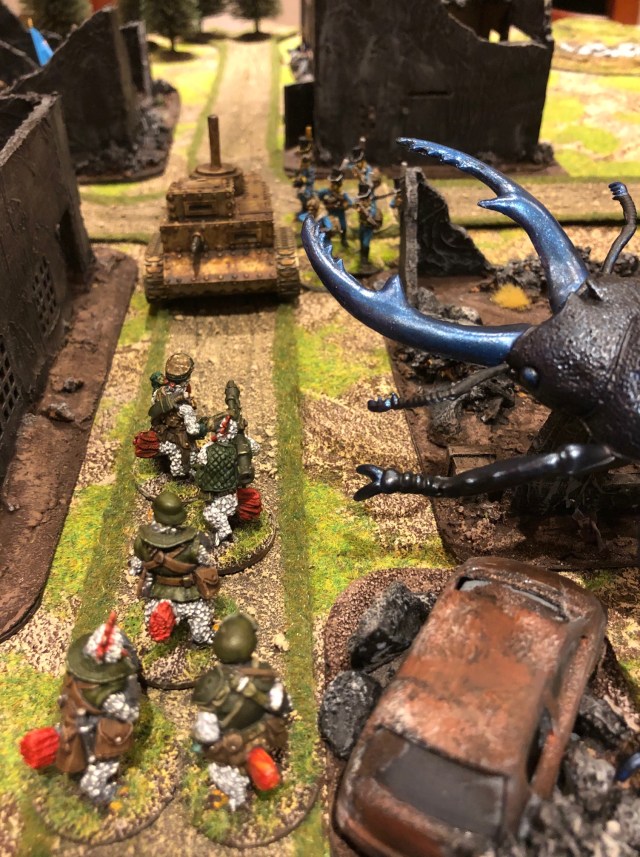
Border Skirmish at Hammering – Mutants who would be Emperors (Mutant 1984)
IMG_1845

Mutant (1984) and Death Ray Guns – from Ganesha Games!
IMG_8250

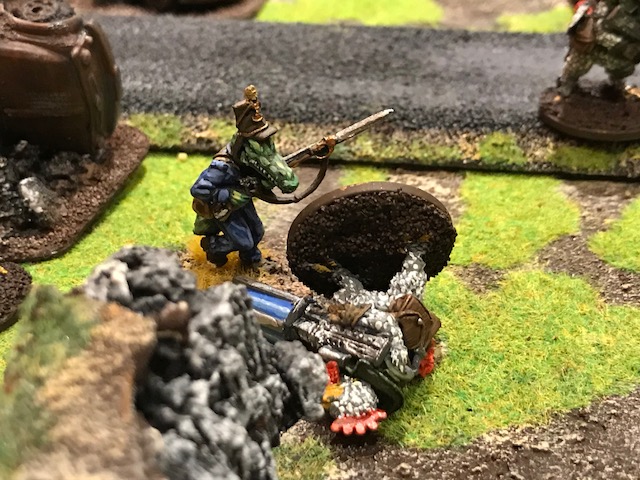
In addition we had a special Xmas game this year based on a vote we did on Twitter where the Mutant 1984 Dinosaur won the Day (beating Winter War, Swedish invasion 1943 and a “proper” GNW battle!).  We used a variant of the The Men who Would be King rules (the same as in the Border Skirmish above) and it was a fun game with two factions of soldiers and hunters trying to take out as many Monsters as possible (2 Dinosaurs, a Giant Beetle, a Four armed Gorilla, 2 Swedish Tigers, a Dark Young of Stubb-Nigarakan) whilst fighting each other. I did not do a write-up but instead I have included a bunch of pictures from the game.

The Swedish (Sabre Tooth) Tigers are based on the Swedish Wartime information Poster stating “En Svensk Tiger” that means both “a Swedish Tiger” and “a Swede Shuts-Up”.

See the source image

Being on Podcasts and some other stuff

Any regular reader of this blog will know that I have a few wargaming podcasts that I like to listen to whilst I paint and model – these are in no particular order the Veteran Wargamer, The Lardy Oddcast, Meeples and Miniatures, Havoc Cast Podcast, Wargames Soldiers and Strategy, Wargames Recon, Henry Hyde’s Battlechats and God’s Own Scale Podcast.  They are all excellent and whilst I occasionally listen to others, those are my solid ones I will try to listen to every time (I listen to a fair few more non-wargaming stuff like the eminent Grognards RPG Files and We have ways and Audible books).

This year I have been humbled by having been asked to come on three of these shows and talk about stuff mainly relating to the 6mm work I have been doing, but also about wargaming with children and my great passion – the Great Northern War.

A few weeks ago Neil Shuck announced that he will stop the Meeples and Miniatures podcast as he has reflected on the time it takes to do the show and other priorities like gaming with friends etc. Meeples and Miniatures has, in my opinion, become like a wargaming (and Meeples) institution and its legacy is enormous and Neil and the other presenters (Mike, Mike, Dave, Rich and all the guest presenters) should be enormously proud of having created this. I felt so honoured to be asked to attend the show and had a blast – so much that it was enough to fill two episodes (sorry!, but thanks Neil and Mike for having me).

Meeples and Miniatures, Part 1

Meeples and Miniatures, Part 2

When I listened to Sean Clarke’s episode 0 and he declared that one of his inspirations to starting his blog (focusing on 6mm an history) was the work I have been doing with this blog – it made that and many days last year. I contacted him and asked if I could come and talk to him and we had a great time talking about the 6mm stuff I have been doing but also getting an idea of Sean Clarke’s upcoming WW1 project for Joy of Six in 2020.  This is another excellent show and I really like all the episodes to date with many friends from the 6mm trenches.  The show with Robert Dunlop (No 3.) is one of the best Podcasts I heard last year.  Thanks Sean for my second outing this year – I had an absolute blast.

God’s own Scale

Henry’s Battlechat has very quickly built up an impressive catalogue of podcasts with a wide range of guests from the industry, rules designers, miniatures producers, artists, book publishers, academics, etc. I have stolen parts of Henry’s intro for this:

“Per is a wonderful ambassador of the hobby, friendly, approachable, intelligent and with a dry sense of humour that you might only notice when you’re halfway out of the door after meeting him! (Watch out for his comment about the Dark Ages being “Scandinavian colonial”!) Here, then, is this Swedish superstar of the hobby in full flow, waxing lyrical about 6mm gaming, the Great Northern War and other Scandinavian conflicts of the 17th and 18th centuries, making snow-covered terrain and the joys of being a wargaming parent.”

Thanks for having me Henry!

Henry Hyde’s Battlechat

Finally I would like to say that my favourite wargaming thing this year was the visit I did to Evesham and OML7 (Operation Market Larden No. 7) – Thanks to Ade et al for this. I met so many nice people and had a fantastic time playing some great games.

Lardy Da!, not La-Di-Da, my day(s) at OML7

I think it is over and out now!

Well almost…

The Winter War

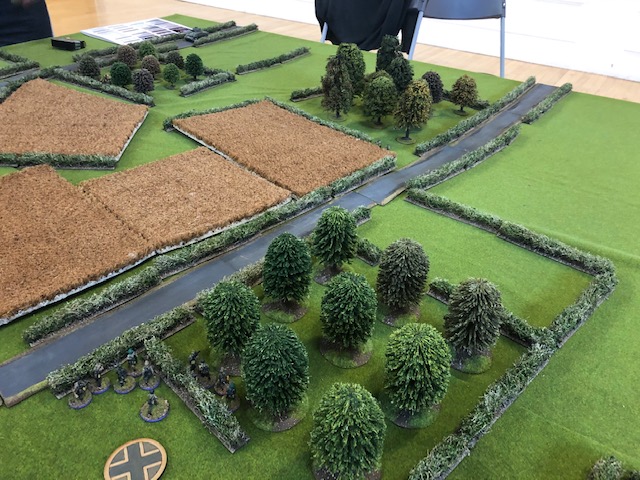
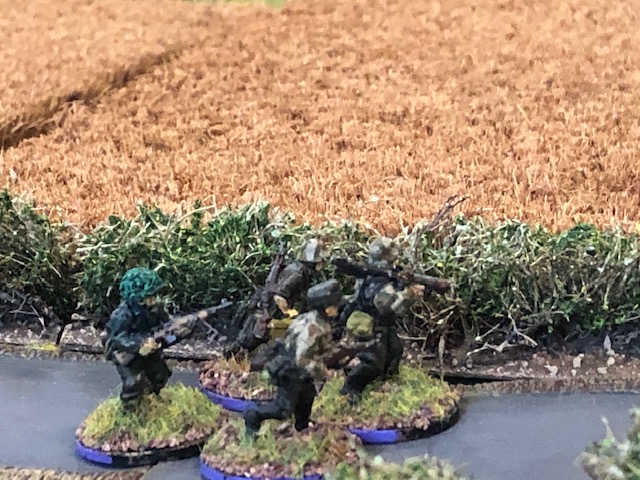
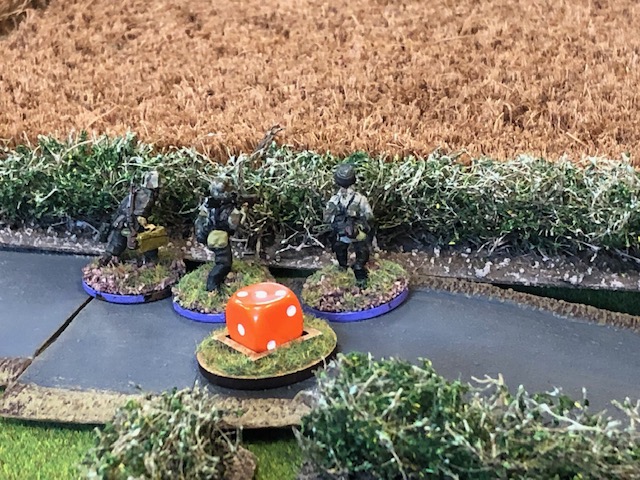
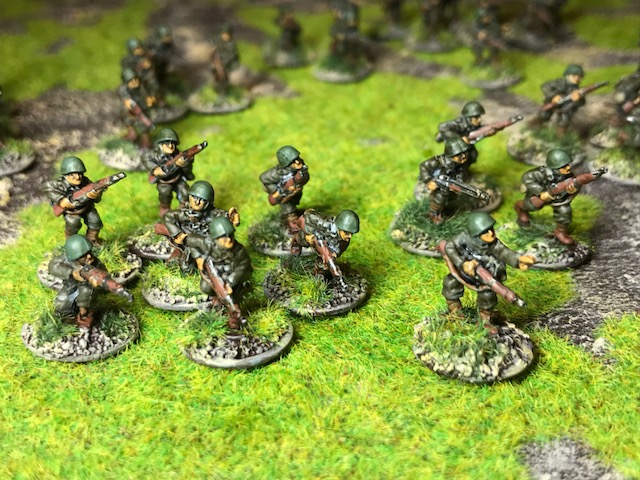
80 years ago Finland was fighting for its independence against Soviet Union in what has become known as the Winter War.  The war has a personal connection to me as the family on my mother’s side is Finnish. We have therefore fought a few battles using the Chain of Command rules to honour and remember the people on both sides who fought and died in this war.

The war started with a Soviet Invasion of Finland without a declaration of war on the 30th November 1939, the war ended 105 days later on 13th March 1940.  More than 25,000 Finnish died and many were wounded. At the end of the War Finland was still an independent state but had lost about 10% of its territory and 12% of the population lost their homes and where re-settled.  The Soviet Union’s losses were far higher and somewhere in the order of 150,000. The campaign was badly planned and conducted by the Soviets and the Finns fought bravely and with great skill.

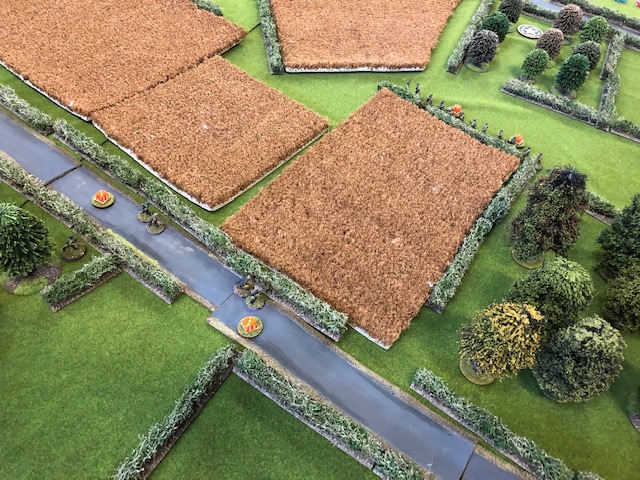
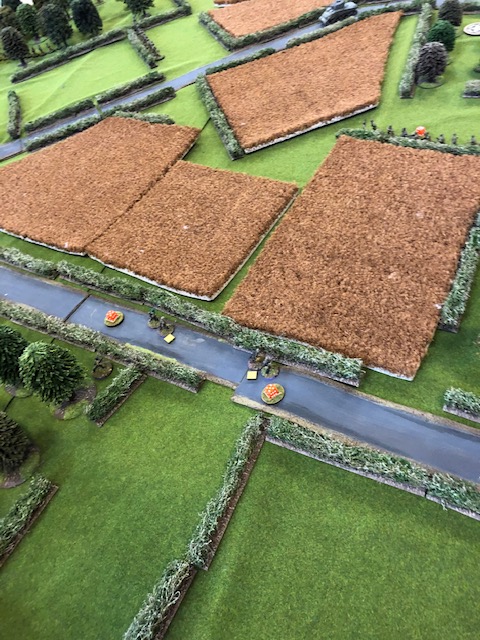
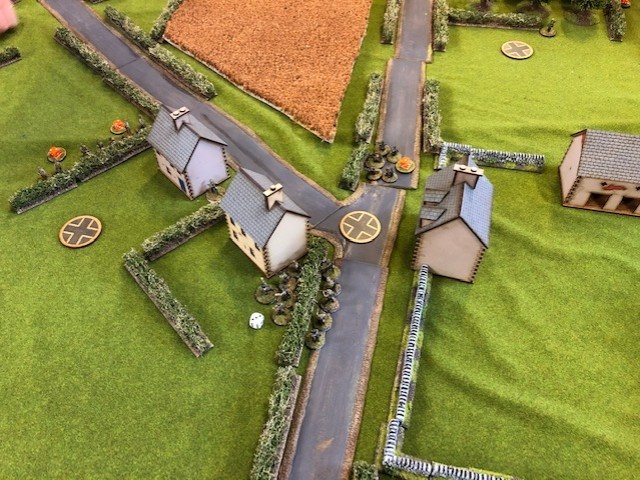
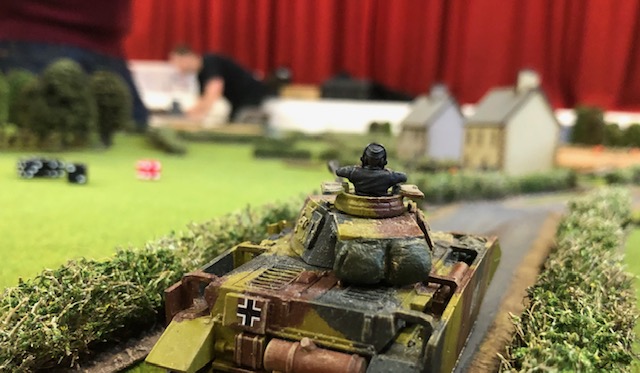
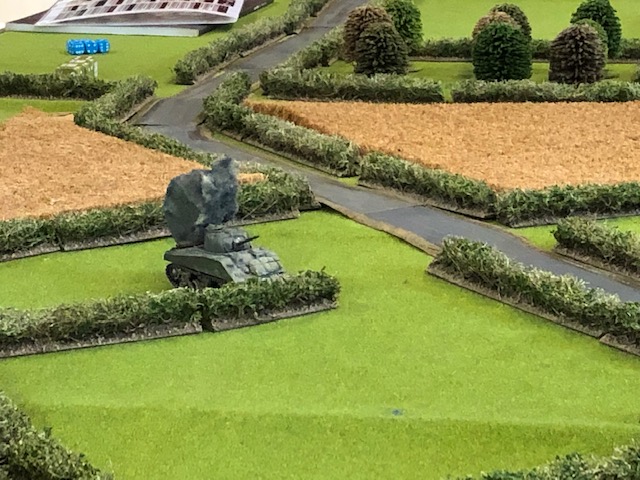
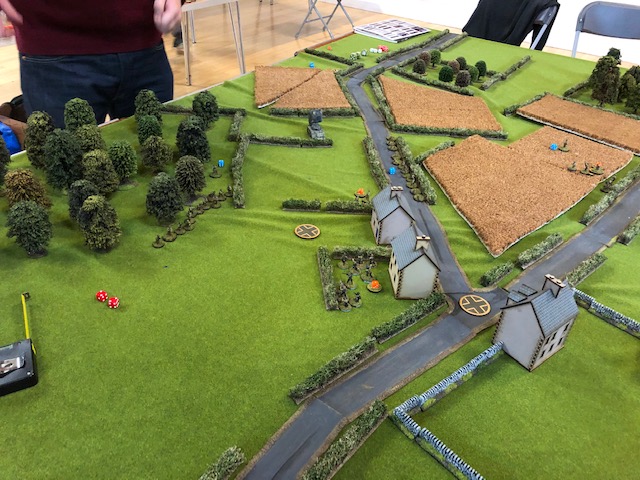
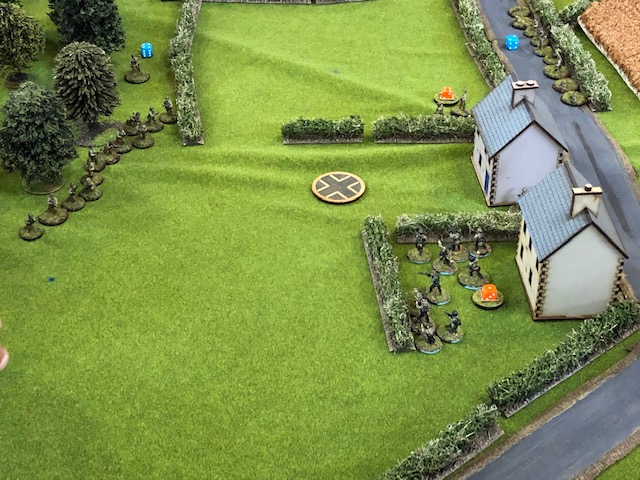
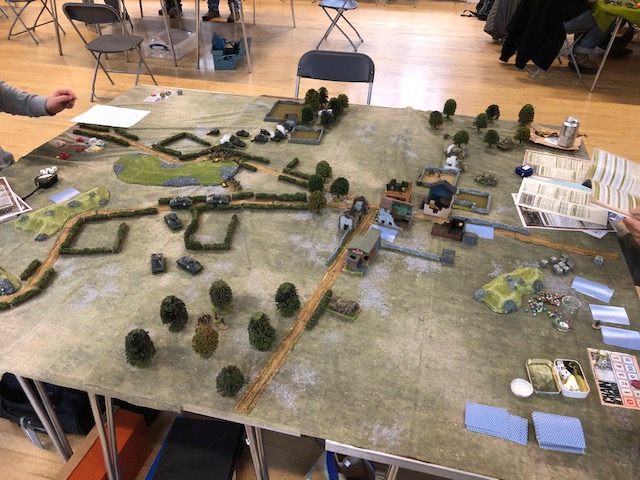
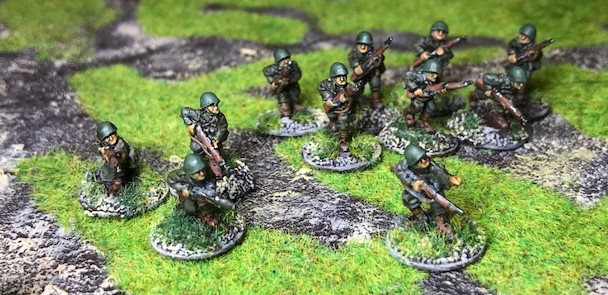
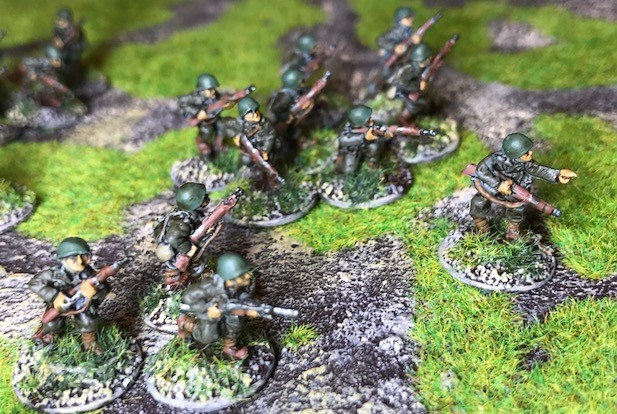
Here are few pictures from one of these battles, somewhere along a country road…

That was all! See you in 2020.

Germans for the Swedish 1943 Tourist Season and CoC in Dulwich

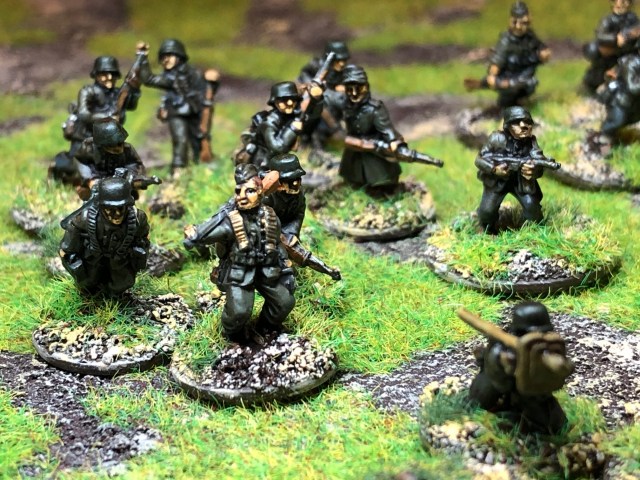
I based the two German Platoons I made last week for the Swedish 1943 Tourist Season (this being the What-if German Invasion of Sweden in 1943) on Sunday evening. These are the Skytrex 15mm ones that form part of the first part of the Campaign – the Northern Approach through Dalecarlia. This part of the Campaign will be infantry vs infantry with limited options for heavier support (perhaps an armoured car for the Germans, etc). I have a few ideas that I think will work well in a setting like this. Anyway here they are:

IMG_1151

IMG_1150IMG_1152IMG_1153

Capture
Focus of the two Planned Campaigns

On Saturday I was invited to play a game of Chain of Command in Dulwich by Iain Fuller. This was one of the South London Warlords Saturday game days – they run these on the second Saturday every month – on this occasion a few Too Fat Lardies games were played. It was a really good game and although I lost I had the best of times.  It was tense and hang in the balance more than once, more than a few bad rolls but then again a few good ones too.  Chain of Command is a very enjoyable game! Below a few pictures from the day. it was nice to meet up with Iain Fuller and his chums, seeing Dave Brown again and having a chat with Rich Clarke.  I may have a solution for playtesting the Swedish Campaign stuff thanks to Iain and Des – I will get back to you shortly.

IMG_1069
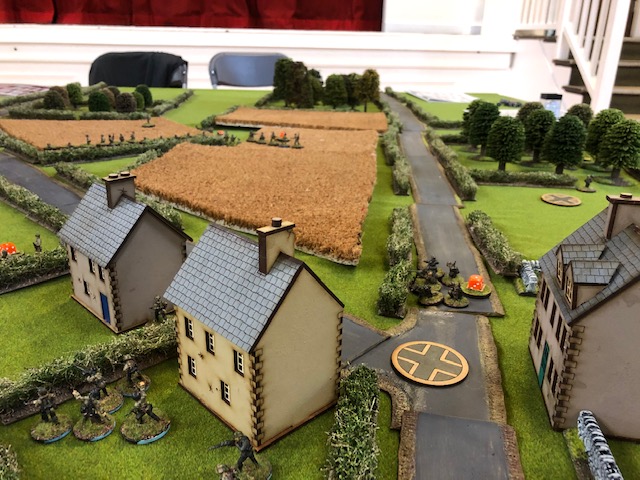
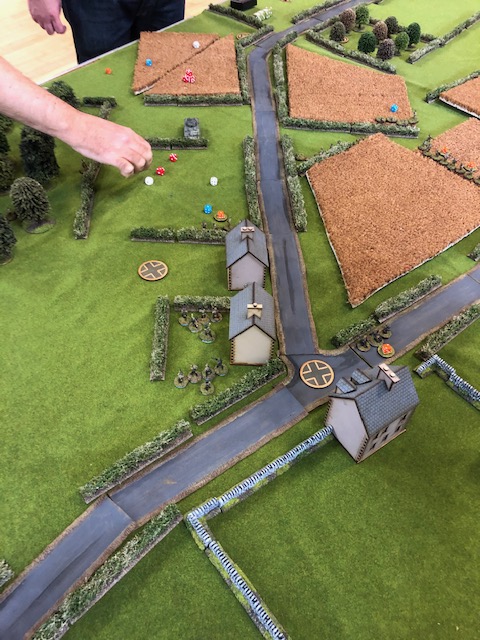
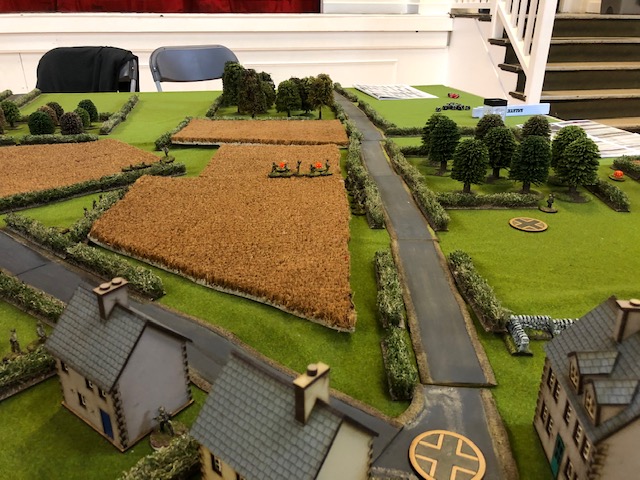
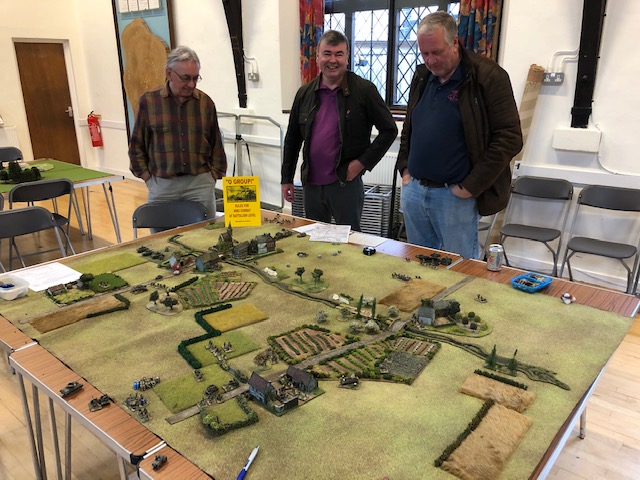
The table for the Day – I and Iain were playing the Germans – we had a Panzergrenadier Platoon with three squads with 2 No. MG-42 each, we also had a Panzershrek team and Tripod MG-42 team as well as a Pz IV tank. We played against Dan and Glenn who had an American Platoon and a Sherman tank for Support. We were defending.
IMG_1075
The Americans quickly got a squad into the forest threatening the defensive position. A squad of Germans were sitting on the first floor with their LMGs aimed at the forest – a dash would be daring and deadly.
IMG_1076
Then came the tank
IMG_1077
The MMG was set up in one of the houses covering the approach road.
IMG_1078
All the Germans deployed in buildings at this moment
IMG_1079
The Americans sent out a scout platoon provoking an activation of another squad.

IMG_1080IMG_1082IMG_1083IMG_1084IMG_1085IMG_1086IMG_1087

IMG_1088
A fierce fire fight broke out between two sections over the field.

IMG_1089IMG_1090

IMG_1091
In spite of overwhelming fire power the rolls did not favour the Germans this time and they ended up withdrawing to the forest to recover some Shock.

IMG_1092IMG_1094IMG_1095IMG_1096

IMG_1097
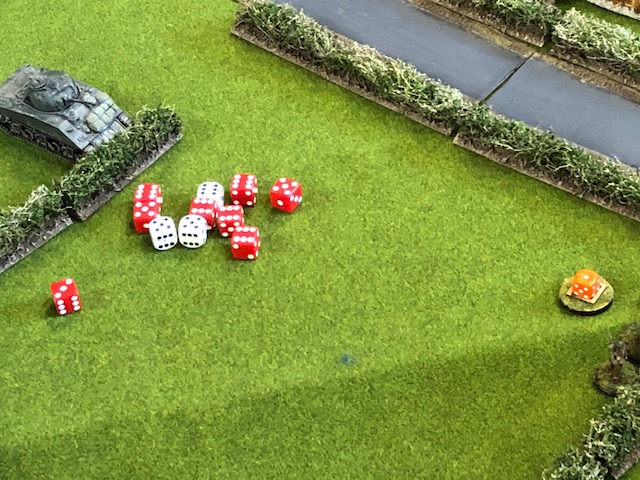
Glenn rolled really well at times! 5 and 6 to hit!

IMG_1098

IMG_1099
I rolled less well!

IMG_1100

IMG_1102
My favourite moments was the Pz IV shot…

IMG_1104

IMG_1105
….that made the Sherman smoke
IMG_1106
What is superior firepower worth when you roll like this?

IMG_1107

IMG_1108
Americans advancing down the road towards the objective of their success.

IMG_1109IMG_1111

IMG_1112
Overwhelmed, unlucky the Germans slowly weakend!

IMG_1113

IMG_1114
Seconds before the Americans overran the Jump Off point and ended the turn! – game over.
IMG_1117
IABSM
IMG_1118
General D’Armee
IMG_1119
Playtesting of the upcoming O-Group rules!

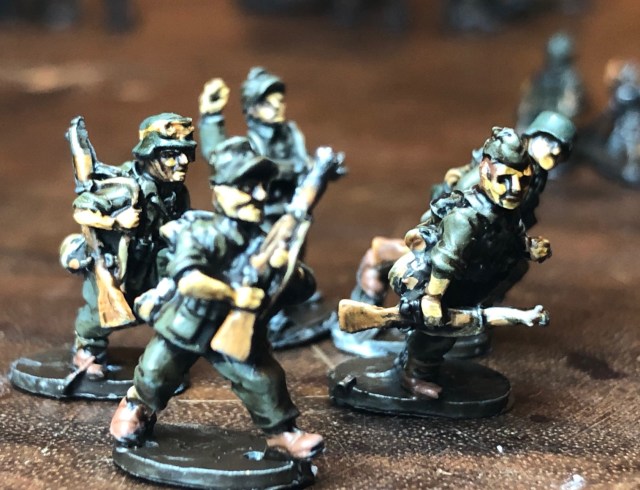
German Infantry Platoon(s) for the What-if attack of Sweden in 1943

IMG_0999

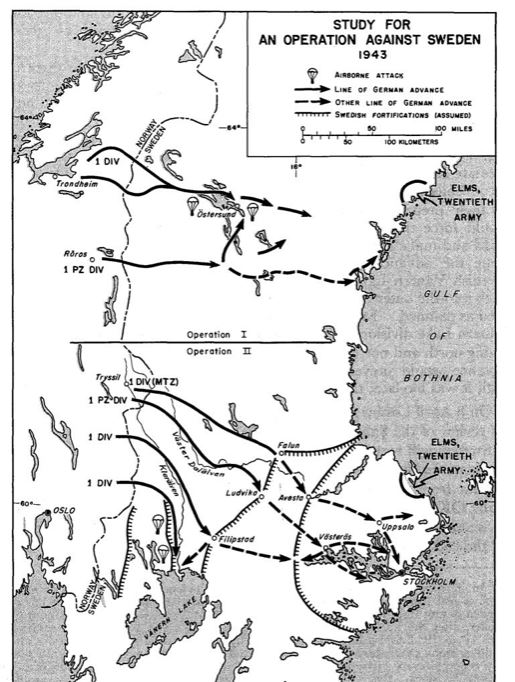
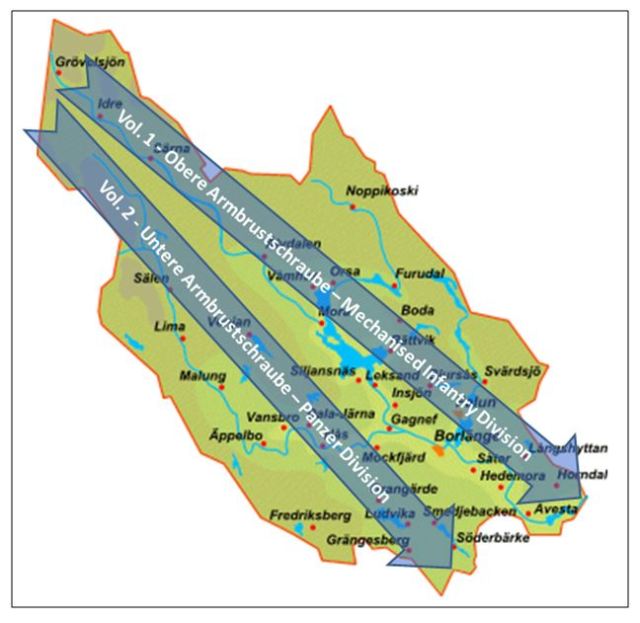
As you may be aware I want to start playing a few scenarios based on the 1943 Swedish invasion plan made by Adolf Schell (that of course never happened). Part of this plan had two of the lines of advance going through Dalarna (the county where I was born) in Sweden and it would be interesting to place some of the action here – the first campaign will follow a mechanised infantry division and the other a Panzer division.

Capture
The Dalarna (Dalecarlia) county in Sweden showing the two advances – Obere and Untere Armbrustschraube.

I only had early war Germans in 15mm so I needed to find some miniatures to build two regular infantry Platoons and some to do two Panzergrenader platoon.  I will discuss the regular infantry in this post.

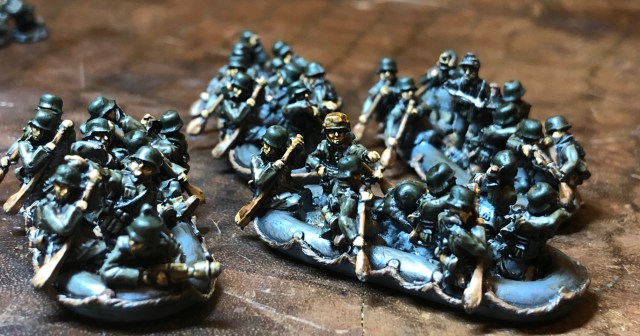
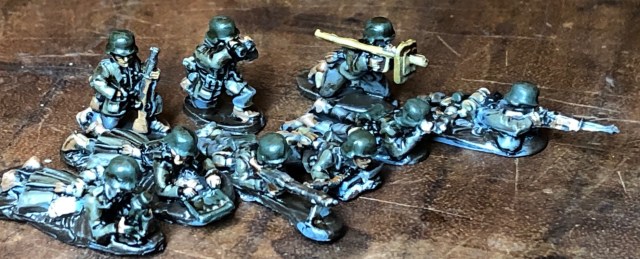
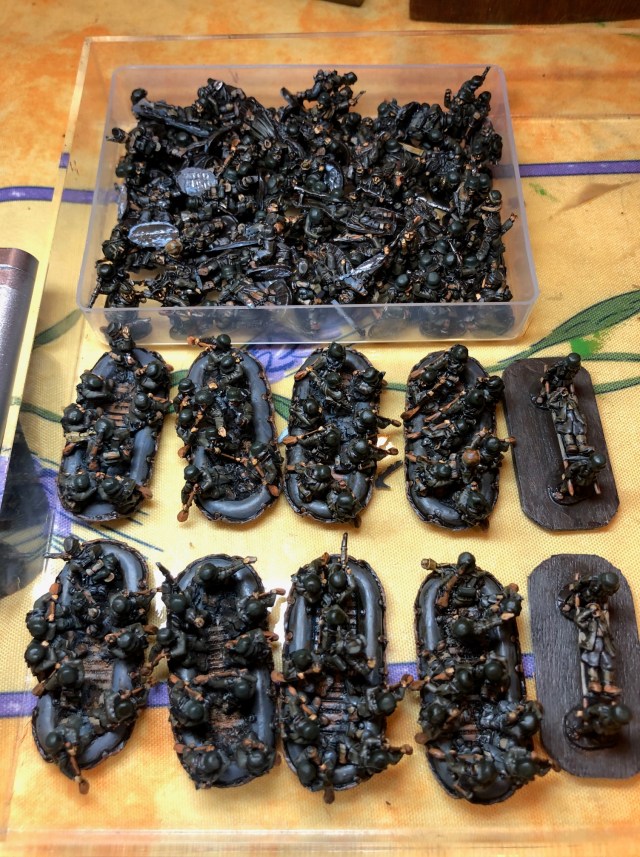
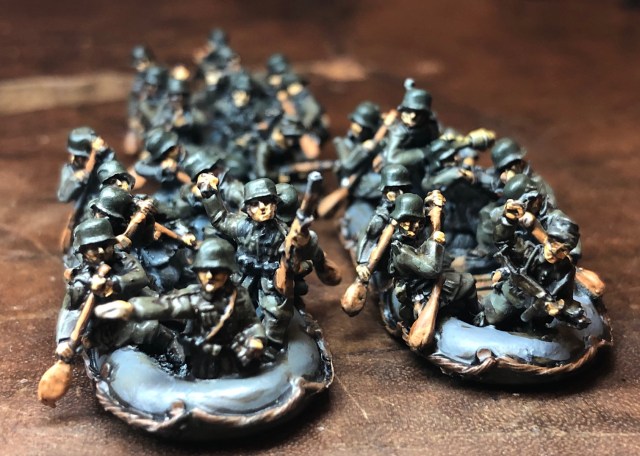
One of the scenarios will be focusing on a river crossing and for this I needed to have some rubber boats.   Looking around I could only find one producer that make rubber boats with crew in 15mm and it was the Command Decision range from Skytrex (link here, I think these are sold by Old Glory in the US).   I also got enough squads for two platoons and some extra sections, some machine guns, mortars and stretcher bearers.

I painted them as follows (use alternatives as almost all manufacturers have had a go at some of the German colours) with normal Roll a One approach – splash rather than finesee:

  1. Grey base coat, ink washed (diluted ink)
  2.  Paint face, hands, paddles, wood on rifle, and rope around rubber boat in Beige Brown (Vallejo 875)
  3. Paint uniform jacket and trousers in German Field Grey (Vallejo 830, it feels more green than grey), leave some of the blackened recesses shine through – I painted about half of the trousers with a normal grey colour (London Grey 836).
  4. Paint helmet in Dark Green (Vallejo 979)
  5. Paint Anti tank weapons with panzershrek and panzerfaust in Dunkelgelb (I have a MIG paint, called RAL 7028)
  6.  Let dry and wash with GW’s Agrax Earthshade – a dark brown wash. This give a nice dark shine to the model.
  7. Detail skin with flesh (I used Vallejo Sunny Flesh 845) – let some of the brown shine through.
  8. Highlight uniform and helmet with original colour used as per 3. and 4. above.
  9. Webbing black, breadroll khaki, brown for waterbottle, various brown for shoes.
  10.  Highlight rifle and paddles with Light Brown (Vallejo 929)
  11.  Vallejo Air Silver for spade, mix with black for rifle, smg and lmg metal.
  12.  Paint the rubber part of boat in London Grey – leave some of the darker grey to shine through.
  13.  Let dry
  14.  Give it all a wash of Army Painter Soft Tone

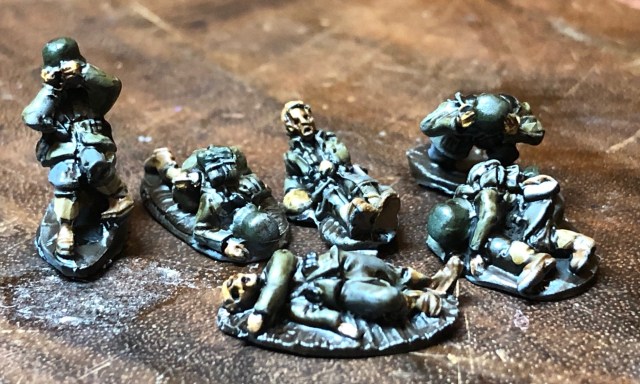
Here is how they came out, although this is an old range I think there is a lot of character in these and I am very tempted to give their Afrika Korps miniatures a go just for fun.

IMG_0974
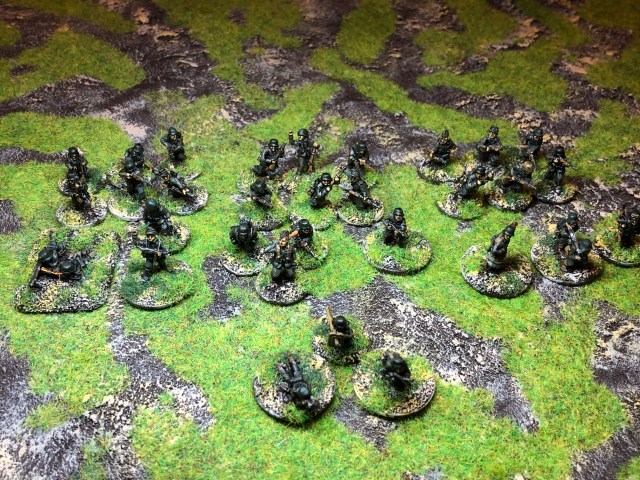
First Platoon in Rubber Boats
IMG_0975
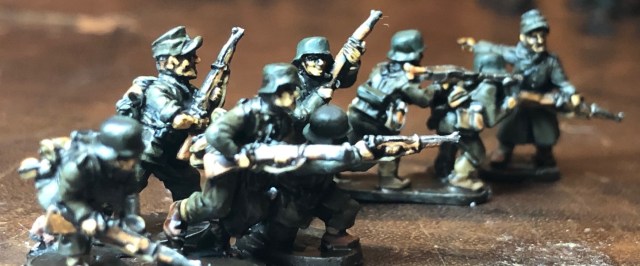
Some classical poses
IMG_0976
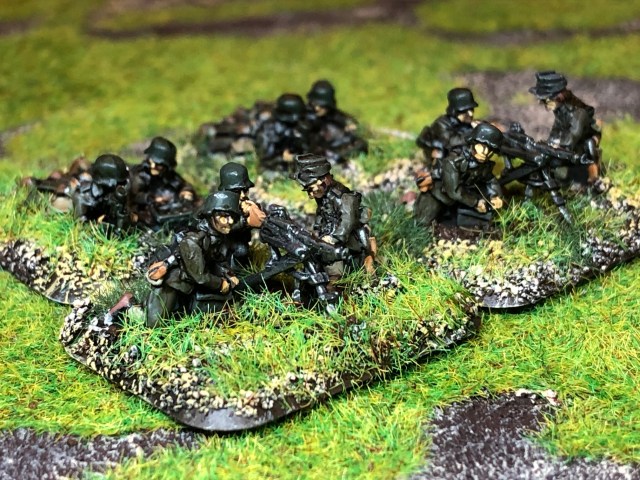
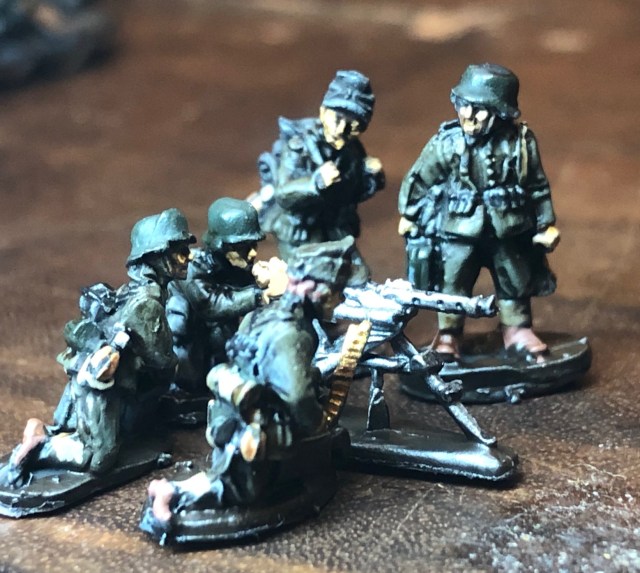
HMG team
IMG_0977
Love these models – full of character.
IMG_0996
Some casualties
IMG_0998
Second Platoon in Rubberboats
IMG_0999
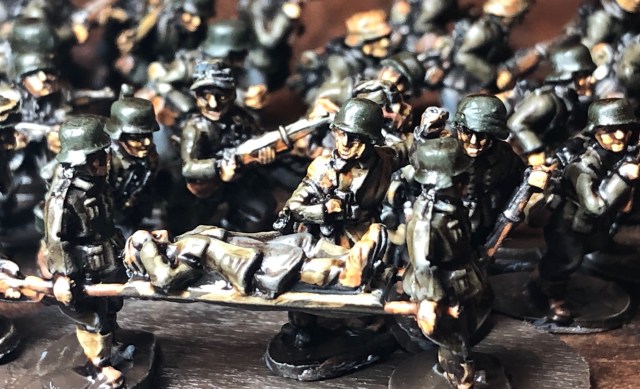
A wounded comrade is carried away but the fight must go on!
IMG_1001
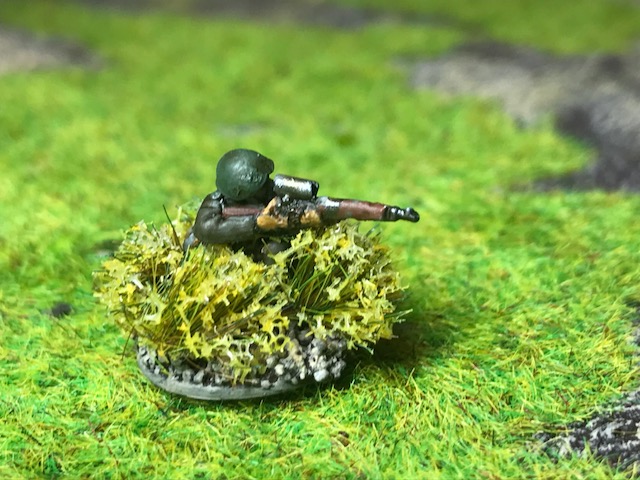
Some 5cm Mortars, a prone LMG team, a Panzershrek team and a lying rifleman (that will be used as a Sniper).
IMG_1002
Done! Very happy, next the Panzergrenadier Platoons that I will be using some Battlefront models to build.

/ Hope that was of some interest

Featured

Swedish Rifle Platoon in WW2 for Chain of Command – Updated List

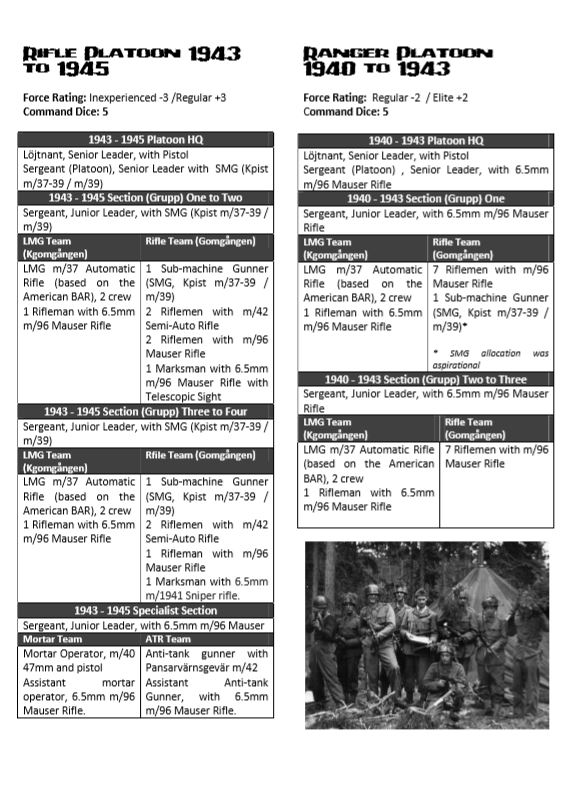
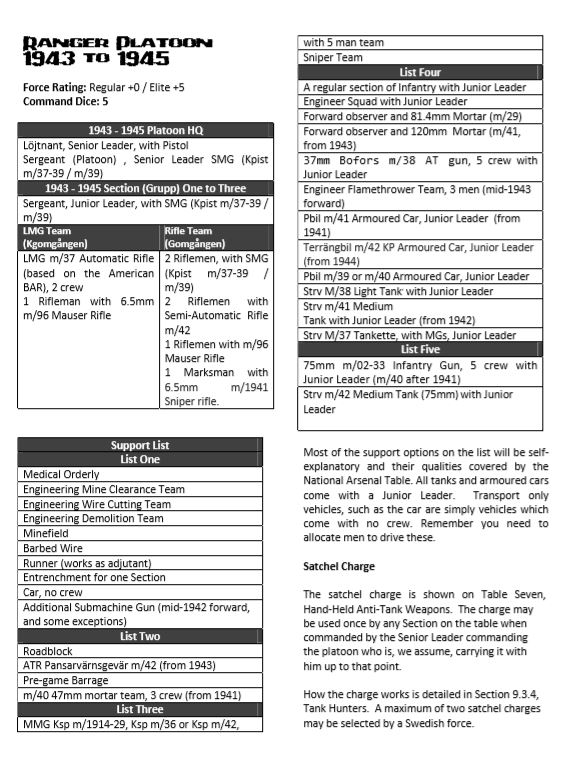
This contains an updated file to that one presented in a previous blog post (see here), some corrections and information for both Rifle Platoon (Skyttepluton) and Ranger Platoon (Jägarpluton).

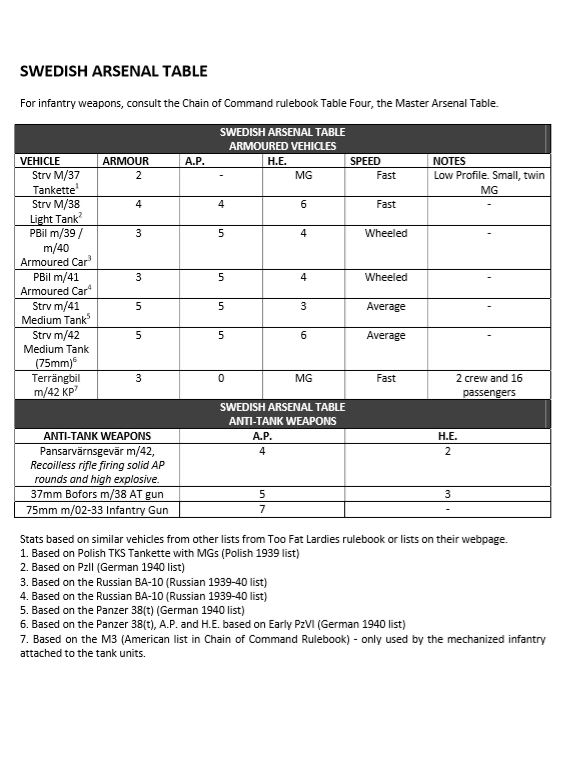
POST NOTE: The Mortar team in the support option states 3 crew, it should be a crew of 2. Also the KP-bil was not equipped with a MG during the WW2 era, so is probably more a list One or Two option.

IMG_8595.jpg

During the hostilities of WW2 the Royal Swedish Army was undergoing a lot of changes and the most significant at the Platoon level was the change introduced in 1943 (the so called 43M organisation). This introduced more power for the Rifle Platoon by equipping the NCOs with SMGs, adding 2 No. Semi-Automatic rifles to each section. Further firepower was also provided by the introduction of a fifth specialist team with a 47mm Mortar Section and an Anti-tank rifleman to each Platoon. In addition a rifleman per section was a designated Sharpshooter and had a scoped rifle.

These changes were gradual and we suggest that the player can choose to play either the 1940 to 1943 or the 1943 to 1945 Rifle Platoon for the 1943 campaign. As an example the number of sub-machine guns and semi-automatic rifles would be aspirational in 1943.

These list allows you to field a normal Rifle Platoon (Skyttepluton) or a Ranger Platoon (Jägarpluton). The latter was more than often be used to do specific recon missions and to distress the enemy. These platoons would most often march onto to the battlefield, with a platoon cart and a horse. Some platoons may be equipped with bikes and some may even be driven to the battlefield in a truck.

IMG_2711
Some may even have been riding in the KP-bil (see more here)

Hope they are of some use, the file can be downloaded here.

PDF Swedish Infantry Platoon v3

Word File Swedish Infantry Platoon v3

zz1zz2zz3zz4

/ Hope that was of some use/interest.

Swedish Rifle Platoon in WW2 for Chain of Command – Getting some Heavier Support, Part 1


IMG_8595

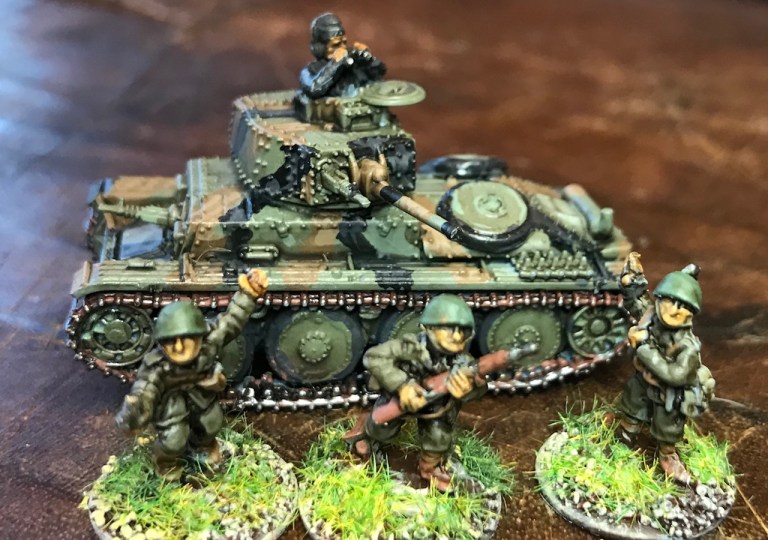
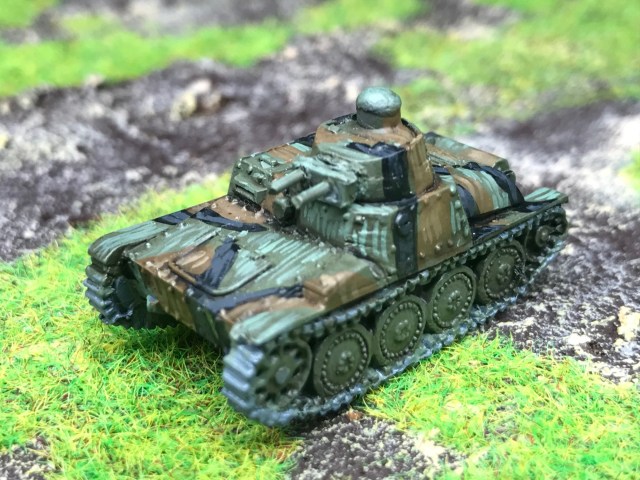
I have had the strawman of this blog post in my draft folder for a long time as I have stalled this part of the Swedish 1943 Invasion project until I sort out some decals etc. I have been working on the opposition though (here is a link to the last blog post on them). I do get the more than occasional question on what tanks to use for this project and what proxies are available.  Therefore with an apology in advance for the tanks presented here being 80% complete lacking the final wash, drybrush, decal and weathering. The stripy painting will be subdued by this process – I promise and hope, but looks good at the right distance as it creates some depth. The final garage will be presented in a Part 2 together with some Swedish Armoured Cars, it may even contain a little mini campaign for what a Tanker in the What-if Swedish 1943 Invasion context.

More on this project in previous blogs here (links below):

I am doing this project in 15mm and have not explored what options exists in other scales.

In essence we need 4 different tanks for Sweden in WW2, here they are (the two first models would be available in an earlier war campaign, my focus is Summer 1943 when all these models are available/in service. Each links to the relevant Wikipedia page if you want to know more about them):

Strv m/37 (available from the start of WW2) – This was the AH-IV Tankette the Swedish Army in the inter war years bought from the Czech company ČKD (Českomoravská Kolben-Daněk) company, it was produced under licence in Sweden.

The tankette was strongly modified, including the suppression of original driver’s machine gun, this variant was heavier and larger, than the AH-IV. On the turret, was placed two Swedish-made machine guns, the 8mm Ksp m/36 Strv and a commander cupola.

– Wikipedia entry “Stridsvagn m/37”

To achieve something looking similar to the Swedish version I had to do a rough conversion of a Battlefront / Flames of War model (how I did it is included in the Appendix below, with the code reference RO005) of the Romanian R1 Tankette.  I just made one of these, but they came in pack of 3, so I may do a few more of them.

IMG_2892IMG_7770

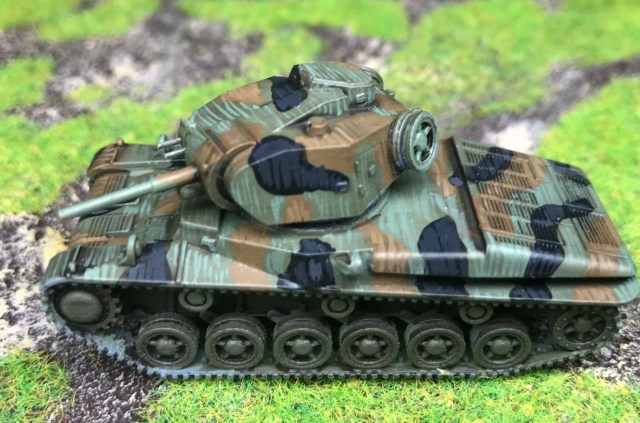
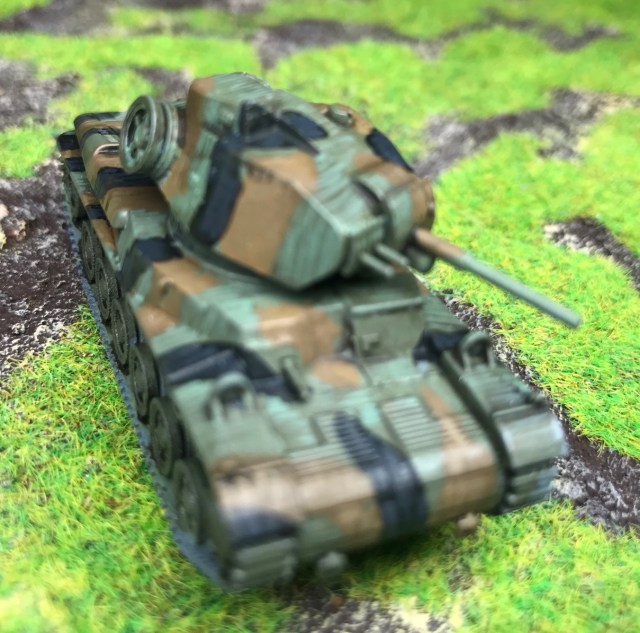
Strv m/38-39-40, generally known as the L-60 series (available from the start of WW2) – This was a Swedish tank developed in 1934, a few were exported and one of the versions is the Hungarian Toldi tank . My version is a 3D printed Toldi. They can be bought from Butlers Printed Models (BPM) in the UK – I got mine from a friend. They are a little bit of rough models, compared to other manufacturers.  You could buy a Toldi in 15mm from Battlefront as well. I did no modification on these.

IMG_2883IMG_2886

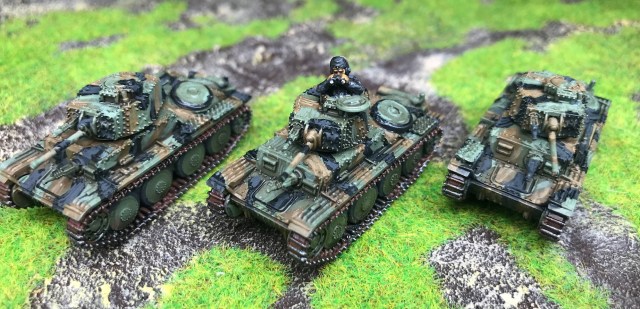
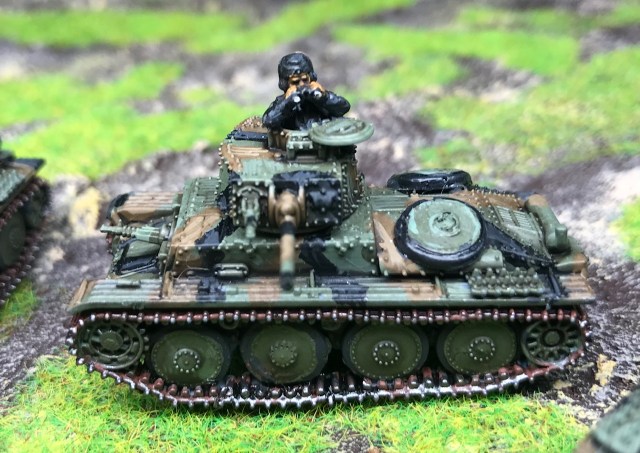
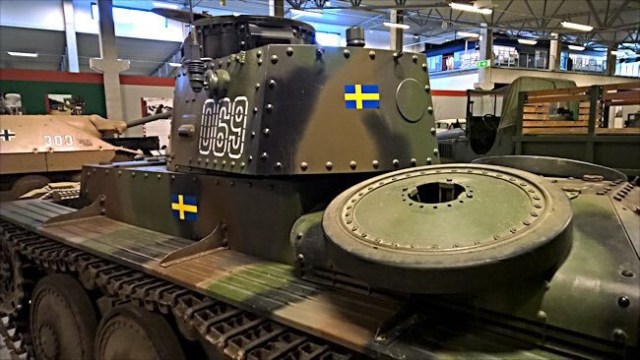
Strv m/41 (available from Dec 1942) – Licence built 38(t) a common early war tank used by the Germans. I got some Plastic Solider company (PSC) 38(t)s and did some minor but I think effectful modifications (included in the Appendix below).

IMG_2887IMG_2888

Strv m/42 (Available from April 1943) – The mighty m/42 with a 75 mm L/34 gun. I bought one from Shapeways, it was bloody excellent.  I think I will buy two more of this one (PV112B Stridsvagn m/42 (1/100) is the Shapeway reference, they cost £25 each – ouch!).

IMG_2889IMG_2890

Appendix – conversions

Stridsvagn m/37 

This was a Swedish-built version of the Czechoslovakian CKD AH-IV Tankette, it was also sold to Romania.  Battlefront does a model of this version (R1 Cavalry Light Tank Romanian, code RO005), however there are a lot of notable differences between the versions.  The Green model in the picture below is the Battlefront model whilst the black and white photos are the actual Strv m/37.

Key differences:

  • Machine Gun on the right-hand side (did not exist on the Swedish model, so I did not install it)
  • The detail on top of the tracked wheels in front is different, there is a smaller box on the Swedish version (I reshaped this part – see below)
  • The Swedish version had two MGs in the front, not one barrel (I re-did this part – see below)
  • The Swedish version had a cupola in the hatch (I added one on my version – see below)

This is how I did the conversion, a quick job as usual looking for something impressionistic and that looks more like the Swedish than the Romanian versions.

IMG_7759.jpg
First I hacked away a little bit of the front part (shown on the second model) ….
IMG_7760
…so I could shape a little box instead as seen in the picture.
IMG_7761
Then I removed the cannon and sanded the front of the turret flat.
IMG_7762
Got a piece of plastic
IMG_7763
Drilled two holes in it (as shown in the picture below)
IMG_7764
Put in two pieces of a paper clip to represent the 8mm MGs and glued a part of a plastic sprue on to of the turret to represent the commander cupola.
IMG_7765
Wrong order – but you get the idea.
IMG_7766
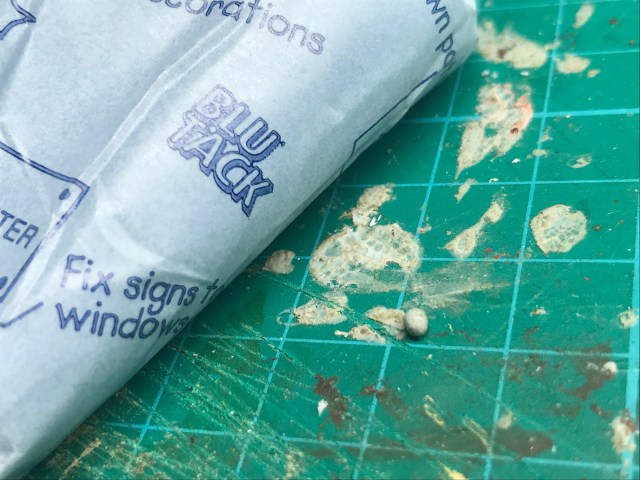
Piece of blue tac – I suppose you ought to use something more sturdy like green stuff – but this is Roll a One modelling – no finesse.
IMG_7768
Stick it on top – conversion done. The Cupola is too tall but you get the idea. I am redo this later.


Strv m/41

I more or less used these as they came in the box from Plastic Solider Company, however I wanted to add some spare wheels, because it looks very iconic on the n/41 and also the  hatch opened forward.

IMG_0736

IMG_0738
First I cut out a wheel from the track section
IMG_0739
Trimmed it as good as I could
IMG_0742
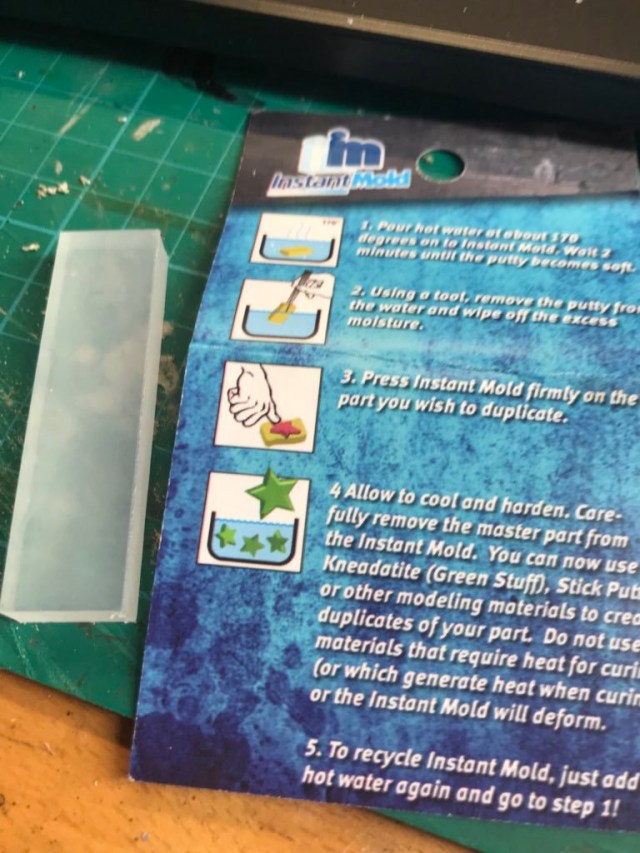
I used instant mould – it is a plastic that goes soft in warm water and you can use it to make simple moulds – like this one.
IMG_0743
I pressed the plastic on the shape
IMG_0751
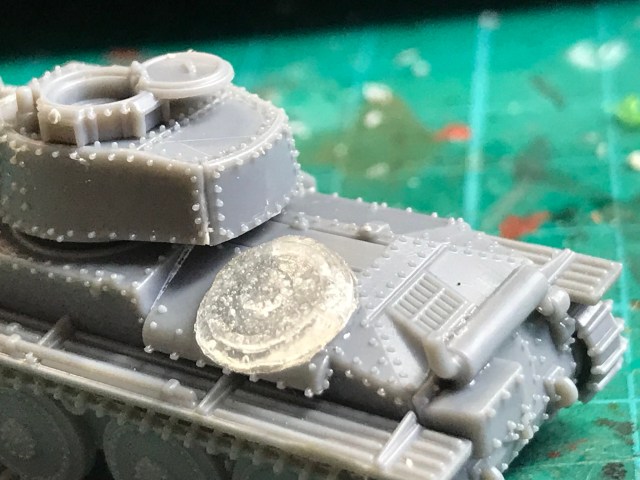
Then I used some cheap 2 part epoxy resin and put it in the mould – you do not need a lot.
IMG_0745
Reasonable result
IMG_0746
Changed my mind and drilled a whole in the original and made a new mould
IMG_0753
Looking better
IMG_0755
To reverse the hatch direction I just cut of the front and the back bit on the cupola and glued them on in the opposite way.
IMG_0756
Job done, looking more Swedish

/ Hope that was of some interest.


Featured

25th Panzer Division for the What-if Swedish Invasion 1943 – Part 1

IMG_2793

Some time ago I fancied doing some Swedish WW2 era soldiers for fun, originally thinking I would do some kind of border skirmish scenario or something similar. It grew in scope somewhat, I have recorded the progress so far in a number of blog posts (here, here and here).

Capture
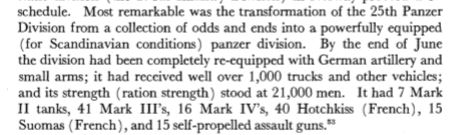
From the Book “The German Northern Theatre of Operations 1940-1945” by E. F. Ziemke, you can download an excellent copy of the book here. For this particular project it in the pages 252 to 264.

Current I am planning a few Scenarios based on the 1943 Swedish invasion plan made by Adolf Schell. Part of this plan had some of the lines of advance going through Dalarna (the county where I was born) in Sweden and it would be interesting to place some of the action here. So having some units for the Swedish side I really needed some suitable Germans and decided to start by doing some tanks representing the 25th Panzer Division as it was in the Summer 1943 when it was stationed in Norway.

section
From the book reference above, page 262.

So from this we know that the division had the following tanks:

  • PzKpfw II
  • PzKpfw III
  • PzKpfw IV
  • Hotchkiss H39 (captured French tank)
  • Suoma S35 (captured French tank)
  • Self-Propelled assault Guns

As the Swedes on the other side did not have a very strong tank force and anti-tank capability at the time, this list is still challenging but not as devastating as a list with Tigers and Panthers for example.

In addition the division would have a number of other supporting units like Panzer grenadiers, scouts/recon, artillery etc. I will get to these later, however as this is a Chain of Command project, I am not interested in some of the heavier stuff and/or supporting companies, but it would be fun to include some scout types as I read somewhere that they were mainly on Motorcycles and did not have armoured cars, etc.

However back to the focus of today – the tanks.

First I had to decide on how to paint them, my initial idea was to just make them Panzer Grey but since the directive was to paint them in dunkelgelb  was issued earlier in the year, I asked people on twitter for some advice and got may helpful hints, like this one from Petri Niemenien (thank you):

To be specific, Feb 1943: Dunkelgelb RAL 7028 base coat + Rotbraun RAL 8017 and Olivgrün RAL 6003 stripes 😉

So, and I noted this down mainly for myself, this is the process I used (it creates some reasonable and quick results, it works for my table):

  1. I used Plastic Soldiers Tank Spray Dunkelgelb (link here) cans – awesome product to be honest, saved me a lot of time. But you could of course use a brush.
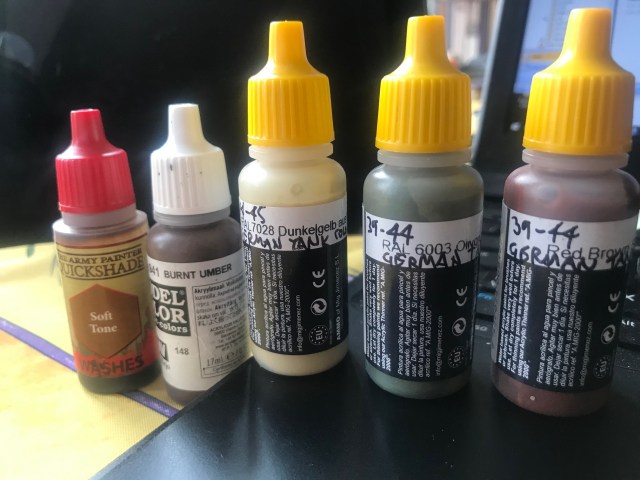
  2. Then I dabbed/stipple (use a thin wasted brush) on the Olive Green mixed with the Dunkelgelb paint (4:1 mix to tone it down) forming some 2-3mm stripes – I used the paints in the picture below, but anyone will do. The MIG paints are a little bit runny and work great for this, if you use other paints water them down somewhat, I want to have some of the primer shining through.
  3. The same with the Rotbraun (reddish brown).
  4. Then I highlighted the green stripes with the Oliver Green unmixed, tried to do a line in the middle kind of – do not paint stipple it on.
  5. For the Rotbrown stripes, use the colour again but mix in some dark brown (I used burnt umber).  Again highlight the middle.
  6. Let it dry
  7. Wash the tank with a light brownish wash – I used Army Painter Quickshade – Soft Tone.
  8. Let it dry
  9. Drybrush with the Dunkelgelb
  10. Do the details as appropriate.
  11. Put on Decals (I used Plastic Soldier Company Decals for mine).
IMG_2882.jpg
(I) Army Painter Quickshade Soft Tone, (ii) Vallejo burnt Umber 941, (iii) Mig RAL 7028 DUNKELGELB AUS ’44 DG III (for highlighting, this is paler than the mid-war version, so get one of those if you are not using the army painter spray), (iv) MIG RAL 6003 OLIVGRÜN OPT.2 and (v) MIG Red Brown Shadow.

I will do some further weathering but will perhaps add some division insignia decals (I will do these myself later) and decide what time of the year the actual invasion “happens” so will wait with that and do it when all is completed.

IMG_5218
Divisional Insignia, 25th Panzeer

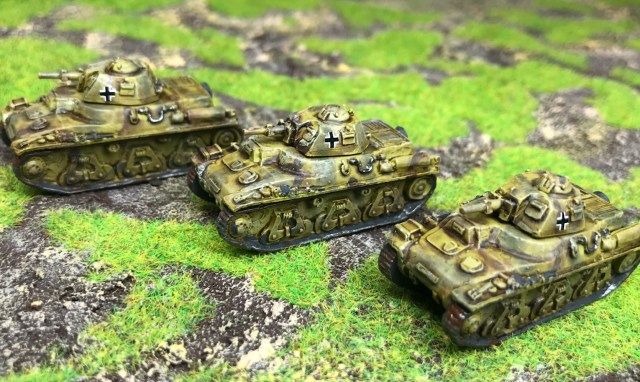
I really fancied the idea of including some of the French captured tanks – as they are rarely seen on a wargames table unless it is depicting France in 1940. I went to the Tank Museum in Saumur in 2016 and really enjoyed the French tanks in the collection.
IMG_0464
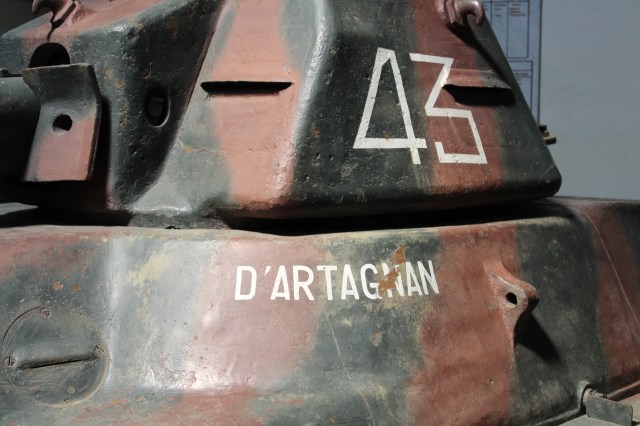
Wonder if the other ones in the Platoon were called Athos, Porthos and Aramis?
IMG_0451
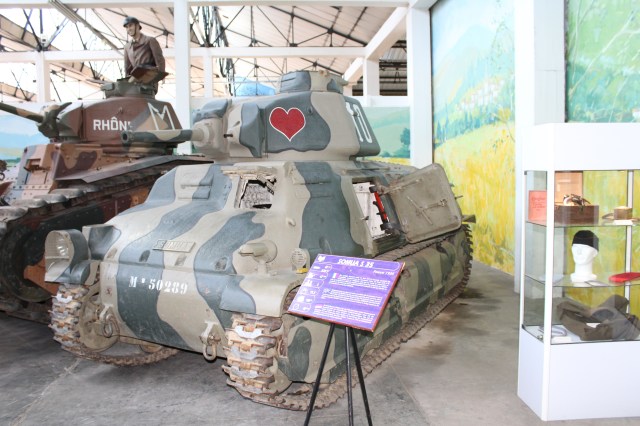
This is the Somua S35
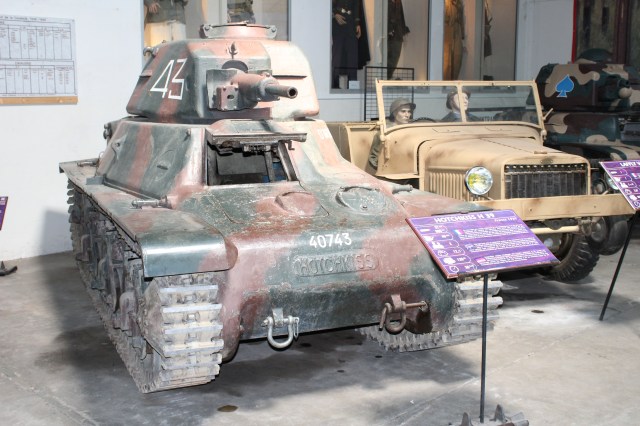
IMG_0462
This is the Hotchkiss H39


I bought three each of these French tanks from Peter Pig (link here) and they are brilliant metal models with limited parts, just ensure you use either 2 part epoxy glue or some milliput or equivalent when you assemble them to ensure strength and durability.

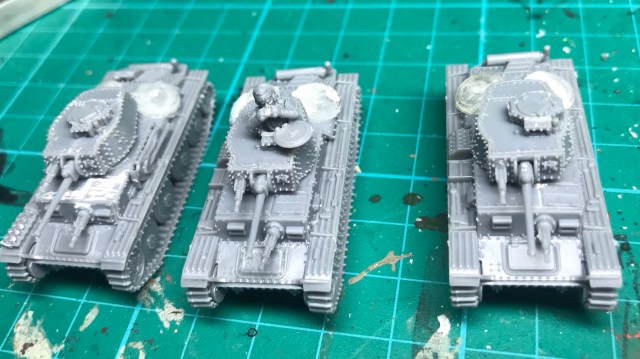
The French tank had cupolas instead of hatches on top and in many cases the Germans added hatches on top.  I did not modify the H39s but on the S35 a used a modelling knife and did a cut in the middle of the cupola to represent a hatch on two of them and a tank commander with some improvised hatches (I cut some plastic Sherman hatches roughly from a Plastic Soldier Company sprue the Little One had not used).

Here are the H39s (Peter Pig)

IMG_2797.jpg

..and the S35s (Peter Pig)

IMG_2796.jpg
Note the cut on top of the Cupola, creates the illusion of a double hatch, also the DIY hatches on the one with the visible commander.

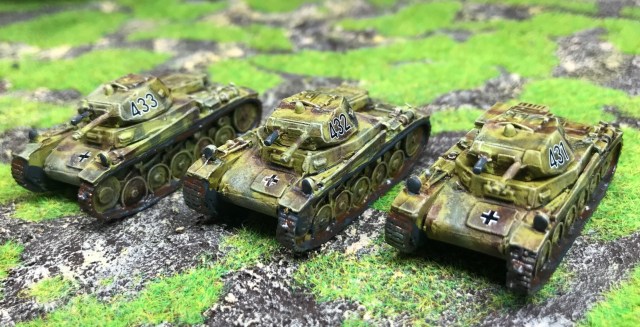
Then the standard German tanks, first out PzKpfw II.

IMG_2798

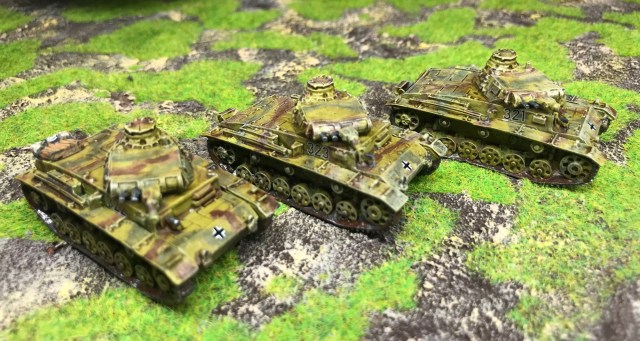
Then the PzKpfw III.

IMG_2794.jpg

So now we have some options, and good progress overall on the tank front.

  • PzKpfw II (done)
  • PzKpfw III (done)
  • PzKpfw IV
  • Hotchkiss H39 (done)
  • Suoma S35 (done)
  • Self-Propelled assault Guns

I guess next I will do some PzKpfw IVs and StuGs but fancy including some early other Self Propelled Guns as well – but that will be the next binge batch some other time.

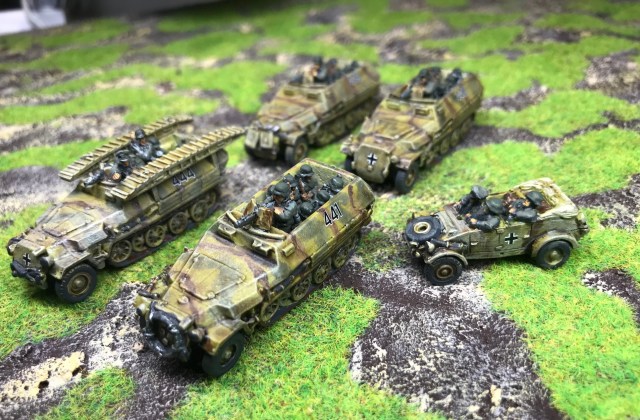
By the way I also did some Hanomags and command vehicles… (all from Peter Pig, except the Befehlswagen that is from Skytrex, this is the last vehicle in the second Picture)

IMG_2792IMG_2793

If you have any information about the 25th Panzer Division that could be relevant up to them leaving Norway in 1943 I would be more than interested. Also any books that may include some coverage of the Division or the individual regiments/battalions that formed it, etc.

  • Panzer Regiment 9
  • Panzer Grenadier Regiment 146
  • Panzer Grenadier Regiment 147
  • Panzer Artillery Regiment 91(undersized)
  • Panzer Reconnaissance Battalion 25
  • Motorcycle Battalion 8
  • Panzerjäger Battalion 87(Tank Destroyer Battalion)
  • Panzer Engineer Battalion 87
  • Panzer Signal Battalion 87
  • Panzer Pioneer Battalion 87
  • Feldersatz Battalion (Field Replacement Battalion)


/ Hope that was of some interest


Swedish Rifle Platoon in WW2 for Chain of Command – Getting a Ride

IMG_2711

You may recall that I did some work on a Swedish Rifle Platoon in WW2 for Chain of Command last year. This is part of a What-if Project I have been working on for some Potential WW2 actions involving the Swedish Army.  I have been working away slowly with this project in the background.  The rules I am using are Too Fat Lardies Chain of Command, but if you are interested in this What-if then you should be able to get something out of this even if you use another rule set.

More on this project here and here.

I will shortly do an update of the Swedish Platoon list for Chain of Command as there are a few errors in the support options.

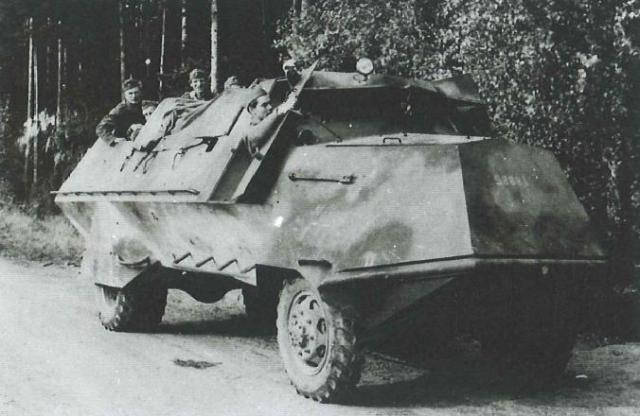
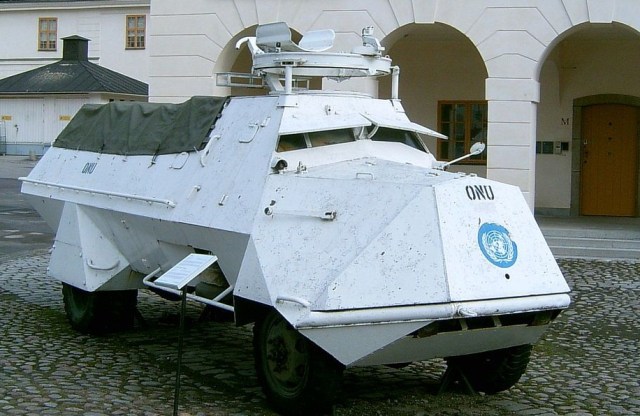
One of the most iconic Swedish vehicles of the era was the Terrängbil m/42 KP (Off Road Vehicle), also known as the KP-bil.  It was a domestic development and would allow the troops to keep up with the tanks and also offer some protection from artillery and small arms fire. The KP-bil was a APC basically developed from an army lorry with armour-plates.  The first ones were delivered in 1944 but there were a produced in 1943 but rejected (due to weaknesses in the body).  In the What-if scenarios I am developing with a German invasion of Sweden in 1943 these will be pressed into service earlier.

SKP_m42
1944 Configuration (Picture from Wikipedia)

The KP-bil was finally de-commissioned from Swedish Military Service in 2004 and was baptised in fire during its service with the Swedish UN forces in Congo in the 1960s. It was sometimes referred to as the Coffin due to it shape and in Congo it was also known as the White Elephant.  You can find more about this vehicle, in English, from these web pages:

1280px-Terrängbil_m42_VKP
Later Configuration painted as when in service in Congo – with machine Gun mounting on the Roof

Putting them into Service

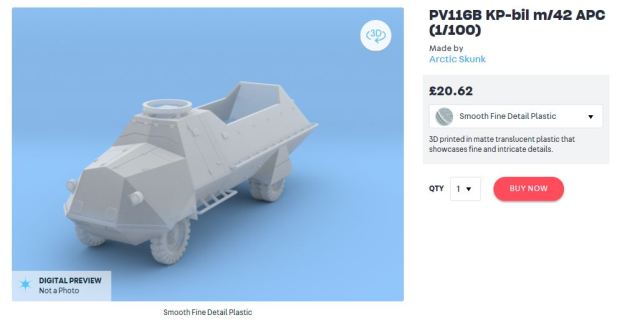
In doing the research for this WW2 Swedish project I found that it is possible to buy the KP-bil in 1/100 scale from Shapeways (link here).

KP-bil
Over £20 for a 15mm vehicle!, well I thought it was so favourable so I got 4 of them.  I am not here to justify the stupidity in this – I just love this whole idea and this project.

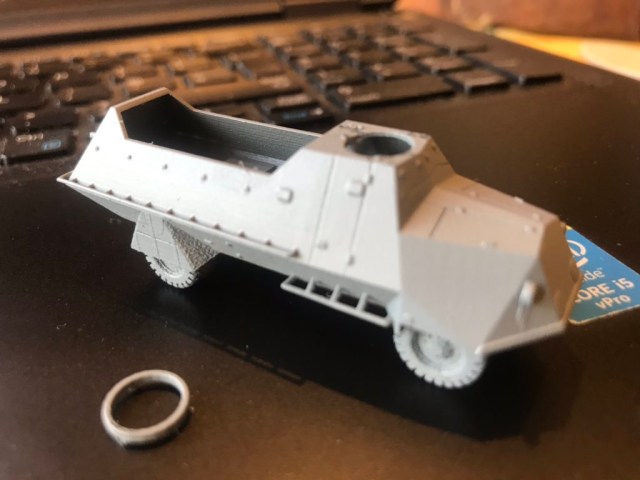
The first issue is in the fact that these come with Machine Gun Mountings that were not included as standard until the 1950s – I could have stretched the imagination a little bit in this what-if and said that perhaps when they were pressed into service the mounting were attached?  I decided to take them away. I did this with a fine cutter and then applied two pieces of thin card to cover the whole, the round piece incidentially the same diameter as a normal hole punch hole – I covered them with PVA glue.

IMG_2719
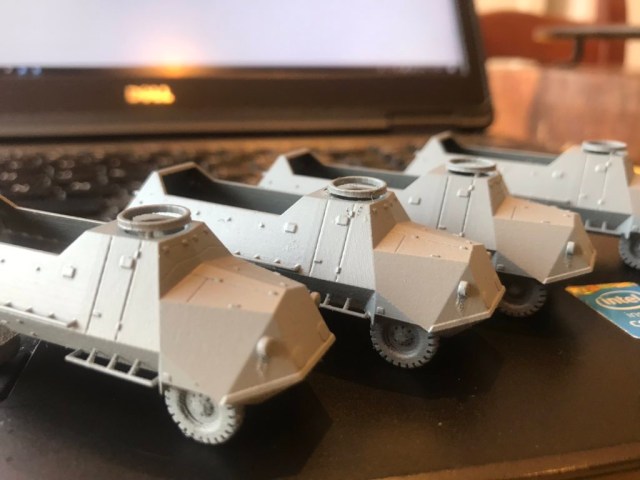
As they arrived from Shapeways – primed in grey.
IMG_2720
Cut away the mounting and clean up!
IMG_2721
Thin card applied – glued and sealed with some PVA glue.

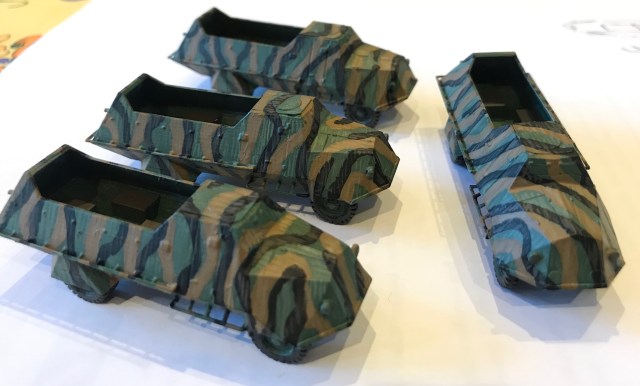
I then painted them in three colour scheme – I have used this for the Tanks I am working on too (future posting).

IMG_2627.jpg

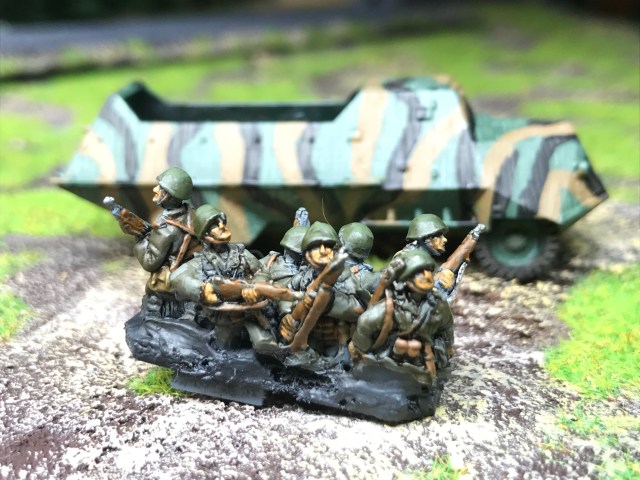
The looked ok, but as they do not cover with any passengers the look a little bit boring.  I thought I add some, but wanted to be able to take them out to show whether they were occupied or not on the gaming table.

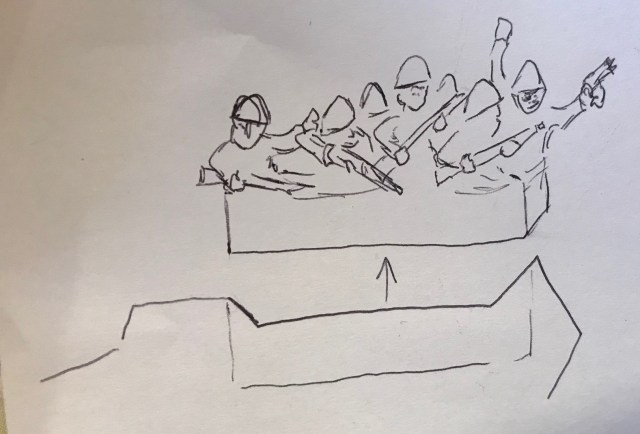
During a very long telephone conference I got an idea and doodled it down – not a very clever one but good enough to achieve what I needed to do. I thought I would just create a block of soldiers that could be put in and out the vehicle.

IMG_2628
Not very engineering like!

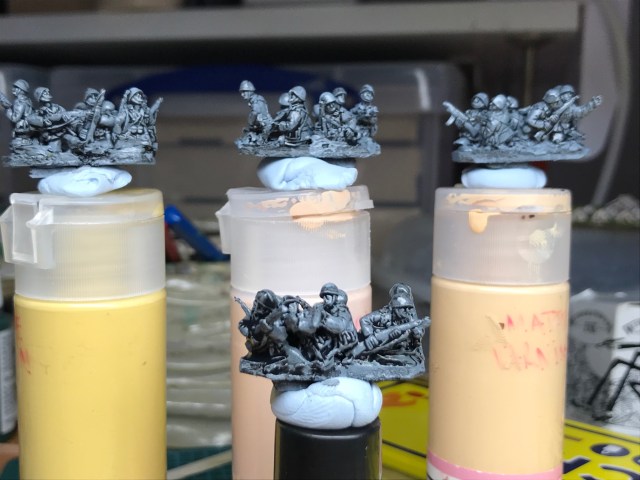
I got some Italian Flames of War models (the one I used for the base Platoon I made) and created four bases (that I made sure fitted into the vehicles) with soldiers glued together (I used Grip Fill) trying to create some interesting “going ons”.

IMG_2690.jpg
Primed Grey and washed with Black Ink.

The I painted them as I did the other Platoon I did (see link here to that blog post for what Colours I used).

IMG_2708.jpg
I was really excited at this Stage!

Had to get them out on a test spin, I think it was worth it.

IMG_2711
Travelling through the Country side. You get the feeling that the men are nervous looking around in all direction, maybe the enemy is near.
IMG_2703
Getting off the main road.
IMG_2705
Parking Up
IMG_2707
Disembarking and advancing towards the Forest.

/ Hope that was of some interest,


2018 is almost over…

I had a lot of fun with the hobby in 2018 and this is my year end account of a lot of the things that has been and some things to come.  I really hope that your 2019 will be great and I am really grateful for all of you who visit this blog on a regular or occasional basis. One of the best things, this year, is that the Little One is getting more interested and involved in the hobby – thanks Mate!

IMG_7021

Also a big thank you to Nick Dorrell, who I did the Horka Battle with at Joy of Six in the Summer, also all the Twitter people (it is a very nice place to be, I call myself Per at Roll a One there), and all the fantastic hobby related podcasts I listen to in between the audible books whilst I try to put paint in the right places. These include, the Too Fat Lardies Oddcast, the Veteran Wargames, the Grognard’s Files, the WSS Podcast, Henry Hyde’s Battlegames (not strictly a podcast but he has done a lot of great ones this year), Wargames Recon, and Trouble at T’Mill.

I also regularly listen to the Meeples and Miniatures podcast and inspired by them the Little One and I thought we would do our own top 5 games we played this year, in no particular order.

  • What a Tanker – this is so much fun and it inspired me to do a lot of Russian and Finnish tanks during the Sovietic Summer Offensive 1944. I also did a List for the Finnish Tanker (see more below). A brilliantly simple, but not simplistic game, that I really recommend anyone to try (link to the rules here).
  • Bag the Hun – Provoked by some of the Twitter chums, you know who you are, but again got me a reason to explore some of the Finnish connection. The Finns basically flew the shit of the machines they had and painting those tumbling dice plane has been great fun (see more below). We only did a few games to learn the rules – we will definitely fly more next year (link to the rules here).
  • Maurice – we just pulled this out for our Christmas game but ended up playing another two games in the last few days. I had forgotten how good of a game this is, it really gives a very nice feeling of the larger battle with the cards adding that narrative feel and grand excitement to the outcome of the battle.  I wrote about this battle in the last blog post (see here) and a link to the rules here.
  • Saga – we have had fun this year using the Second edition of the rules (see more below) and we recently got the book of battles that is a fantastic product – that could be used for other games than Saga (link to the rules here).
  • Mutants and Death Ray Guns – In the quest for rule sets for my Mutant 1984 project (see more below) we have had some fun games using these rules. Perfect for smallish skirmish (link to the rules here).

Next year we are looking forward to playing all of the above, but also a few other games:

  • Star Wars Legion – the Little One got a fair amount for this game over Christmas. Looking forward to see if the force is with us or not. I am not a great fan in doing 28mm painting because it takes too long and I am crap at it – so I think we have more than our hand full with this project.
  • Chain of Command – I want to finish the Swedish platoon write-up and do a few Scenarios based on the 1943 Swedish invasion plan made by Adolf Schell.  Part of this plan had some of the lines of advance going through Dalarna (the county where I was born) in Sweden and it would be interesting to place some of the action here. I also would like to do some scenarios based on some of the fighting in the ‘Unknown Soldier’ book/movie during the Finnish Continuation war (I made some assault boats I really would like to put in a scenario). I also need to finish the Germans for the 29th Lets Go Pint sized campaign.

Capture.JPG

Other stuff – I am excited about the Rebels and Patriot Rules, as we have enjoyed playing Pikeman’s Lament and the Rampant rules.  I also think the Little One is getting ready for a few more involved rulesets, like Twilight of the Sun King and some higher level WW2 rules.  In addition I will do the final battle of the Towards Moscow Trilogy, Poltava 1709, at Joy of Six, but plenty more of that next year.

Here are a summary of the projects I have been working on this year….

Kirbekan 1885 – 6mm Sudan/Egypt Colonial Project

This project was started this year to try out Peter Rileys draft “A Steady and Deliberate Fire” rules.  It has been fun to paint the Baccus colonial range. I will need to get some terrain together so I can have a go with the rules next year. Here are few pictures and links to relevant blog postings below.

Mahdist War, Battle of Kirbekan 1885 – making a start

Mahdist War, Battle of Kirbekan 1885 – a little more effort (Part 2)

Kirbekan 1885 – (Mostly) Some Mahdists

Kirbekan 1885 – End of the Beginning (Part 4)

Bison Riders – 6mm Armies of Dragon Pass Project (or something similar)

Rapier Miniatures are doing some fantastic Glorantha stuff in 6mm and 28mm, I could not resist to get a few of their Bison riders. They painted up really well. Here are few pictures and a link to the relevant blog posting below.

Riders on the Storm Bull

WW2 Platoons, 15mm for Chain of Command (or any other platoon based game)

I painted a fair few Platoons with supports this year, including a Swedish what-if platoon (with some initial notes on the composition to do a list for Chain of Command). Here are few pictures and links to relevant blog postings below.

Swedish Rifle Platoon in WW2 for Chain of Command – the bare bones

Swedish Rifle Platoon in WW2 for Chain of Command – Part 2 fleshing it out

29 Let’s Go Pint Sized Campaign for CoC – the American Platoon

29 Let’s Go Pint Sized Campaign for CoC – Houses and Battlefield Clutter in 15mm

More Platoons (Soviet and Italian) for Chain of Command and Lights

Russian Scout Platoon for CoC, Painting Rig and Strelkovy

Greek WW2 Infantry Platoon for Chain of Command

Finnish Continuation War – Infantry Platoon for Chain of Command

Finnish Assault Boats for Chain of Command

Winter War Terrain, 15mm Chain of Command

I also did a full set of markers etc, to use for winter war gaming of Chain of Command. I especially enjoyed doing the patrol markers and the tall pine trees. Here are few pictures and links to relevant blog postings below.

Markers for Winter War Chain of Command, Marching Colours and Henry Hyde

The Winter War effort continues – Making tall pine trees

More Markers for Chain of Command and Command & Colors Romans

Vulgar Display of Power – Just a little bit of progress on the Winter War Stuff

Boxing up the Winter War for a while

What a Finnish Tanker – Mikä tankkeri!, 15mm

Here are few pictures and links to relevant blog postings below. We have played a lot of games with these rules and made a list for the Finnish Tanker so we could play Continuation War scenarios. Here are few pictures and links to relevant blog postings below.

Who needs a Tiger when you have Sisu? – Finnish Late Continuation War Career Ladder for What a Tanker

More options for the Finnish Tanker

Finnish Aircraft – Bag the Hun, 1/600 Tumbling Dice Airplanes

Excellent fun painting these, putting decals on and exploring this ruleset.  Here are few pictures and links to relevant blog postings below.

Finnish Aircraft and a Swedish Army

The Russian Army at Horka and some more 1/600 aircraft

Got myself a Hex Mat

Horka 1708, 6mm Great Northern War, Twilight of the Sun King

This was this years grand project, the biggest one we have done to date.  Here are few pictures and links to relevant blog postings below.

The What-if Battle Horka 1708 at Joy of Six 2018

(TMT) Horka 1708 – Making the Battle Mat – Part 1

(TMT) Horka 1708 – Making the Mat – Part 2 and ready and steady for Joy of Six 2018

Mutant 1984, 28mm Post-apocalyptic madness

This is my old 1980s RPG nostalgia project. I let you read up on it, I even built a 28mm log cabin. Here are few pictures and links to relevant blog postings below.

Older blokes in robes! work in progress and the Grognard Files

Limited progress, but bear with me!

Pushing forward towards Moscow and Nekropolis

More Mutant 1984, other RPGs and all is the Dice’s Fault

Painted Cabin and Snowmobiles – Mutant 1984

Järnringen / The Iron Ring (Mutant 1984) – Part 1 Opening Scence

Järnringen / The Iron Ring (Mutant 1984) – Part 2 – The Attack of the Robots

Saga in 6mm

Have a look at this massive blog post.

GNW Horka 1708 update, Tiny Tin Troops, 2nd Edition Saga and Helion Books

/ I hope that was of some interest, I will be back next year at some point.

Swedish Rifle Platoon in WW2 for Chain of Command – Part 2 fleshing it out

His shoes are too big and his hat is too small,
His trousers are tight and his coat is too long,
But it does not matter, because he is my soldier,
Somewhere in Sweden!
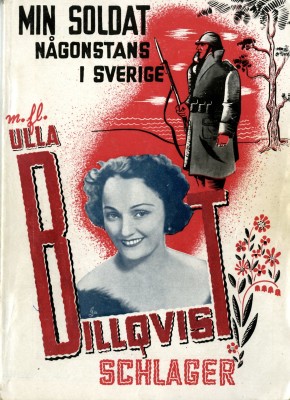
– Translated from the 1940 Swedish Song “Min Soldat” (My Soldier), performed by Ulla Billquist and written by Nils Perne.

8f149e07a918afe3b91b895023d4d377-290x400

Here is the link to the Original Song.

IMG_8595.jpg
Some of the Swedish Troopers and a slightly Converted 38(t) from Plastic Soldier Company

A few weeks back I presented an initial stab at a Swedish Platoon Organisation for the WW2 era (here is a link to the earlier posting) for Chain of Command.  Since then I have been working on some miniatures for the platoon and some of the support options – I will present the work to date in this blog update.  I will leave out the work I have been doing on vehicles (armoured cars and tanks, I think that will be a good one on its own) as I have not yet finished the tank markings/decals – but I am working on it with some help from some friends.

I want to state how grateful I am to the community when doing something like this, the support from all kind of places with encouragement, the research and offers of help.  I even got a fair few of 3D printed models for a Swedish Tank type sent to me by a friend on Twitter.  Good stuff!

Later blog updates will also show/discuss jump-off markers and some terrain features to make the battle field having a touch of Scandinavia – making it look as Scandinavian as a wargames table with Snake rail fencing looks American!

Gardsgard-Vilhelmina.jpg
Here is a clue!

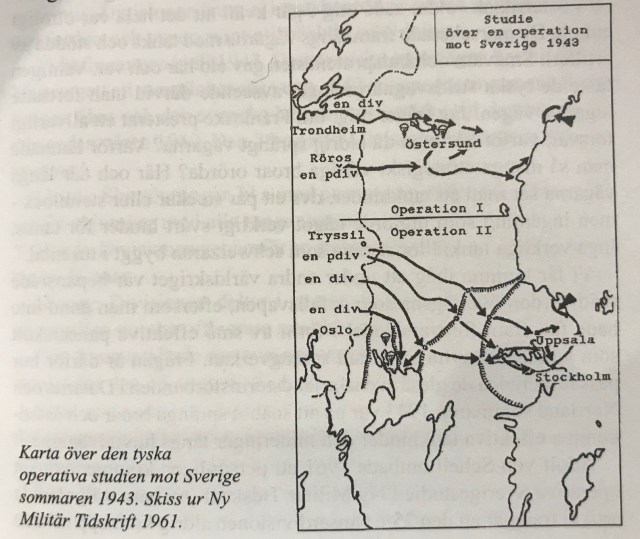
I would like to do an what-if Scenario based on the operational plan developed by the commander of the 25th Panzer Division (link to Wikipedia here), Adolf von Schell, to attack Sweden with a handful of divisions from Norway.  This is described at high level in the book “Andra Världskriget och Sverige (2002)” (that translates to: The Second World War and Sweden) by Jan Linder, and contains the following picture.

img_8631.jpg
The side note states “Map showing the German Operative study against Sweden the Summer 1943”. Sketch from Ny Militar Tidskrift 1961.  The Heading of the Map states “Study of a Operation against Sweden in 1943”.  The Map show airborne attacks and the movements of divisions, the two top arrows for the “Operation II” goes through the County were the Roller of Ones was born – therefore I find this potential scenario interesting.

I have not been able to find any more information on this operation and if you are reading this and know more – please let me know.  It would be fun to do a linked campaign of fighting in some of the areas I know very well from my childhood.

It is interesting to note that the 25th Division was issued with outdated French Tanks and according to the Wikipedia entry above the following was the combat strength in 1943:

..21,000 men and fielded 14 Panzer II tanks, 62 Panzer III, 26 Panzer IV, 40 Hotchkiss H39, 15 Somua S35, and 15 Self-propelled assault guns, such as the StuG III.

It would give a nice opportunity to get some French tanks and do them in German “livery”.  However that is for the future and I have yet some research to do…

The Swedish Platoon Organisation and Models Used

In reading the old manuals there are a few changes required to the original list that are summarised below.  I will update the Platoon document at a later date.

IMG_8610
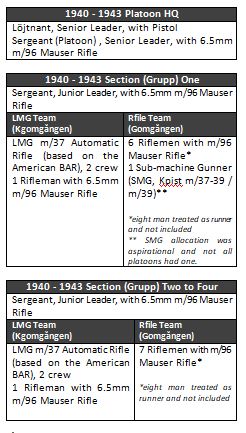
1940 Platoon – More pictures below

Part2_1

(i) Due to allocation of runners, I have reduced the number of Riflemen in each section with one.  I need to verify this so I did 4 extra models just in case!

(ii) The first Section/Grupp had an SMG armed rifleman in the Rifle Team/Gomgången.  However, due to shortages this was not always possible, especially early in the period.

(iii) The manuals indicate the presence of two Teams/Omggångar and that there are situations when they fight as two elements – one K (Kulspruta / Light Machine Gun) and one G (Gevär / Rifle). Therefore I have re-organised the Platoon organisation in the picture to reflect these changes.

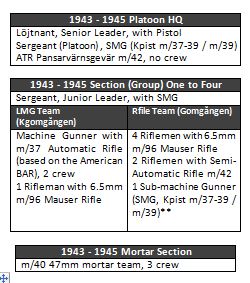
This is still work in progress and may change as I read more stuff. For the 1943 to 1945 Platoon I have made the same changes to the organisation.  Again, this is an aspirational platoon, and as you can see it offers a significant increase of fire Power with 2 SMGs per section and the M/42 Semi-Automatic Rifle, and in addition the Platoon 47mm mortar and the Anti-tank rifle.

IMG_8618
1943 Platoon – More Pictures Below

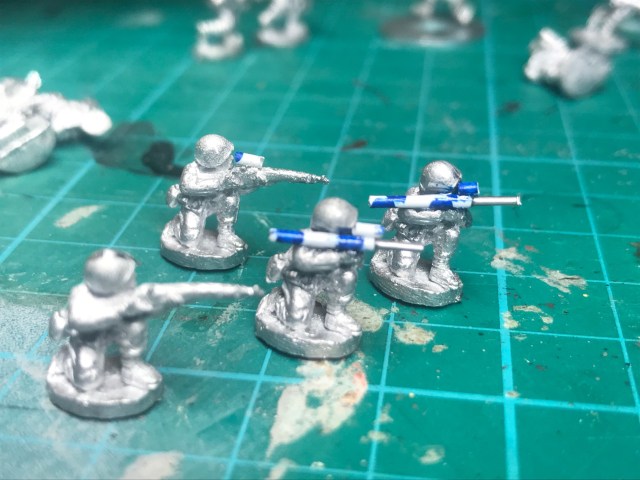
Part2_2I decided to make enough miniatures so that I could field a platoon at any stage of the WW2 period.  Following some discussions on twitter and a few other similar projects the 15mm Italians from Flames of War seemed to be a good match for the m/39 uniform.

This assumes the M/37 helmet and the M/39 uniform, at the time the latest equipment available.  Some units would be equipped  older uniforms and helmets, like the earlier helmet M/26 and older uniforms.

If you are doing this project in 28mm you could use the fantastic Ådalen Range that depicts interwar Swedes, these are just troops that have not had new kit – the range covers all that you need for the early war (limited poses, and there are no SMGs and the Machine Gun is perhaps a bit dated, but I think it would work and if you even use some of the earlier uniforms in the mix you may get a motley crew of ill-prepared 1940 soldiers), more information here (I have not ordered any, but they do look good.  I suggest you contact them first before you make your order – I always do).  

Anyway back to my 15mm project.

I bought the following from Battlefront

  • 1 pack of ISO101 Italian Artillery Group – gives you crew for your guns as well as some SMG armed gentlemen.
  • 2 packs of IT702 Fucilieri Platoon – your bulk infantry
  • 3 packs of ISO131 Italian Fucilieri (Late) – again gives some SMG armed soldiers and some more LMG (for simple conversion)
  • 2 pack of GSO517 7.5cm GebK15 howitzer – for the infantry gun option (more below)
  • 1 No. PL510 37mm wz.36 gun – this is the famous 37mm Bofors Anti-tank gun, used by the Poles, Finns and the Swedens (and others).

I also had some Polish Machine Guns from Batttlefront and bought the WW1 Austrian Machine Gun from Peter Pig.

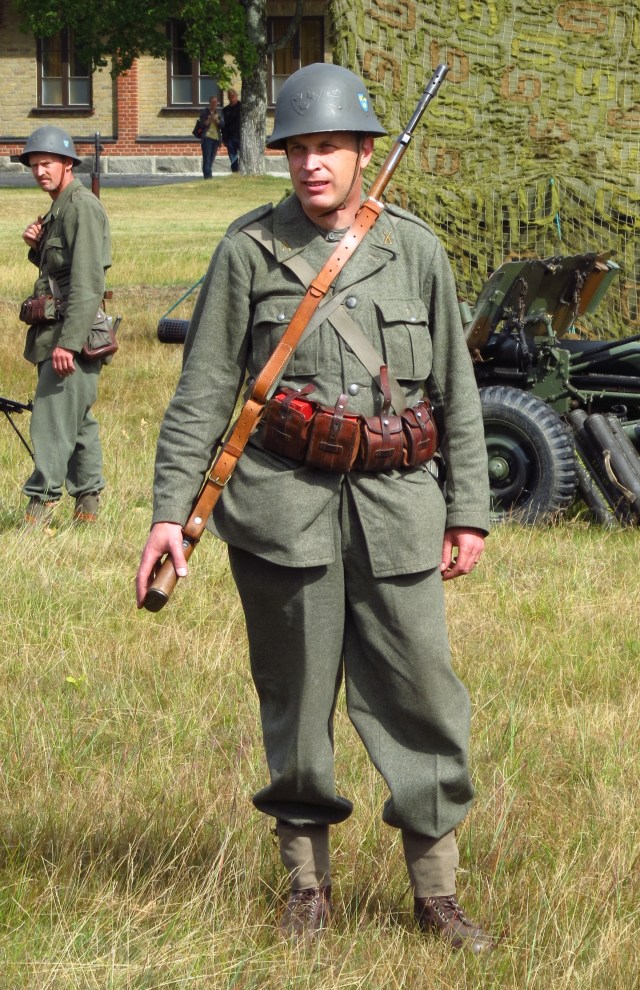
Uniform_m1939_Revinge_2012-1.jpg
This is a picture of an enactor I found on the net, with an older helmet than the M/37.

I used the following paints for these:

  • Jacket and Trousers – Vallejo German Field Grey 70830
  • Helmet – Vallejo 70895 Gunship Green
  • Bread bag – Vallejo 70886 Green Grey
  • Leather / Belt – Vallejo 70875 Beige Brown
  • Water Bottle / Gaiters – Vallejo 70988 Khaki

I tend to use Field Drab, then Medium flesh tone for skin, saddle brown for the rifle buts.

I put a wash of army paint quick shade on top – soft tone.

The Swedish 1940 – 1943 Platoon

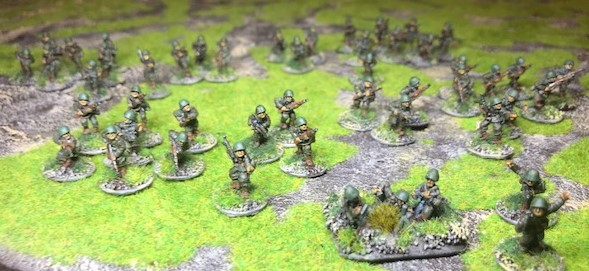
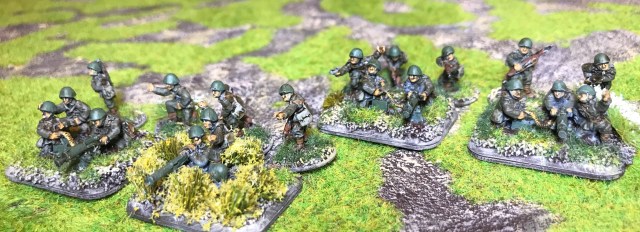
IMG_8610
The full platoon with the Platoon HQ and the 4 Sections
IMG_8605
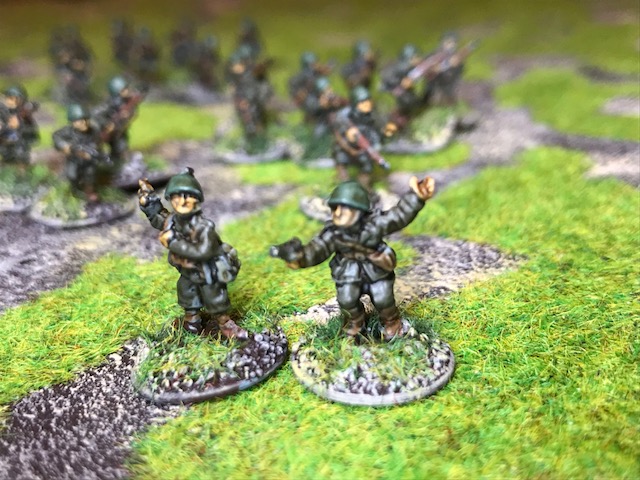
Platoon HQ
IMG_8606
1st Section (with the SMG, he is the kneeling Soldier in the middle of the left team, from the Artillery Group Pack)


IMG_8607
2nd Section


IMG_8608
3rd Section


IMG_8609
4th Section

The Swedish 1943 to 1945 Platoon

This is the same models as above but with some swaps and the Mortar Section.

IMG_8618
The Platoon with the HQ, Mortar Section and 4 Rifle Sections
IMG_8611
Platoon HQ – note the Platoon Sergeant now has a Submachinegun.
IMG_8612
1st Section – As before but now Sergeant also has a Submachinegun. Note that two of the Rifel


IMG_8613
2nd Section – as the 1st Section


IMG_8614
3rd Section – as the 1st Section


IMG_8615
4th Section – as the 1st Section


IMG_8616
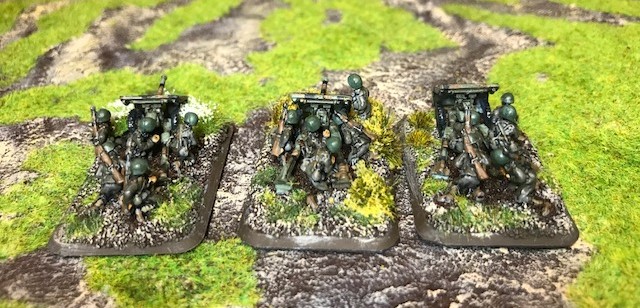
Mortar Section – built from a casualty Polish miniature and 2 Polish anti-tank crew from the 37mm AT Pack.


IMG_8617
The 47mm Mortar again!
IMG_8345.jpg
Before paining – mortar built using a paper clip and a thin spaghetti!

In addition there is an anti-tank Rifle for the Platoon, I made two of these conversions.

IMG_8621

The are based on a kneeling rifleman and I did the simplified rifle from some plastic coated paper clips, it shows better in the picture below.

IMG_8319
It also shows the simple Snipe Conversion.

Some support options

IMG_8620
A Sniper
IMG_8622
Three blokes on a base, the Engineering Team for now. Will do some conversions at some point from Peter Pig Engineers.
IMG_8625
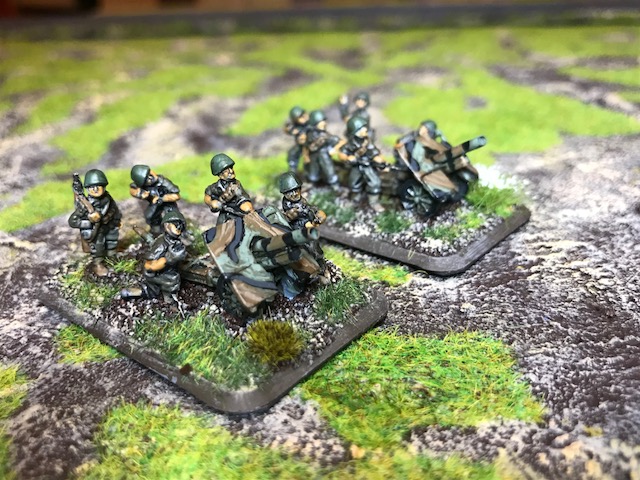
Bofors 37mm Anti- Tank Guns, mix of the Italian and Polish Crew to create these dynamic bases! Perhaps they were not Camouflage painted, but his is a little bit of a what-if so I may perhaps be forgiven.
IMG_8626
Same as above
IMG_8627
Same as above

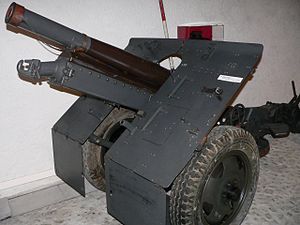
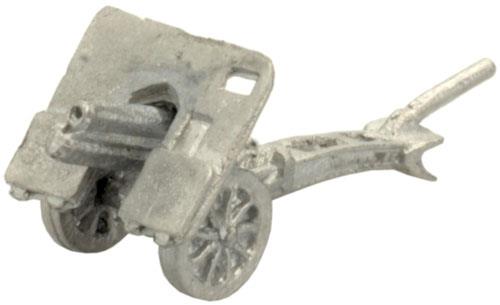
The next one was a little bit trickier, but once I found a reasonable proxy the conversion was simple, using some very thin cocktail straws I bought may years ago. I wanted to mode the Bofors 75 mm Model 1934 Mountain Gun.

It looks like this,

IMG_7644

Battlefront makes the GSO517 7.5cm GebK15 howitzer, it looks like this.

IMG_7645

I hope this sequence is self explanatory

IMG_8630
Again, using the models from the Artillery Group Pack!

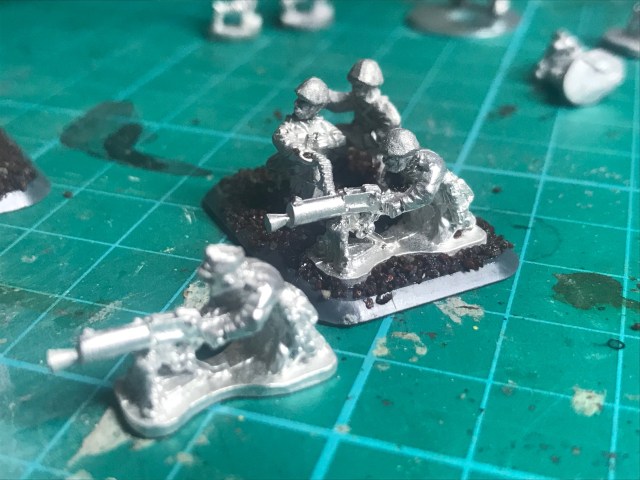
And finally some Machine Guns, one using an old Polish MMG set and the other head swapped Austrian WW1 MMGs from Peter Pig.

IMG_8322.jpg

img_8624.jpg

I am really enjoying this project, it is not a Labour of Love, just Love
IMG_8628

/ Hope it was of some interest!

Swedish Rifle Platoon in WW2 for Chain of Command – the bare bones

NOTE the file contained in this post have been updated in a later post – link here.

This is a holding blog post for yet another diversion and show the bare bones for playing a Swedish Platoon in WW2 using Chain of Command (or any other Platoon based WW2 rules).  It is a work in progress but as there is some recent interest on Twitter for this I decided to do write-up to get us started  in doing some men and machines for the table top.  This will be fleshed out with further blog updates moving forward, including:

  • National characteristics to be added to the platoon list – see notes below on this process. 
  • Suggested ‘what-if’ scenarios for using the Swedes – potential German invasion in 1940 or 1943, the Swedish Army fighting the Soviets in Finland (early or late war, in an official capacity), an Allied attack in Northern Sweden on the iron ore mines, etc.
  • Modelling the Swedes – a note on what models can be used for Proxy Swedes and Equipment. In general Italians, polish and Japanese can all be used in some form or another for this purpose.  There is some great inspiration out there as some people have already done some spectacular projects and others are in process.
  • Some more detailed presentation on Swedish weapons and vehicles available during the war years.
  • Vilken Stridsvagnsfanjunker! – a What a Tanker list for the Swedish bidding panzer ace – even more done just for fun.

Before I forget a big thank you to the ‘Swedes’ on twitter (you know who you are) who has helped this along.  

This post seek to present a typical Swedish Rifle Platoon that you can use during the war years for some “what-if scenarios”.  I have organised this in the way Too Fat Lardies does their platoons for Chain of Command – however, you should be able to transform this to whatever rules you are using.  As for support options I have gone full in and based it on what was available at various times.  Some of the options may not be logical from a geographical location, but I have left it for you to have some fun – it is a what-if situation anyway.  If you do specific historical scenarios you may have to do some research on where different regiments were stationed (e.g. for armoured units) and modify your support options accordingly.

On the Too Fat Lardies webpage there is an article about designing platoon lists for Chain of Command and so far we have achieved the first two steps required (the organisation and the support), but I have not yet developed national characteristics for the platoon.

“Finally we need to look at national characteristics. This is a more time consuming process as it involves significant research into the way that the troops were trained and fought. Only with this research can we allocate characteristics to our forces which are based on the way they actually fought, rather then on some rather dodgy stereotypes.”

From the Too Fat Lardies webpage (here)

I mentioned in an earlier blog update that Too Fat Lardies have their new Blitzkrieg supplement on pre-order (link here).  Have a look at the large amount of platoon lists available and the statement the manuals that the armies of the period issued to their troops.  The French Tableau d’Effectifs de Guerre, the German KsTN lists, the Dutch Handboek vor den Soldat and Officier series and many others issued throughout the 1930s and up to 1940.  These manuals tell us not just how troops were organised, but how their training prepared them for war and their doctrines.”  Hard work has gone in to that supplement and if you are interested in gaming the early war give it a go.

So given this and to get a better understanding of the Swedish Platoon, I have ordered some old Swedish manuals and books from the 1930s and 1940s, that I hope will give me some further insights to develop some characteristics and a note on tactical doctrine.  I want to avoid doing some national characteristics like “The Spirit of Gustavus Adolphus” or the “Tactical Brilliance of Charles XII”, in lieu of reading through these – but they are yet to arrive and then it is a matter of finding the time to review them.
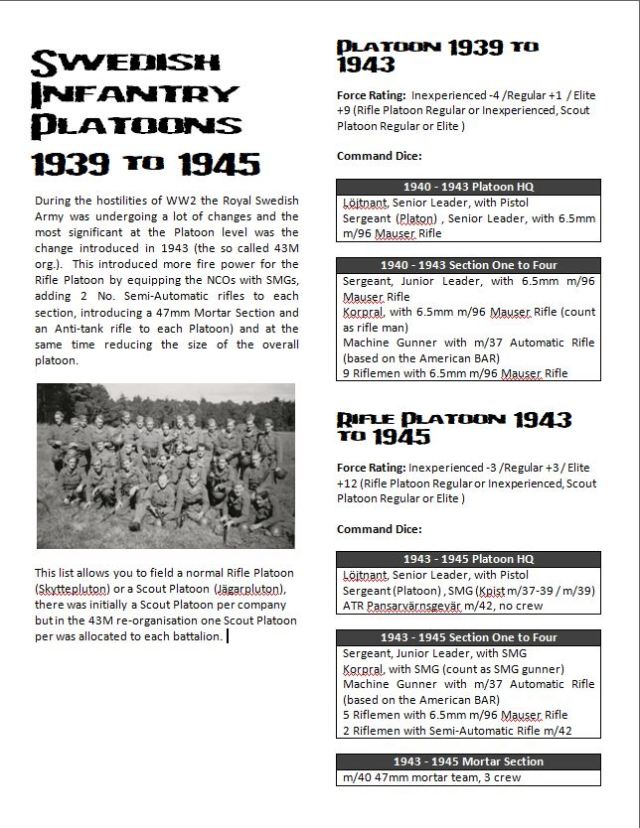
Anyway, I have a word file and the pdf file for download here, that you may use as you wish.  These are version 2 of this list as I will update the list and will make further versions available on this page.  Please, if you do have any corrections or views let me know. As indicated, I am interested in how these men would have fought as a unit.  The infantry tactica available on the Too Fat Lardies webpage here is an example of what would be ideal to have in a Swedish context – that is our target.
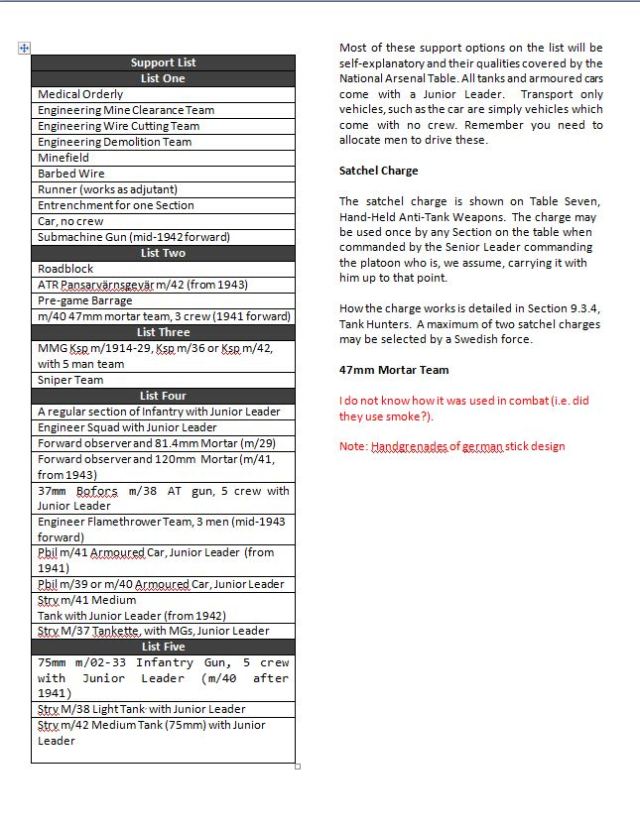
PDF Swedish Infantry Platoon v2

Word Document Swedish Infantry Platoon v2

The Platoon is also presented below

/ Hope that was of some interest

Swepla1Swepla2Swepla3