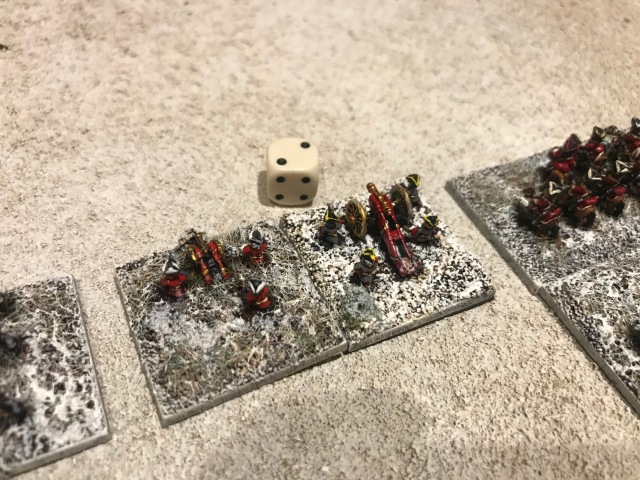
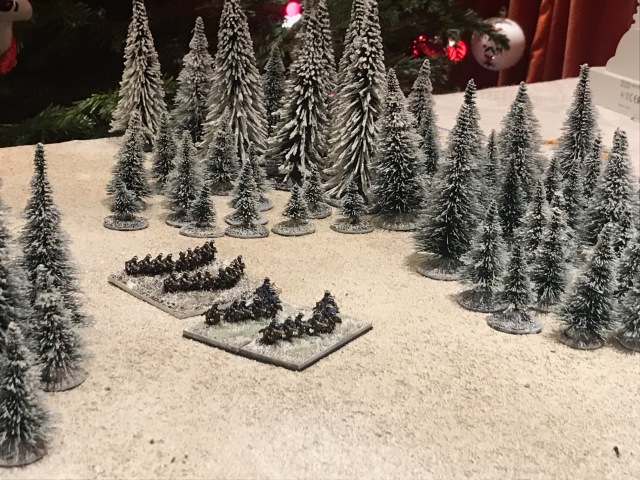
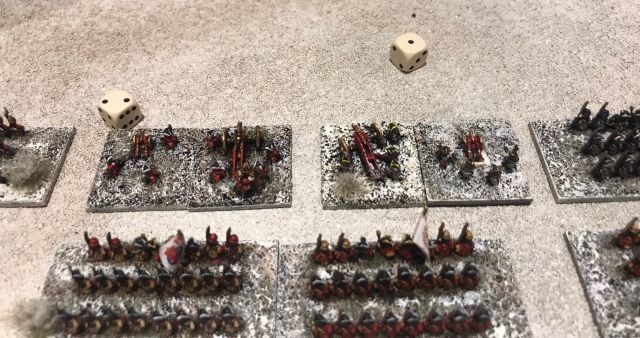
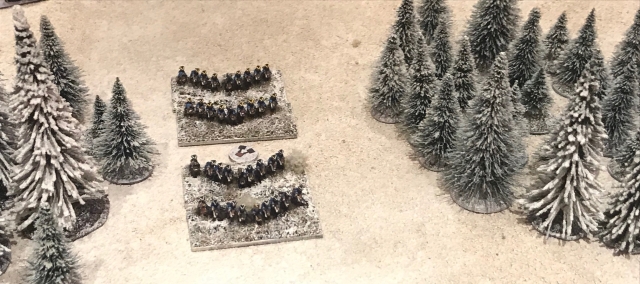
On Saturday the Little One and I had a real treat as we were invited to Mike Whittaker’s Mill Studios (@TaTM_blog on twitter) to play the eminent Omaha Beach game that we had missed to play at Salute this year (see link here). The Little One, Andy (who built the terrain but never played the scenario) and I played the American Side, we were being skillfully empired by Mike who also played the Germans. We
The scenario is from the excellent IABSM scenario book called “Where have you been boys” and can be bought from the Too Fat Lardies website here.
21 Scenarios for £7.80 – that is a good deal! Whether you are using IABSM or not it is an excellent source and contains a lot of varied scenarios.
This is scenario Six and in the book and promises “The game will be nasty, bloody and gritty, it shouldn’t be anything else”. It takes place at the eastern end of Omaha beach (Colleville-Sur-Mer) and involves the US 1st Infantry Division – the Big Red One. This is very much the scenes from Saving Private Ryan stuff. The scenario shows the difficulties on the day and for this kind of operation in general. The Germans have relative little Firepower but are in very good protected position whilst the Americans are mainly in the open up to the shingles of the beach, then protected by the cliffs before having to be in the open again trying to get through the wires and mine fields.
The US forces, just like on the day come in waves, and basically first wave took a lot of damage, so did the second but managed to clear some wires and take out some of the nests form a distance, then the final and third wave started to turn the balance. It was a different wargame in that most of the time, from our American side, was spent hoping that the next barrage of artillery, HE guns, sniper fire and MG would not wipe the whole section out and that some of the men who survive and get to the shingles and momentarily be safe. The two Sherman tanks who had made it to the beach did provide some initial fire power but they were soon taken out. It was very sobering and certainly kept to the promise in the scenario book, as it was indeed “nasty, bloody and gritty” and leaves you with a lot of reflection on the terrors facing the men on that day. We had to leave just as the third wave had arrived, but at this time it looked like the first part of the job was done, at least on the side of the beach I was not responsible for (luckily Andy and the Little One had cleared a lot of wire on their side of the board).
Mike had added a few features like General Norman “Dutch” Cota, coming as part of the second wave, who was useful in rallying and getting some moving on where needed and also Robert Capa who took some iconic photos.
The Famous Capa PhotoThe one take during the game (actually when leaving rather than arriving) – taken by Mike
A few other memorable moments was the first shot from the Sherman leading to one of the guns in the bunker getting out of action and the off–table German 88 being taken out by some Royal Navy guns very early. In addition the effect of artillery and the way it works is really effectful and realistic (as is the use of HE weapons) leading to units becoming pinned and stopped in their tracks – not based on casualties in itself – I really like this (keeping your head down). Some of my units arrived without leaders and it was difficult to get these men up to beach to do their job – the unit with the leaders fared better but I was let down by some bad dice rolling (rolling ones, who would have believed that!).
What follows are a lot of pictures from the day. I believe that Mike will be doing a write up of his thoughts from having played the scenario a number of times in the upcoming Lard Magazine that will be out later in the year.
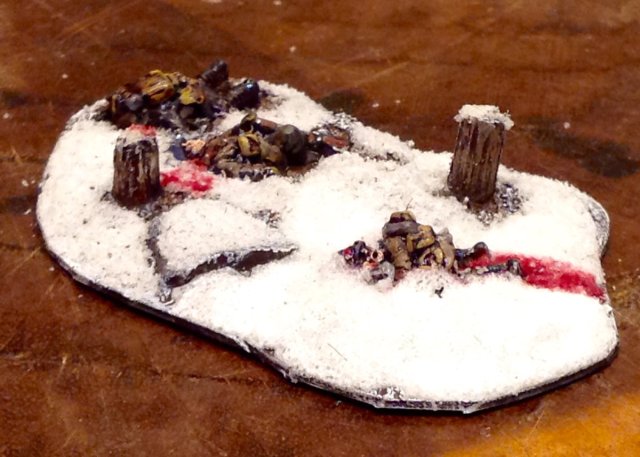
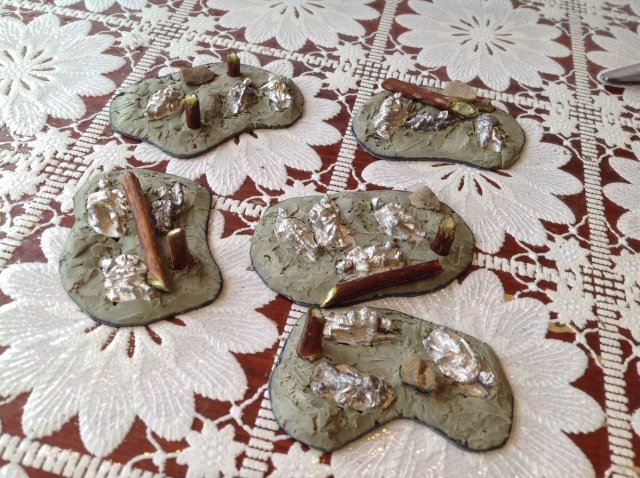
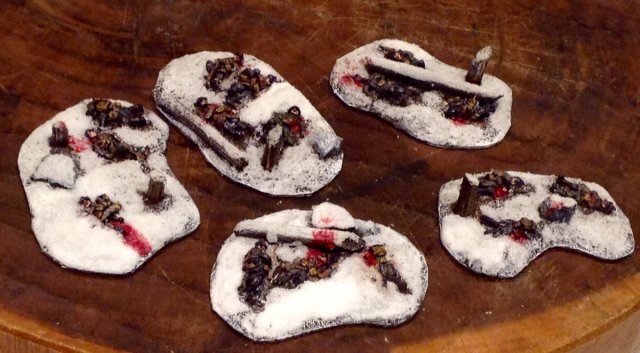
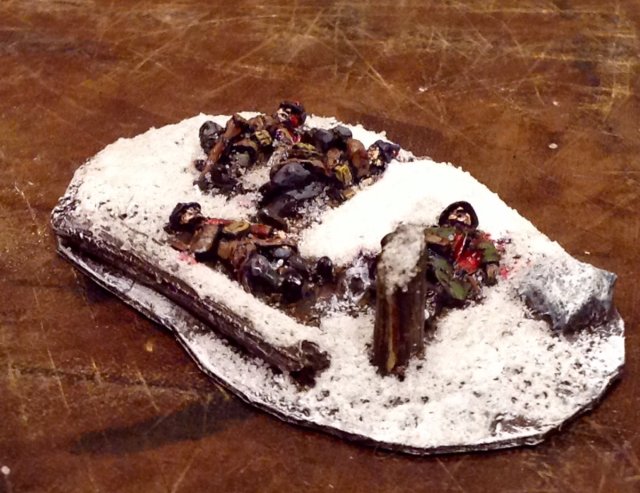
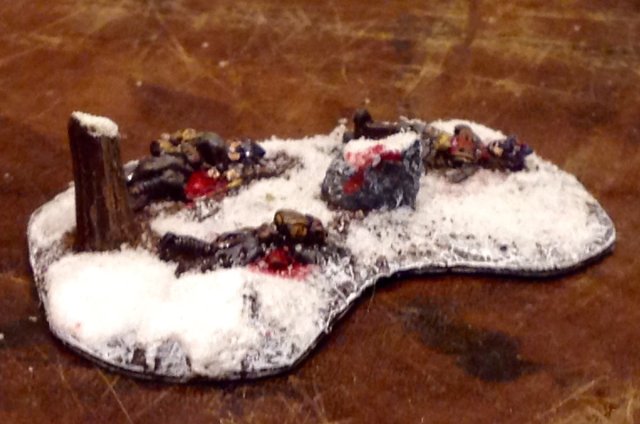
All the miniatures were from Battlefront!, except for a few Peter Pig casualty markers.
As for the Little One and I? I think we both would be tempted to do something similar perhaps in 6mm?, one day!
It was a great day indeed, thanks for having us Mike.
Prepping with Chocolate and an OspreyPreparation is everythingThe calm before the storm, just a few engineers on the beach.Initial rolls for what is coming and a where? – will the boats come with medic of big men, will they arrive in time and will they have taken casualties and in which sector will they arrive?Two tanks had made it to the beach!Mike had a very effective and clever management system for getting the waves organisedFirst boats incoming, one taking damage.First shot of the Game a Sherman knocking out one of the Bunker guns.
One of the first wave boats deploysRobert Capa being onboard
One of the Shermans quickly gets take out of actionMore boats arrive
Movements then starts up the beach – slow and deadly!
The Germans have easy targetsIt is a long way to go
Some of the teams manage to get to the shingles relatively early – safety can be found here for a while.
Engineers getting up the slopes trying to get rid of the WiresMike doing some Capa shots!
General Cota is inspiring the men but a lot of kills and pins are being delivered by the German continuous firing!
Build up on the beach!
Artillery was scaring and kept pinning and draining men!They are not having rest Corporal!
Some early wires being dealt with!
Guess who!
Constantly pinned down – it was difficult to get forward.
A bazooka team is getting closer with the objective of taking out the other bunker with the Gun (eventually they would be successful).
At this point we had to leave, we had been playing from around 10am to 6pm, with a break for Lunch. Finally we had broken through the wire in Section 3 and the third way were just starting to come in.
This weekend I and the Little One tried out a version of the Men who would be Kings rules by Dan Mersey, we played the Skirmish version (kind of, we actually played it like we had 12 figures per unit although we only used 6 models, but we needed two figures worth in terms of damage to remove a model) with some borrowed items from the FOCH WW1 rules adaptation that you can download from Wargames Illustrated here (covering Tanks, anti-tank guns and squad LMGs). We call it the Mutants who would be Emperors – as it is set in the weird world that is my take on the Mutant universe as presented in the Swedish Rpg from the 1980s (your Mutant may vary, more here).
Basically following a deadly and incurable epidemic caused by samples from a mission to Mars the human civilization collapses. The survivors build enclaves and start experimentation on humans and animals, in effect creating mutants, to see how they will survive outside the enclaves. However conflicts arises between the enclaves and it leads to a nuclear war sealing the fate of the world. Fast forward a few hundred years and the from the ashes new civilizations start to emerge with mutated humans and animals, some “pure” humans and even some mutants with mental powers. There are remnants of the old worlds scattered all around, and some androids/robots from the old days are still around. In addition there are certain areas where the effect of radiation has left some strange effects on the flora and fauna and these areas are called “Forbidden Zones”. The game is set in Scandinavia, but not as we know it today, and the general level of new technology is equivalent to that of the early 19th Century, give or take. There are steam engines, muskets and some emerging rifle like weapons, heliogram for communication, etc. Some of the old technology has survived but is rare.
In short anything goes, it is a world that has started to re-build itself with a technology level of about 18th century give and take but there are some old tech weapons floating around – this is represented by the three different level of firearms in the rules (antiquated rifles, rifled muskets, bolt action rifle, basically differing in terms of range. We may review this moving forward and consider some reloading rules), basically giving each model using one of these a 2d6 (as we are using 6 per unit) in terms of rolling for damage. For other weapons (automatic weapons, lasers, etc) we assume them having a damage of 5d6 (each LMG costs 1 point) – this gave some units we used a very high fire power rating – being difficult to take down but not impossible for a unit prepared to charge in and fight hand-to-hand. We also used a tank and anti-tank gun in line with the FUCH rules.
The scenario was a straightforward fight between two border detachments, one from the large Pyri-Commonwealth and the other from the small but proud Jemtland north of the Pyri-Commonwealth, during the short but eventful Yran Hostilities that almost led to an outright war in the year 96 (or 2550 if you still count in AD).
The Pyri-Commonwealth side has stopped to re-supply at a depot that is well stocked with water and other essentials, very close to the entrance to a small forbidden zone in the Hamra region in the northern part of the Pyri-Commonwealth. The depot is run by the Nicholas von Rijn trading company and a good deal has been made, a few drinks have been had and there are rumours that Furir Dozibugger has had a few too many already (Typical for the Pertorian Guard – elite status in what?, drinking and hazard gaming). There has been reports about some mutated monsters in the area – a walking murder tree and a giant beetle – both are very aggressive towards humans and extremely dangerous. There is enough firepower in the detachment to take them down but invariably a few men or women would have to put their lives on the line in case of an encounter – and they do not fight with caution. Suddenly the Rifle units comes back running, they report movements on the other side of the old ruins – “It is those damn Jemts again. Prepare for engagement…. to arms, man the tank and attack!”.
These are the units we used for this battle:
The Pyri Commonwealth Detachment
Skyttesoldater of the Nordholmia Battalion (Models from Perry Miniatures, Swedish Napoleonic firing line with command with some conversions, link here)Skyttesoldater of the Nordholmia Battalion (Models from Perry Miniatures, Swedish Napoleonic firing line with command with some conversions, link here)Skyttesoldater of the Nordholmia Battalion (Models from Perry Miniatures, Swedish Napoleonic firing line with command with some conversions, link here)Pyri Riflemen with a LMG per section (Warlords 95th Rifles with conversion, link here, and female officer of unknown origin bought on Ebay).Pyri Riflemen with a LMG per section (Warlords 95th Rifles with conversion, link above, and female riflewoman of unknown origin bought on Ebay).The sharpshooting Pertorian Guards – armed with Repeater Berry Rifles. Only flaw is the section commanders habit of being drunk (models from Ironclad Miniatures with a conversion, link here)A tank – this is an experimental model with a steam engine and armed with a machine gun. There are only two things that can cause it any major harm the AT rifle carried by the Cocks or the strong jaws of the Giant Beetle. Tank from Ironclad miniatures (link here)
The Jemtland Detachment
Fusiliers of the Skogsmulle Battalion (ACW Perry Plastics with some conversions, link here)Fusiliers of the Skogsmulle Battalion (again, ACW Perry Plastics with some conversions)Bullet Spitter (Kulspottare, Gatling Gun unknown make, with crew being made from Perry ACW plastics)Free-shooters of the Skogsmulle Battalion (conversions from Perry ACW units)Free-shooters of the Skogsmulle Battalion (conversions from Perry ACW units)Doodle’s Cocks (mercenary unit) – models from Interloper Miniatures (link here)
And of course the wandering monsters, they will attack anything moving within 6 inches and anything firing at them with a movement of 6″+1d6, attacks at 4+ and will deliver 12d6 worth of damage as well as taking 12 points of damage (both counting as being in light cover due to protective bark and scale). The murder tree is from Fenris Games (a dark young of Shub-Niggurath – link here) and the Giant Beetle a plastic toy (made in China) that I was gifted by Michael Leck.
What follows in not a AAR but a set of pictures from the fighting, with some comments, as we were mostly using this to try out the rules – we had a blast playing and the craziness of it all really adds to the fun! What made it even better was that the Little One had done most of the planning and I just had to, more or less, sit down and play. We plan to run the game again and perhaps we will do a better narrative of the battle then.
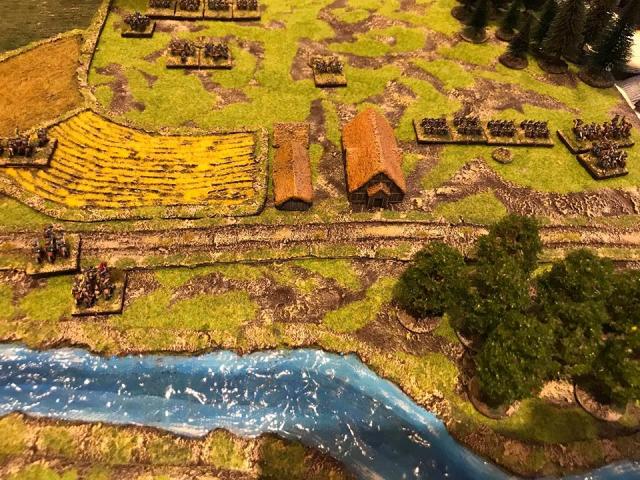
The men of the Pyri-Commonwealth ready for Action!The set-up the Jems coming in from the right and the Pyris on the left with the trading station and the water tanks. The Giant Beetle ended up in the middle of the table and the Murder tree in the top of the picture next to the old truck and the ruin.About there..The Jemts are advancing!Tank Gliding in to action with the intention to put itself on the road and put down some fire down the road. First getting rid of the Giant Beetle.Following some really bad dice the Beetle just got angry and went for the tank, starting to damage the hull with its strong jaws. The Machine Gun firing another burst and jammed, it would be up to the muskets to do finish the job.Meanwhile a steady advance on the other side of the tableSome good shooting later from the men of the Pyri-Commonwealth and the Beetle flipped over dead. But the tank had sustained substantial damage from the beetle.The other group of Pyri Rifles set to take out the Mercenary Squad…behind the cars
A skirmishing action trying to take a few of the Cocks out!Only one Cock lost and the retaliatory fire with a team full of machine guns took the rifle team down from 6 to 1 – game over.Overview…The Cocks are waiting to take out the tank and anyone else coming into their view!The Pertorian Guard were slow to get going as the had started drinking early that day.The tank with an unjammed MG moved over the dead Beetle (made in China).Pyris finest managed to press on but managed to irritate the murder tree.
Another bad firing from the Tank’s MG and it jammed again.Some fine shooting by the remaining rifles and the Murder tree went down after a few exchanges.House to house fighting! I have to agree it looked really weird with all these different uniforms and the setting – absolutely loved it.The Cocks maneuvering around to take out the tank (like if it was a threat anyway)Hey mate stop waving the flag – they will know we are here!This is also the moment when the Cocks used their Anti-tank ability and knock-out the tank (it had already taken some damage and just needed a small push to go useless) – we could not find any of the smoke markers so I let you use your imagination.Nothing more retro than Wimpy! Uber Delivery – the boys are gaming!It became a dragged out firefight!
…until only one Pyri group were left standing and pushed back into the ruins!….THE END – the last firefight before all the Pyri-Commonwealth gave up!Some more pictures the Little One took before we tidied it all up!
Absolute blast. It is funny that I am playing a game with my son being the same age I was when I first adventured in this world 35 years ago. / hope that was of some interest!
[The Little One has written the blog today… I will write a little bit more next week from my perspective, but enough of me…]
I asked my Papa (that is what I call my Dad) if I could write the blog post today as we both went to the Show. I played two games at Salute. I could have played more but some were demonstration games whilst other were crowded when we went there and Papa tended to stop and talk to all kind of people that he knows. We did not maximise the playing time very well – but we both did have a good time and I know he likes to talk. I wanted to play the Omaha Beach game but it was full every time we went there – it looked really good [ed: this was the Omaha Beach game put on by Peterborough Wargames Club]. I will write about the two games I did play in more detail below, but first a few general things.
Omaha Beach by the Peterborough Wargames Club – it looked really nice.
I did like
I really enjoyed the show, there is a lot to do and buy;
I got myself 3 Tiger tanks in 15mm from Peter Pig and they gave me a bonus miniature (thanks!) and I also got the Osprey Book about the Tiger I. We also bought a target lock laser line each – this will help us when we determine whether something is in an arc of fire or not. It avoids arguments, I tend to be more rules strict than my opposition (like Papa). I always see Peter Pig at shows and Papa has a lot of their WW2 stuff – I think he has the world record. I also got some dice, but they were not very exciting.
Everyone was friendly to me and answered all my questions really well;
There is a lot of different games at this show, I really like historical games but you could also play fantasy and science fiction (I was looking for someone playing Star Wars Legion but I could not find any, we play it at home so I was not too sad about it). Some games are more like street fights but there are a lot of very big battles as well;
We went to the venue using the Cable Car – it is very exciting, and
They always have some cool people with costumes at the show, like Star Wars and 40k. This year they had a Spartan from the HALO universe too.
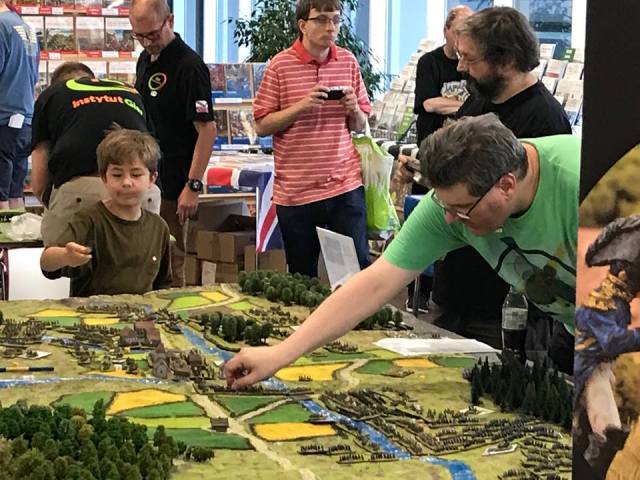
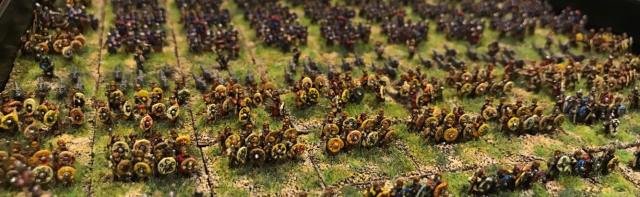
I took this picture from the Cable Car, you can see the big Excel centre in the background just behind the big boat, that is where Salute takes place every year.Peter Pig doing a Pirate Game, it looked really funny!There was even a game using Lego models, that is really cool.Romans fighting Celts – very exciting. I am currently reading a lot of books about the Roman army, you should too it is really interesting.Spartan Soldier
I did not like
I was looking for some of the latest Star Wars Legion releases but the traders were only selling older stuff from the range – things I already have.
I am not used to walking around that much and should have taken better shoes.
The Battle of The Little Big Horn 1876 – The Wargamer Collection Calculator
The first game I played was the Battle of Little Big Horn, it was fought in 1876. It was a battle between 650 soldiers of the US 7th Cavalry regiment under the command of Lt Colonel Custer against Allied Native American tribes led by Sitting Bull. It was fought over land that had been given to the Native Americans but the Government wanted to take it back because they found gold in the region.
The game was cleverly designed and was played on four different boards, each linking to the other boards and events were interconnected. First I played as the Indians but later I took the role of Custer himself, and my strategy was to get into the Indian village and take the women, elders and children hostage. However I found this challenging, first I attacked when I thought the Warriors had gone off hunting but they were still around, second I had left my Gatling guns behind. During the game, I found myself facing three different enemy leaders (one being commanded by my Dad) but managed to fight bravely and get into the actual village, but unfortunately I had lost my bonus (as my leader – Custer had taken injuries) and had nothing to counter the Native Americans – ensuring my defeat. I did put up a brave fight and when I talked to Peter who was one of the organisers at the end he said that I was the closest to Victory on that day. I do not like losing and felt annoyed at first, but I realised that as a consequence the children and the women would be safe – so that is a good thing.
It was a really good game, and I really recommend it if you see it on another show. It is being run by the Wargamer Collection Calculator – you can find a link to them here. I heard that they won best Participation Game on the day – I think they deserved it. I hope I can play it again at Joy of Six in July as I will be going there this year [ed: as if you had any choice mate!]. I am getting the book about the Battle by Philbrick.
Here is the first of the four areas that was part of the game, the small board is the Native American Village and the big board is where Custer fought. In reality he died on top of the Hill in the Middle. The wooded arrows show how the board links with the other boards.Here are the other two boards that form part of the overall Battle.
Space Vixens from Mars – “Meine Ehre heiβt Treue”, The Road to Castle Itter May 1945
The second game was interesting too and was about a situation at the end of WW2 where a German Army Major and an American Lieutenant joined forces to save French prisoners in the Austrian Alps. These prisoners were being guarded by loyal SS Soldiers at Castle Itter, determined to ensure that the prisoners are terminated.
The Book that inspired the game – The Last Battle with Stephen Harding. I ordered it today as I found it really interesting.
In the game I played the German major and his two squads of the finest German Army Soldiers. We had to convince the SS checkpoints at two stages to successfully enable us to get behind the PAK 40 AT Gun and the Tiger Tank the SS soldiers were equipped with. This would allow me to conduct a surprise attack whilst the American approached the SS position with his Sherman tanks. Once the Shermans were spotted, they concentrated their fire on the Tiger and managed to disable it. I overwhelmed the gun crew and put some of my men to operate it and managed to use it to destroy some enemy positions. The American commander did his job well and finished off the remaining opposition. As a results we managed to free the prisoners. All-in-all another great game indeed. They were using the SFD rules. Really nice people (Phil, Gary and Steve) and they have a webpage too (link here) [Ed: and thanks to Josh Shuck who played the American Commander].
The Germans approaching the SS position – the Major in his Kubelwagen and his men in the American lorries behind. This requires nerves of Steel.The German Major is bluffing his way through as the Sherman Tank sneaks closer at the far end of the table, getting ready for the knock-out shot on the Tiger. Then all went according to plan.
/ Hope that was of some interest, Great Show and Great day. Thanks to the organisers and all the people who put on nice games and shared the hobby with me!
The last blog post was 28 days ago, that is the longest gap I have had since I started this blog in 2016 – my objective was to do a blog post every week or so. I am slowly working away on a few hobby things but work and some personal issues has lead to some difficulties to find some time to write stuff down – I still do some Twitter binges as I find it a fantastic forum for miniatures and wargaming – it is friendly and inspirational.
However here is a condensed catch-up blog of what hobby related activities I undertook during February 2019 – I hope it will suffice!
Roll a One blog 10th February – Star Wars Legion, first two Games
We Spent this week preparing and playing Star Wars what a Legion it was fantastic fun. We had a go at the learning scenario and then we did a more involved scenario with some objective in a little desert village. I lost both of the battles… here are some pictures.
The Little One gave me a new nick name – Roll a Blank! However overall we had a blast and have played a few more time since. Fun game and thumbs up from the Little One.
Roll a One blog 17th February – Some more Legion Building
A relatively calm week, we got a MDF piece for the Legion Desert terrain. Following some preparation we think it blends in nicely with the other terrain although it is made from MDF.
Good value at about a tenner, and gives some options for fighting on the roof.
Roll a One blog 25th February – Mapping it all Up, Bad Elephant Joke, Painting the Monastery/Cloister
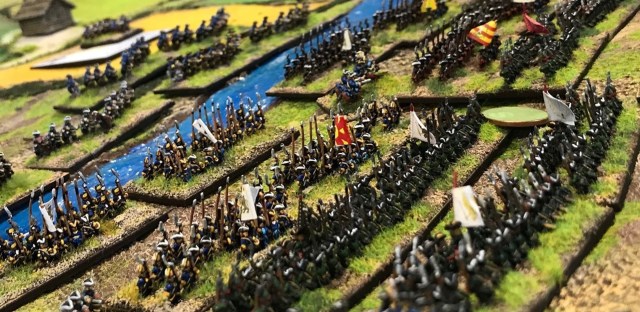
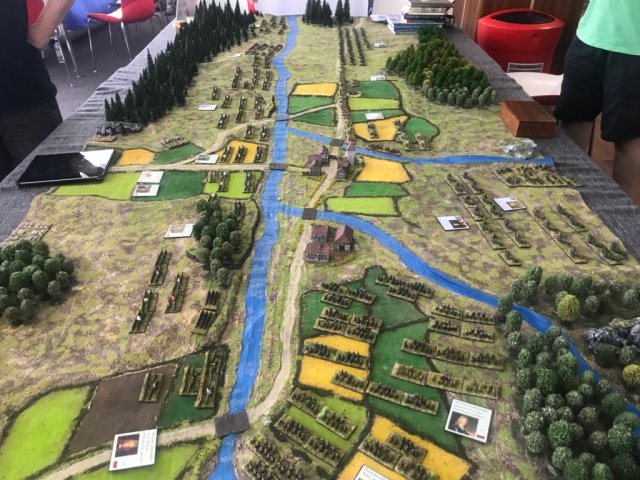
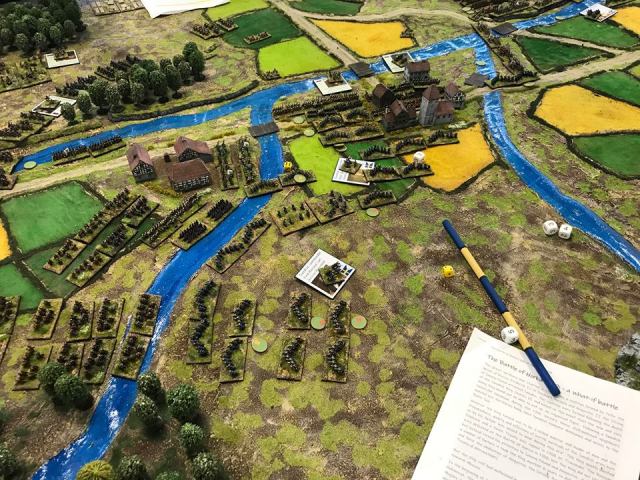
I pulled the famous finger out of that infamous place and have now started with this years Joy of Six project for real – Poltava 1709. The Battlefield will be 16 by 5 feet and I did a rough map on how it will look in the end and have started planning the various key terrain elements (All miniature 6mm Baccus).
Some of the key features on the left hand side are seen below, the Swedish Camp, Poltava with Siege lines, although I think they actually were on the left of Poltava in this picture. We can also see the Monastery, the Swedish Camp and some of the Russian Redoubts.
Here is the Monastery made from models from Total Battle Miniatures. I think it will do the trick it will be place on a hill with trees.
I have also got myself a whole camping worth of tents to do the Swedish Camp with a design based on how a battalion camped during the era (with the latrines to the left).
I even found a guy in the Baccus camp pack who looked just perfect to convert to a man having a dump in the latrine area – he looks very peaceful and reflective, perhaps he was unwell on the day and could not be with the army (lucky guy!).
Roll a One blog 3rd March – Russian Redoubts
The Russian redoubts are another of the key components of the Poltava Battlefield, here are my take on them (note due to ground scale vs figure scale these had to be relatively small). I have just got the miniatures so only did a few for test purposes.
I first made some using clay but whilst in a Wickes (UK DIY shop) on another mission I noticed that the were selling Pine Glass Bead Moulding (basically strips of wood) that had a very interesting profile (see below, they are product code 121231 at Wickes and comes in lengths of 2.4 meters – plenty for my current needs).
That was all, I think I am all up to date now, until next roll Ones!
I have finally finished my France 1940 15mm Platoons I have been working on. I intend to use these with the excellent Too Fat Lardies France 1940 supplement I bought some time ago (link here). I have talked about the book before and it is a fantastic resource for any Platoon based WW2 Gaming. Here they are, I used Skytrex (link here) and Peter Pig (link here) miniatures.
I bought the Little One a copy of the Airfix Battle game for us to try out over Christmas and we took it with us to the holidays in Sweden. He rather likes it and I thought why not ask him to write a short review/reflection of the game I have added it at the end of this blog post.
British 1940 Regulation Platoon (Skytrex and Peter Pig)
Platoon Structure with support (note that I made prone Bren Gunner Teams as well as walking, with the same for Boyes Anti-tank team and the 2″ inch mortar team).I think these relatively old Skytrex Models are just fine.I did base them eventually – part of Machine Gun Team and a 2pdr AT Gun (these are Peter Pig)Peter Pig Anti-Tank Rifle Teams2″ mortar teamsA British Squad (All Skytrex apart from the Bren Gunner from Peter Pig) on the left and the Platoon Sgt and the Lt on the right (both from Peter Pig)
German First Wave Platoon (Peter Pig)
Some regulars and a SniperInfantry GunPlatoon Structure with SupportsBased up Squad on the Left and Platoon HQ on the left
Mortar and Anti-tank Rifle TeamsNice weekend of basing
Airfix Battles – A review by the Little One
I find Airfix Battles a good game because everything you need sits in a small box – flat miniature soldiers, tanks and guns. The rules are simple to understand for a 10-year old wargamer. However I have played a lot of games before so maybe they are a little bit more difficult for you. There a paper sheets that are used to play on and some terrain features you place on the mat. These are ruins, hedges and difficult ground. It takes on some things that I like with WW2, such as Tigers, Bazookas and Pak-40 guns. However, it is a little bit unrealistic as you can shoot in a curved trajectory (kind of) and mortars and artillery do not seem very powerful – I read in a book that artillery was the biggest cause of death in WW2. Also the ranges are a little bit strange, the MG-34, Browning and Sniper Rifle has the same range. My Papa, that is what I call my dad, tells me there should be figures with the game, but we have plenty at home and the flats works well for travel. It also shows how dangerous war is – so you have to manage your units carefully and protect your commanders as they are important to allow you do things like getting cards and playing orders. You can also use the set to play other games on while you travel, we played What a Tanker using the Panzers vs the Shermans – that was fun!
The Game comes with two thin sheets of paper you can use instead of a battle mat, they look ok.Here are some of the unit cards, showing a lot of useful information like the number of stars (this is how much the unit is worth), how may are in the unit, what the units skill is (the dice), how much it moves, what weapons it carries (with range and damage) and any special abilities.I like this game. Our games have taken between 20 minutes to 2 hours.I think the rough terrain markers are funny – maybe they could have used something less boring like some stony ground of something. My Papa hates markers like this – I am less bothered and just get on with things. That is clearly one of his rolls by the way.
The other day we used miniatures to play the game, it made my Papa a little bit happier and we had a very good time. He does not like this game as much as I do. I really like it. There is also a way you can play against yourself in Solo mode – I like it and it is harder than playing against Papa because I roll very well for both sides.
I really like games and I think I have learned a few things from this one that I will try to use in my own rule set I have been working on.
As Papa would have said, I hope that was of some interest.
– The Little One (you can read more about the game here)
Below are some more of the pictures we have taken of our games.
To Katie, Henry, Mike and Neil (I will explain later),
I have a twitter account Per at RollaOne (@roll_a_one) were I ran a vote on whether to do a Christmas game with Swedes fighting Danes or Saxons. Here are the results. Being Swedish I did not want to us to do a game without the Swedes on the table. It would have been a strange Great Northern War battle without them anyway.
So here a presentation of the forces and a short AAR with some picture of the Battle…
The Rules, Opposing Commanders and their Forces
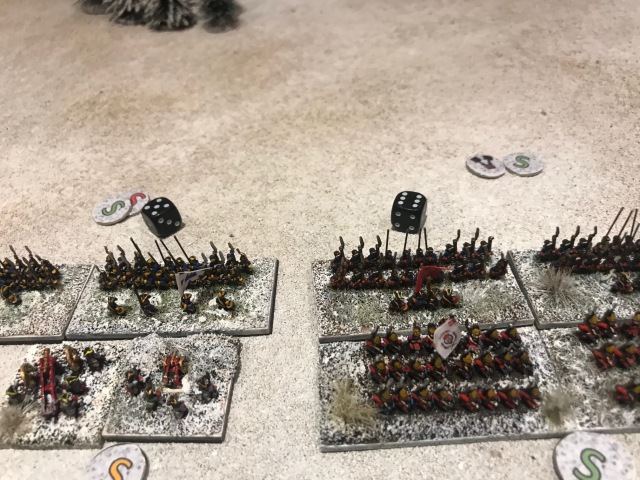
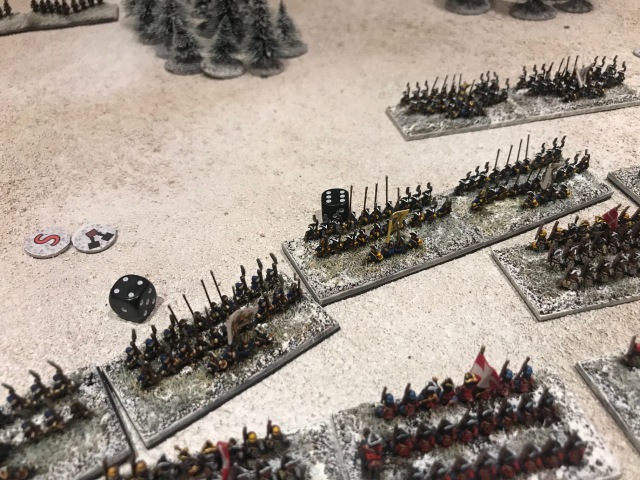
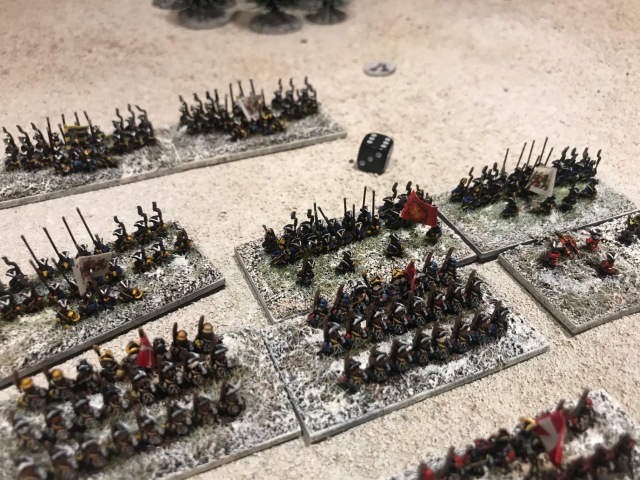
We decided to use the Maurice Rules for the game and made two 100-pointish armies each. 1 unit is represented by 2 No. 60 by 30mm bases (a battery by 1 No. smaller base) – normally you use 4 square bases for a unit – this is 2 bases – the only issue is that the column formation looks funny – I can live with that.
Maurice is an excellent game by Sam Mustafa and you can download some information on his webpage, including a lite version that you can play with (link here). The rules works well for us and suits the way we play.
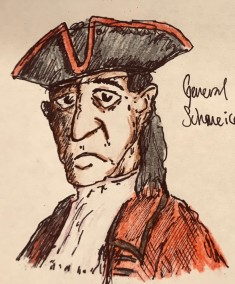
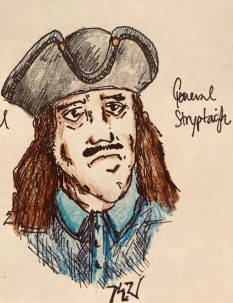
We have not done a what-if, instead it is a just a battalion level clash with familiar names of regiments for both sides, but with two totally fictitious Generals (quickly sketched up by yours truly).
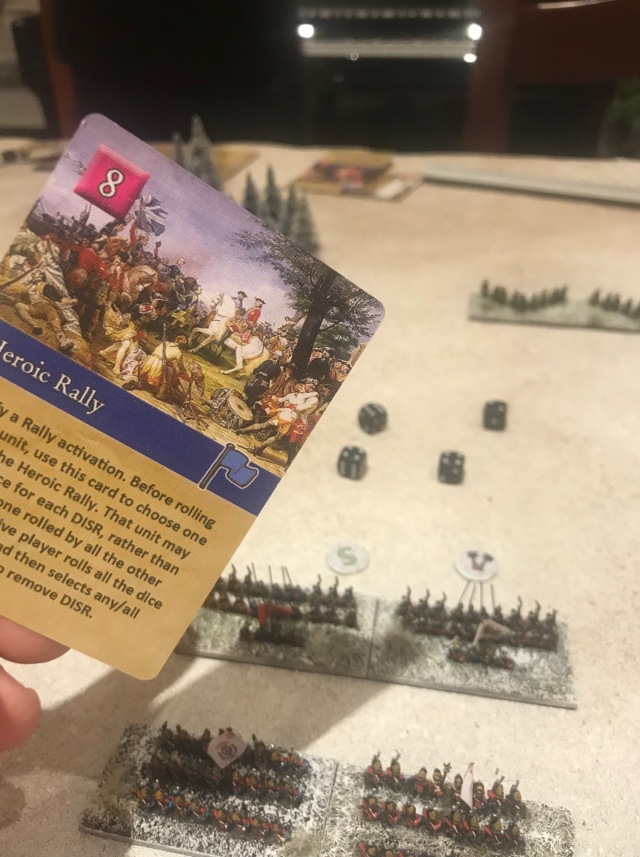
I am using Maurice because I would like to do a little campaign, at some point, of the Swedish lacklustre efforts against the Prussians during the Seven Years War. This is a chance to dust off these rules that I think gives a fun flair and works for the Period. It is a card driven system, cards are used for activation and in additon can give bonus to firing (called Volley in the game), actions (charge, march, bombard, rally) or events can be played. You can also buy national advantages that gives your army bonuses. There is also a good campaign system, heroes (notables that work as supporting Commanders) and other stuff not covered here.
I made some notes on Maurice earlier with regards to the Great Northern War era (link to that blog post here). In addition we are using the special rules for stationary artillery and pikes (for the Swedes).
This is not a review of the rules and I will just discuss the set-up and the result of the Battle briefly, there are a lot of reviews and playthroughs on the net, as the game has been around for some time, that you may want to check out. I really like the concept and the card system. As you will see in the actual game we played it creates a narrative.
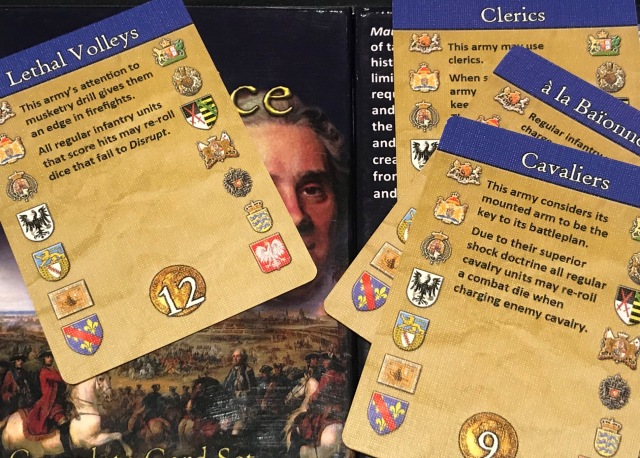
Some of the optional national characteristics cards we will be using (more detail below).
The Danish Side
The Danish Major General Schmeicel is a tired and laconic individual, but can cause some occasional spark on the battlefield. He is mainly an infantry specialist and have fought many campaigns in central Europe and his men are well drilled in firing – in accordance with the Dutch School. This places less emphasis on the bayonet and is highly dependent on platoon firing with a rippling of fire down the whole length of the battalion. His strength lies in a prolonged firefight again the inferior firing Swedish units but will find it difficult once caught in the melee. The conscript horse units are represented by Dragoons.
Major General Schmeicel
For the Danish side we went for the following:
National Advantage: Lethal Volleys – 12 AP (this to represent better fire drill than the charge oriented Swedes)
8 No. Regular Infantry (Trained) Units – 48 AP
2 No. Regular Cavalry (Trained) – 12 AP
3 No. Regular Cavalry (Conscript) – 12 AP
4 No. Artillery units – 10 AP
Improve two units to Elite – 5 AP (1 No. Cavalry and 1 No. Infantry)
A total of 99 AP, 16 infantry bases, 10 cavalry bases and 4 Artillery bases.
We are also assuming Stationary batteries for the Artillery (See Chapter 10 – advanced rules). In this era
Resulting in the following force:
Foot Guard/Queens Req, Regular Infantry, Elite
Grenadiers, Regular Infantry, Trained
Marine Regiment, Regular Infantry, Trained
Frijs Regiment, Regular Infantry, Trained
Arnoldts, Regular Infantry, Trained
Zepelin Regiment, Regular Infantry, Trained
Staffels/Kragh, Regular Infantry, Trained
Viborg/Aarhus National, Regular Infantry, Trained
Horse Guard, Regular Cavalry, Elite
2nd Fynske, Regular Cavalry, Trained
Life Dragoon, Regular Cavalry, Conscript
Bulow Dragoon, Regular Cavalry, Conscript
Jyske Land Dragoon, Regular Cavalray, Conscript
1 to 4 Artillery Units
The Swedish Side
The Swedish Major General Stryptagh has risen quickly through the ranks and is one of the Kings youngest Generals. Keen to impress, he is rash and a fully aligned with the Swedish offensive tactical doctrine (Gå-På). He needs to get into contact as quickly as possible to win the day with superior shock cavalry as well as pike armed infantry units, hitting hard. The religious doctrine is represented in the use of clerics which is more to give an edge than clerics running around throwing incence. The cleric will be marked using individually bases figures. There is no difference between Cavalry and Dragoons in the Swedish army in this game, or in reality, the are all count as galloping shock attacking cavalry.
As elegantly described in the book “Vägen till Poltava” (‘The Road to Poltava’, by Konovaltjuk and Lyth) the Swedish doctrine of marching slowly and steadily, towards the enemy in silence, then fire a Salvo at 70 steps and then at 30 steps from the enemy, with no reloading, before charging in, was based on simple mathematics.
Here is a rough translation of the relevant passage.
“The Swedish method of infantry attack was based on the limited accuracy (spread) of musket fire and the time to reload for a new salvo. The spread meant that units preferred to shoot at the same time with many weapons – salvo fire – and hoped this would create gaps in the human wall in front of them, even though many shots failed to ignite or missed their targets. A salvo had a limited impact on distances above 70 steps (50 meters) – except against cavalry that had a bigger target area and were the horses reaction was more important than the riders. In shooting repeated salvos, whether they were fired by rank, platoon or by all, you had to wait for all to reload. The time for unified reloading has been discussed a lot and sometimes assessed to be at least one minute and up to two minutes. In a minute the enemy had time to march one hundred steps (75-80 meters) and run 150 steps. If the effective range for a salvo was 70 steps the unit that opened fire at a longer distance became a defenceless target for the opponent that calmly and steadily advanced and fired its salvo at a shorter distance and therefore with a bigger impact. The Gå-På method was based on this simple calculation.”
In reality it seems that the first and second salvos were fired even closer as the war progressed. It was very effective and very often led to a routing enemy at or before contact with no protracted melee. The horse charged in with a wedge shaped formation as was equally offensive and did normally not fire any weapons at all.
For the Swedish side we went for the following:
Major General Stryptagh
National Advantage: Cavaliers – 9 AP (Shock Cavalry), Clerics – 9 AP (to illustrate Swedish Determination) and A la Baïonnette! – 9 AP (shock infantry)
5 No. Regular Cavalry (Trained) – 30 AP
5 No. Regular Infantry (Trained) Units – 30 AP
Improve four units to Elite – 14 AP (1 No. Cavalry and 3 No. Infantry)
Also Swedish infantry are armed with pike and we are using the advance rules for Pikes (See Chapter 10 – Advanced Rules). Typically a third of the Soldier had pikes in the early Stages of the War.
A total of 101 AP. 10 No. Cavalry Bases and 10 No. Infantry Bases.
Resulting in the following force:
Närke-Varmland, Regular Infantry, Elite
Västerbotten, Regular Infantry, Elite
Västermanland, Regular Infantry, Elite
Kronobergs, Regular Infantry, Trained
Södermanland, Regular Infantry, Trained
Queen Dowagers Horse, Regular Cavalry, Elite
Bremiska Dragoon, Regular Cavalry, Trained
Bassewitz Dragoon, Regular Cavalry, Trained
Norra Skanska Cavalry, Regular Cavalry, Trained
Nylands Cavalry, Regular Cavalry, Trained
We then made our selection from the Winter based stuff, we used about 25% of it.
The Battlefield
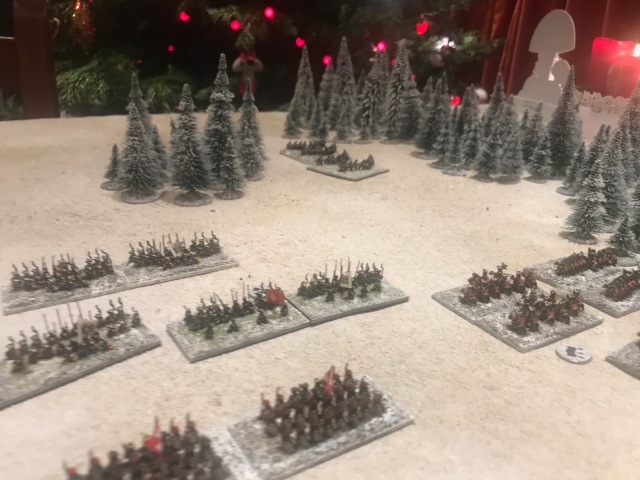
We fought the battle on the dining table, using a 3 by 4.5 feet snow mat I have had for some time. With the relative small forces at hand (and a base width at 30mm) this should work fine.
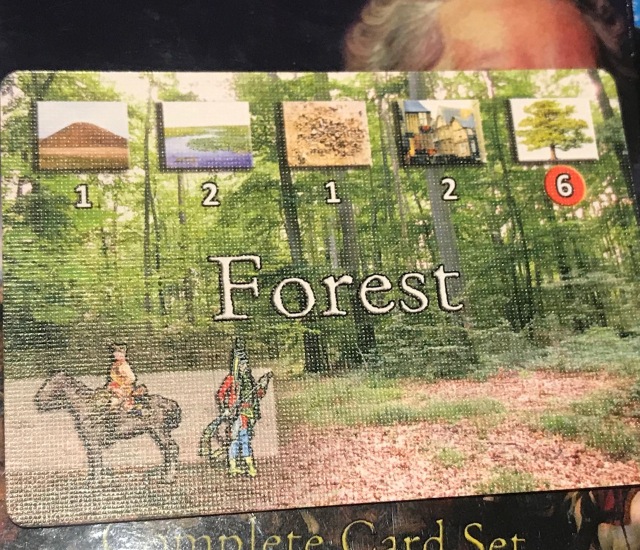
We drew the following battle field card.
That is not my hairline but Maurice de Saxe.
Going through the motions of the card we find that we can place a maximum of 1 hill, 2 marshes, 1 rocky ground, 2 towns/village, and 6 wood terrain features (the red around marking around the forest number indicates that it is mandatory to choose some forest features (makes sense since the battles is in a woodland area).
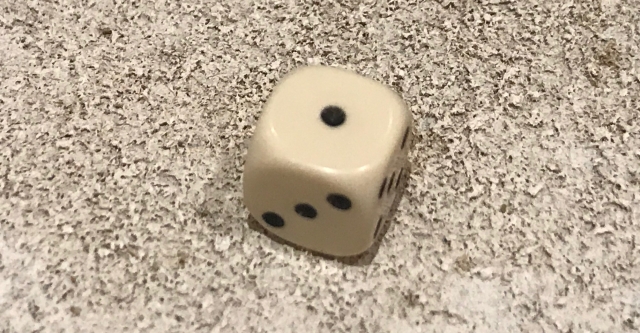
Next was scouting and this is done by rolling a die each. The Little One rolled 6 and I rolled, yes you got it, One!. There are modifiers based on the number of units you have of the type on the card (regular cavalry and irregular infantry in this case) but there was no point checking this, the Little One won. He wanted to be the attacker! – it was what the Swedes did in this era.
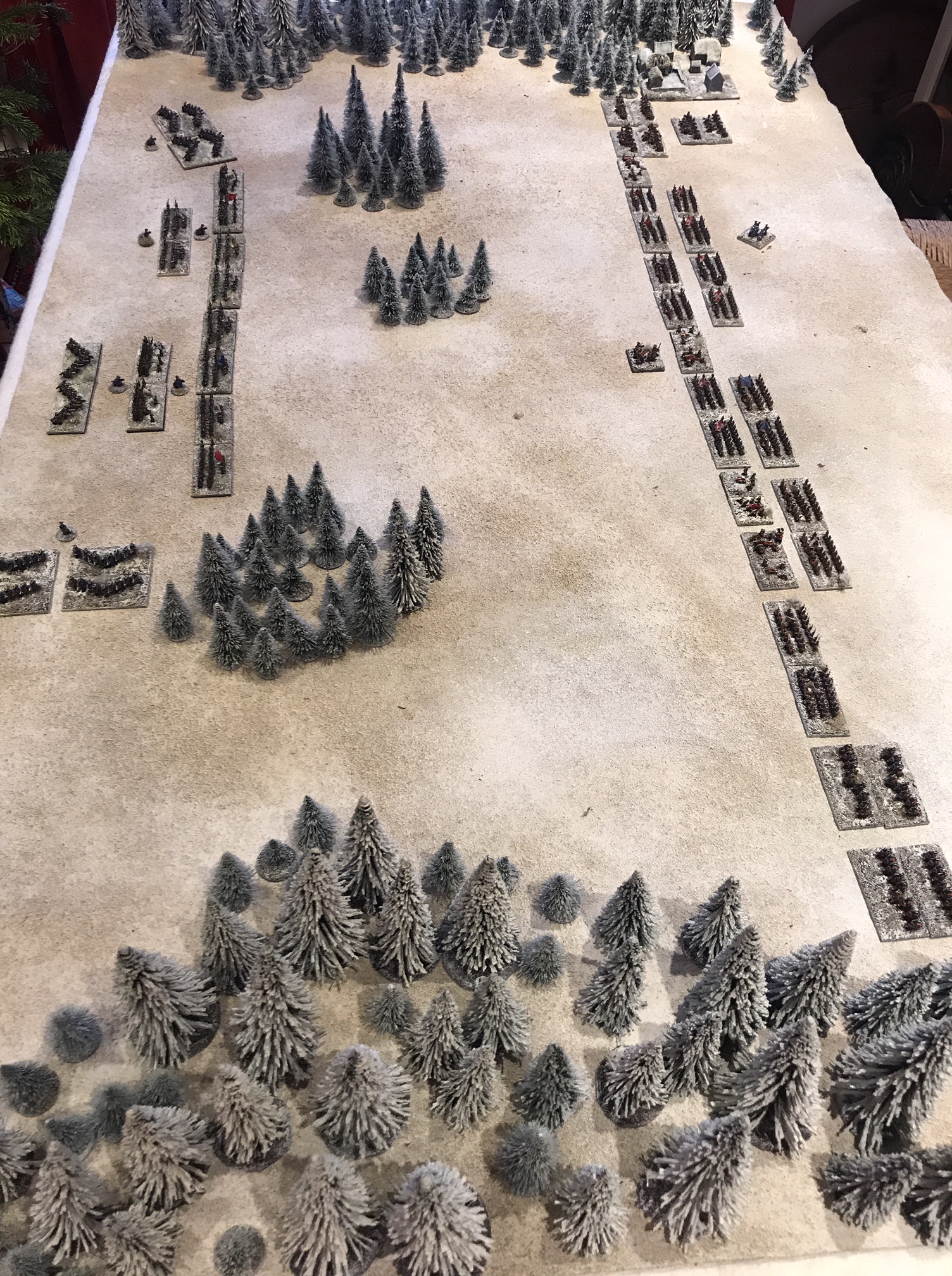
We ended up choosing two town/village and a few forest terrain areas. The table was set up as follows.
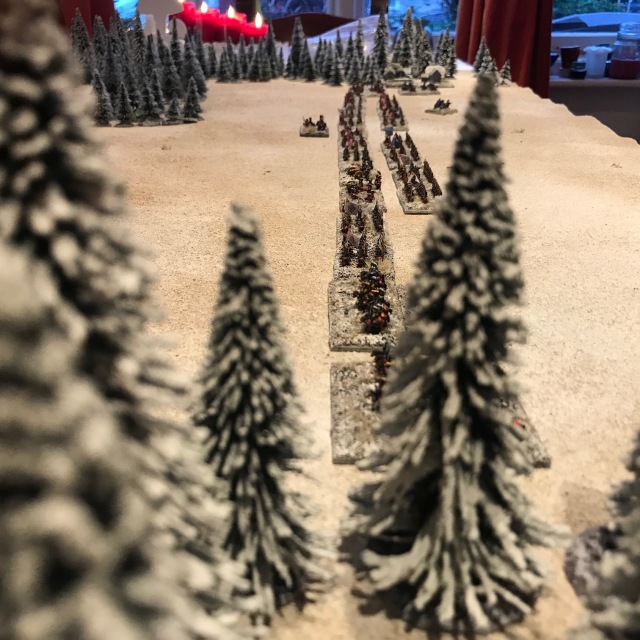
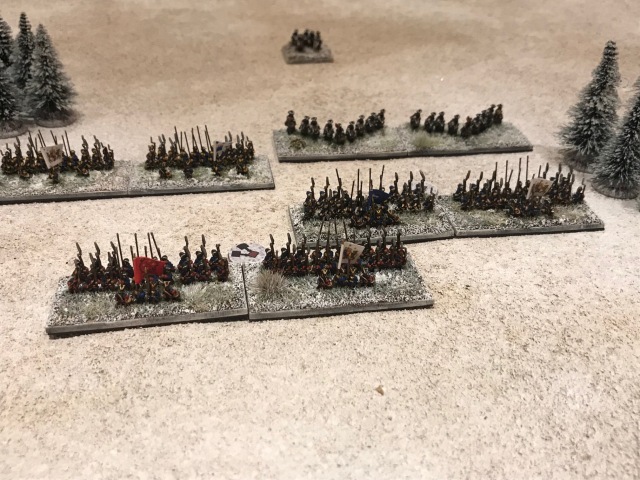
Swedes on the Left hand side and the longer Danish line on the left. There is a village on the Left Danish flank as well as on the Right.
In addition being the attacker the Little One was allowed an additional ‘mercenary’ units – we just added another Swedish infantry unit.
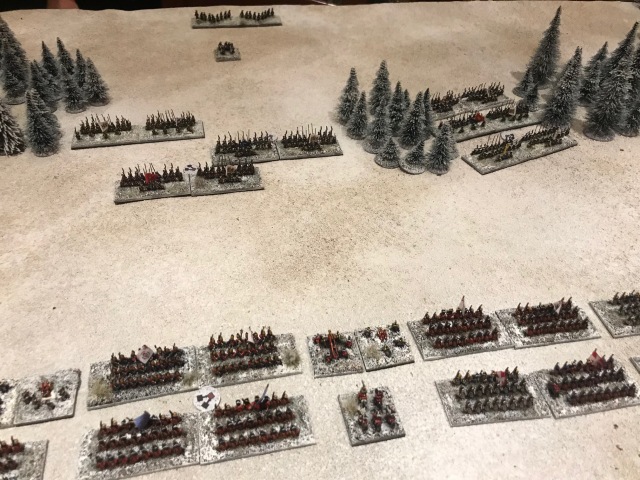
We then recorded our Army Morale values which were 17 for the Danes and 11 for the Swedes, this is based on number regular of units!
A little bit of shuffling and card allocation later we could start the Battle.
The Battle
The Jingle Bells rang and we were ready to get going….
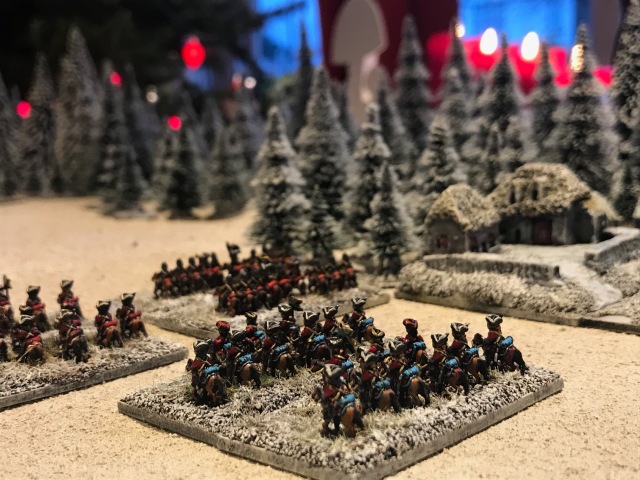
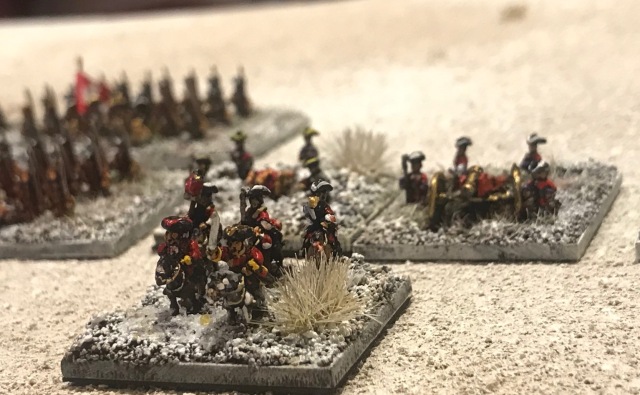
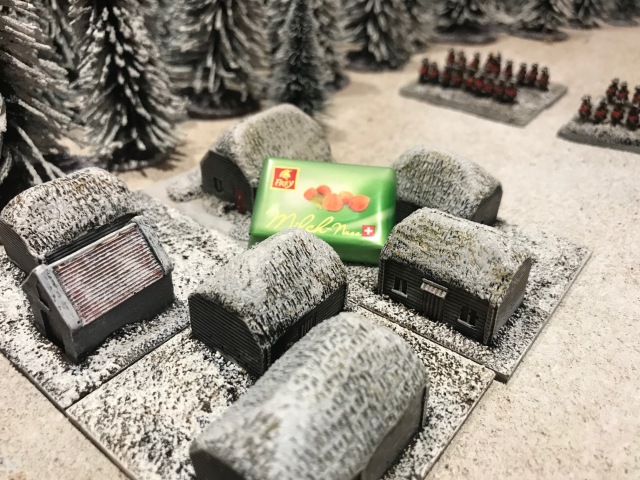
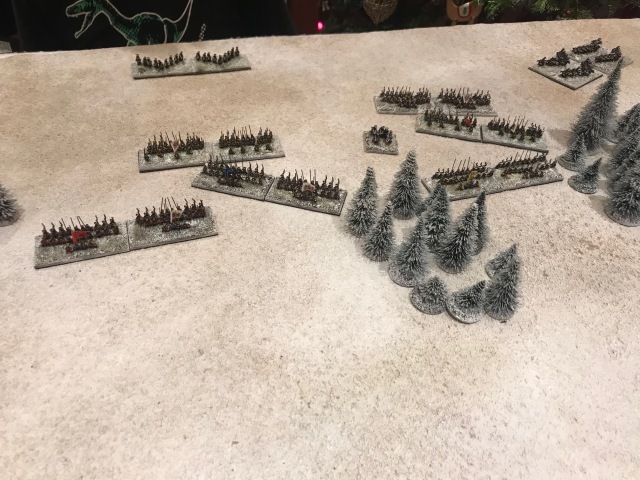
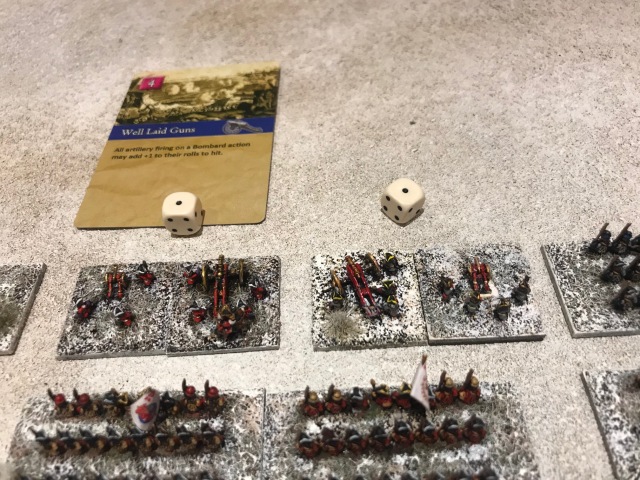
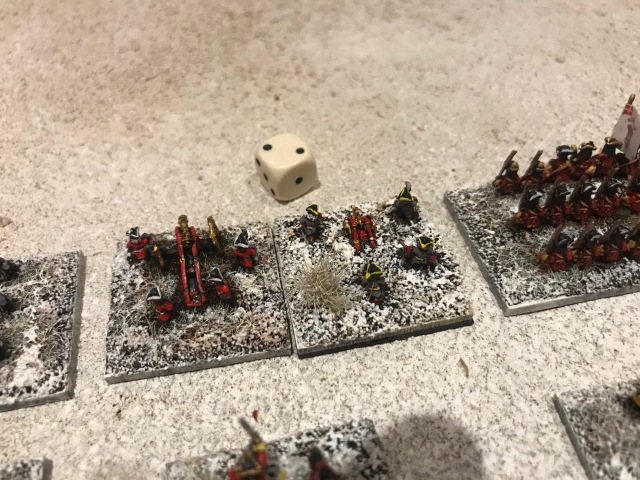
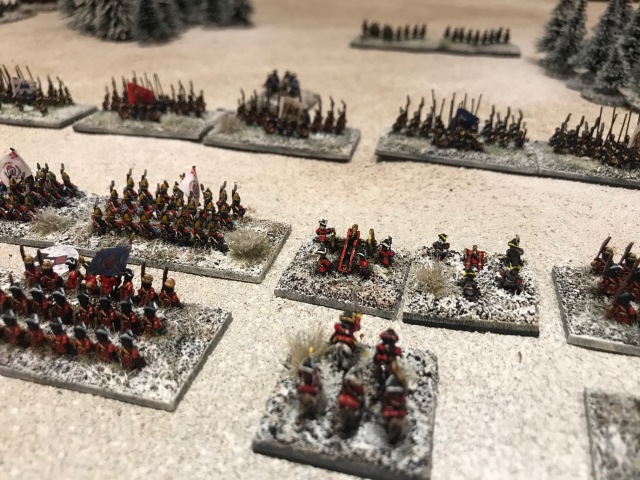
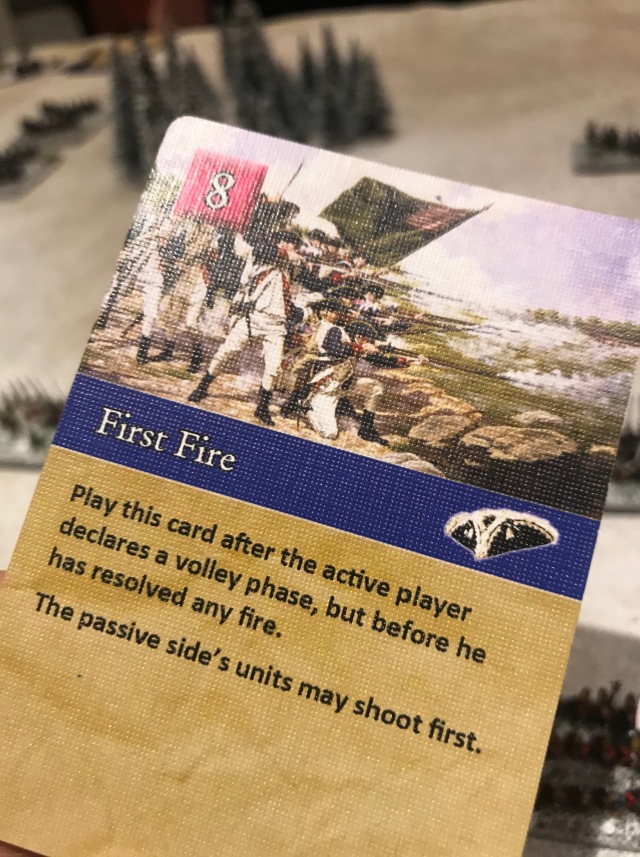
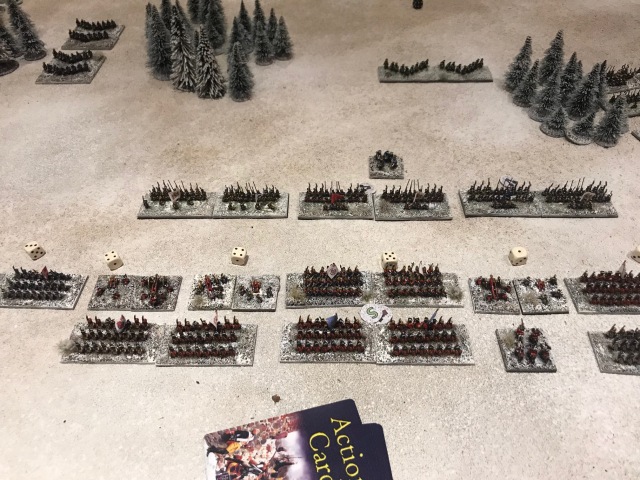
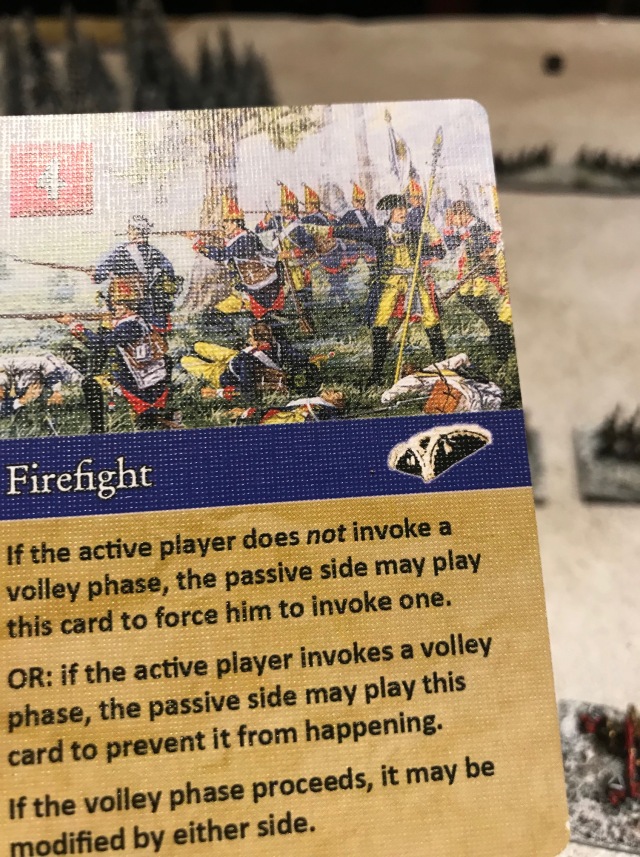
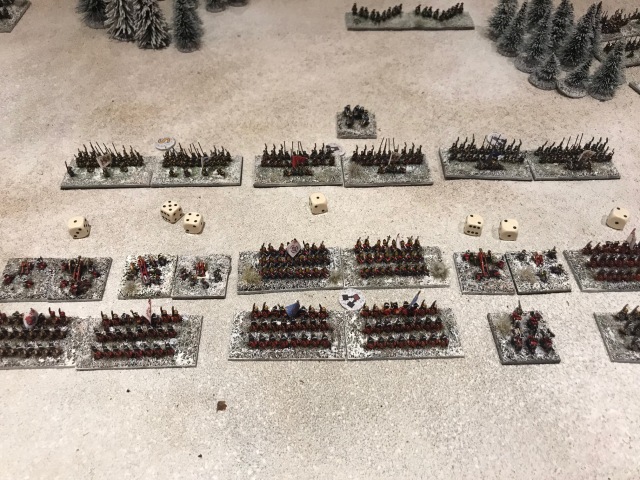
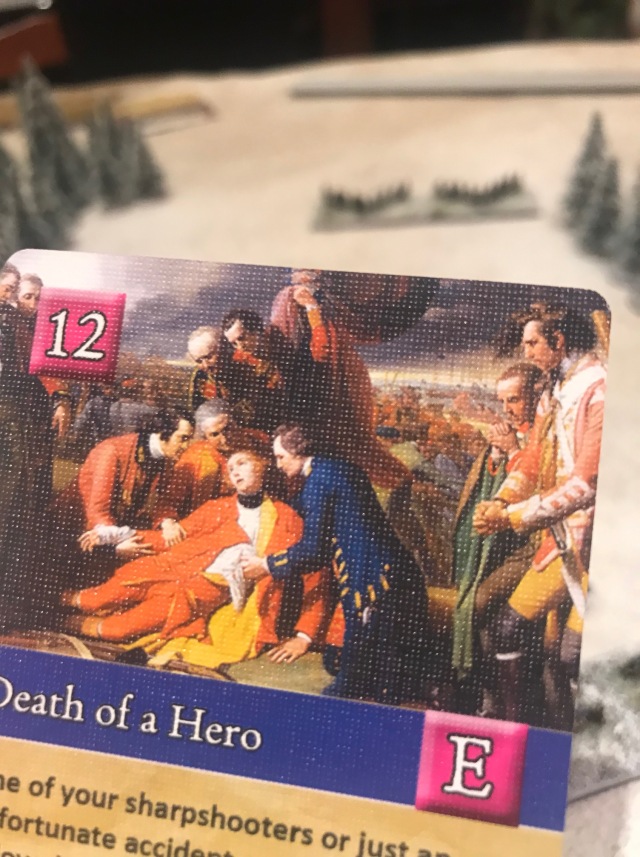
“Straighten the Lines, the Swedes are coming” was heard over the snow cladded fields!.Village of Højreflanken in the background, with the Danish Dragoons and Cuirassiers getting ready for rumbleThe Danish Commander shouting his orders of the day, “Stand and deliver!”.The Venstreflanke Village on the left, with a tasty objective marker!The Swede breaking the line to get around the forest area! The Dinosaur was not part of the game.An excellent opportunity to cause some disruption from a distance, but sadly Ones are not very useful, not even with “Well Laid Guns!”Neither is Two…as I said above, 4 rolls an no effect at all… Swedish left flank Cavalry ploughing forward. They then ended up more or less staying there to the end. Perhaps they got lost?Another Bombardment opportunity… the other rolls as bad, no yield at all.And the right cavalry is coming too!The Centre gets organised for the attack!I think I rolled more Ones than any other number on this day… but then what is the name of this blog? – it is not just a gimmick!That regiment is getting far too close….Nearly there, now our Lethal Volleys and Cannister fire will rip the Swedes into pieces!. “GIVE FiRE!”But the order seems too late, as the Little One plays this interruption and get the first Volley in. Causing one level of disruption on the Grenadier Unit.I got 3 hits on my volley but failed to cause any damage from any of the hits (yes it is a roll to hit, then to damage depending on unit quality system)On his round he decided not to do any firing, which means I do not fire back either. However I had got lucky and I got this card. So I told him we would shoot.However I only managed two hits (cannister rolls two dice for hits) with minimal damage caused.He then went all in with this card and it felt like the beginning of the end…My Grenadier’s shat themselves. A white field coloured brown!My diversion on my left flank! Going on the attack, but he dealt with that swiftly later on.Raptured Danish lineRolling like a God that Little One!Another set of hits!Another one… Diminishing Danes…The Little One managed to rally most of the Little Pathetic disruption/damage I had caused.…and even had time to use a round to play an event to cause me even more overall morale loss – the Death of a Hero on the Battlefield!Nearly there….And a round later! Not the happies nation in the World on this day. Perhaps a Danish player would have done better, sorry (Jeg er ked af jeg rodet op!).
Assessment
The Game got a thumbs up from the Little One. I have to agree, although the write-up perhaps gives the impression of Swedish onslaught it hang somewhat in the balance. The cards are interesting and the national characteristics gives the right Great Northern War feel we get from the traditional history books.
We had blast, but then we always do. I would like to take this opportunity to wish you a really good Christmas if that is your thing, if not have a blast anyway. I will be back with some reflective stuff before the end of the year. That will be the normal review of the Year, from this/my blogs perspective (and there is a wide variety of stuff to cover), and some Crystal ball gazing for next year. Hope you will be back for that! The next big project is Poltava, with some 350 bases on the table (the battle we just presented above had 50 bases) at Joy of Six in July – it will be a spectacle. Here is a “nice” video about the battle from YouTube.
A sad but also, I hope, inspiring end to this post…
Being somewhat detached from worldly events at times, I totally missed that my favourite Danish Artist Kim Larsen died earlier this year, on the 30th September 2018. This was after a long battle with prostate cancer.
I remember many drunken occasions in my youth listening to his band Gasolin and have been listening to him since. I have included my favourite song below – “Det bedste til mig og mine venner” (“The best to me and my friends”).
This year I have also sadly been reminded of the issues of mental health within my family, friends and in the work place. I am happy that the awareness and understanding is increasing in our society but I think there is a lot more to do. In the wargaming community I especially applaud efforts from Katie Aidley, Henry Hyde and the Meeples and Miniatures crew (of course there are others too). They have all in their own way inspired me to reflect, consider and learn new things about these issues. This blog post is truly dedicated to them.
I let you explore the fantastic creative work of these fantastic people on your own, but here is a little bit of help for you to get started.
I had a Christmas Greeting from an ex-colleague who retired a few years ago, he said some nice things, and one part really made me happy “…working with you was a pleasure. And I noted you covered by back quite a lot”. He actually covered mine and many others backs all the time. It is what builds strong teams, friendships and people! Look out for each other!, … and yourself!.
Yesterday, the Wyre Foresters and I had the pleasure of presenting Horka 1708 at the Joy of Six. We have discussed the background to the battle before and I have attached a handout that contains some background on the idea of the battle, the rules we used (Twilight of the Sun King) as well as an list of the forces used on the day:
It could be useful to read this one before pushing on.
Following a nice family Saturday in the Derbyshire Dales, visiting the impressive Crich Memorial for the Sherwood Foresters Regiment and the nearby Tramway village, we went to Sheffield and attended the famous BBKBCE – Baccus Balti King Beer and Curry Evening. This is a chance to meet some old a new friends on the eve of the many battles being fought at the Joy of Six.
The Doors at the Joy of Six opened at 10am, but by this time I had been trying to set up the table since 8.30am. It took me a few minutes more – I always mess up some of the regiments in terms of placement and being pedantic with regards to these things knock-on effects on the schedule are inevitable. The mat worked reasonably well, but I had some issues with the sides and I may want to use some duct tape when I roll it out again. I am still in two minds on how I will do the Poltava battlefield next year as it has some interesting elevation – perhaps reverting back to boards or a mix of elevation pieces and a mat – I have a few more months to worry about that.
Having put it all on and taking a step back I have to admit that I said a little “wow”, and reflected on the fact that this is why I do this. Not to stare at an individual miniature being nicely painted (because that is not really my forte, but I do like nicely painted larger scale stuff), but to stare at something that resembles a battle when you take a step back – a battle from one of those many pictures the old man used to show me when I was a little boy and an aspiring General.
The Battle of Poltava, 1726, by Denis Martens the Younger. One of those paintings that really inspired me. It is the grandeur and the drama, Peter the Great in the middle front with his entourage fighting their way forward, the Russian camp on the left and the first Russian Line of infantry and battalion guns giving fire towards the oncoming Swedish force, the smoke, the intensity – just brilliant!
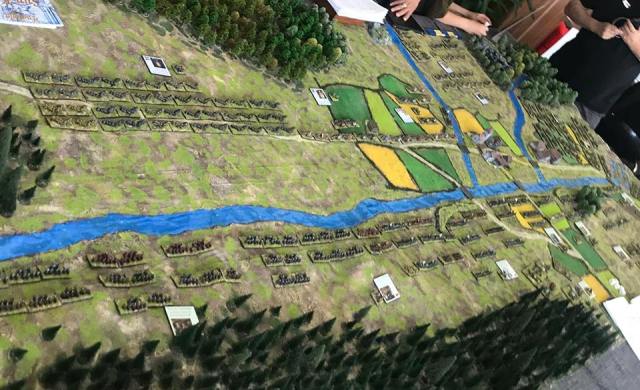
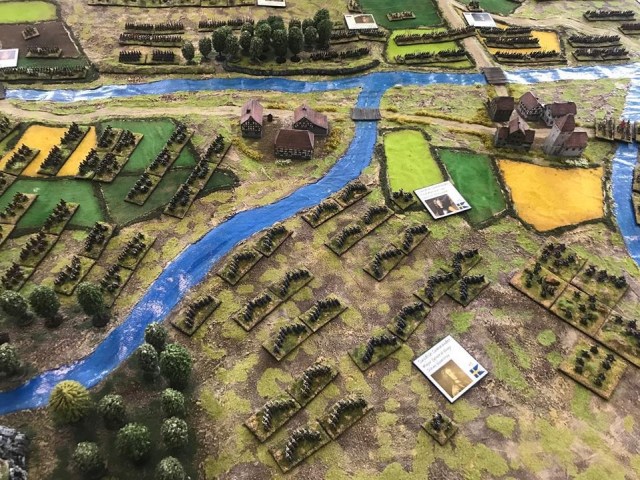
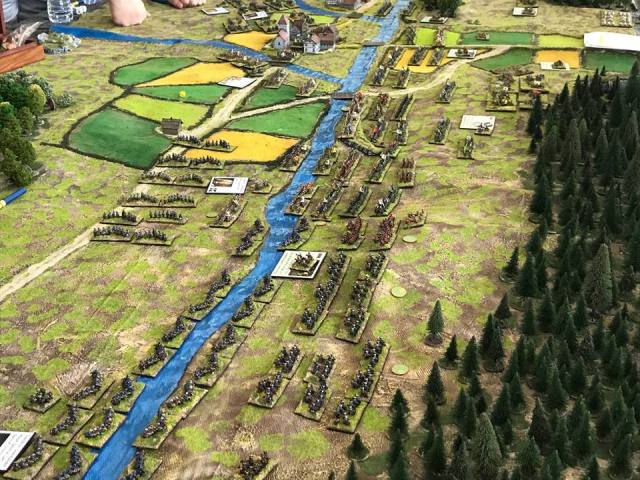
Admittedly not your average evening game weighing in at 12 by 5 feet, more than 3,700 miniatures on more than 270 bases – but at Joy of Six – why not! Here is Horka 1708. I dedicate this game to my Dad, who I hope is feasting in Valhalla!
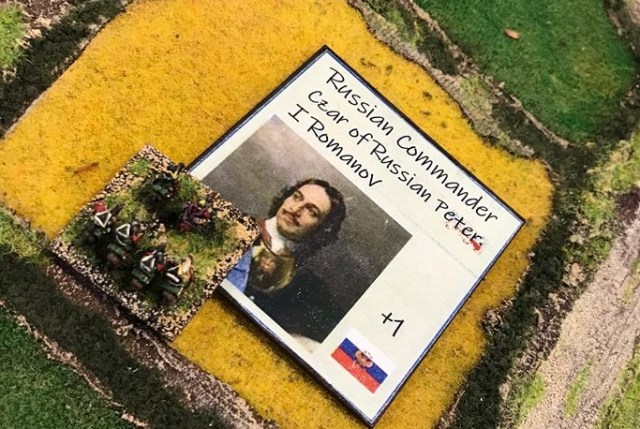
The squares (65mm) are “Command Cards” – 5 for the Swedes and 10 for the Russians. I printed these on sticky labels and put them on MDF bases. It adds a little bit of flair to the game – I think – and also indicates the rating of the Commander. From Poor (+0) to Exceptional (+3).
The actual battle worked out great for the Swedes. The Russian left cavalry flank collapsed under the pressure of Major-General Creutz relentless cavalry attack on the other side of the river, combined with the strong push of the centre. The Tsar himself died heroically in the Battle. Surprising Field Marshall Rehnskiöld with the finest of the cavalry regiments was struggling on the Russian right. It was a decisive Swedish victory. In a re-fight setting we would probably consider making the Russian position stronger with defences and perhaps treat the waterway as more treacherous. So the next refight may be more desperate for the Swedes than this first go indicated.
However, for now, the Swedes won at Horka in 1708.
I will do a general update about the show itself later this week – but I actually did not have time to do very much. It is how it works out when you have table to attend to. There are however some things I need to mention, a few shout outs to people, the seminar I attended and a few of the tables that caught my eye (and I actually took some photos but only a few) but that is for another time.
/ Hope that was of some interest, a few more pictures of the battle.
Many thanks for passing-by, next year we are doing Poltava 1709 (I think that if you look at my flowery shirt long enough and then stare on a white sheet of paper you will see something very special!).
I had a very nice day at Salute yesterday, but have decided to reflect on that next week as I think his blog post is long enough – but in summary of Salute I can say “a lot of people, met some new and old friends, the games looked great, got some gifts(!), picked up some stuff and bought some more, What a Tanker from Too Fat Lardies looked fun, a fantastic GNW battle from Michael Leck – from my perspective the Show rolled a Six.” More next week on this and some further on the progress on the Horka Project.
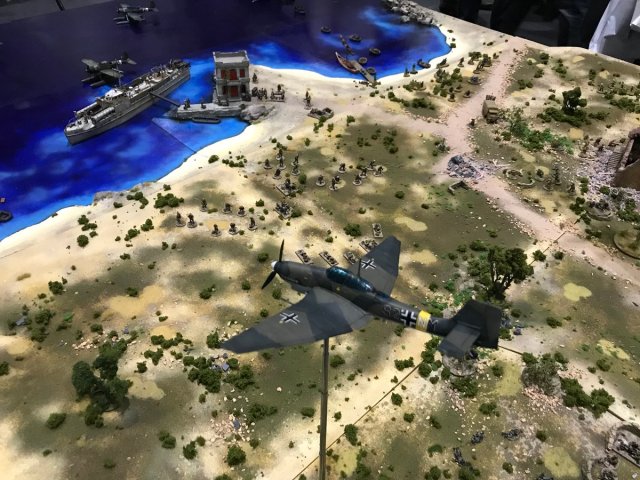
Ok, one picture for now of what I think was the most stunning table on the day and it was simply based on the colour schemes used – it was very nice. Yes other tables had more impressive buildings and clutter but in terms of overall visual appeal and artistry this was the one to beat on the day – I think colour and composition goes a long way and this one I think proved that point. This was put on by “A Few Brits and the Hobby” and was depicting the Battle of Leros in 1943. It was a demonstration game and was depicting the last successful German invasion of the war (WW2) when the island of Leros was taken in November 1943 as part of the Taifun operation (yes you are right another operation in 1941 was carried out with the same name). From the guys own blur for the game “Despite being outnumbered by the defenders, the Germans managed to gain local numerical superiority in various small battles and used total air supremacy to defeat the enemy despite heavy losses. Leros was another British disaster in the eastern Mediterranean and Germanys last major campaign victory in the region.”
back to the main theme….
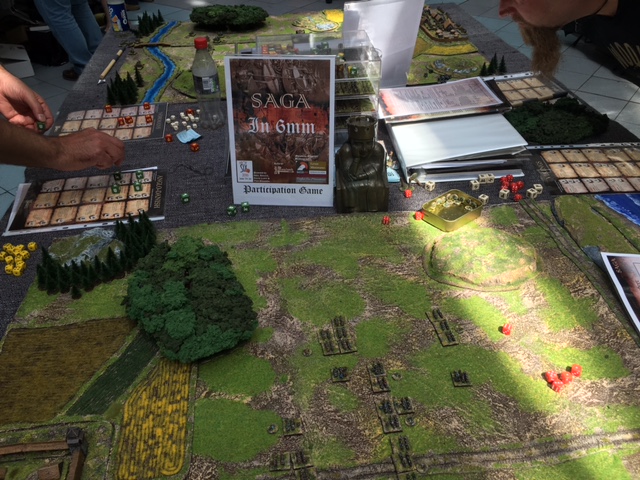
I decided to start this blog on the back of doing a participation game of Saga in 6mm with the gentlemen from the eminent Meeples and Miniatures podcast (link here) for the Joy of Six in 2016. The demo game was Saga in 6mm and I went all out and did starter armies (4pts) for the 12 factions from the three first books for the Age of Viking era (a total of 15 official Age of Vikings factions were produced for the first edition rules, if we exclude semi-official ones like the Skraelings, Revenant and Steppe Tribes).
This is the 100th blog update since the start and I felt it appropriate to do an update on Saga on the back of the Second edition being published earlier this year. It is a long one but I do hope you will find it of some interest.
For this special occasion I asked Neil Shuck for a few words as a kind of preface (thank you Neil).
“When I had a conversation with Dave Luff on the podcast about the possibility of gaming Saga in 6mm, we had no idea of the forces we were about to unleash.
Dave was on one of his ‘it’s only a counter’ monologues, and with the fact that that very nice Mr Berry had just brought out some more of his Dark Age range, we were discussing the idea of being able to play Saga in a smaller scale, and what impact that might have on the game. As with many of our ideas, it never got close to the painting table, so imagine our surprise when Per contacted us to say that he had taken our idea and moved it to the next level.
We may have planted the seed, but Per is a force of nature when an idea takes hold, and the rest is, as they say, history. Per did a fantastic job creating all the forces, plus building the tables, and the games were very well received on the day. More importantly, the game still works – if anything, the grander scale created by the smaller models gives it a more epic feel. Congratulations Per, you have done a fantastic job with this.”
– Neil Shuck, from the Meeples and Miniatures Podcast (link here).
Here is a link to that very first blog post with a postscript that makes a few notes and links to the other relevant posts. Note that the Factions are presented again in the text that follows, I will not repeat the information in the Part 6 to 8 sections about terrain, buildings and painting.
We had a blast on the day of the Joy of Six 2016 Show and Neil wrote about his experience on the Meeples and Miniatures webpage here and my report on the Roll a One blog is here.
From the 2016 event – we ran two table – The Queens table and the Kings table (you can see the Lewis chess Queen overseeing the proceedings on this table and the king is blocked by the Sign overseeing the other).
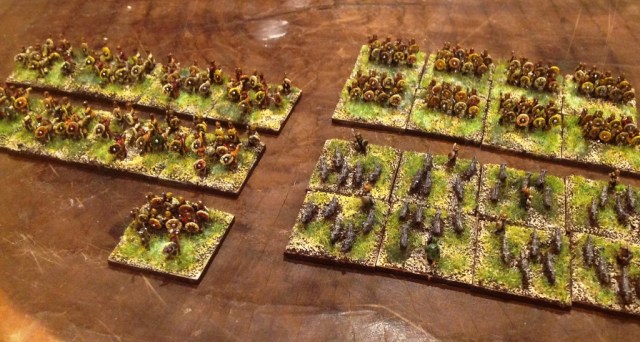
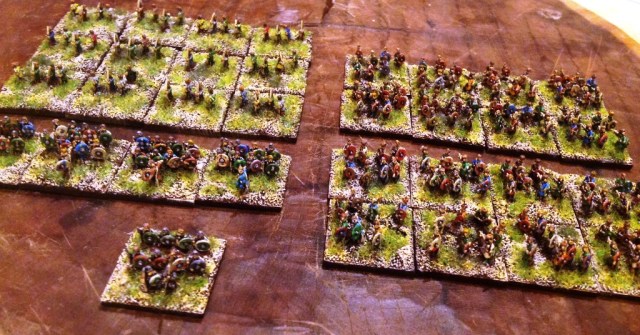
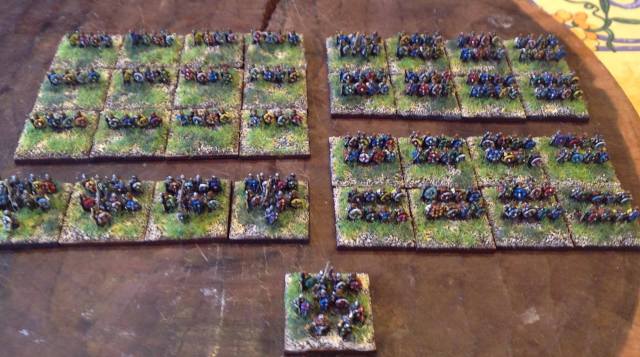
It was a nice project to get done and all-in-all I did 2,474 miniatures in a total on 324 bases (25mm square). Each base contained between 3 to 10 miniatures depending on type, but in general:
Mounted – Warlord 5, Hearthguard 4, Warrior 3
Foot – Warlord 10, Hearthguard 9, Warrior 8, Levy 4
After the show the Little One and I played a fair few games of Saga and we really enjoyed it. We then drifted away to other things and the models have been left standing relatively still for a while (apart from a few sessions using the eminent Dux Brit rules from Too Fat Lardies, a test of the Sword and Spear Rules and a few games of Saga here and there). In the beginning of the year (2018) Studio Tomahawk released the updated edition of Saga (I will call is Saga 2) – where there is a core set of rules and then a book for each era (e.g. Viking, Arthurian, Crusade, etc.). I was debating on whether to get the new rules or not as we found the old ones more than satisfactory, but as I stated in an earlier blogpost.
I have all the old Saga books and I am aware this version will probably not blow me away in the same way as the first set, but it is on the basis of that very first set I bought the second edition. Saga is a fantastic game and I, and especially the Little One, want to be part of the ongoing process of making it even better.
I got the basic rule book for £8.50 (this contains the basic rules) and the Age of Vikings (this has the Viking factions and 12 battle boards) supplement for £25.50, which I believe is very competitive, from Dark Sphere (link here) with free postage (as at 14/03/18). That is a total of £34.
The original Saga Rules were typically sold for £25 and gave you 4 battle boards, three additional supplements (actually four if you count the campaign supplement) were produced cover the Viking Age at a typical total cost of say £42. This gives a total comparative cost at £67 vs. £34. So this new packaging is more cost effective, although the start-up cost is higher (£34 vs £25) as you need some battle boards to play the game.
The only thing that slightly irritated me is that there is only one base scenario in the basic rules – Clash of the Warlords, and that there are no specific scenarios in the source books either – instead there will be a specific scenario book. I really hope that this scenario book is something really special as I honestly think that some more scenarios could have been included in the basic rulebook or in the supplement(s) – so the comparison above is not fully a like for like.
On the back of having read the rulebook and the Age of Viking supplement and had a few games, I personally think it was worth the upgrade. I can use all of my existing models to play and the Saga Dice are the same (I have two sets of each type of dice as I used them for demo gaming and that allowed a higher number of combinations to be played over two tables at the same time) with one exception (the Last Romans, see below).
On the other if you have the old rules I am not sure I would be a position to strongly insist you should do or feel the same. It is still Saga after all. However, I do hope that more supplements covering other Ages will be developed and made available on the back of this re-release. The pictures of some Samurai warriors in the rulebook gives an interesting hint.
This blogpost will re-introduce the factions presented in those old blog posts, with what I hope are better pictures. In addition there are some changes to the composition and I have now enough figures to do starting warbands for the 10 of the 12 included in the Age of Vikings supplement. I will further include some notes on changes to the rules (that only makes sense if you know the first edition) and finally show a few pictures of from some of the games we have played over the Easter Period with some friends and family. I hope it is of some interest – it was nice to get them on the table again.
Factions (4 pt Starter Armies)
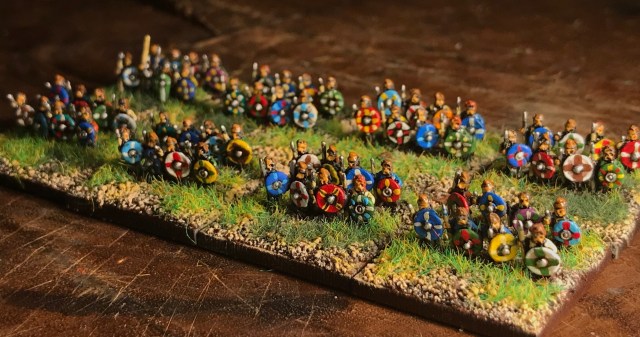
Anyway let us look at some of the miniatures (again!, note I do not have miniatures for two of the factions but are repeating the advice I gave in Saga in 6mm – Part 12). All models, with the exception of the Irish Dogs, are from Baccus 6mm (link here) and the codes are from their catalogue to indicate what miniatures have been used. The original picture showing the whole 4pt warband have been reused here, but I have also included close ups of each unit. I am in two minds about this as I think 6mm is best shown in mass not as individual close ups (well I let you form your own opinion). When you paint bulk and fast like I do for my projects it does not always look that great in a close up – but then why not. All are on 25mm square bases, you may want to refer to that as an inch at your own peril of being 0.4mm out!
A few changes are noted in the text basically:
Reduction of a Battle Board (-3)
The Welsh and Stratchclyde Welsh now share a Battleboard
The Normans and Bretons now share a Battleboard
Their is no longer a Pagan Prince board, but I assume this one is now assumed included in the Pagan Rus board (as one of their heroic options are a Pagan Prince)
Renaming of Battle Board (+/-0)
The Frankish board is now renamed the Carolignian board
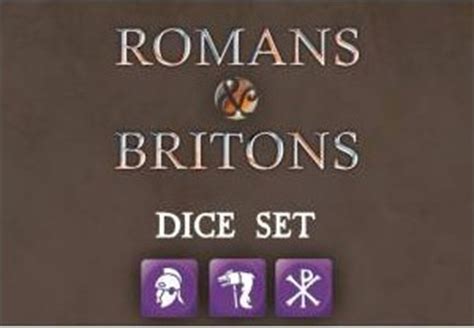
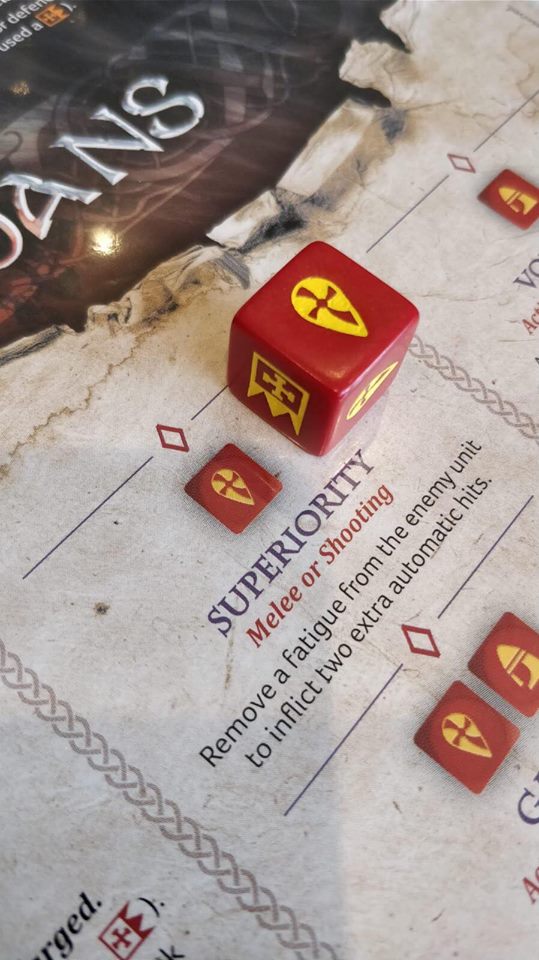
The Byzantine battleboard is now renamed the Last Romans (and actually needs a set of dice I do not have (yet!) – the Roman/Briton dice that were introduced with the Saga Aetius and Arthur rules.
Anyway here are the Warbands:
Irish Starting Warband
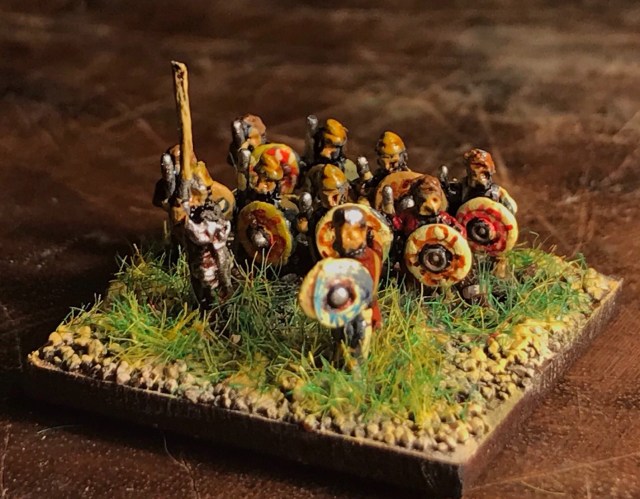
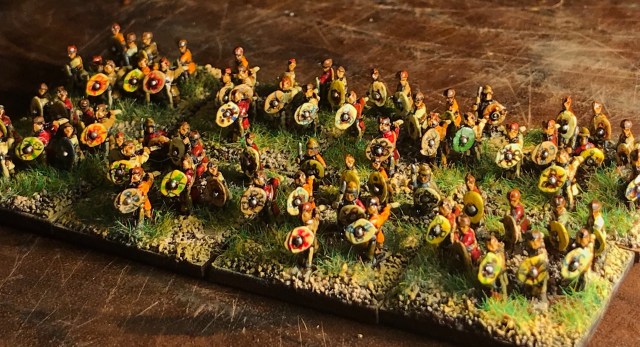
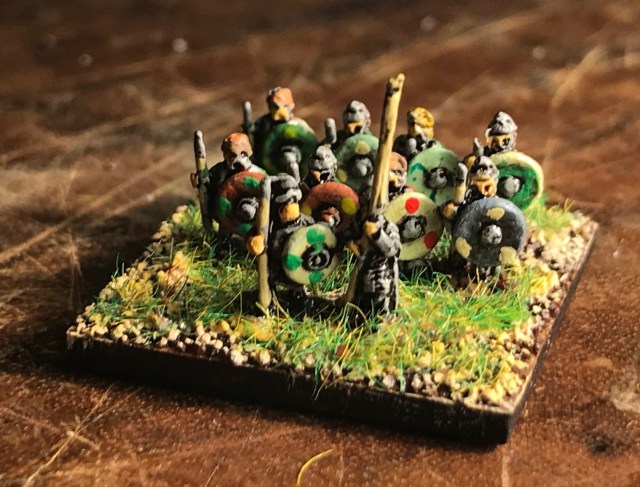
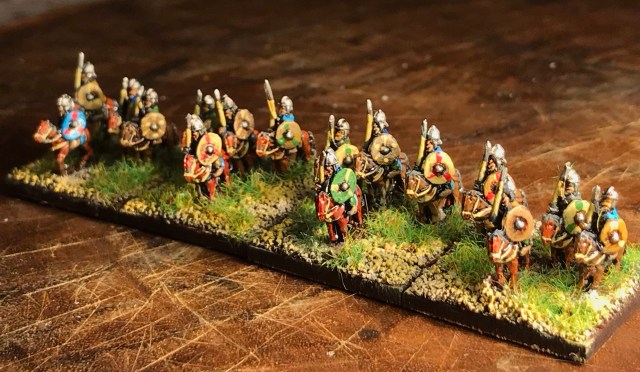
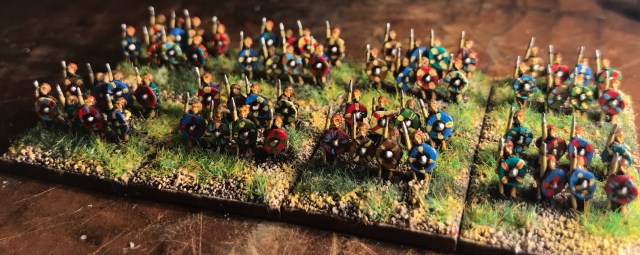
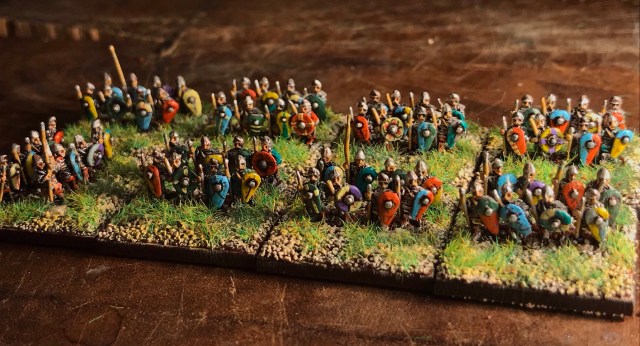
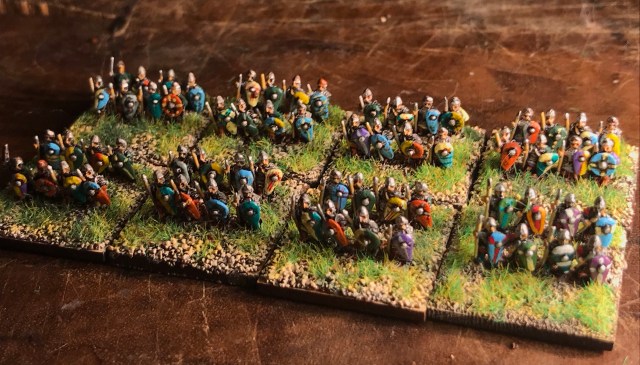
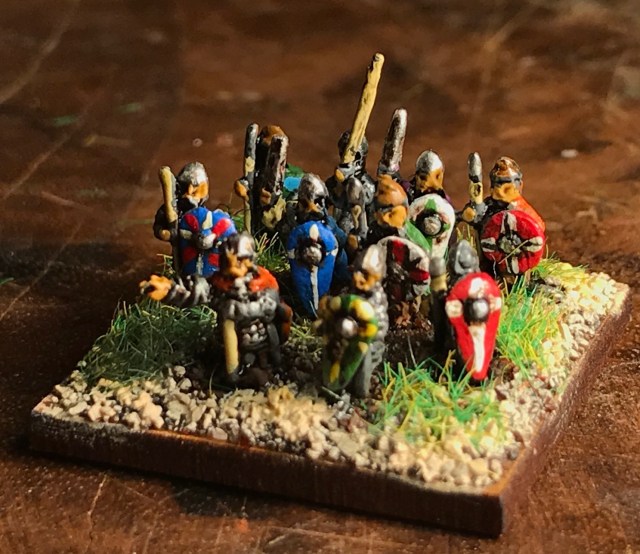
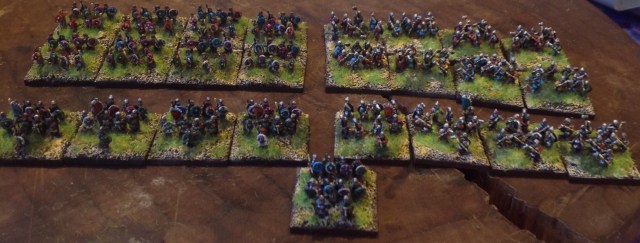
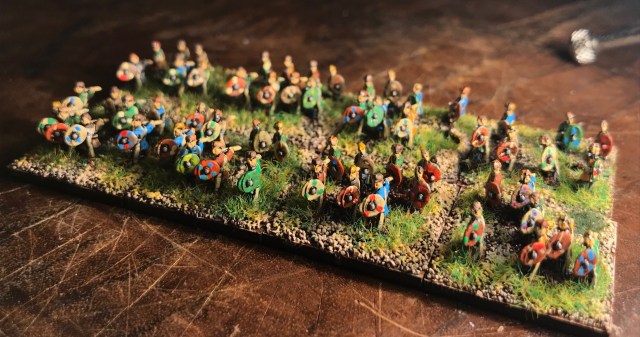
The front figure are from the ALR04 Lanciarii (from the Late Roman Range) and a banner miniature I do not know from where. The two row of warriors are from EMV02 – Unarmoured Spearmen (vikings!).These are actually two Hearthguard (Fianna) Units and I used the ALR04 Lanciarii (from the Late Roman Range) to represent these Javelin armed units.These are my favourites they are the Warrior units and I used EMV02 – Unarmoured Spearmen (vikings!).The Irish have the option to field a warrior unit of war dogs and who could honestly resist that? I needed to find some 6mm dogs. Baccus does not do any dogs but I did not need to get to any extreme measures as Perfect Six (link here) do some nice ones (and since I ordered my dogs they now also do wolves that could represent even more terrifying dogs – mine were border collies painted grey rather than the less intimidating Lassie look) so I ordered enough dogs to do 8 No. bases with 5 dogs and a dog handler on each. I used AMO01 Moorish infantry from the “Rome and Enemies range” for the dog handlers. These were leftovers from another project and I felt that the movement in these skirmish type figures were suitable to act as “leaders of the pack”. The war dogs may be more legend than reality but I think they add flair to the game.
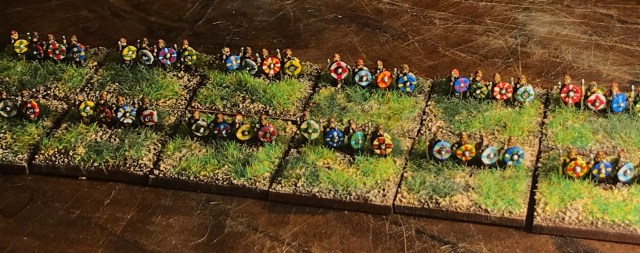
Welsh Starting Warbands
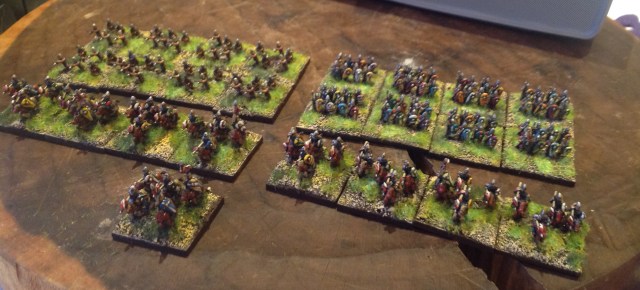
I have two Welsh starting warbands as there were two separate boards in the first edition – one for Welsh and one for the Mounted Strathclyde Welsh.
Welsh
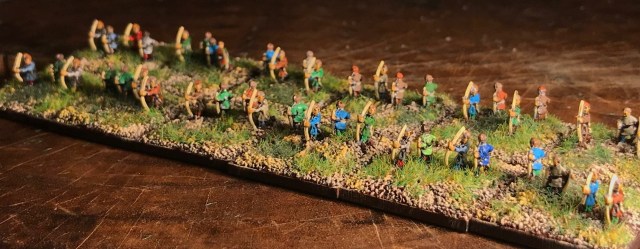
For the Warlord I used the unarmoured spearmen (EMV02 – from the Viking code) fronted by 2 spearmen figuresFor the Hearthguards I used the unarmoured spearmen (EMV02 – from the Viking code) fronted by an individual model from the Late Roman lanciarii code (ALR04) to mark the units as being armed with Javelin .These warriors were made by using a front line of models from the Late Roman lanciarii code (ALR04) to mark the units as being armed with Javelin, with a back line of the EMV02 Viking unarmoured Spearmen.A Javelin warrior unit bases on ALR04 – LanciariiFor the bonnedig (levy) I used Norman Archers (EMN05) – to get some balance versus all those Javelins.
Stratchclyde Welsh
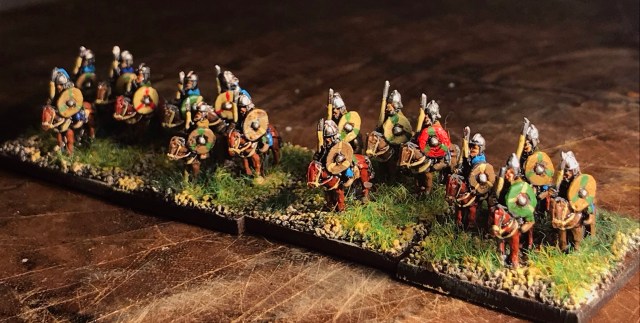
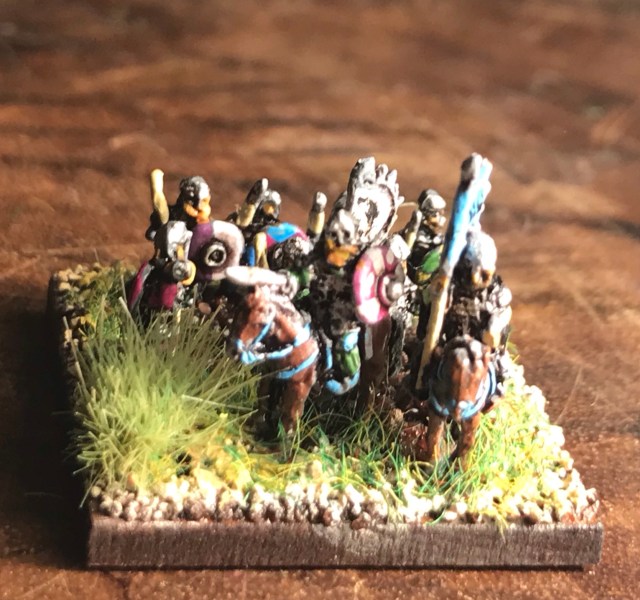
Stratchclyde Welsh Warlord – Modelled with AG003 – Gothic Heavy Cavalry. For the miniature holding his hand up I have no clue.Stratchclyde Welsh Hearthguard (Teulu) – AG003 Gothic Heavy Cavalry.Stratchclyde Welsh Hearthguard (Teulu) – AG003 Gothic Heavy Cavalry.Stratchclyde Welsh Warriors – AG004 Gothic Medium Cavalry.Stratchclyde Welsh Warriors – AG004 Gothic Medium Cavalry.
Scots Starting Warband
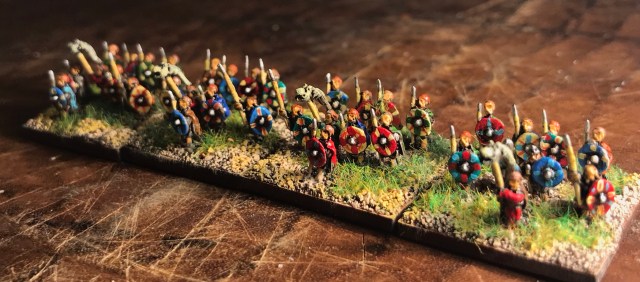
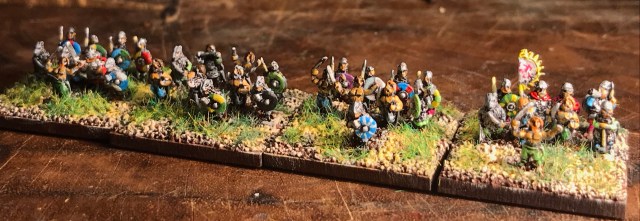
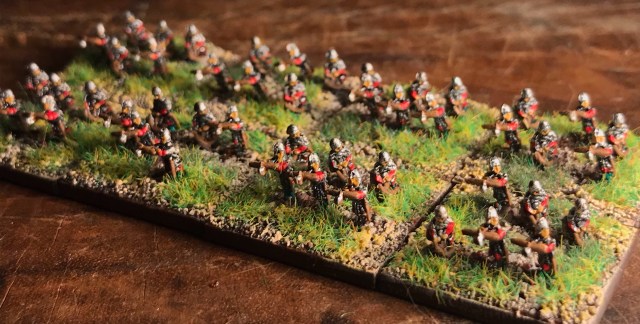
Scot Warlord – the mounted miniature a AG003 Gothic Heavy Cavalry, the man with the axe from the EMA05 – Saxon Leaders and command set, the first row of soldiers a mixture of figures from various sets, the backline from AG001-Gothic infantryScottish Hearthguard – AG001 – Gothic InfantryScottish Hearthguard – AG001 – Gothic InfantryScottish Warriors – AG001 – Gothic InfantryScottish Warriors – AG001 – Gothic Infantry
Viking Starting Warband
Viking Warlord – The mounted Vikings are from the EMV05 – Viking Luminaries and Loonies pack and the foot from the EMV01 – Armoured Spearmen pack.Viking Hearthguard (Berserkers) – the hero models are from the EMV05 – Viking Luminaries and Loonies pack and the foot from the EMV01 – Armoured Spearmen pack.Viking Hearthguard – the hero models are from the EMV05- Viking Luminaries and Loonies pack and the foot from the EMV01 – Armoured Spearmen Pack.Viking Warriors – EMV01- Armoured SpearmenViking Warriors – EMV01- Armoured Spearmen
Norman / Breton Starting Warband
As for the Welsh this is now one Battleboards for what used to be two – the Normans and the Bretons. The difference is that the mounted Hearthguards have Javelins.
Norman
Charging cavalry (EMN01) was used for the Warlord (but with one of the fronting figures from the EMN06 – Norman Leaders pack).For the hearthguards (Knights) I used the Charging cavalry (EMN01)Another unit of Hearthguard (Knights) using the Charging cavalry (EMN01).The crossbow unit are Warriors so I decided to put 6 on each base (mainly as I only had one pack of 48 miniatures EMN07 – Norman Crossbowmen at the time and it divides nicely with 8, if you remember your times table).The archers are Levy and based on the EMN05 – Norman Archers
Breton
For the Warlord I used EMN01 (Norman Armoured Cavalry) , however in doing it again I would have used the EMN03 (unarmoured cavalry) code for all mounted Breton units – to represent the more Javelin oriented Breton cavalry.For the Hearthguard unit I also used EMN01 (Norman Armoured Cavalry), with the same comment as for the Warlord above.Another Hearthguard Unit using EMN01.These are the Warriors using the EMN03 – Norman unarmoured cavalry code and represent the Javelin armed mounted Breton soldiers.These are the Warriors using the EMN03 – Norman unarmoured cavalry code and represent the Javelin armed mounted Breton soldiers.Javelin armed levy using ALR04 – Lanciarii.
Anglo-Danes Starting Warband
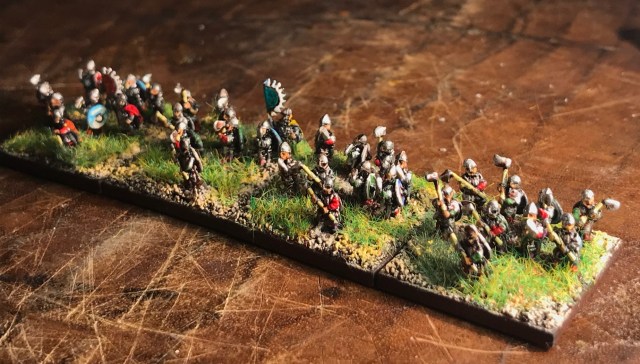
Anglo-Danish Warlord – Mixture of Leaders and personalities from the early medieval range as well as EMA01 – Huscarles with Spear. Technically this should perhaps be a heavy weapon (e.g Dane Axe equipment and this is how we play and just remember it).Anglo-Danish Hearthguard – EMA01 – Huscarles with Spear and leaders fromAnglo-Danish Hearthguard (Heavy Weapons) – EMA02 – Huscarles with AxeAnglo Danish Warriors – EMA01 – Huscarles with Spear (look at the unit in the front left, seems like someone did not listen to their orders)Anglo Danish Warriors – EMA01 – Huscarles with Spear
Anglo-Saxon Starting Warband
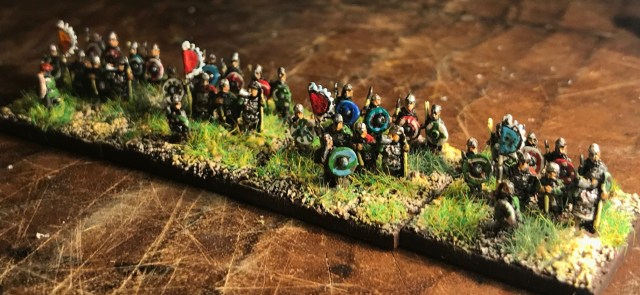
For the warlord unit I used the Huscarls with Spear (EMA01) fronted by miniatures from the Saxon Leaders pack.For the hearthguard I used the Huscarls with Spear (EMA01) again fronted by miniatures from the Saxon Leaders pack.For the warriors I used EMA03 – Fyrd SpearmenAnother unit of warriors, again, using EMA03 – Fyrd SpearmenThese are the Ango-Saxon shield and spear levy and I used a thin line of Fyrd Spearmen (EMA03).
Carolignians / Franks Starting Warband
For the Warlord I used the Norman charging cavalry (EMN01).For the hearthguards I used the Norman charging cavalry (EMN01).Another hearthguard unit (EMN01).A warrior unit using the Norman armoured infantry (EMN01).As one warrior unit can be armed with Crossbow I did so with Norman Crossbowmen (EMN07).
Norse-Gael Starting Warband
For these domesticated Vikings I used armoured Viking spearmen (EMV01) for the warlord unit (fronted with miniatures from the Viking and Norman leader packs – leftovers from EMV05 and EMN06).For this hearthguard unit (heavy weapons) I used the Viking axemen (EMV03)This Warrior unit is using the armoured Viking spearmen (EMV01)This warrior (heavy weapons) unit is using Viking axemen (EMV03)The final warrior unit used the unarmoured Viking spearmen (EMV01) fronted by the good old Lanciarii (ALR04) as these are Javelin armoured warriors.
Jomsvikings Starting Warband
The warlord is using Armoured Spearmen (EMV01) fronted by mounted characters from (EMV05). I used a uniform look for this legendary mercenary norse warrior warband which is probably not very likely – but I like the overall effect.This is a Hearthguard, again using the Armoured Spearmen (EMV01) fronted by characters from (EMV05).Another Hearthguard unit, same as above.Warriors using the unarmoured spear (EMV02).Again, Warriors using the unarmoured spear (EMV02).
The Last Romans (Byzantines)
Did not make this faction, but here are my ideas (I have the miniatures and just need to get them done).
Starting Army: Mounted Warlord (CIS01 – Seljuq Turk Heavy Cavalry), Mounted Hearthguard (CIS01 – Seljuq Turk Heavy Cavalry), Mounted Hearthguard with Bow (ASS02- Armoured Horse Archers), Warriors (EMV01 – Armoured Spearmen), Warriors with Bow (ALR05 – Archer).
Pagan Rus
Did not make this faction either, but here are my ideas (I have the miniatures and just need to get them done).
Starting army: Warlord (EMV01 -Armoured Spearmen), 2 No. Hearthguard (EMV01 -Armoured Spearmen), Warrior (EMV01 – Armoured Spearmen) and Levy with Javelins (ALR04 – Lanciarii)
Starting Army (Rus Princes based): Mounted Warlord (CFR04 – Turcopoles), 2 No. Mounted Hearthguard (CFR04 – Turcopoles), Warrior (EMV02 – Unarmoured Spearmen) and Warrior with Bow (ALR05 – Archer).
Playing the Game
Changes to the 2nd Edition Rules
You may want to skip this sections if you have no interest in what the changes are between the two versions, as this only makes some sense if you are familiar with the rules.
When reading the two rules again side by side (pun not intended) a few changes can be noted between the versions. In addition to what I will cover here the battleboards have changed but I have not yet analysed them and probably will not. I have played most of the old battle boards at least once but would felt it a step too far for the purpose of this. Doing this review/rough notes took me longer than I wanted it to take, I do not pretend I believe it is complete and may have missed or misunderstood something:
The Warlord model (base in our case) can no longer use the side by side ability
Resilience ability now allows 1 fatigue to be taken instead of 1 hit up to its limit (see below – but to lower your suspense it is now 3 fatigue markers for all units).
Only a Hearthguard model/base (within (S)hort distance) can be used to sacrifice/taking damage on behalf of the Warlord.
We obey ability now allows free activation of any action – not just movement.
The Warlord now has 8 attack dice (previous he had 5) and only generate one Saga Dice (previously it generated 2 dice)
Heroic units gets the warlord abilities as well.
Levies now generate Saga Dice if the unit has 6 or more figures – previously they did not generate any at all.
Warriors generate Saga Dice if the unit has 4 or more figures – this avoids the 1 man warrior unit being withdrawn to generate Saga dide.
The Saga Dices left on the battleboard from a previous round does not affect how many you roll in your next turn (unless the total of dice on the board + allowed Saga dice from units is higher than 8. As 8 Saga Dice is still the maximum in play at any given time).
In combat you can use 2 fatigue to cancel an enemy activation
You can spend 1 fatigue to reduce the movement of an unit activating to S(hort)
In shooting you can spend more than 1 fatigue to decrease the defending units armour, and in melee the same and also for increasing the attackers armour.
All units are now exhausted when it has 3 fatigue markers allocated to it (3 is the maximum accumulation allowed), this gives -1 to all attack dice.
All units in a group fight if they are engaged with another unit.
Movement is done in straight line (including charges/attacks)
Models (bases in this case) in a unit to stay within S(hort) from the first unit being moved – this technically means that levies at 12 models cannot create a long line. For our purposes not a big problem, we tend to play the units as 2 deep by 6 frontage (levies), 2 by 4 warriors and 1 by 4 for hearthguards. This to simulate some kind of depth in shield wall concept typical for the “Age”.
Movement is free (cost no Saga dice) if you are at L(ong) range away from any enemy and movement ends up L(ong) range from any enemy.
Shooting – combat pool maximum at Step 1 at 8 dice, final maximum at Step 3 16 dice. There is no limit on the number of defence dice that can be applied (previously twice the number of hit was the maximum).
Meele – a unit can only be engaged with one enemy units. There is no longer a step 0 (the reaction abilities are no longer being used). Maximum combat pool is now 16 at Stage 1 and double at Stage 3. As for missile there is no limit for the number of defence die than can be applied. Defending unit may choose to Close Ranks and gain the effect of solid cover but only gets half of its normal number of attack dice (The old rule of sacrificing attack dice to get defence dice is no longer used). Note this rule is not available to mounted, bow/crossbow armed units and heavy weapons (e.g. dane axes). So perhaps a better name for the ability would be to “Form Shieldwall!”. Defenders in solid cover never withdraw if they outnumber the attacking unit, other units may end up less than VS if there are terrain restrictions.
If all the figures are in cover, the cover counts – if not it does not count.
Dangerous terrain introduced – works like uneven terrain but also causes 1 fatigue to the unit.
Changes to the dimension of the sizes of terrain – I let you go a figure this one, I do not tend to care about these things – sorry!. It is getting late.
Equipment /Weapons – clarification of modifications and restriction, changes to rules for composite bows (free activation and no fatigue), crossbow (+1 to attack instead of -1 to Armour, and can only shot once per turn), javelin (+1 melee attack dice when charging, an example of this is the classic roman infantry attack I suppose), there is a new improvised weapon category.
Playing it over Easter
We decided to play a few games over the Easter Period and we only used starter warbands and I used my 2 by 2 terrain tile (famous from sessions of Pikemans Lament last year) as this one can easily be accommodated in a house full to the brim of family and friends. As we had mixed familiarity of the rules this was sufficient to get a few games played, starting within direct engagement distance.
We play the rules exactly as written, one a base is the same as a base in the 28mm version, no adjustments for ranges of missile weapons or movement.
Here are a few pictures from these games, the games flowed nicely and went really well.
The Easter set-up – all games played with the same terrain constellation and with the same opponents – Vikings vs Normans. For the normans we used 3 units of 4 Knights/Hearthguards and a unit of 8 Sergeant/Warriors and the Lord himself. The Vikings had a unit of 4 No. Hearthguard Berserkers and a normal 4 base strong Hearthguard unit, supported by two units of 8 warriors (and the Warlord himself, mounted on a horse but moving like a foot unit).The new rulebooks and battleboards – they have the same feel as the old Crusade boards (if you are familiar with these).Let us ride down those Norsemen!I like the effect of this picture!I know there is only 1 No. One rolled here but I needed to roll 5 or more to hit, with 8 base and 3 bonus dice for my warriors. I hit shit all with that roll!
Very powerful if used at the right time. I got my warlord sacked by this ability being used.The Norse Warlord fighting unit of 4 Sergeants (Warriors)A Viking attack on the Norman WarlordThe Normans breaking through my shield wallThe Guys on the bench. It must have been when I played the Normans! A row of Hearthguard taken out!
Conclusion: Saga is still fun and works really well in 6mm whether you have the old or the new set of rules. In its base it is a simple I go you go – you roll to hit and then your opponent rolls to save kind of game. But with the addition of being able to use your opponents fatigue to gain benefits and the battle boards it is a unique game and I, and the Little One, really like it.
Note: I have played six games with the new version and lost five.
/ I hope that was of some interest, below two bonus parts one about music and the other some old Saga battle shots!
Bonus 1: Old Battle Shots 6mm in Action
Bonus 2: Music for you musings
In the original postings we included some recommended music whilst painting your warbands – so here are a few oldies and a few new ones
Amon Amarth starting with their Twilight of the Thunder God (that incidentially would be a fantastic title for a set of wargame rules in the Age of Vikings) followed by At Dawn’s First Light and Pursuit of Vikings – it does not get much more Viking melodic death metal than this. This is perhaps not everyone’s cup of, sorry I meant horn of mead!
If that was too heavy for you do not despair there are some equally good options (youtube is full of this kind of things – should get your warbands done in an afternoon or give you plenty of inspiration to crush your opponents on the wargames table).
Some time ago I was writing a few blog entries about doing Gaslands in 6mm and then it went quiet – we actually have played a fair few games and really enjoy it.
Anyway a little bit of summary of where we are at with this:
Overview
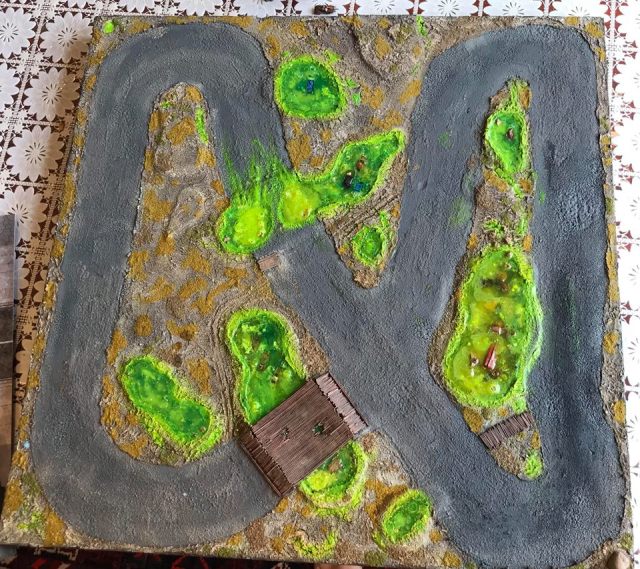
Games we have played on our Toxic Track
Using Dropzone commander terrain
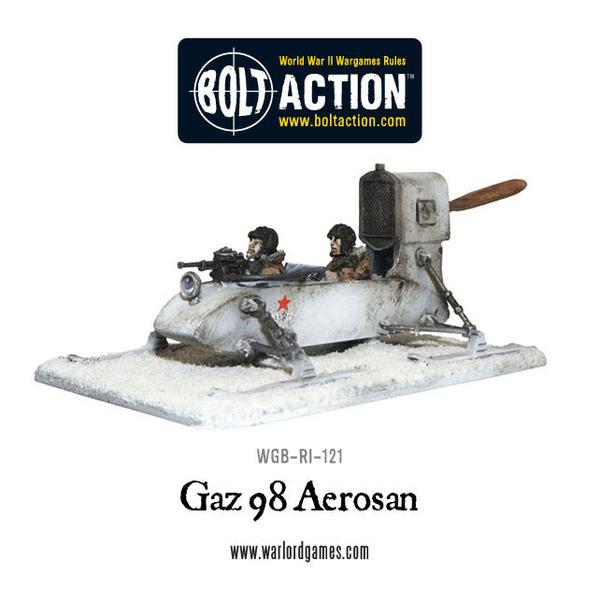
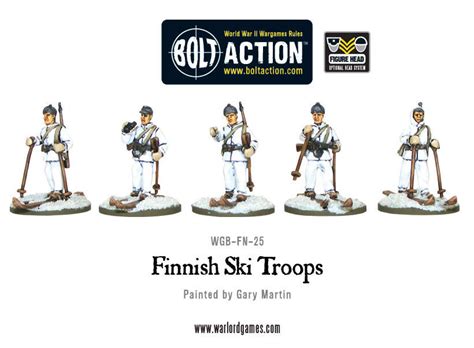
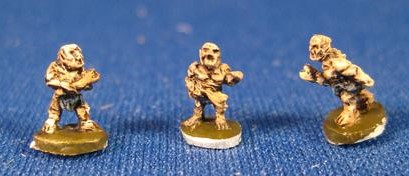
Further ideas – Snowmobiles and Zombies
As I have said before I am not in a position to have a permanent set-up so prefer to do some of the games I play on smaller surfaces (say a maximum of 3 by 4 feet), so games like X-wing or Saga are great straight from the box. Another way to achieve this is to convert a bigger scale game (e.g.28mm) from inches to centimeters (1″ becomes 1 cm) or by using half inches (1″ becomes 1/2″ or 1.27cm – not that difficult if you make special measuring sticks – a one time investment in time) – and using smaller scales for the miniatures. I did this for the Dan Mersey series of rules (e.g. here and here) and for Too Fat Lardies Sharp Practice (e.g. here) and it does work. Yes it is a little bit more fiddly.
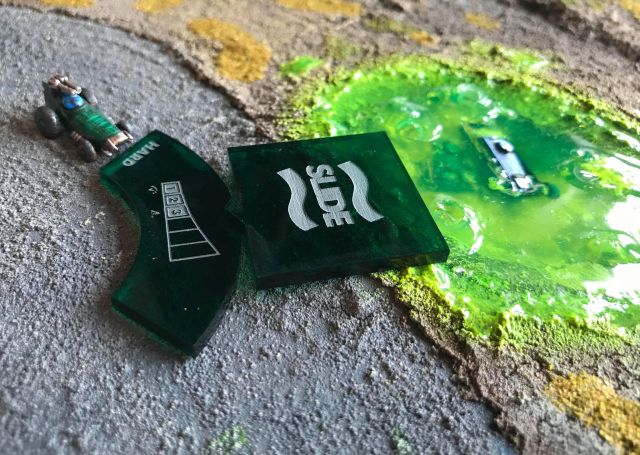
My original thoughts on doing Gaslands in 6mm – well actually more than thoughts – can be found summarised in a blog post I wrote earlier (Here). After this I got myself some 50% movement templates that I bought from Bendyboards (link here, contact Lee and ask him for 50% if this is of interest) that produces the official Gaslands templates. This in effect means that a 2 by 2 foot board equates to a 4 by 4 in full scale.
If you want a good overview of the game, I think this review (link here) is a good summary and worth reading instead of me repeating something similar in content but less enjoyable and thorough. I agree with the sentiment of this review.
TERRAIN FOR PLAYING THE GAME
Getting toxic
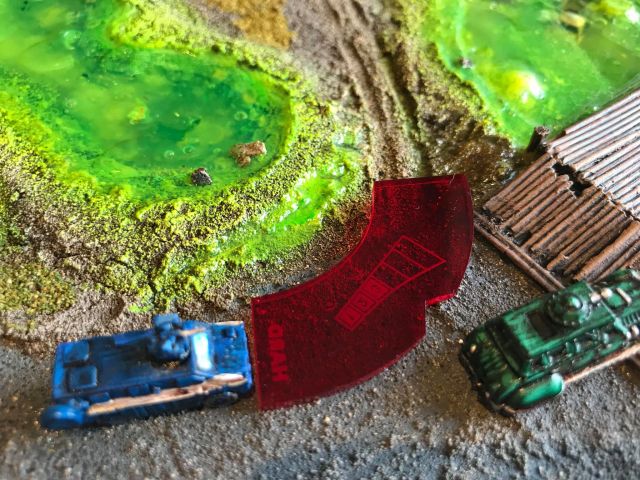
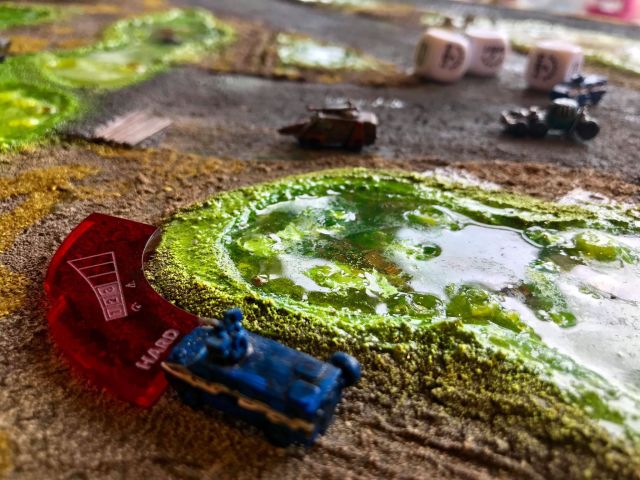
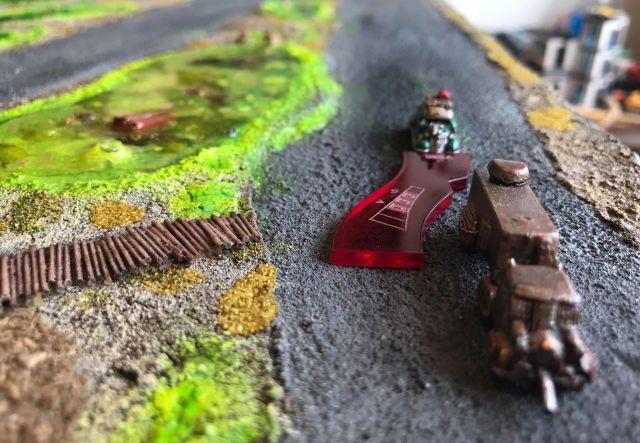
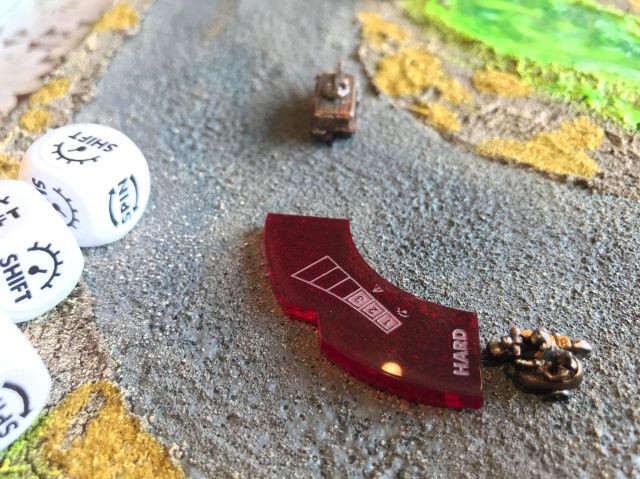
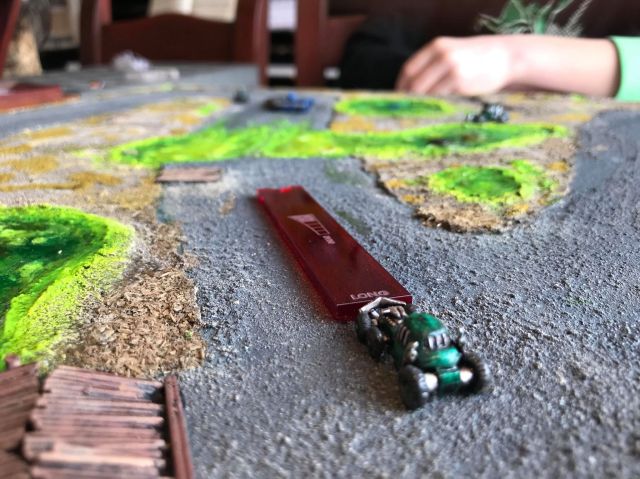
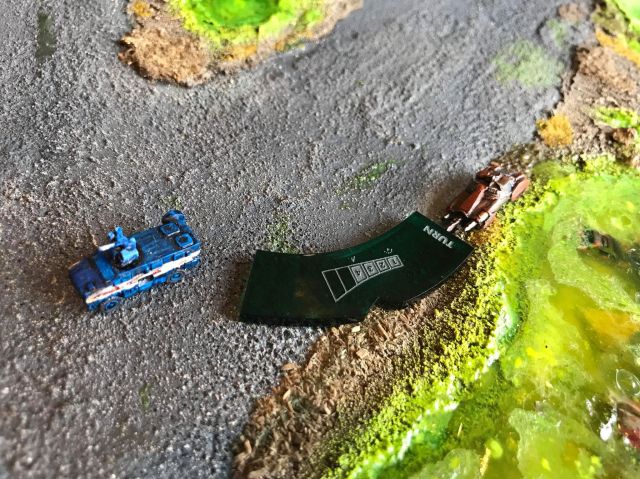
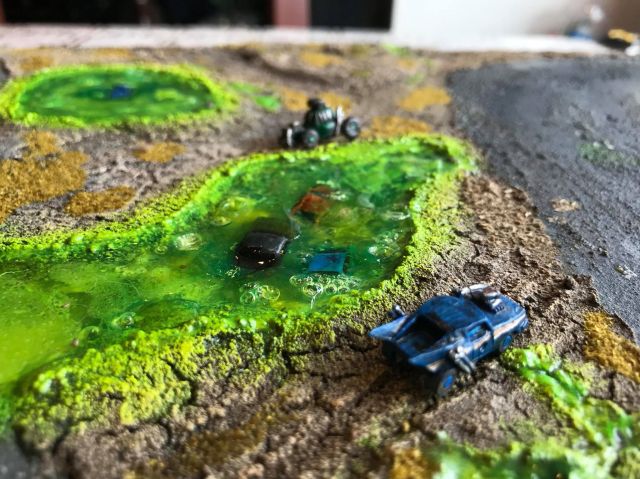
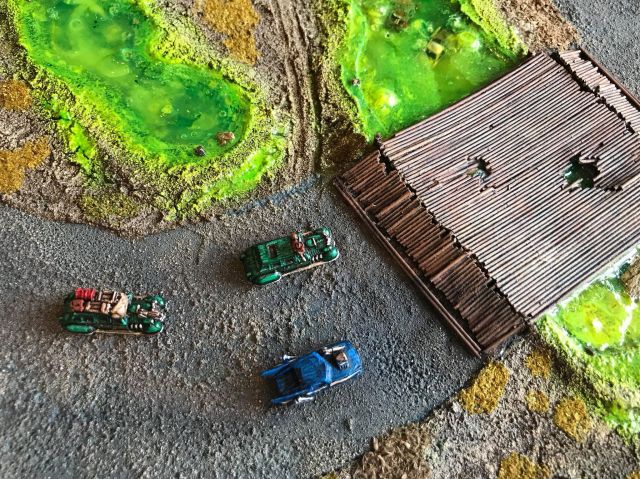
So far we have used the Toxic track I made some time ago to do our games, we played a fair few games just using a car each with front mounted machine gun, but we have now also done some games with 3 to 5 vehicles on each side. I find that it produces different games – the single car race is about outmaneuvering and skill whilst the selection of vehicles tends to lead to a more skirmish fight situation – at least the way the Little One and I are playing. Both version highly enjoyable.
Here is the terrain board again (2 by 2 feet) – we are ready to press the pedals very quickly with 2 minutes of so set-up time.
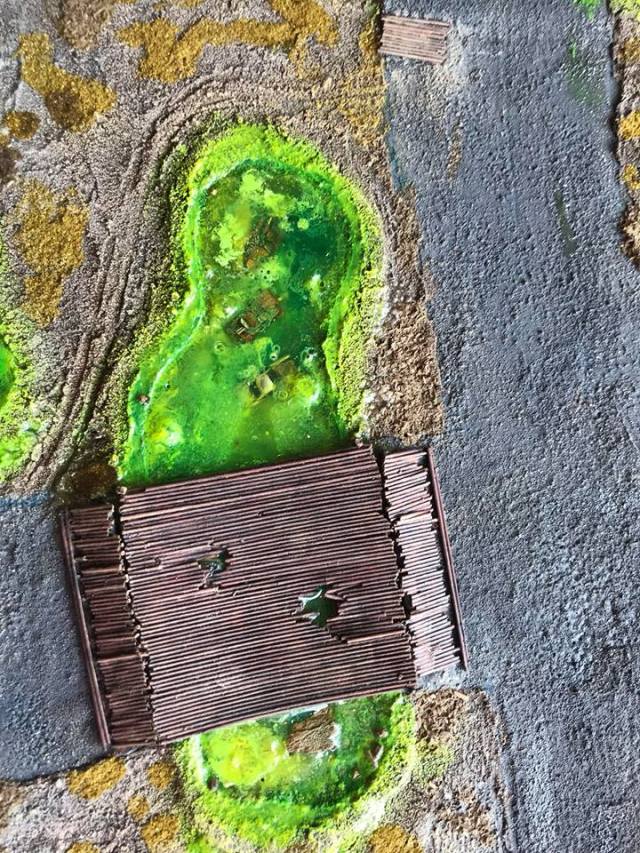
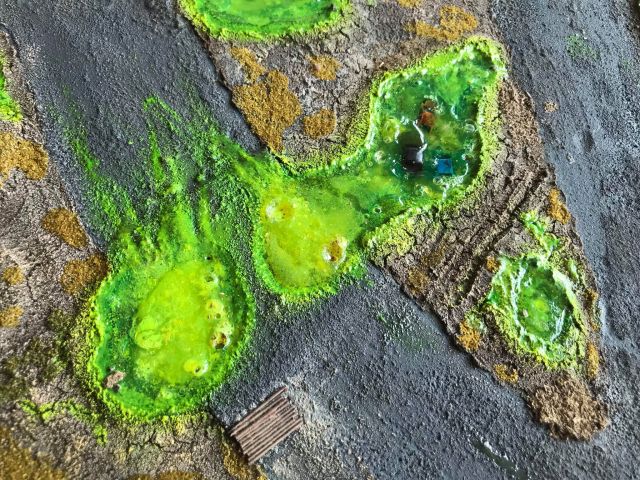
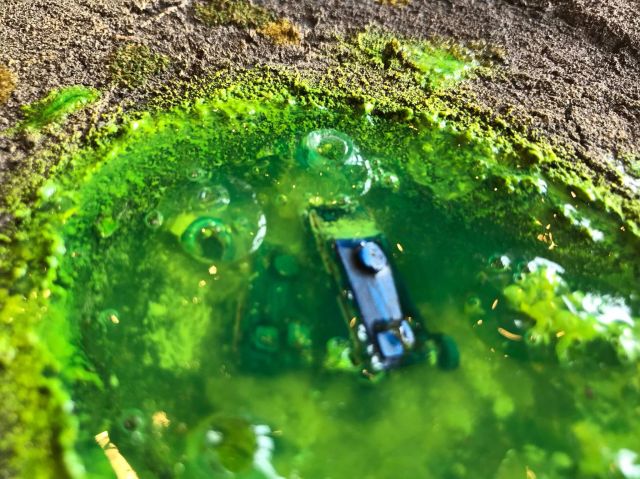
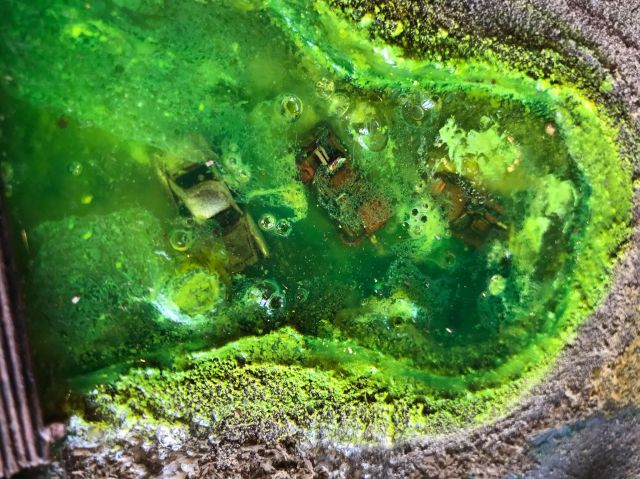
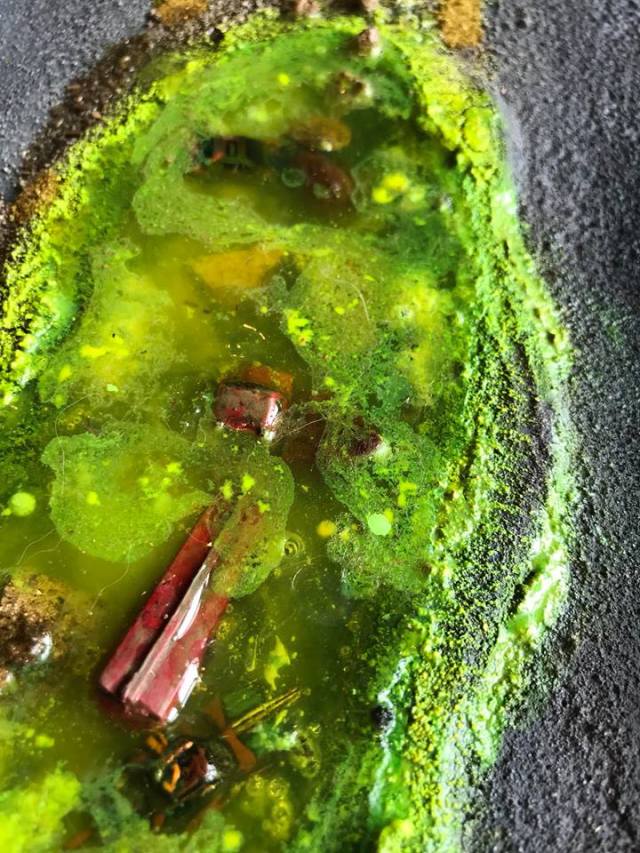
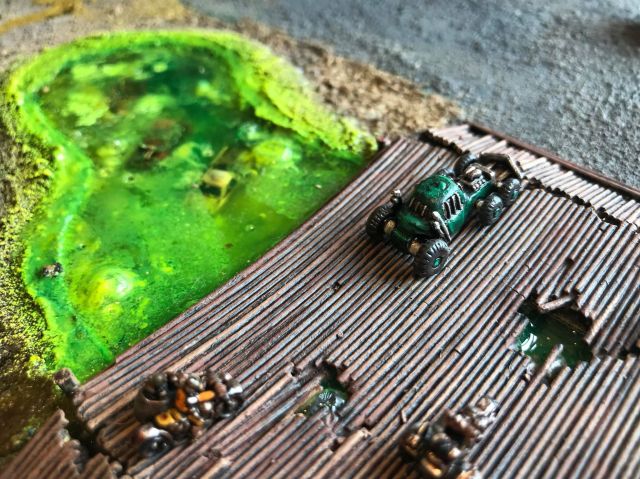
It has some slimy pits that are best left alone.
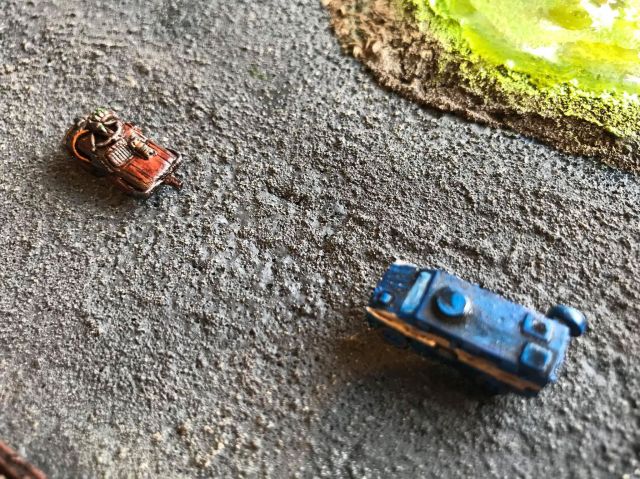
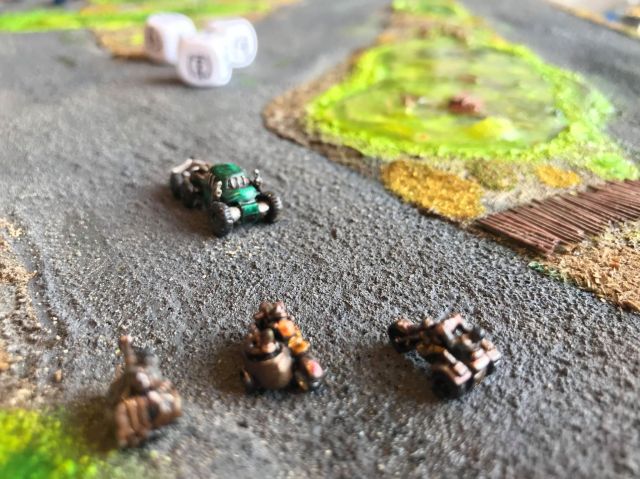
Here are a few shots from some of the games we have played.
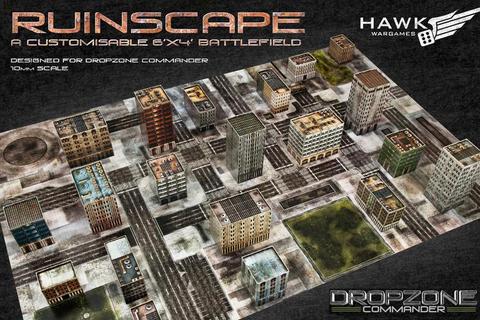
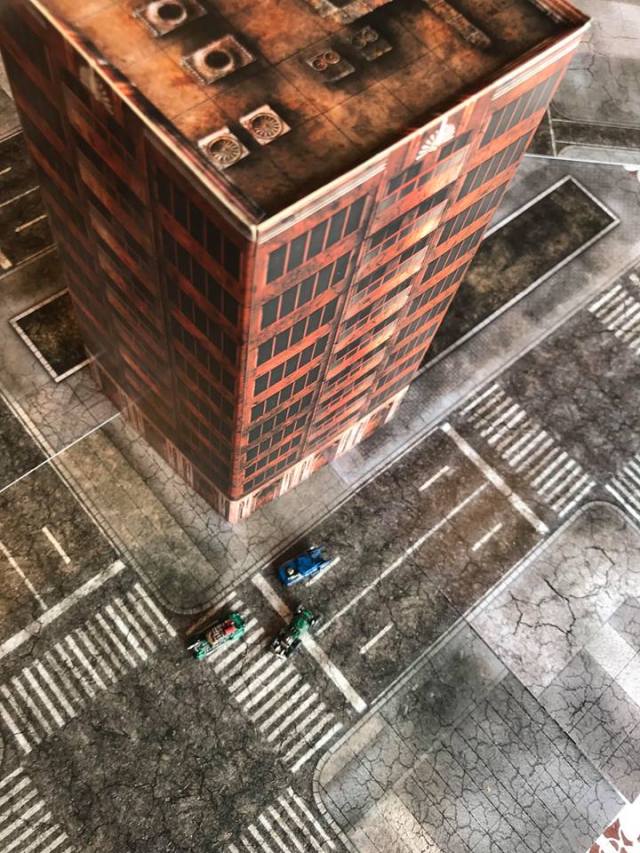
dropzone commander ruined city tiles
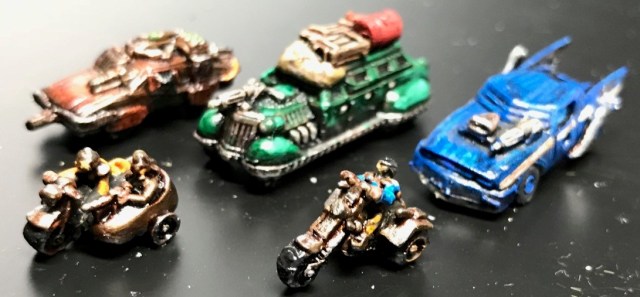
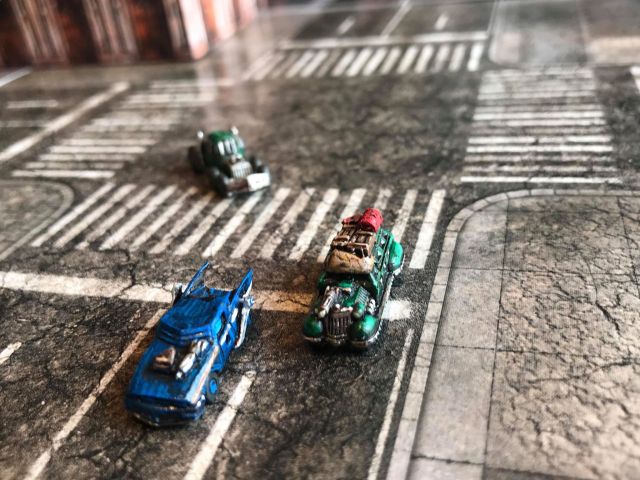
I actually came to the conclusion that the cars I ended up getting were probably closer to 10mm than 6mm scale – instead of 1/285 scale I found them being more like 1/200. 10mm normally is referred to as 1/160. I then remembered the Dropzone commander rules and some cityscape terrain I had seen that looked decent – at least from what I was seeing. I ordered a set of ruined city tiles and buildings for the Dropzone commander game. It is a card board set in 10mm scale and I think this will work brilliantly as it may portray a section of a city where the level of radiation is too high for permanent inhabitation, or otherwise abandoned, and is now being used for Gaslands competitions.
You can find more information about it here. It comes with 20 buildings and mats to cover 6 by 4 feet, so more than plenty for our needs. At £20 (reduced at the time I bought it 3rd April 2018, from £30) for the whole set (including delivery in the UK), hardly any significant outlay even if it is cardboard and we will probably end up knocking down the buildings whilst maneuvering our cars – but I will keep you posted on how this cardboard adventure will progress.
Here is the full set as presented on the Webpage. Looks ok I would use some model trees for the park but otherwise good to go. It is recommended that you mount the tiles on some sturdier board.
Here are some shots showing how the cars I am using compare in relation to the terrain. I think it is a more than adequate fit and I think this terrain have some potential for a lot of different things.
Really like thisSpot on
In addition you can download more buildings for free on the webpage (here), but I think I will stick to these pre-printed ones as I am happy with the amount of terrain I already have in the basic set. I suppose if you use these you could re-sixe them to fit to the scale you are using.
Example of a printable free building for Dropzone Commander as the link above.
further gasland ideas
mutant 1984
I recently completed some Snowmobiles for my Mutant 1984 project, based on a matchbox model (“Snow Hopper”). I found these at a Poundshop for £1 each.
These are in “28mm” and I am planning on using Gaslands for a chase scene with some skiers, snowmobiles and some other snow vehicles, like the one in the picture below from Warlord Games – the Gaz 98 Aerosan (link here, picture from their webpage) and the skiers (link here, picture from their webpage). Still work in progress, so some time away from completion. It is basically a “downhillish” race where a detachment of Pyri Commonwealth Scouts on skis are being spotted by some Borderguards of the Ulvriket Army on Patrol in the occupied Göinge during the cold Winter Year 109.
6MM ZombieS
I also have some 6mm zombies that I need to paint to do the zombie scenario for my “6mm” cars, these are from Microworld Miniatures and I will be using Zombies and Ghouls (link to Microworlds Undead Range, here. Pictures from their Webpage).
In summary we are having fun with these rules!, I hope you are too.
Next time is the 100th Roll a One blog entry.
/All the best, and by the way we had a guest font in this blog post it is called 28 days later and used in Gaslands – you can download it here.
Work is taking more than its fair share of my time at the moment, but it happens to most of us. However, I have had some time to get some things done over the last week or so, this is just a summary of that. As always, I do hope it is of some interest.
Chain of Command – dice, casualty markers and suppression markers
Gaslands – finally a game
Finnish and Sovietic dice
I am currently working on some terrain and markers for winter war Chain of Command. I wanted to have some dedicated Finnish and Sovietic dice so looked around and found a fair few Sovietic options but only one Finnish (very nice ones, sold by Dice of War in Australia, see here). These are not specific ones needed for the game, just the type where the 6 is replaced by a unit or a country symbol and could therefore be used for any game that uses D6s. I wanted to have blue ones for the Finns and Red ones for the Soviets, and thought I could perhaps do some myself. I found some 16mm blank dice on ebay and got myself a few different colours (these are from China so will take a week or two to arrive!, at least if you live in the UK).
I then ordered some labels/stickers from Amazon (13mm).
From Label Planets website (link here) you can get a word template for this label set and buy bigger quantities as well. From this you can design your own labels.
I wanted to have 1 to 5 in the same font as used for the Chain of Command rules. This font is called Vulgar Display of Power (download it here). In addition I wanted the hammer and sickle for the Soviets and the hat emblem that the normal enlisted men had for the Finns, replacing number 6.
Here is are the files with the sheet I made for the Soviets (Russian Dice) and sheet for the Finns (Finnish Dice), these are word files. You can change these to add your own colours and symbols.
I have to admit that I had some problem with the laser printer I was using in aligning the sheet so that it printed out correctly (I wasted three sheets but luckily managed to get two done, which was all I needed)- the final result is not perfect and if you have trouble I can only say I am sorry.
This is how they turned out.
I will make some yellow Sovietic ones and some white for Finns for Command Dice rolls.
Dead Soviets
One of the striking things with the Winter War are all the pictures of dead Sovietic soldiers especially in the fighting North of Lake Ladoga. Behind my romanticised view of the war and Finnish bias, I am not immune to the hell those Sovietic soldiers had to go through trapped on those wintery stretches of roads, with inadequate supplies of just about everything. Go to the Wikipedia page and read about the Battle of Suomussalmi (link here) and check the losses on both sides – 50% losses for the Soviets and less than 10% for the Finns.
To create a reminder of this I did a few terrain features with dead Sovietic soldiers (I keep on using this term as the soldiers in the Red army were not only of Russian nationality). They were based on Peter Pig casualty markers (based on anything with a great coat and headswaps to pointy Russian hats and early war helmets).
Some Casualties, clay, stones and twigs from the garden
…and here with some painting, winterization and blood (sorry!).
Suppression Markers
These are based on the concept of snow flying around as bullets hit the area. I used something called Universal Cooker Hood Filter to do the effect. It is like cotton but much stronger, I attached a part of it with superglue and when dry I dragged it out and trimmed it. I also added a little bit of snow flock carefully on the cloud. I think they do the job well enough.
Ivan with his LMG is under fire and splinters are flying from the tree stumpA simpler constructionSnow splashing around a stoneThe full collection
Explosion Markers
I have seen explosions markers made out of clump foliage and wanted to make some for the winter war table as it will contrasts nicely with the snowy background, and also have some practical game purpose. So I searched around the net for some ideas and found a few different options.
Ivan successfully rolled 12 saving throws
I made my set of explosion markers by following the recipe by the Terrain Tutor (link here). Always excellent, this time he blew me away again!
Terrain Tutor – check him out! Excellent.
I also had a game of Gaslands with my micro cars! (using 50% templates), and it was great, but more on that another time.
/ All the best (yes I know I should be doing GNW!)

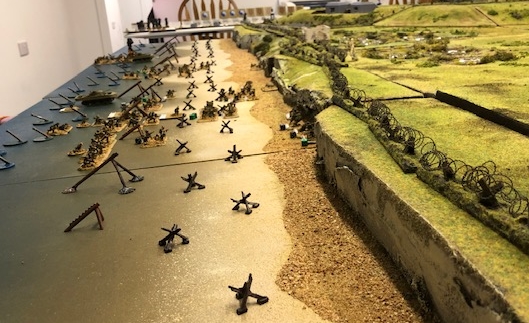

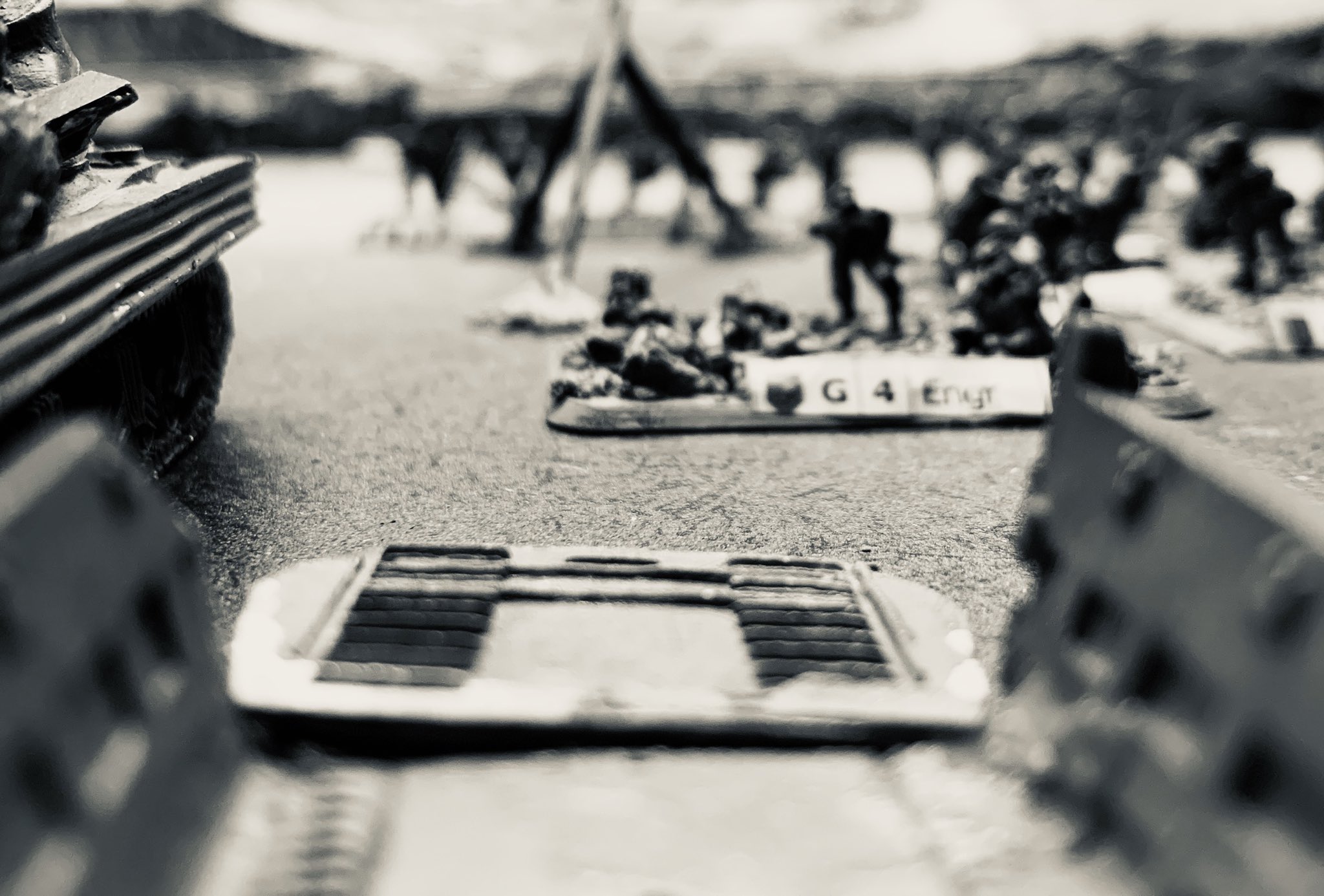

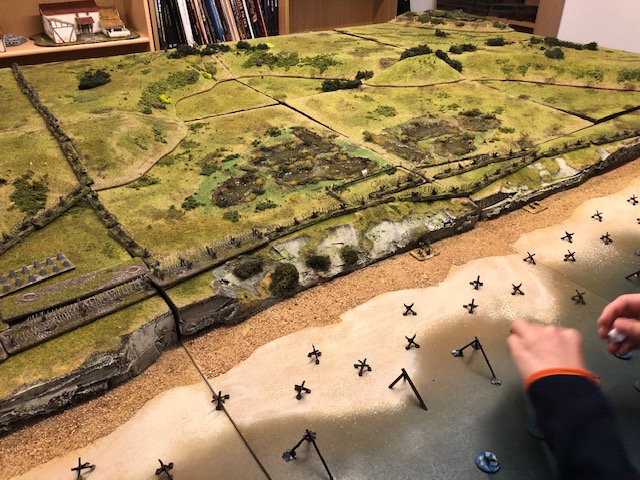
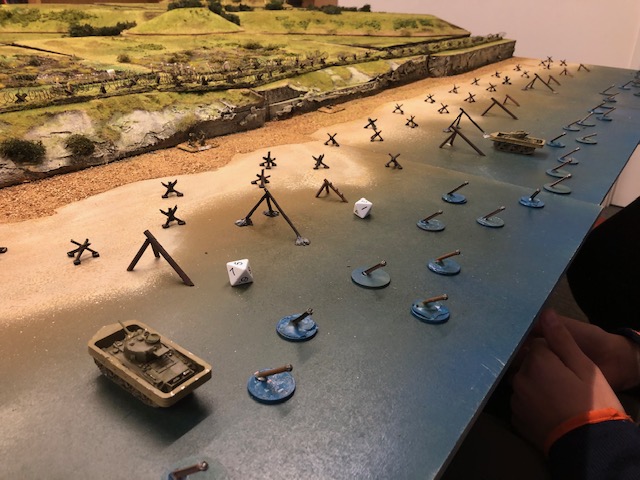

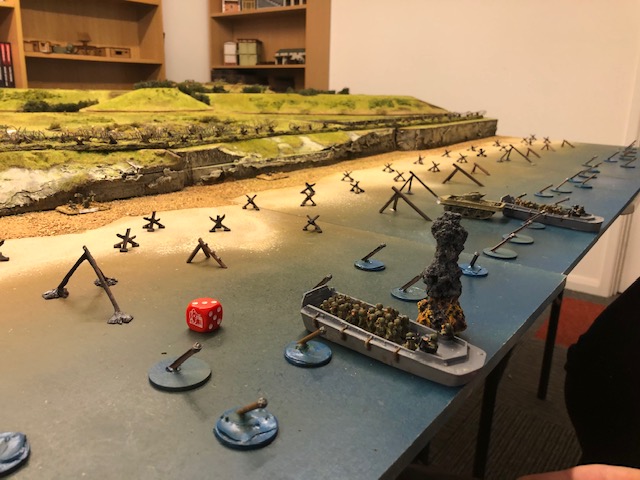
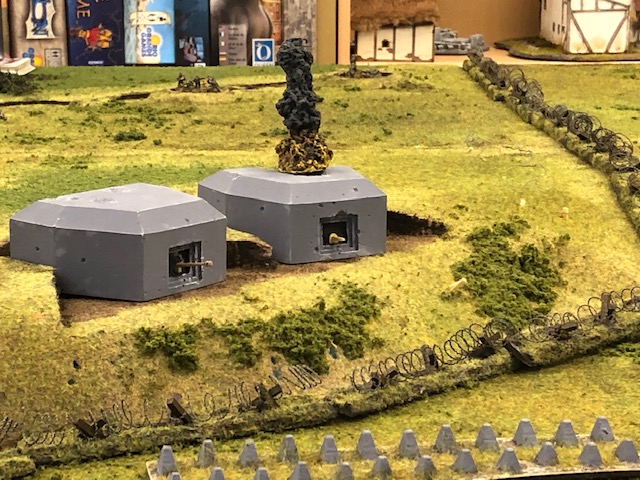
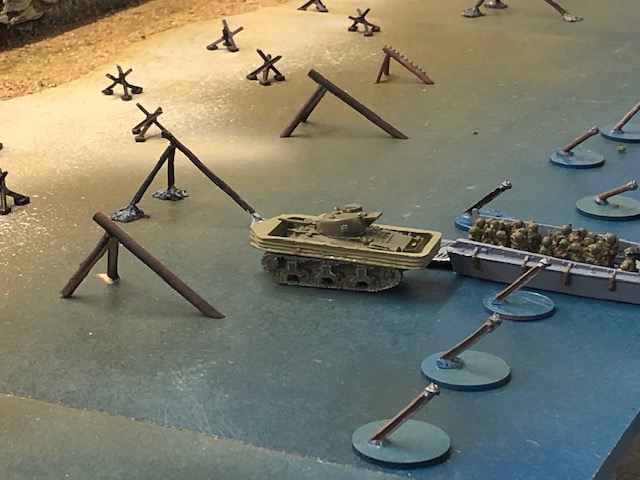
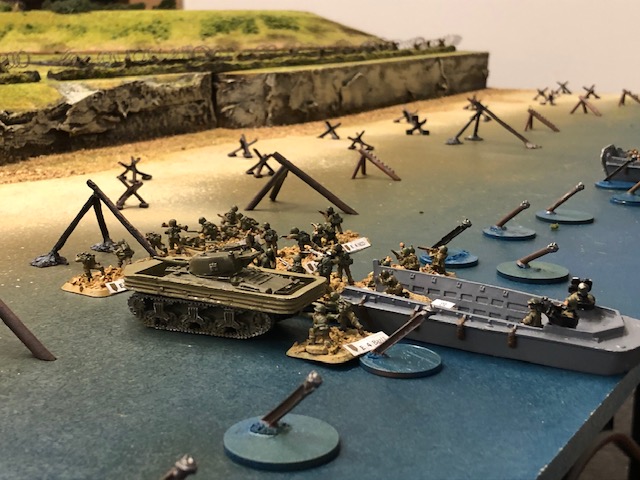


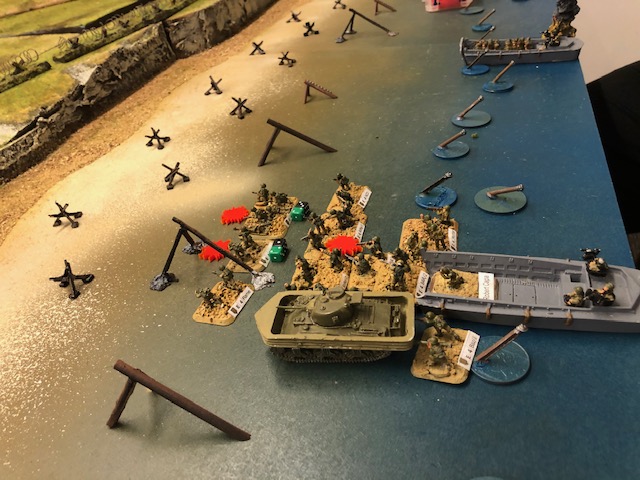
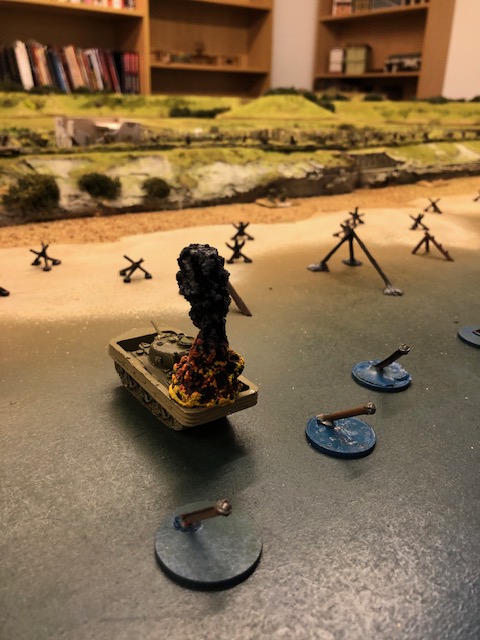
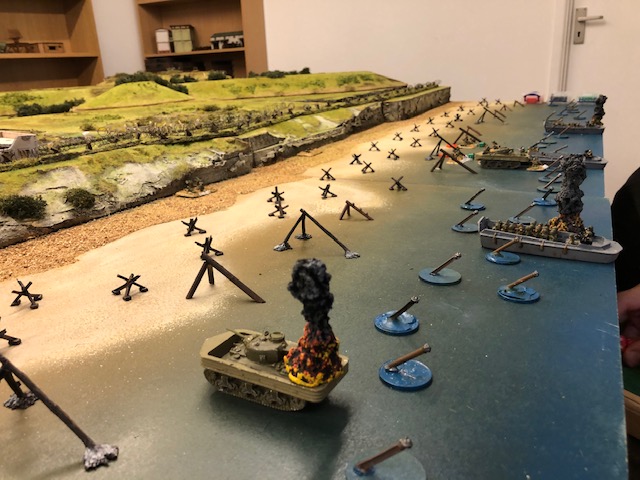
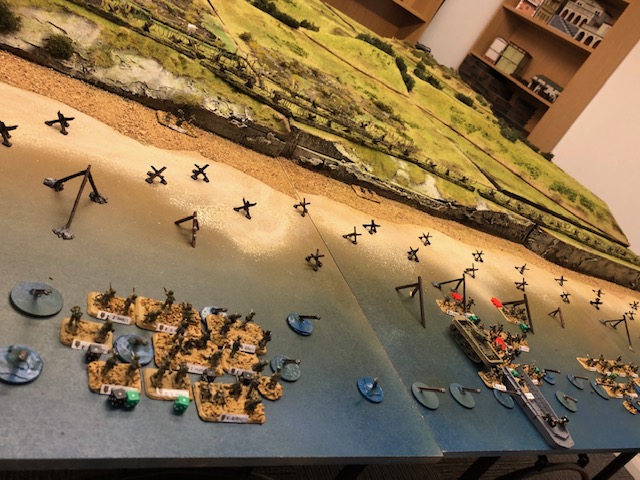
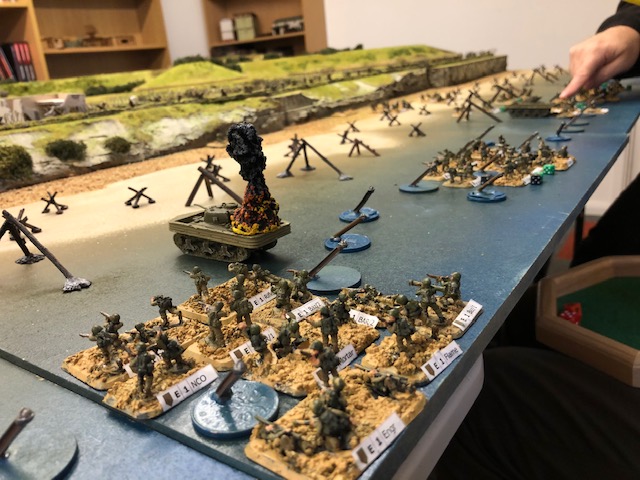

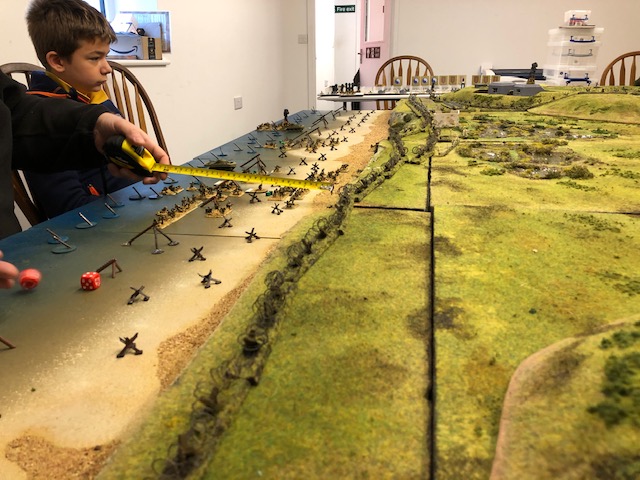
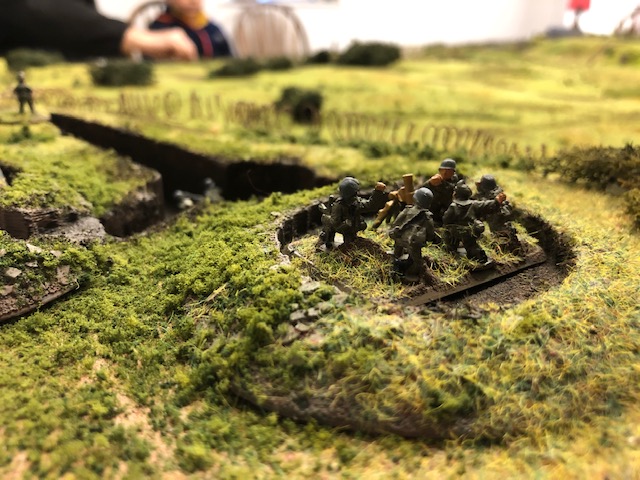
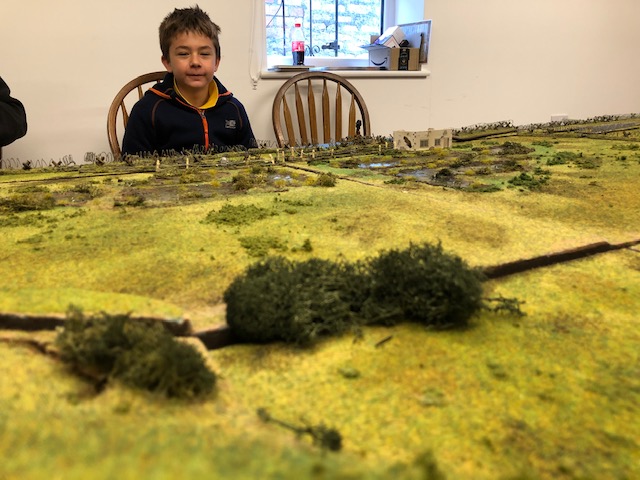
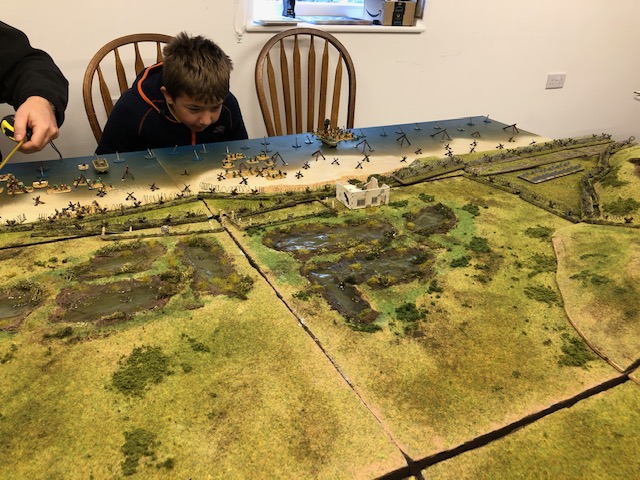
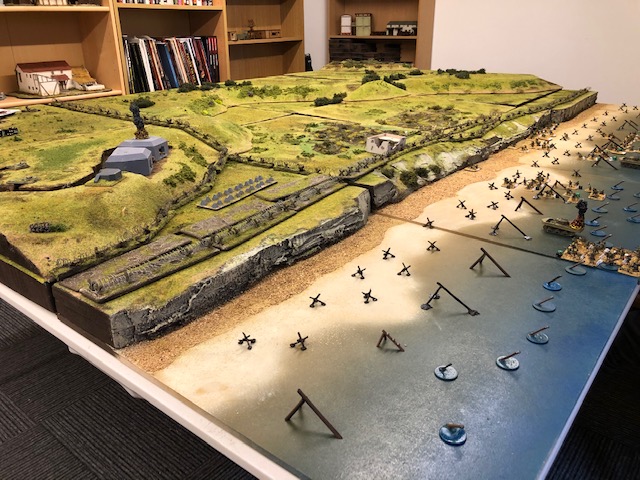
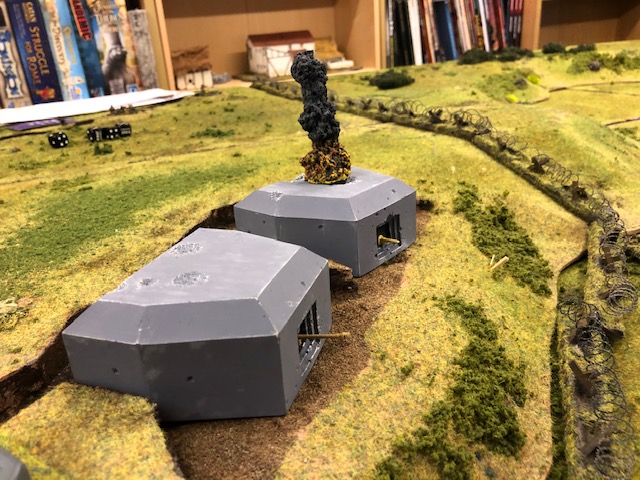
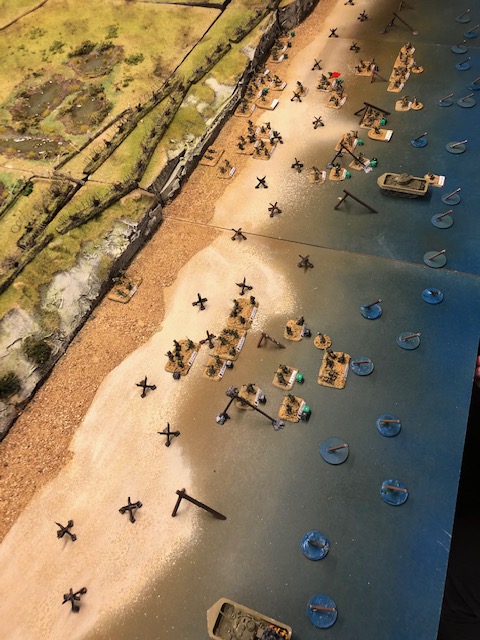
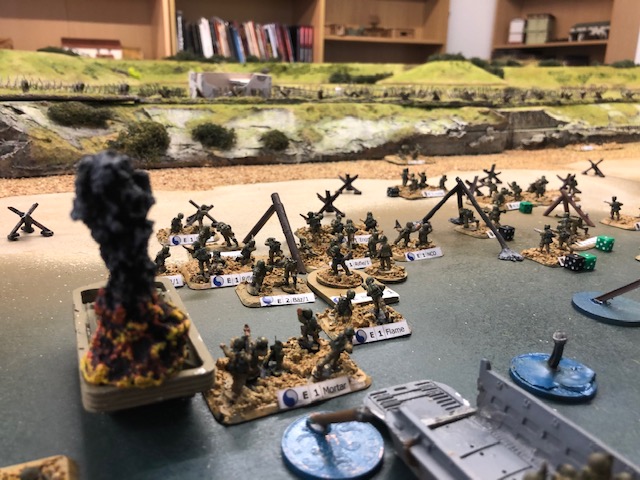
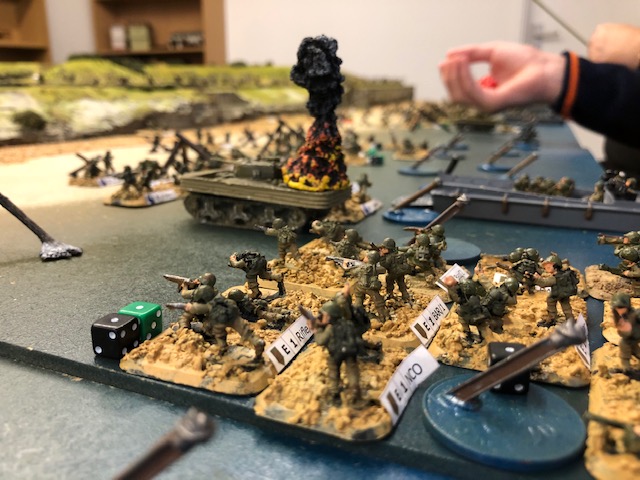
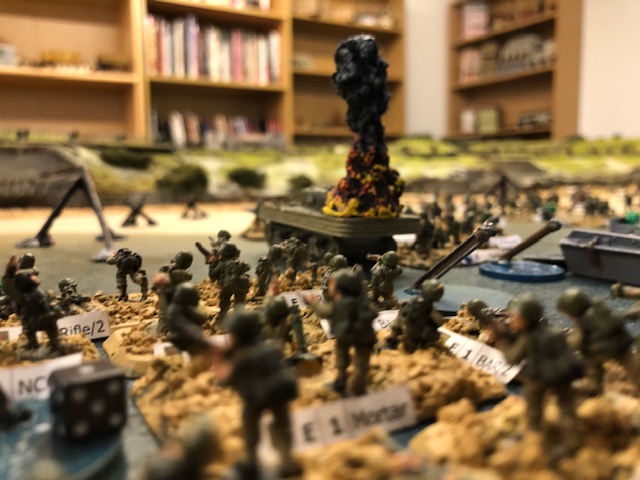
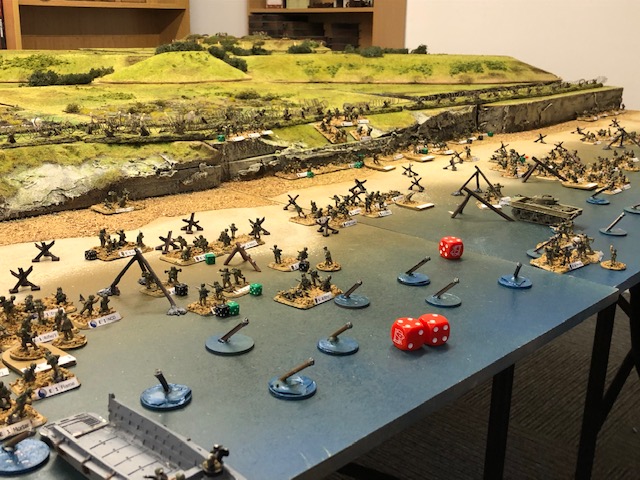
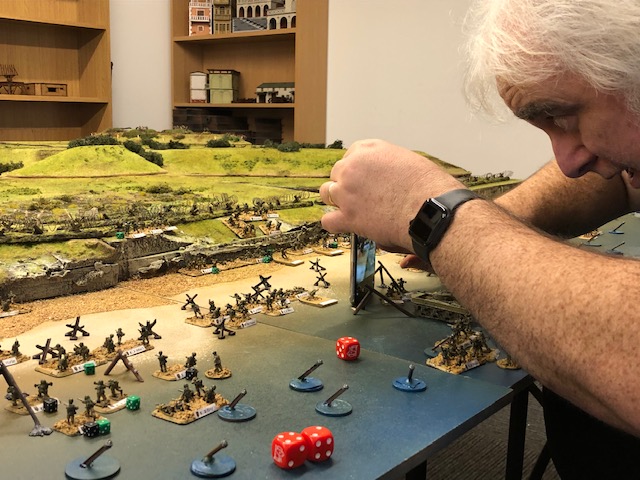
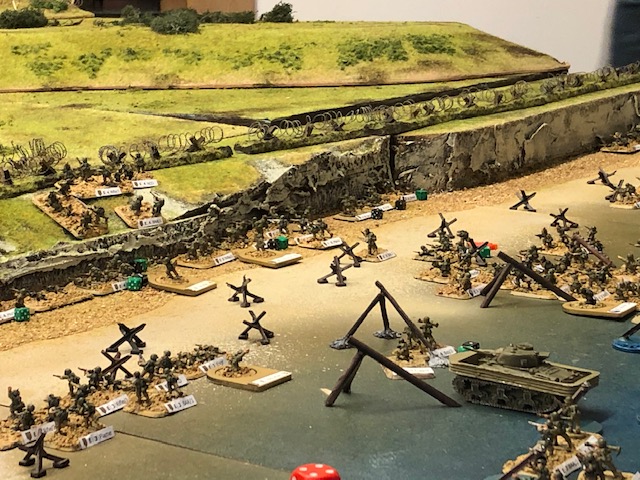
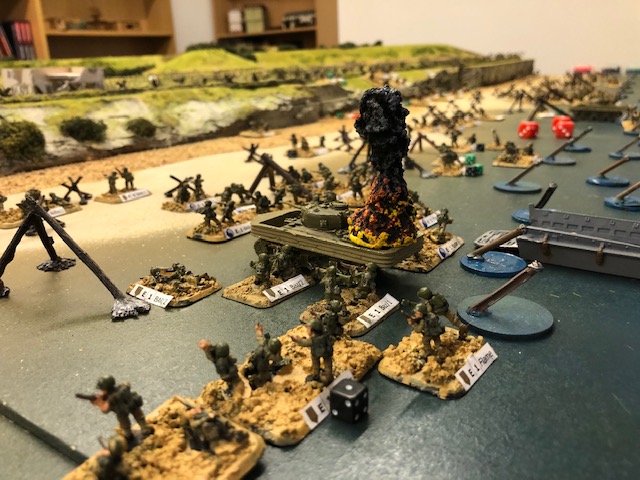
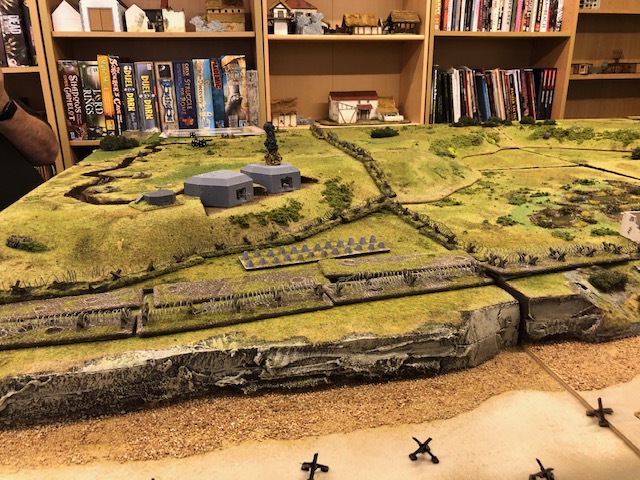
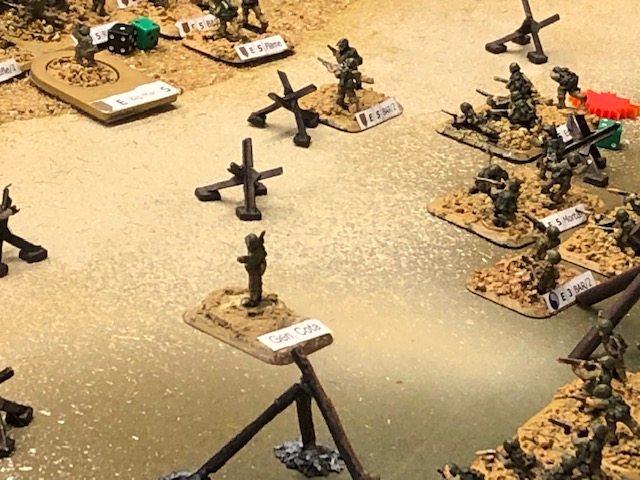
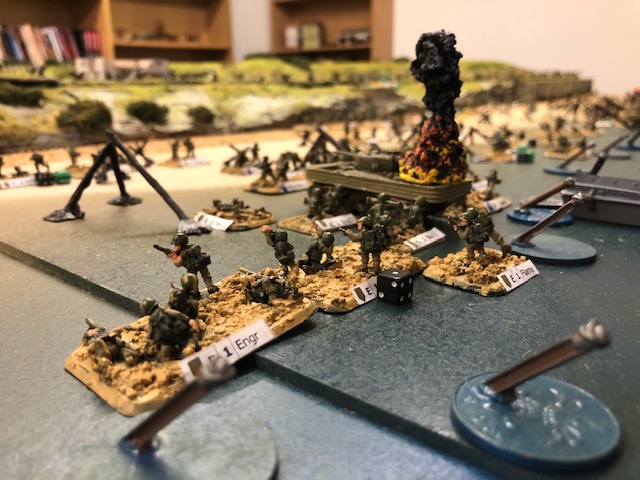
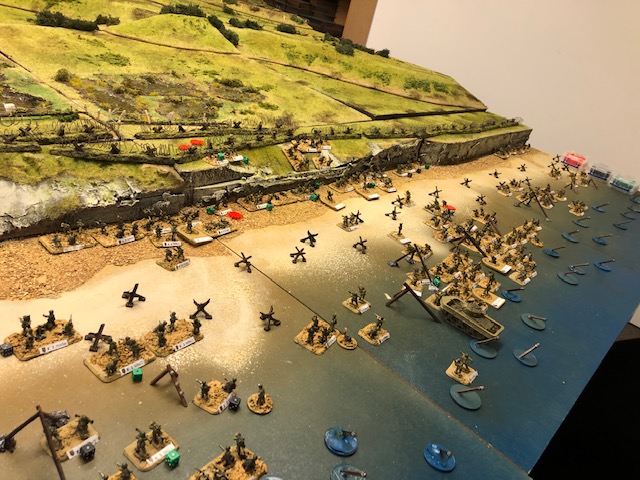
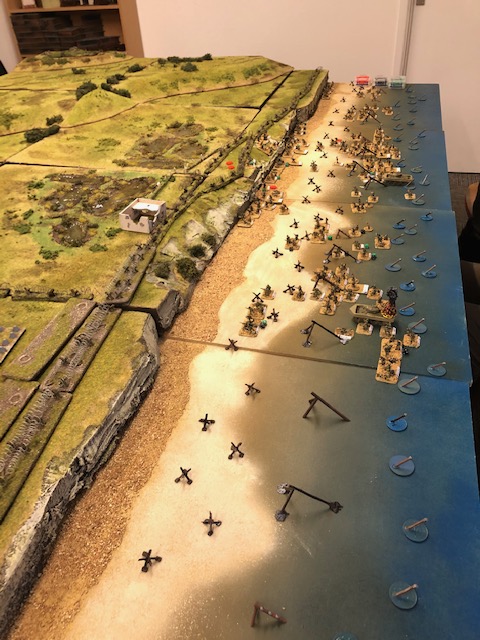
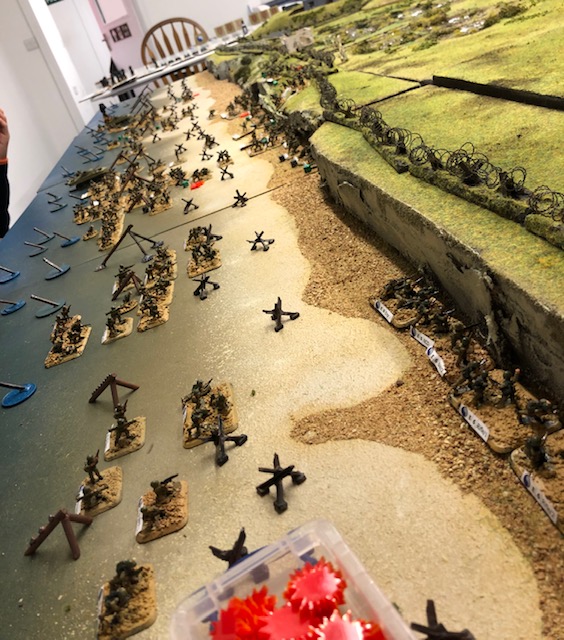
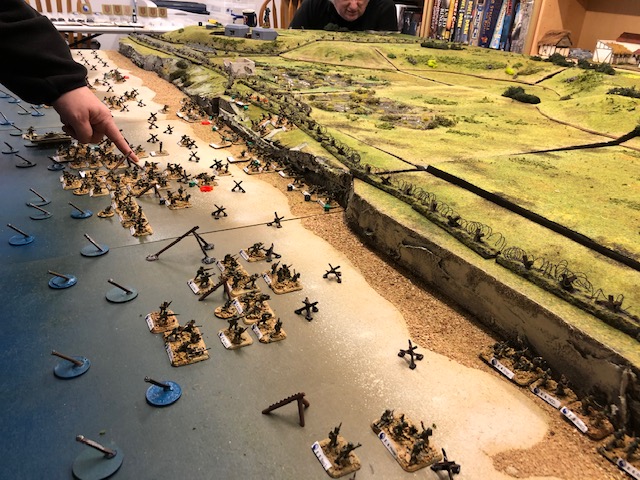
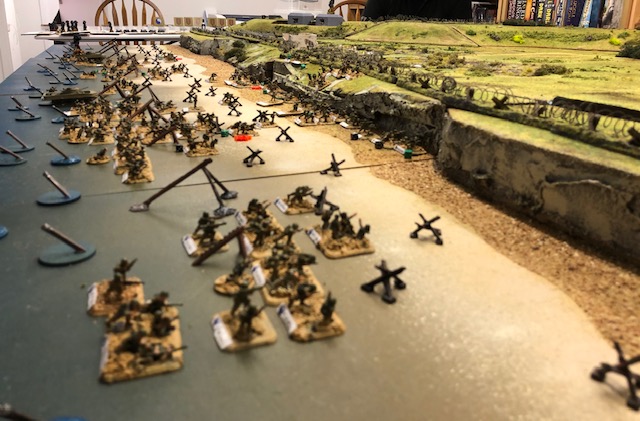
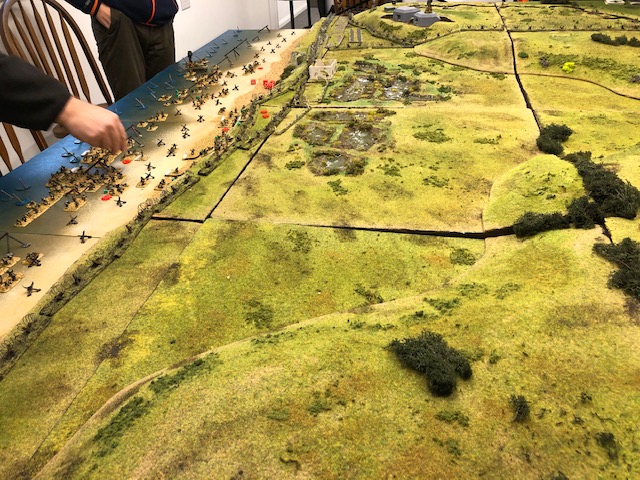
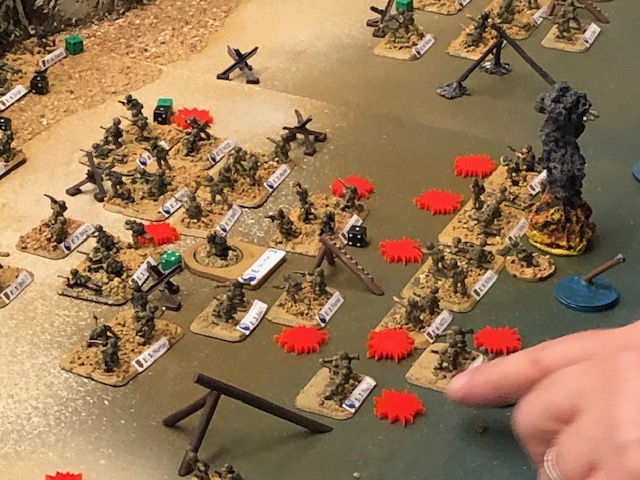
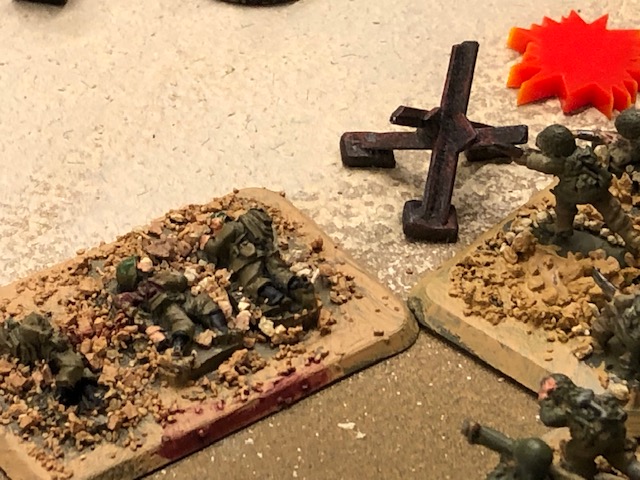
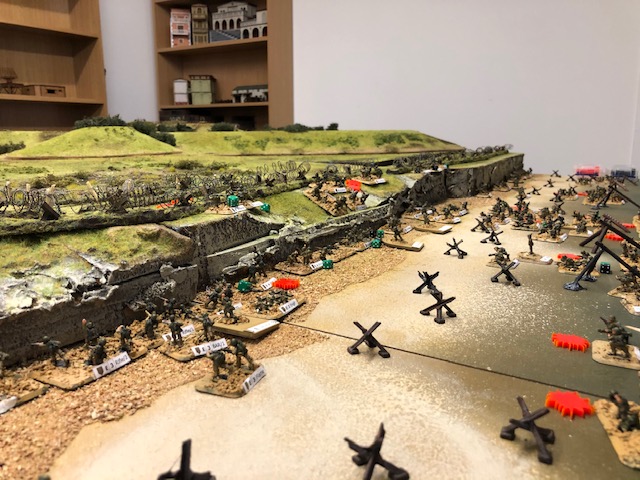
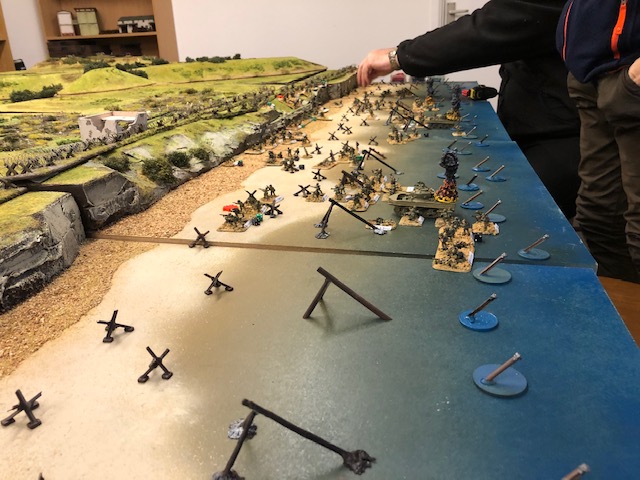
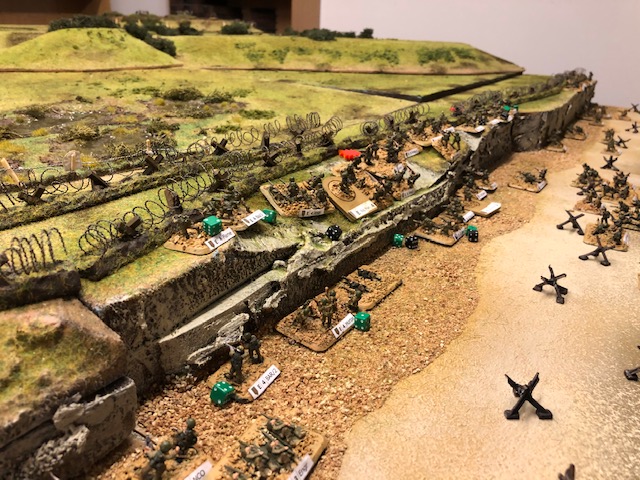
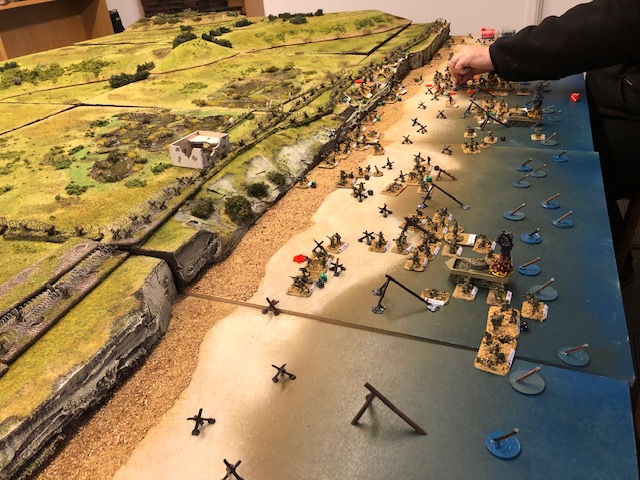
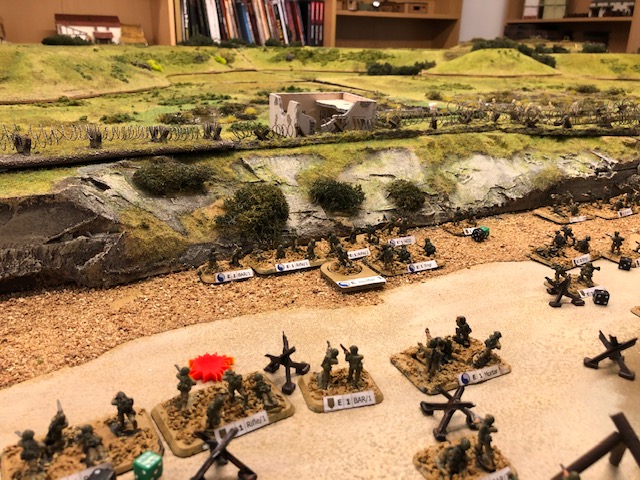
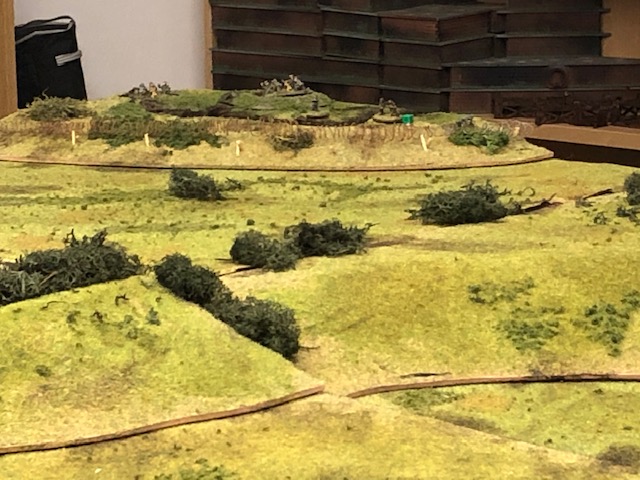
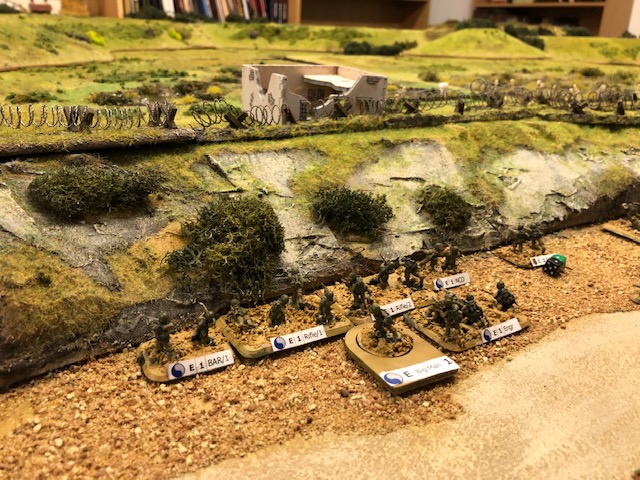
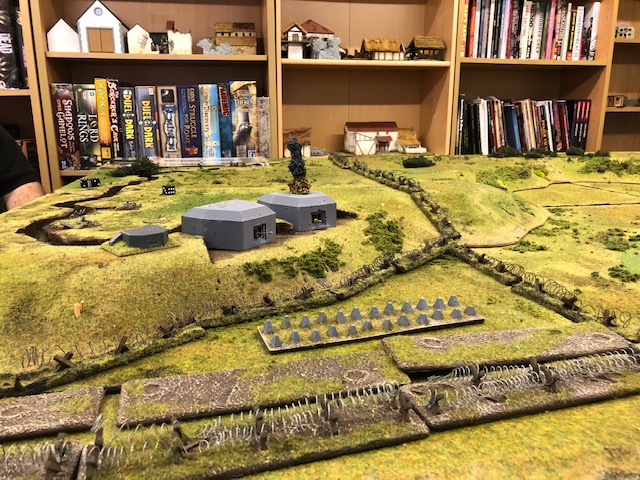


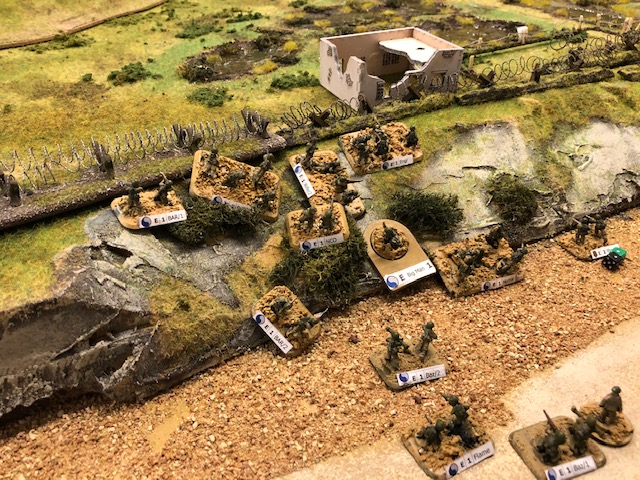
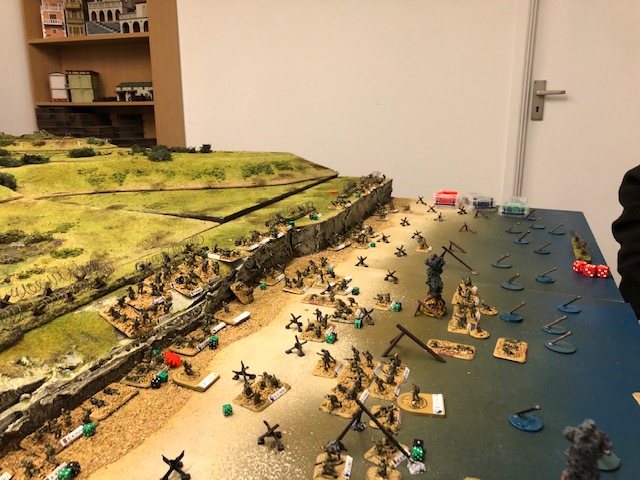

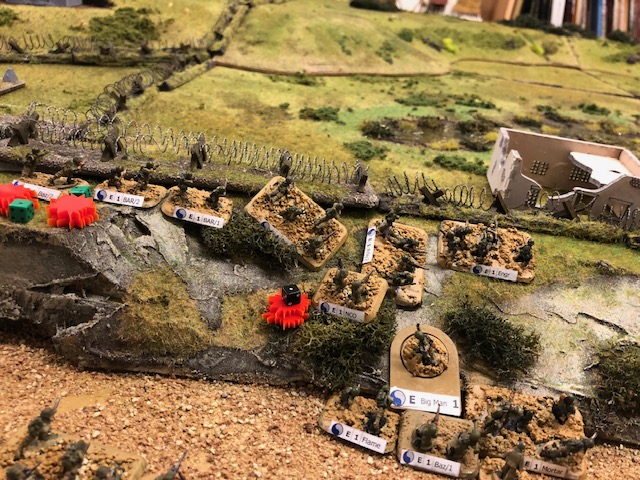
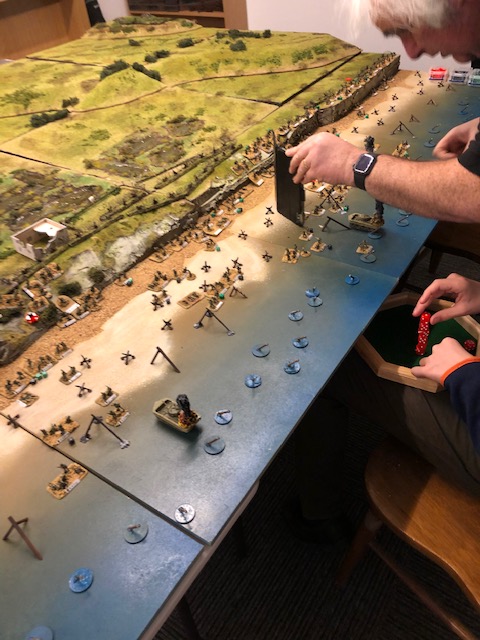
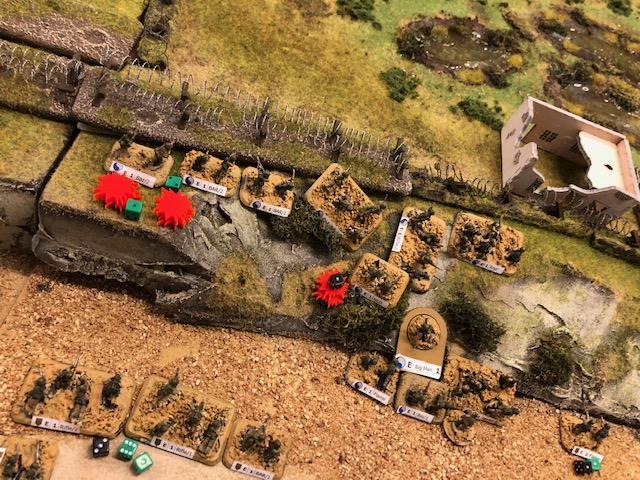
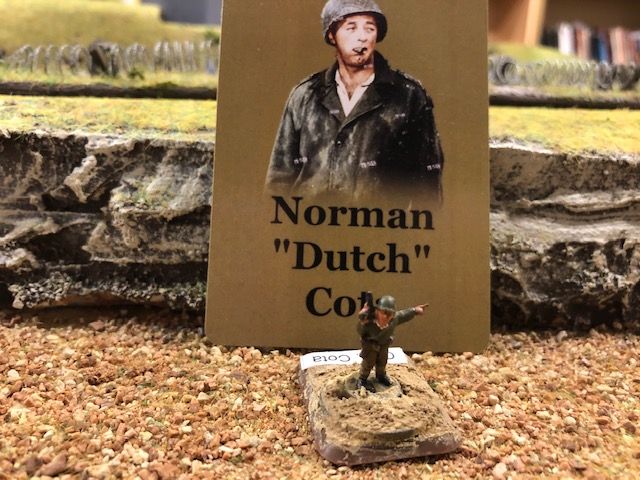
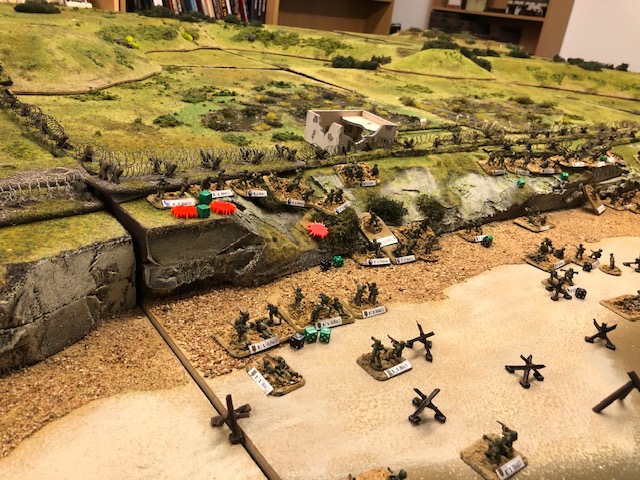
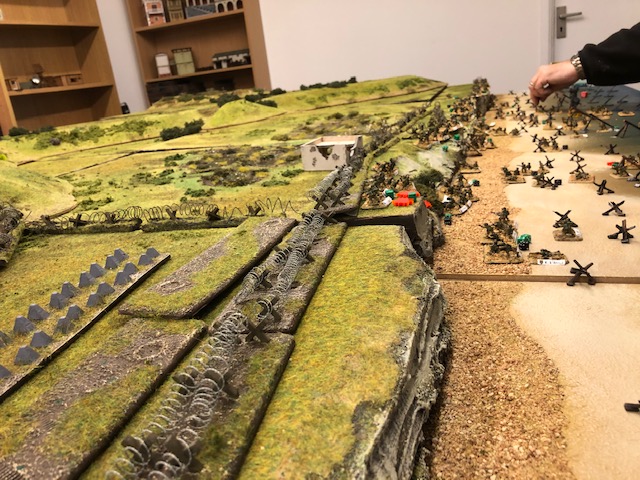
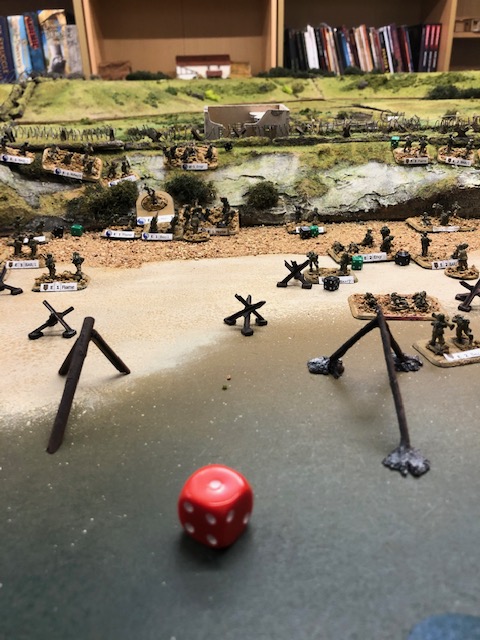
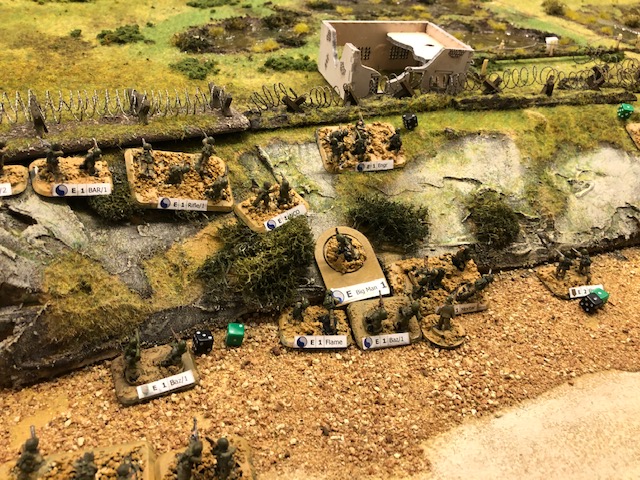


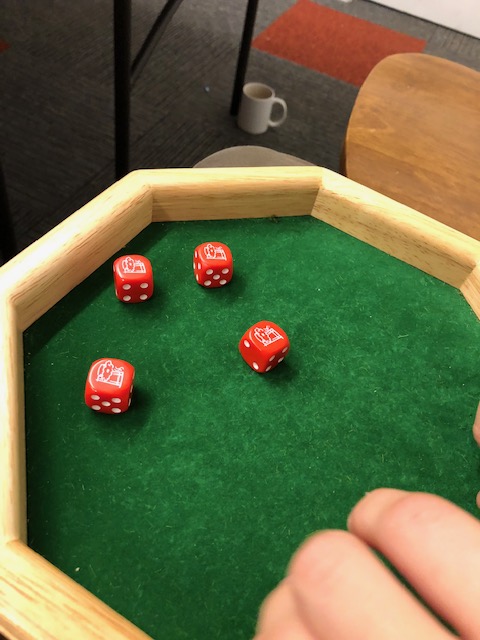

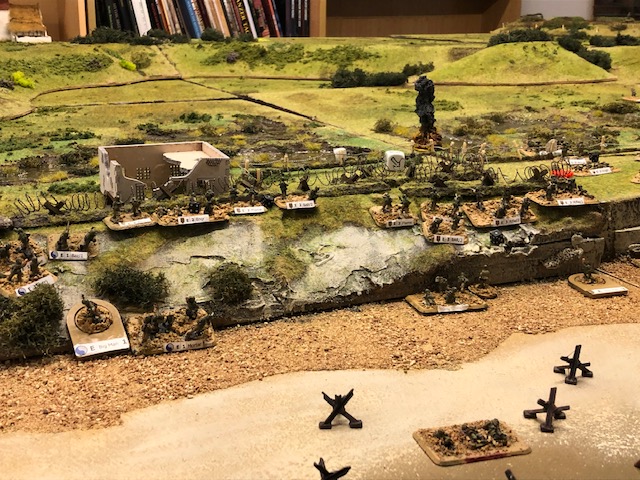
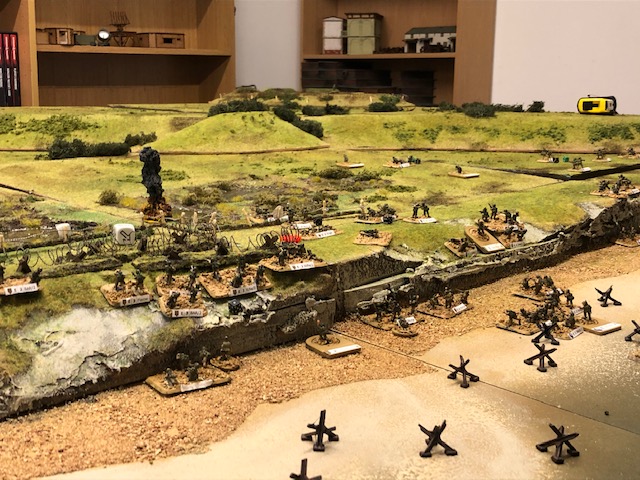
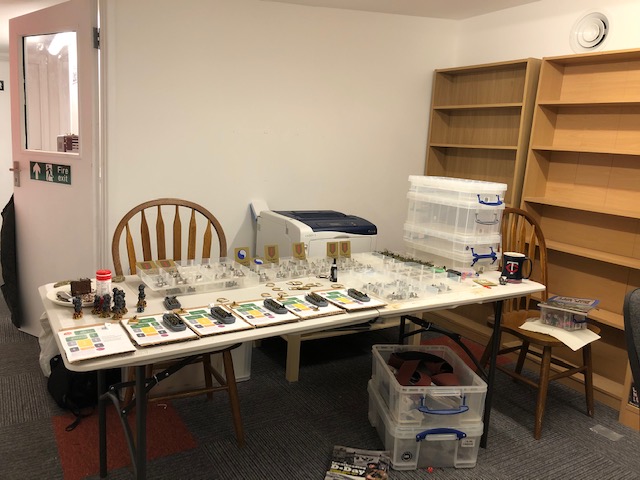
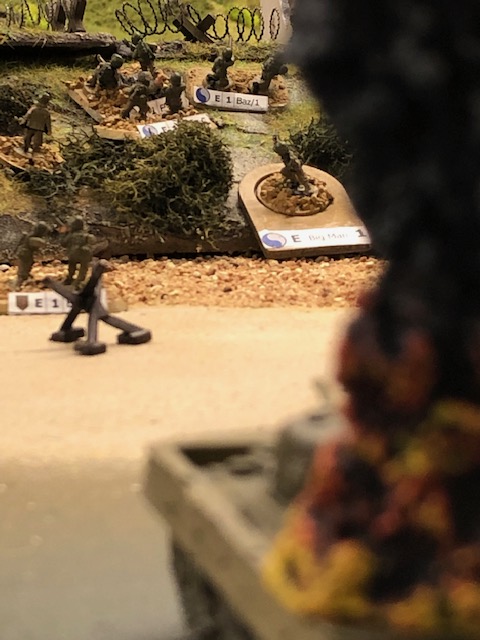

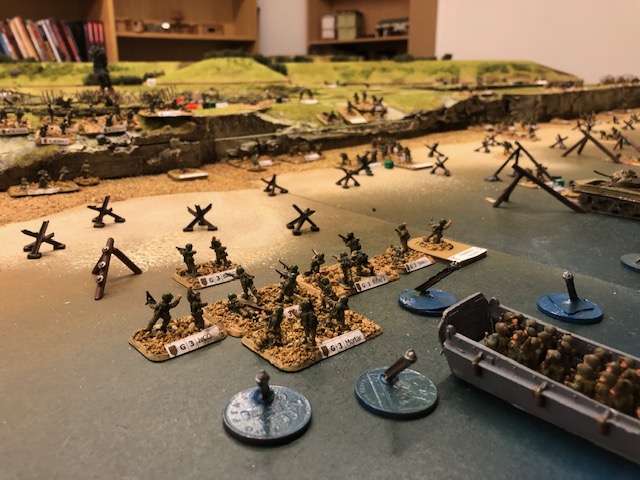

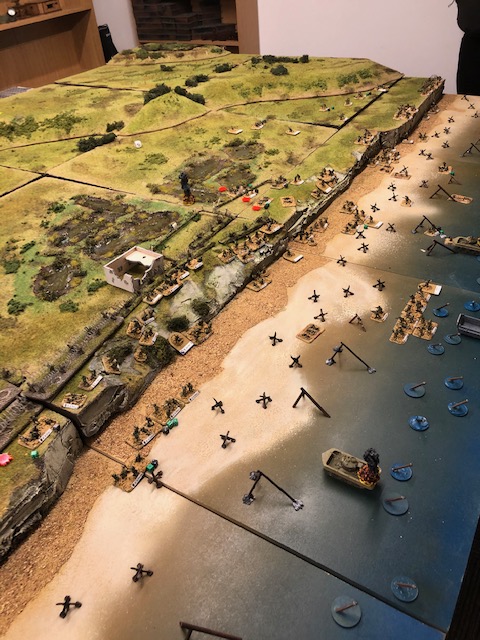
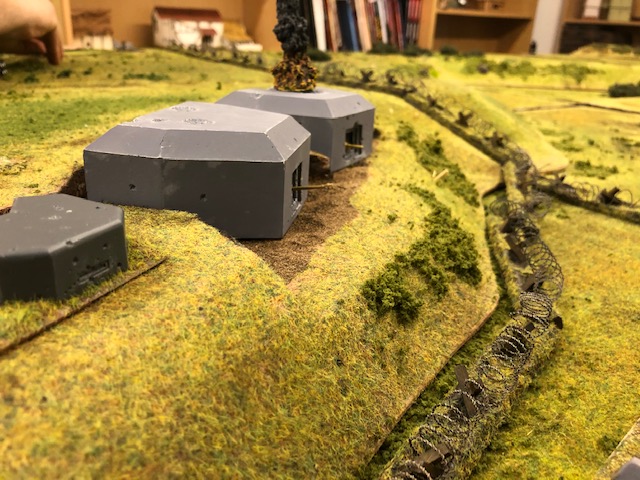
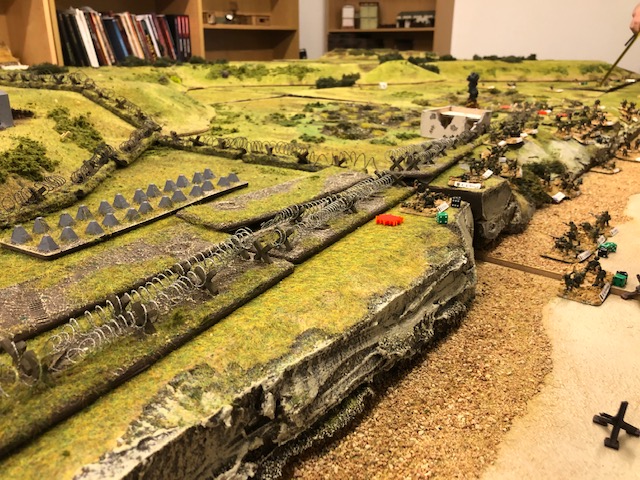
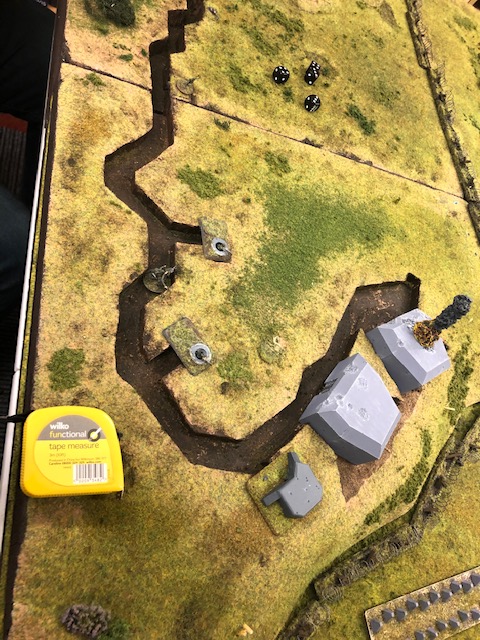
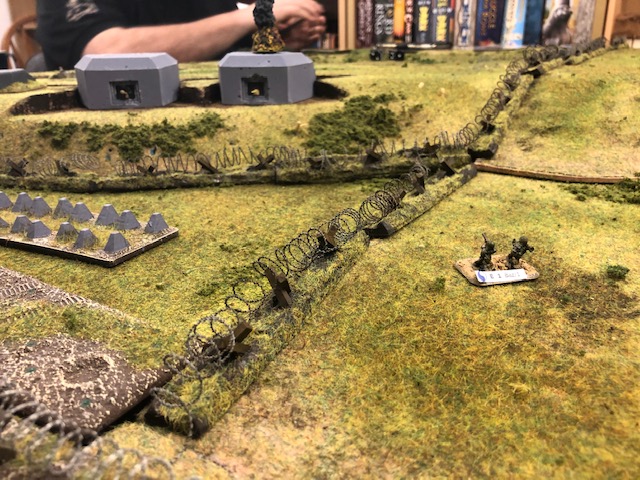
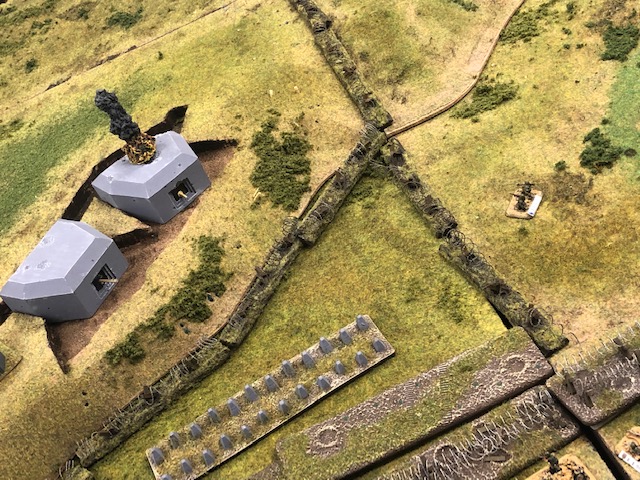
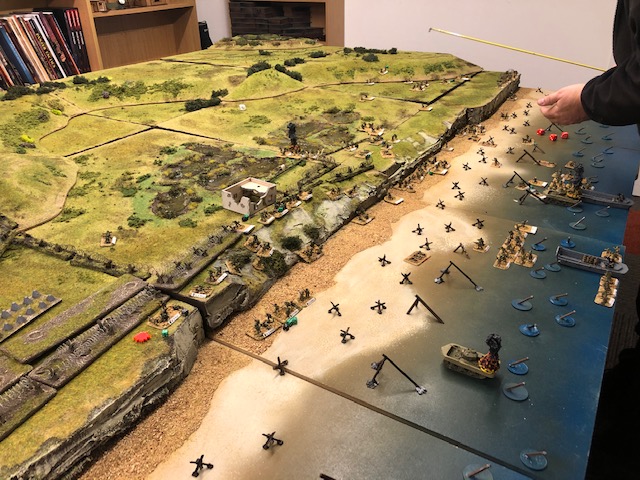
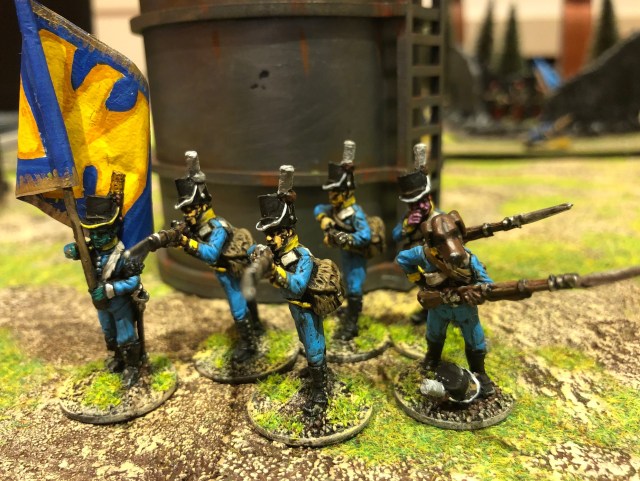
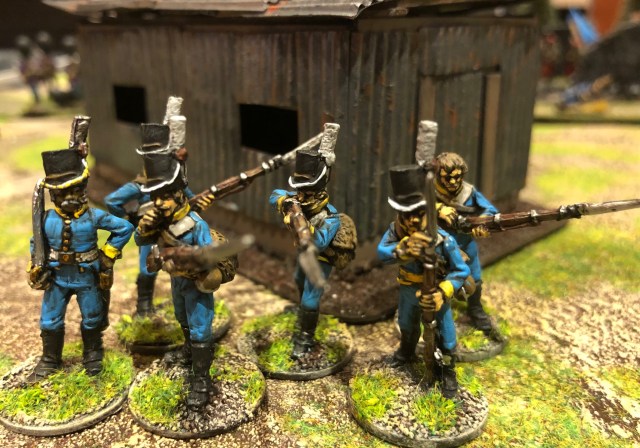
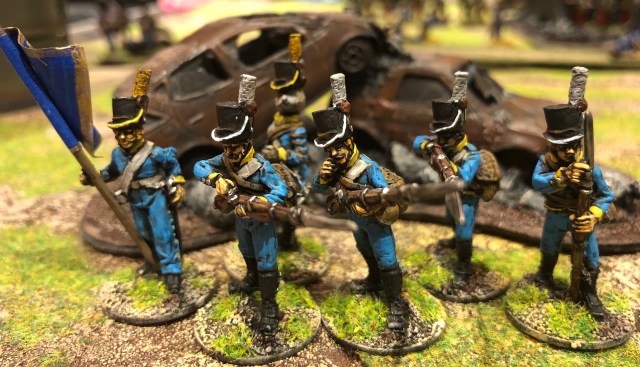
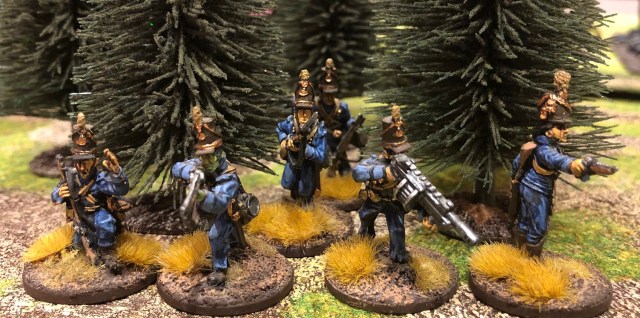
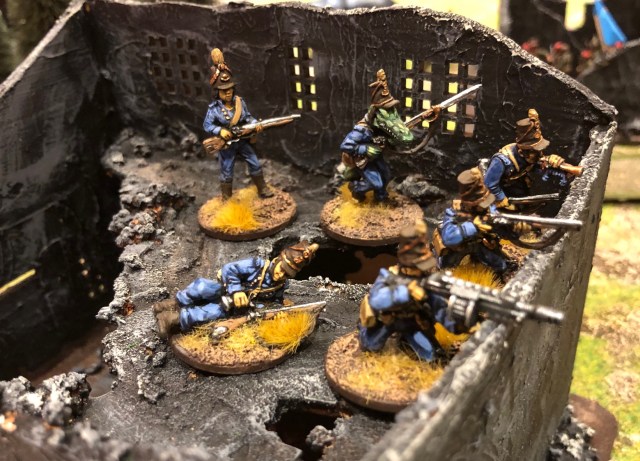
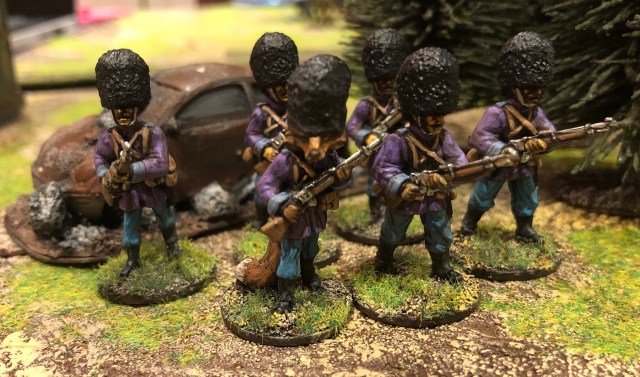
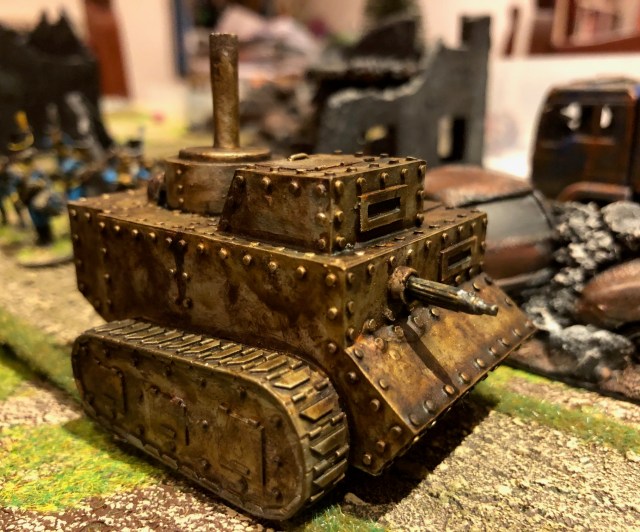
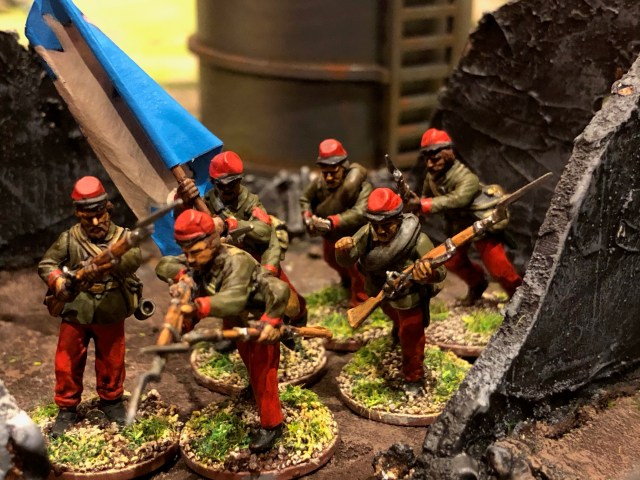
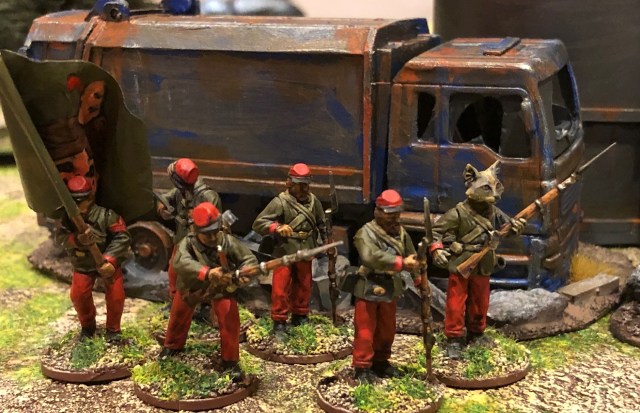
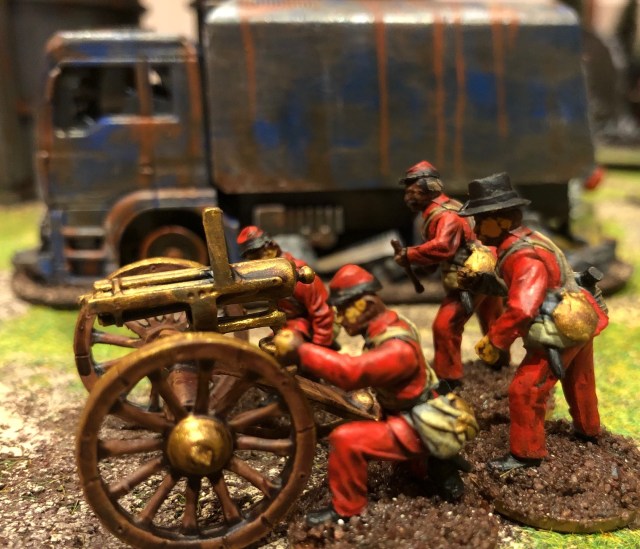
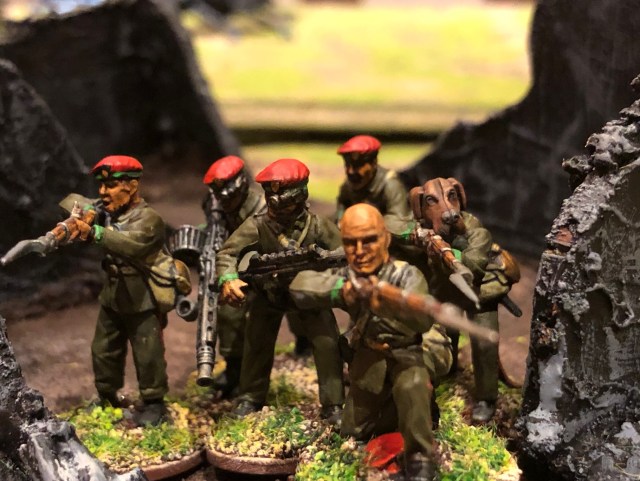
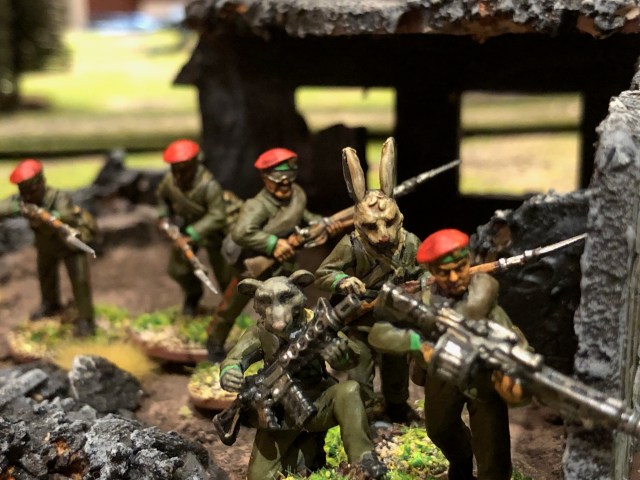
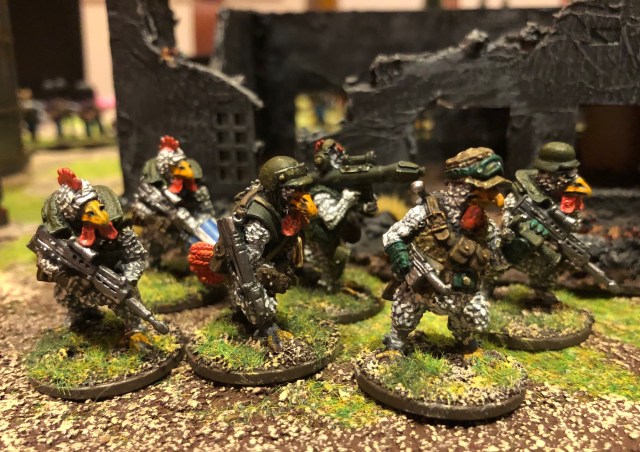
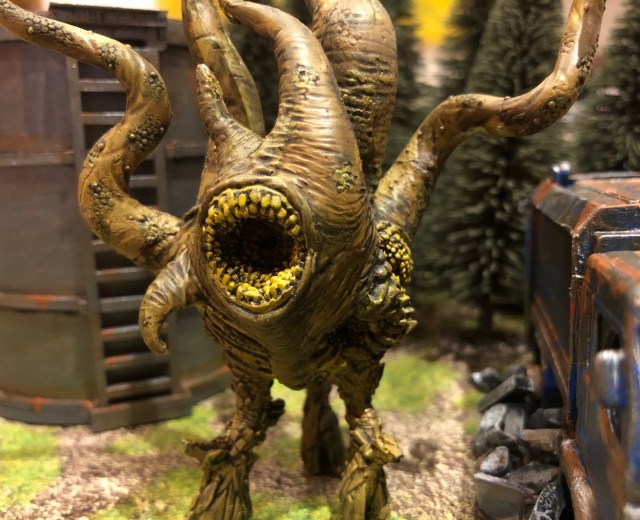
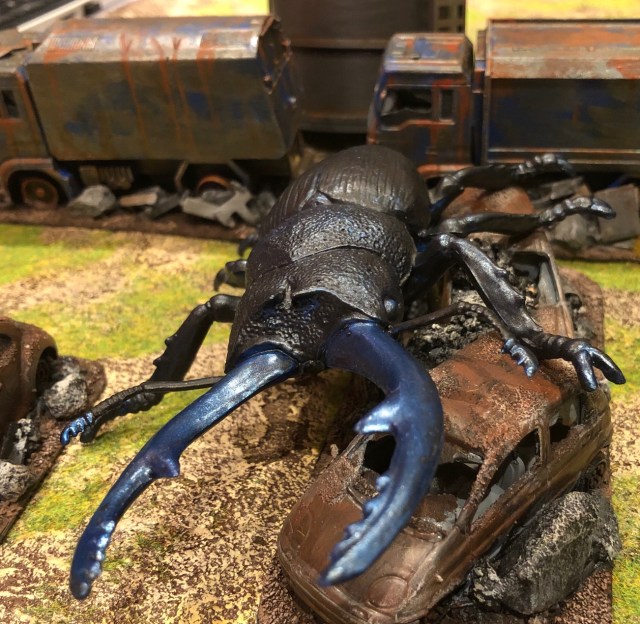
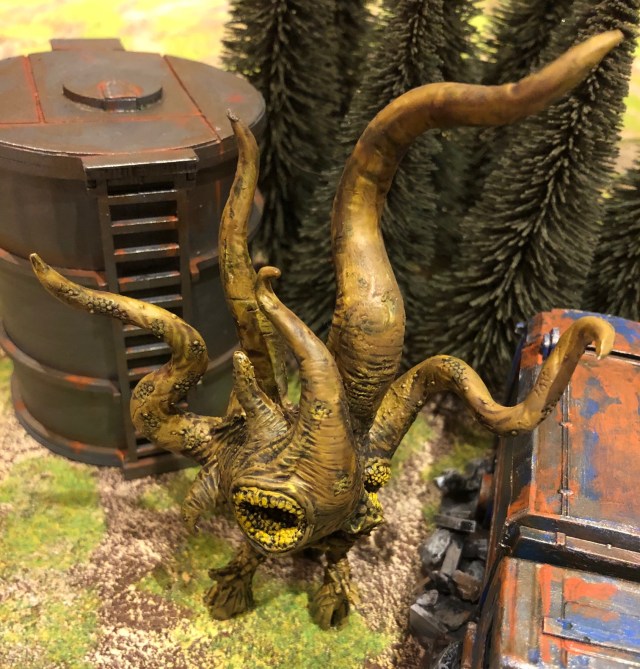
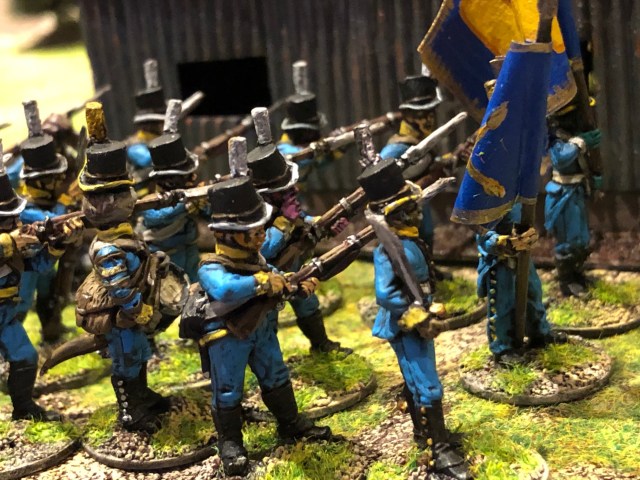
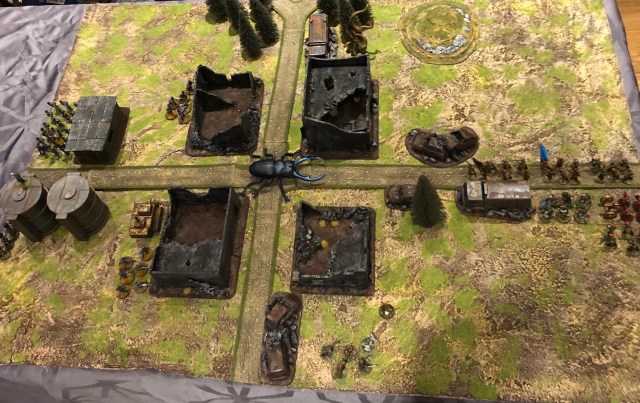
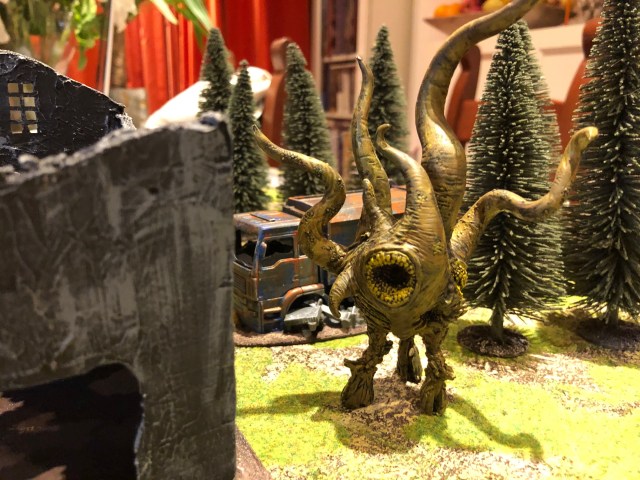
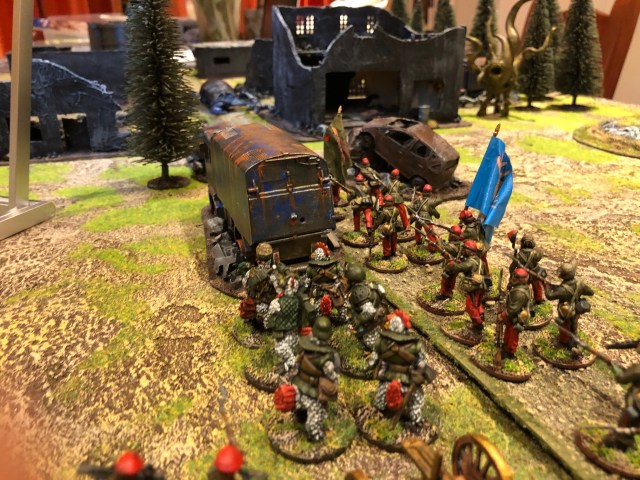
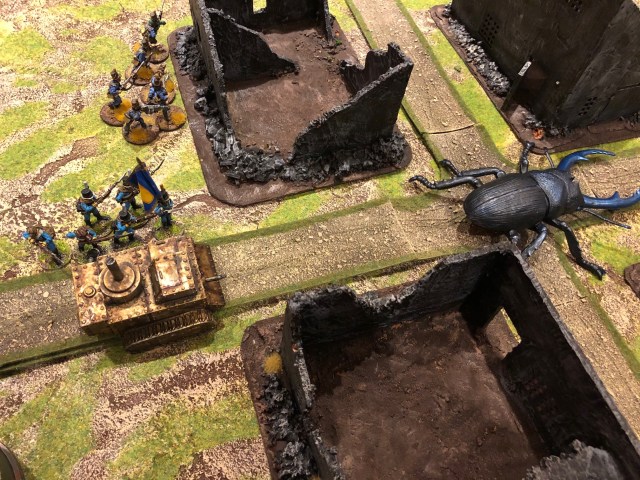
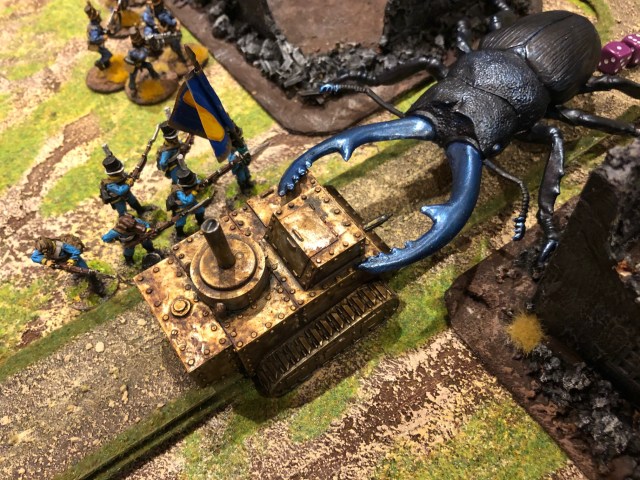
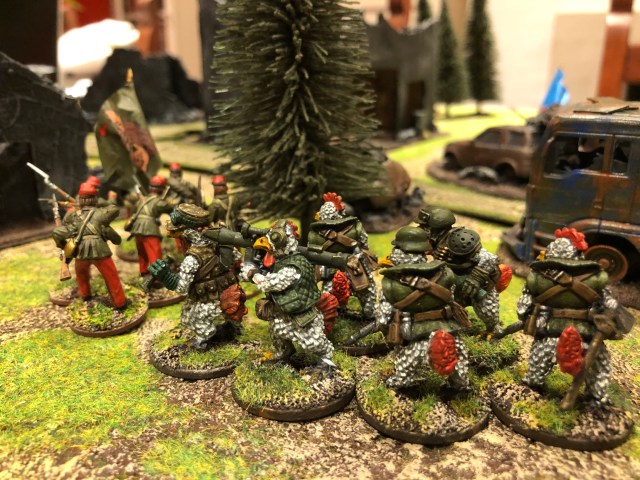
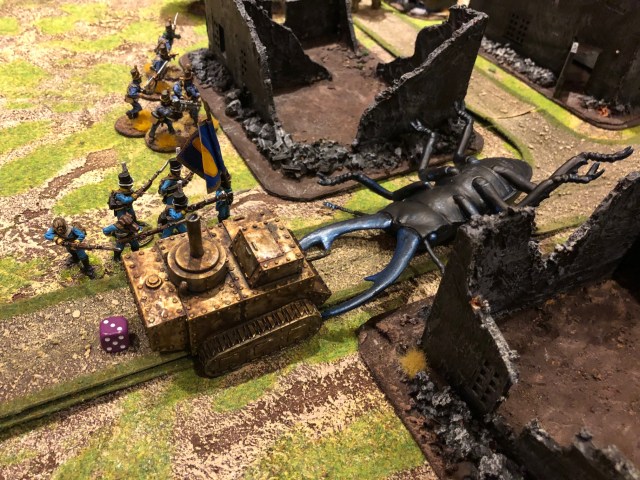
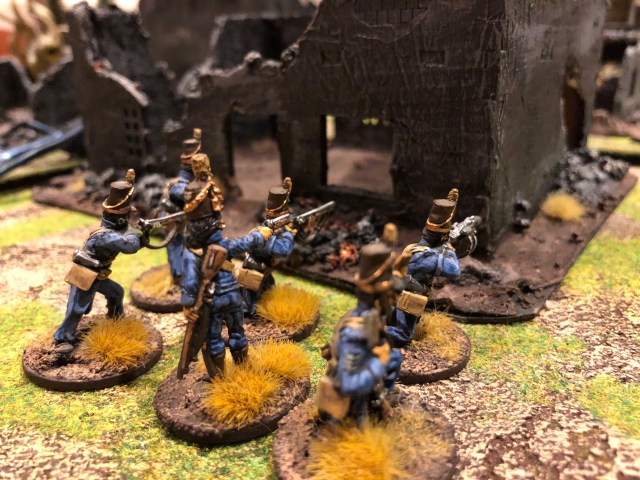
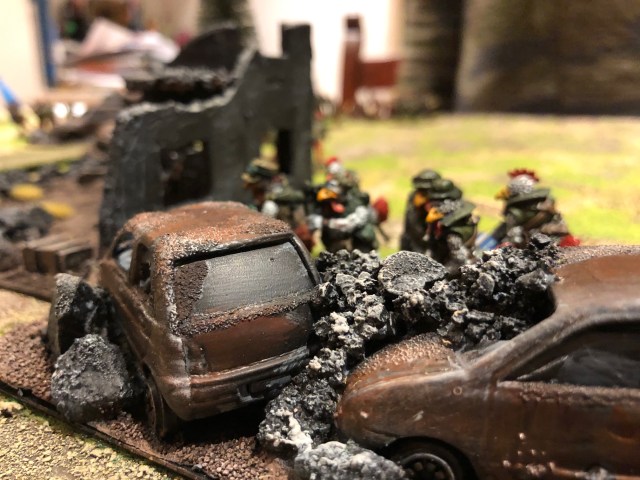
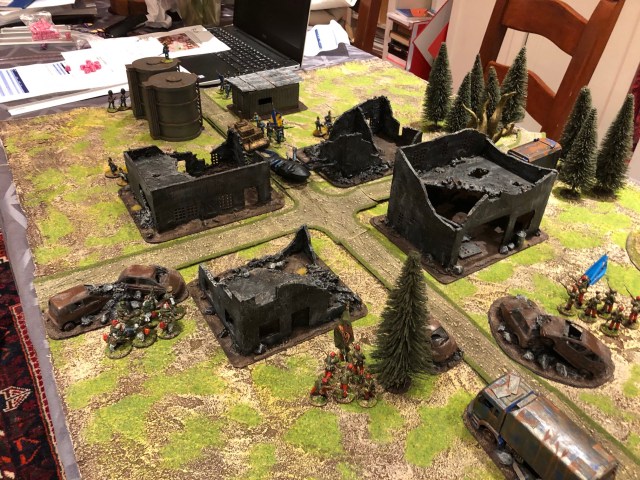
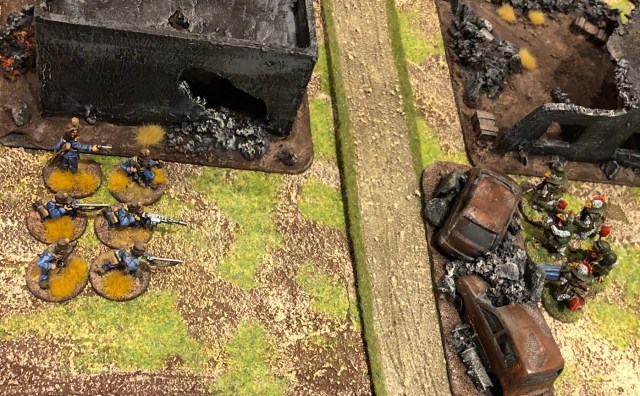
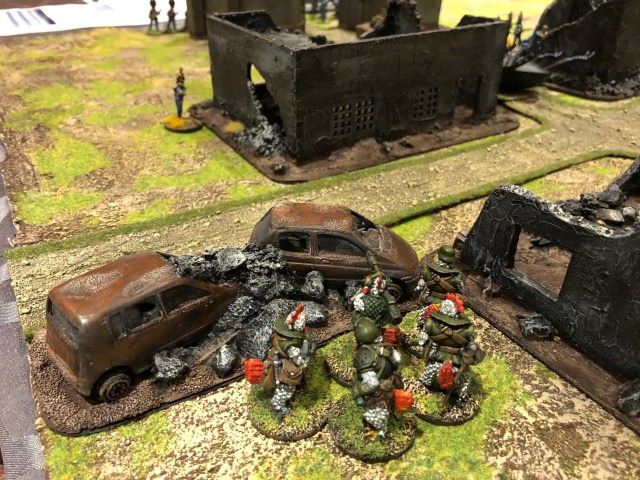
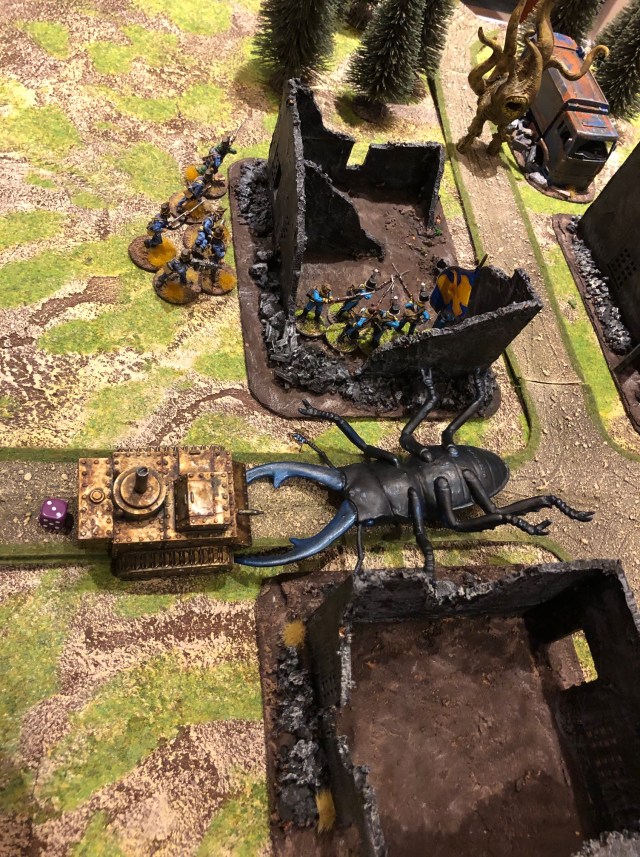
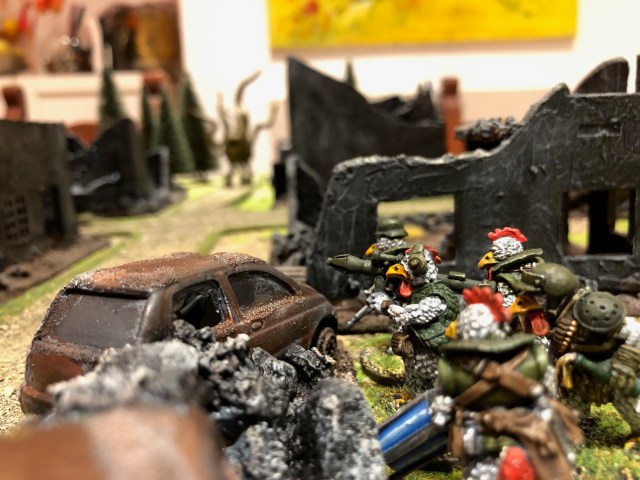
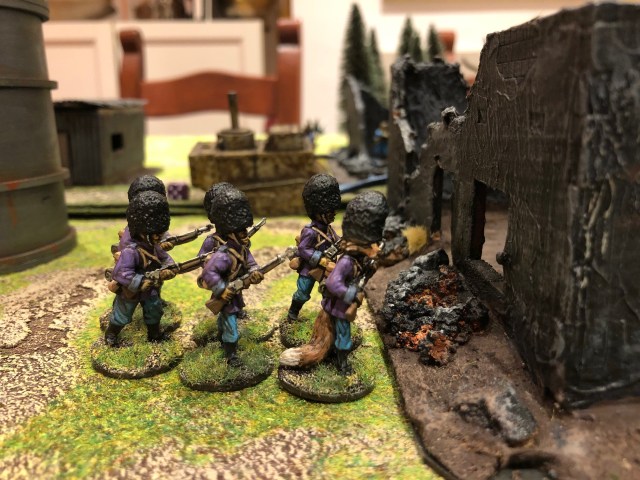
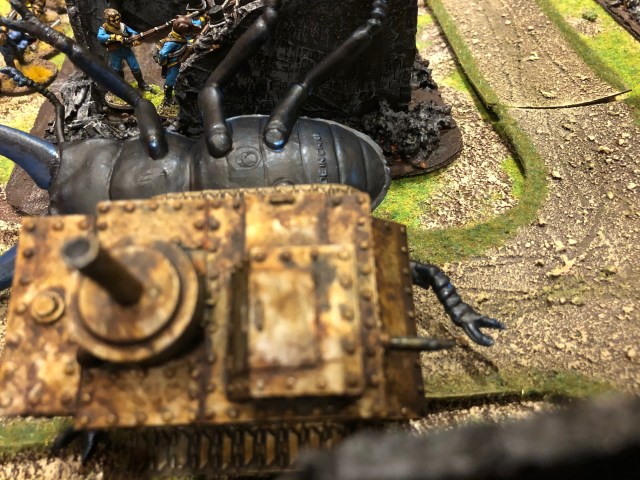
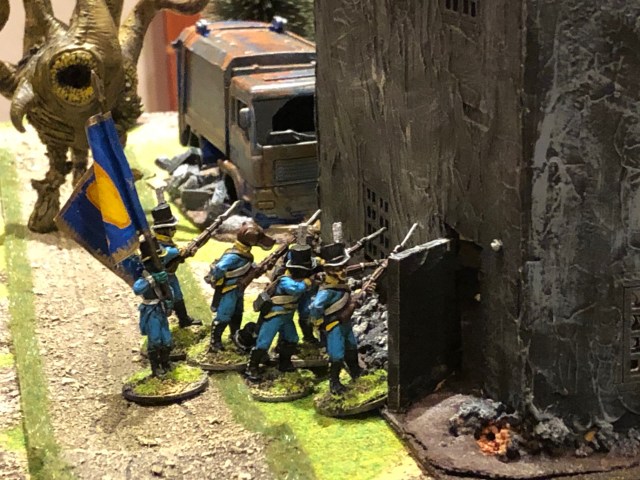
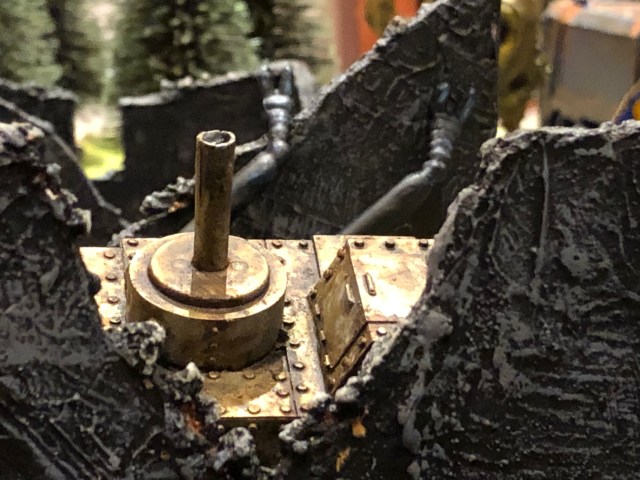
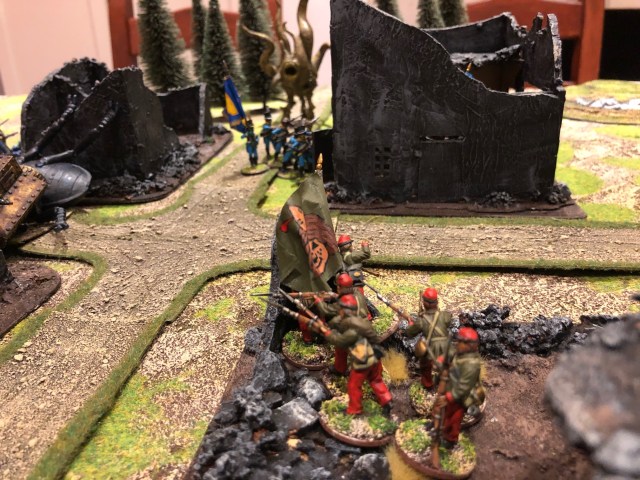
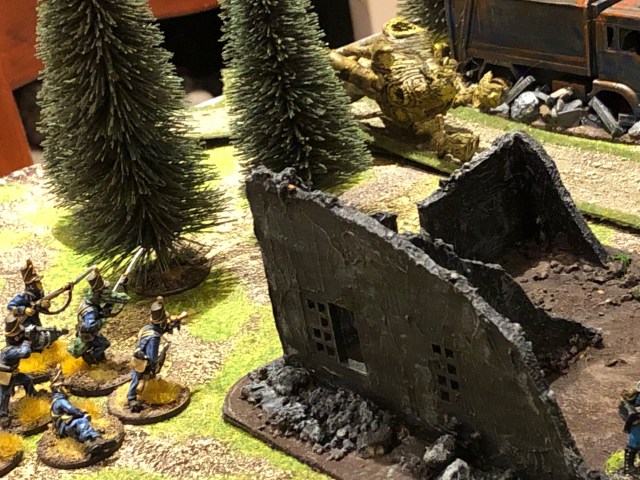
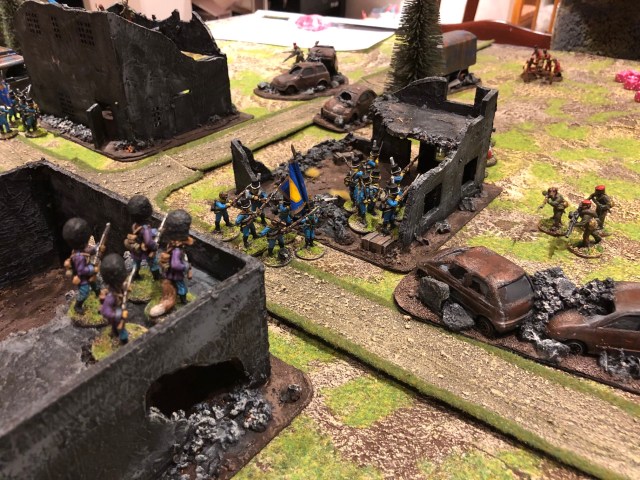
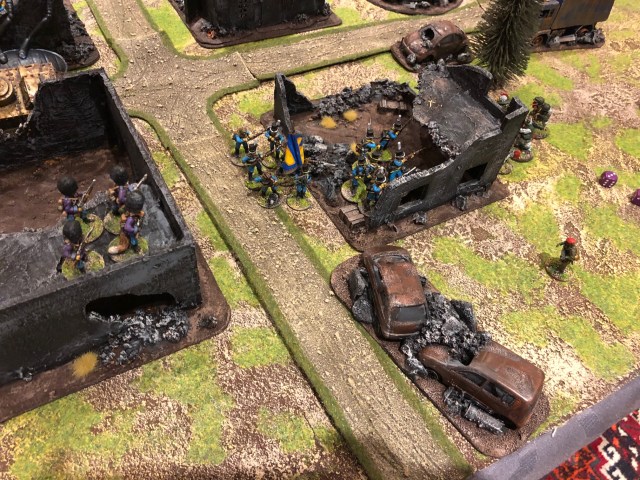
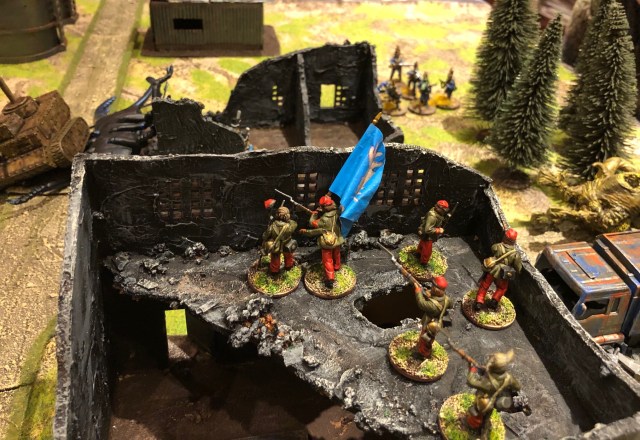
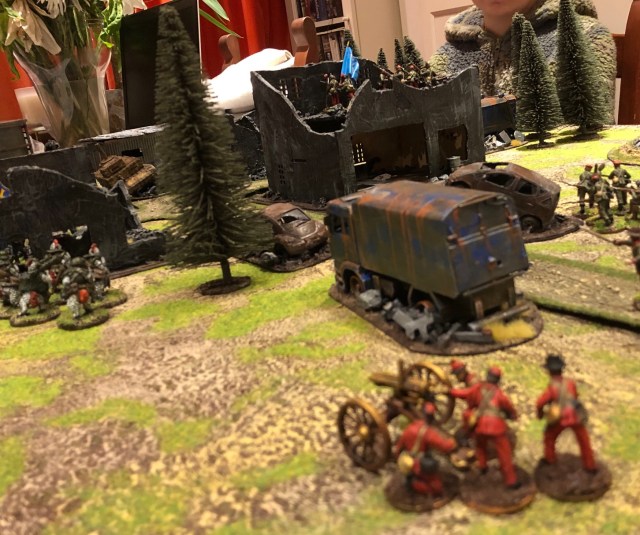
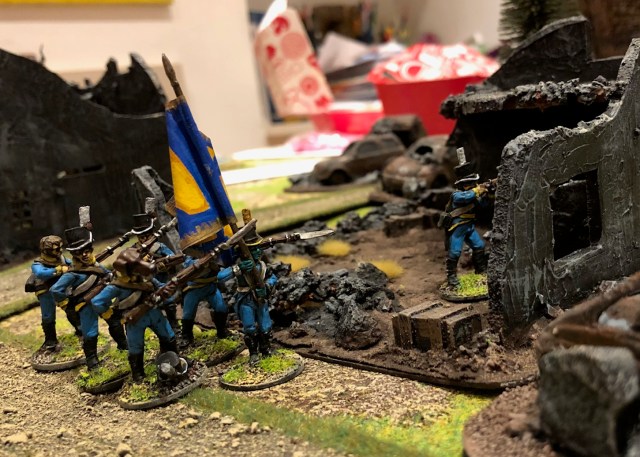
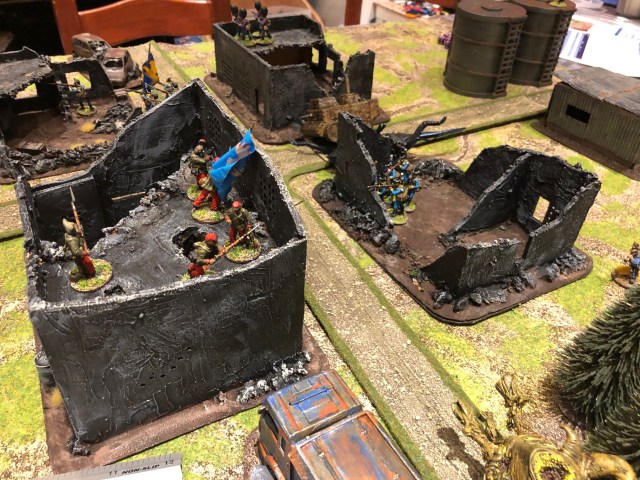
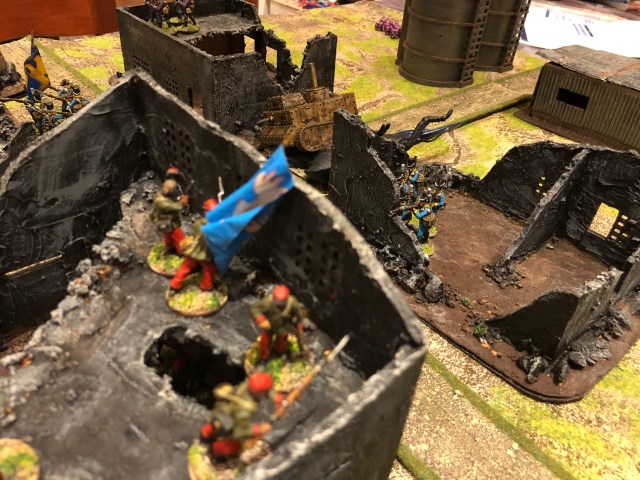
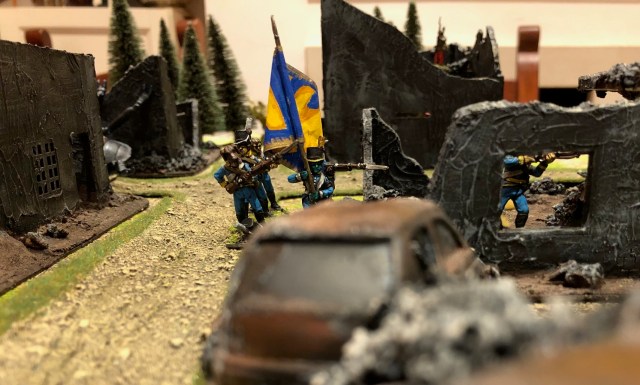
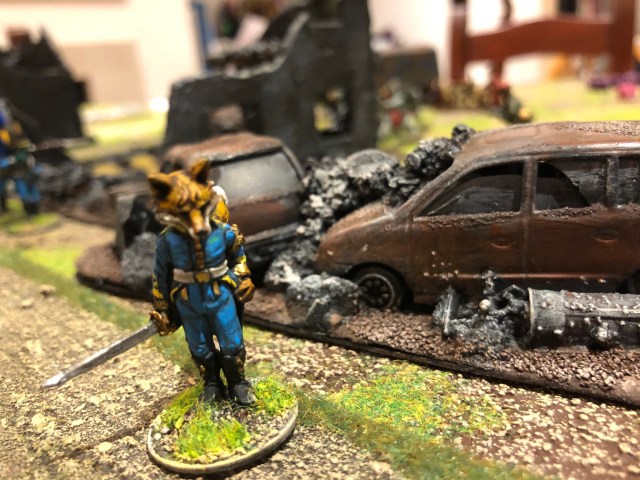
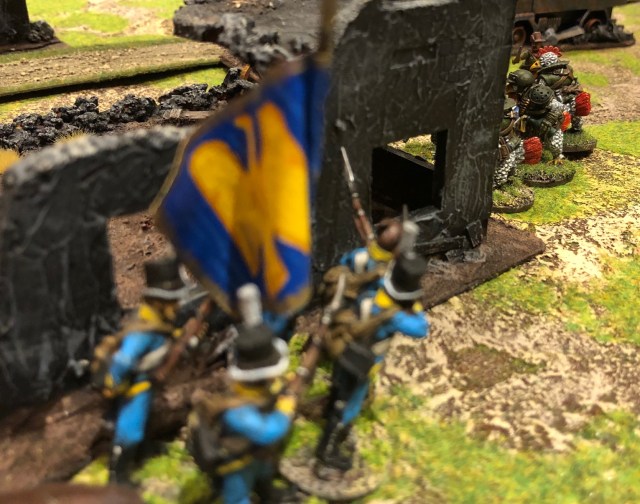
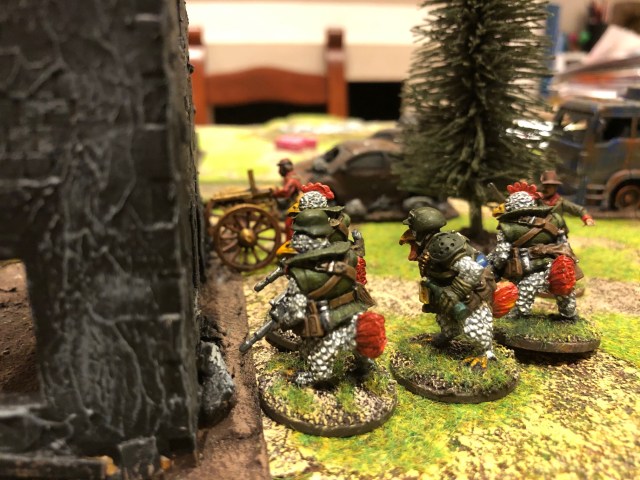
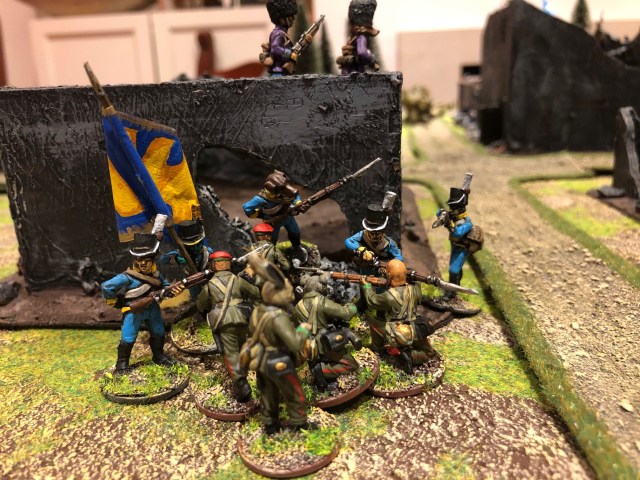
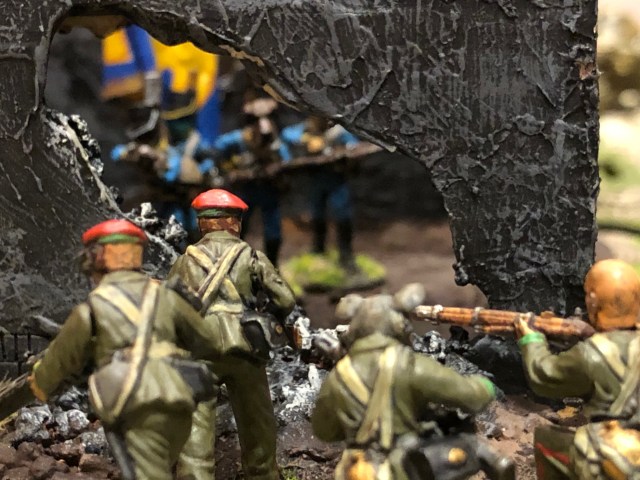
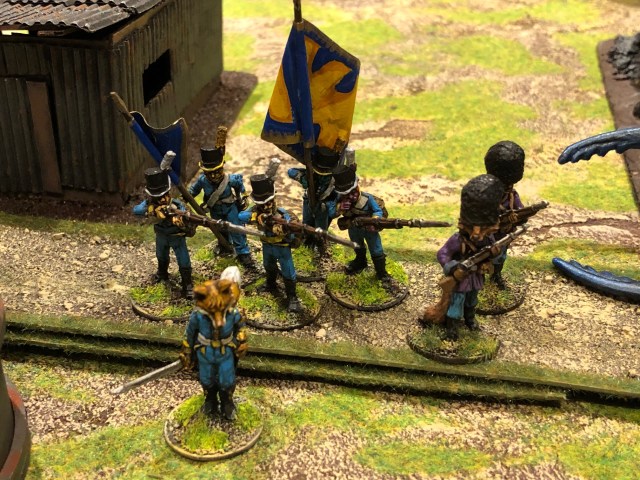
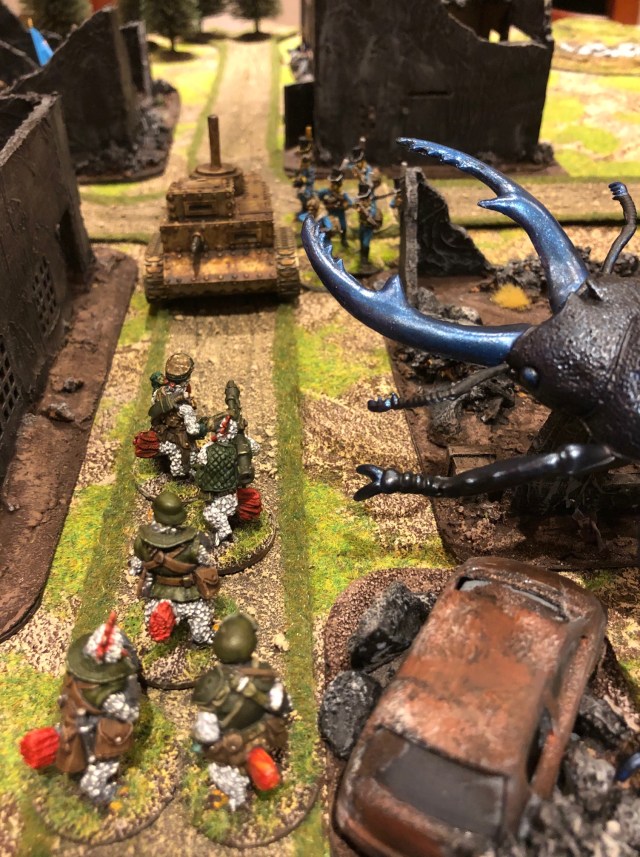
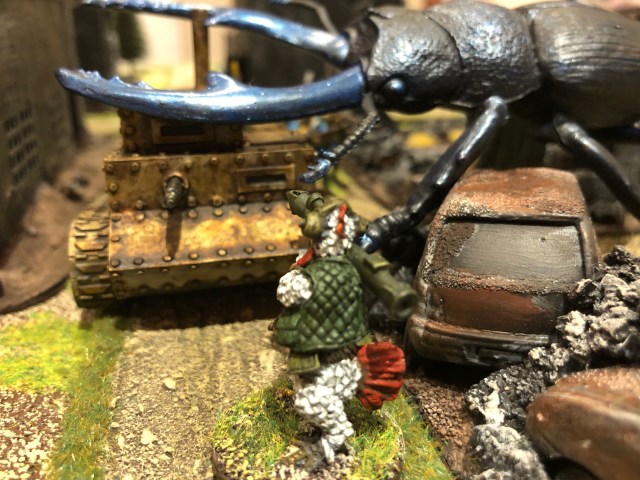
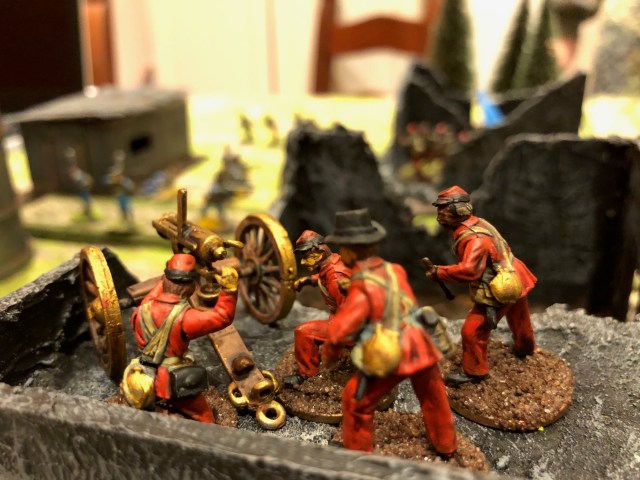
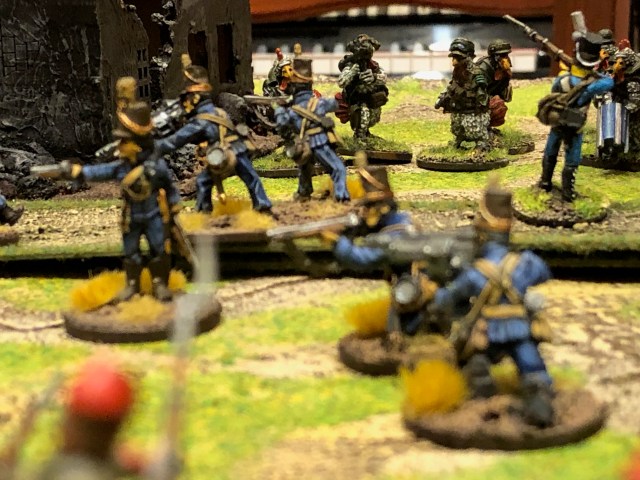
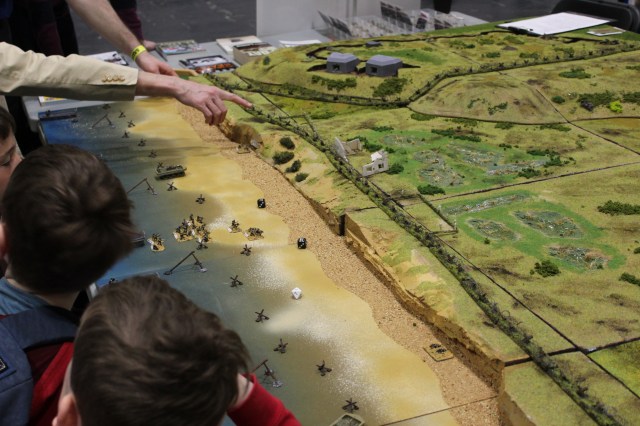

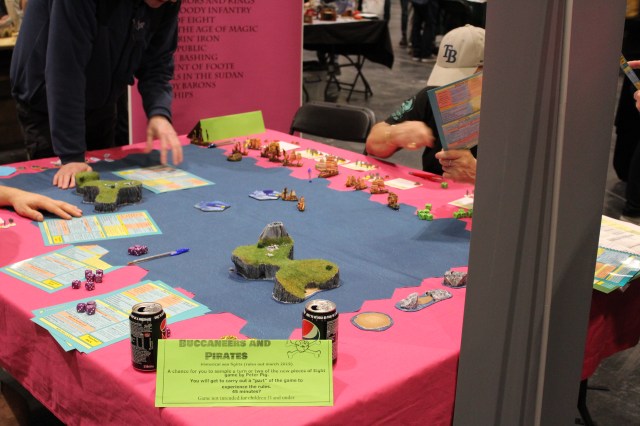
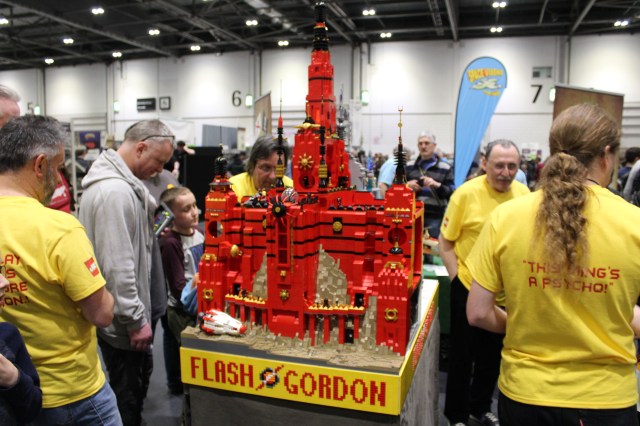
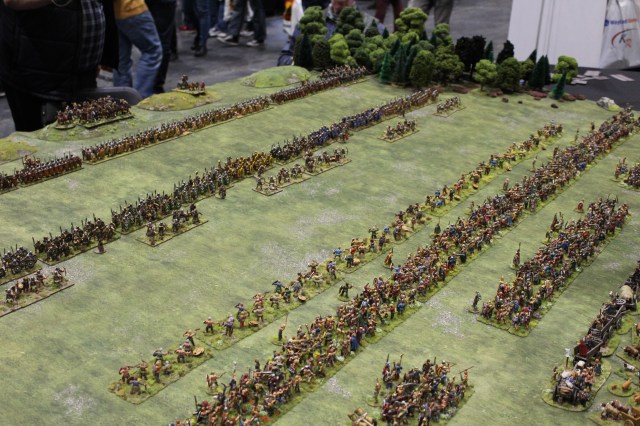
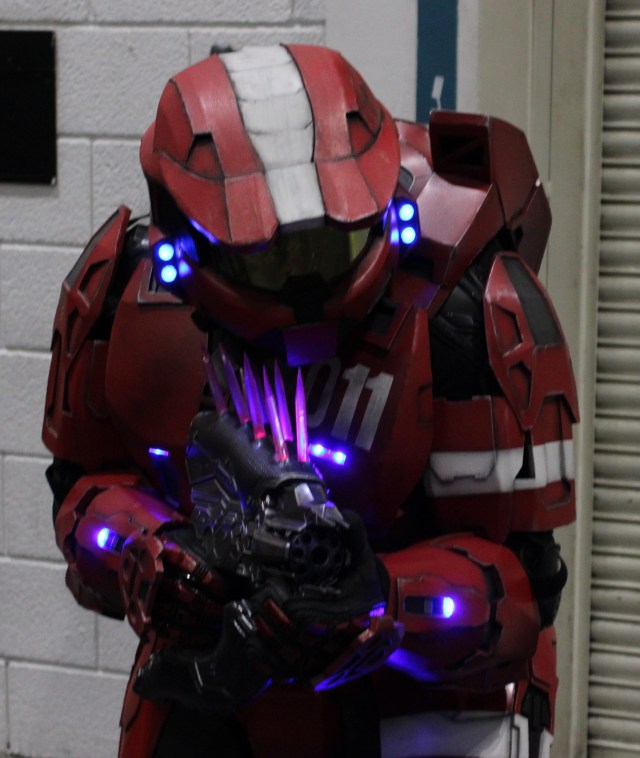
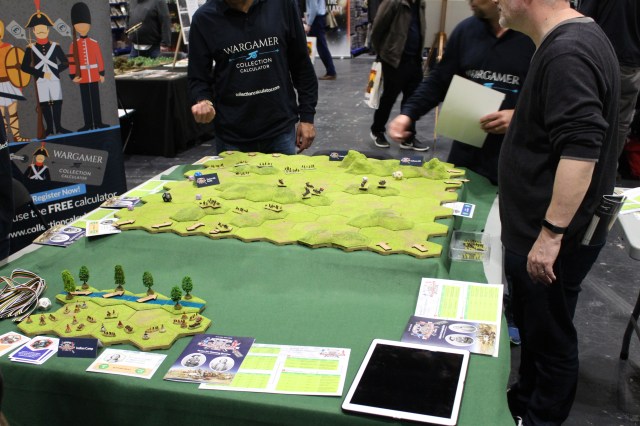
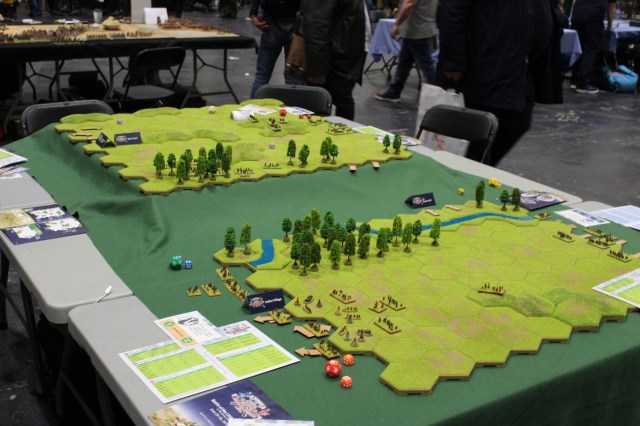
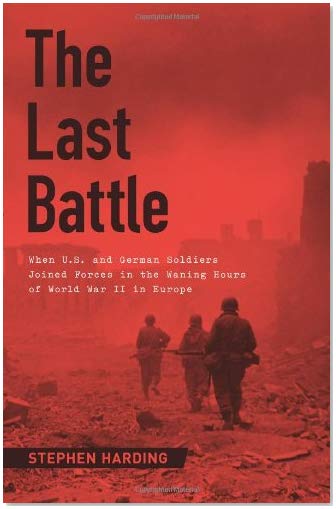
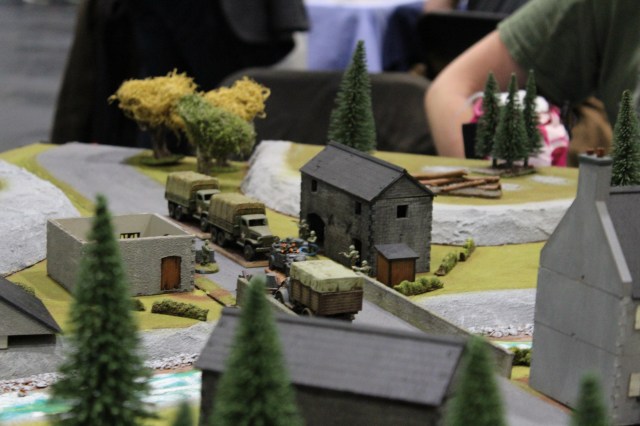
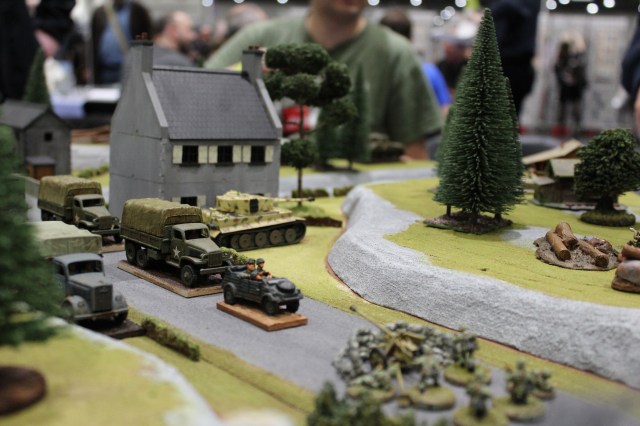



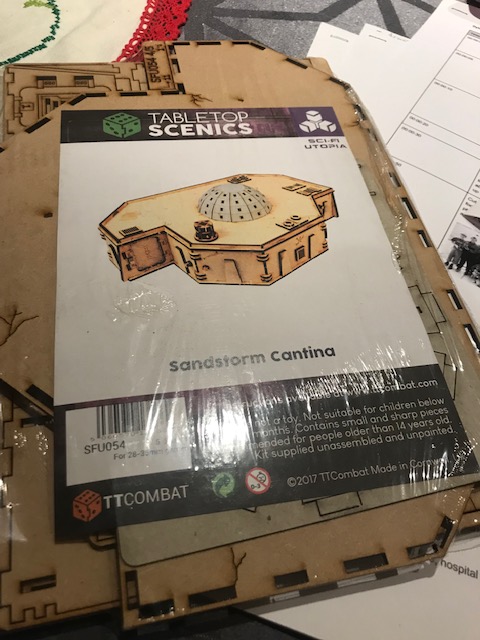


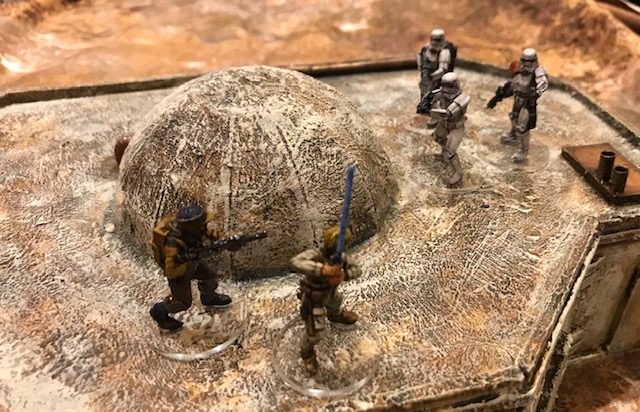


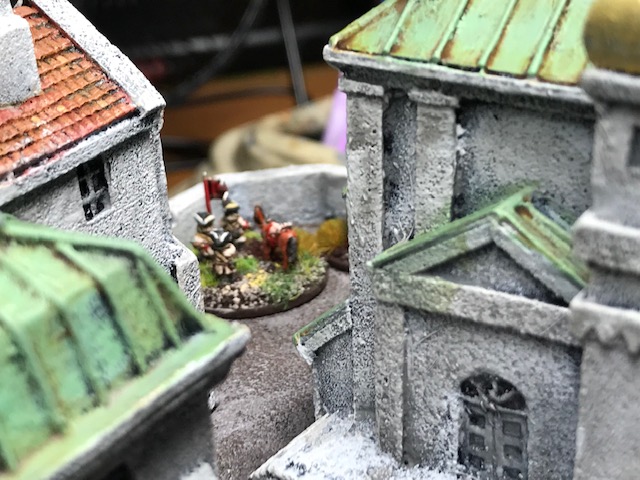
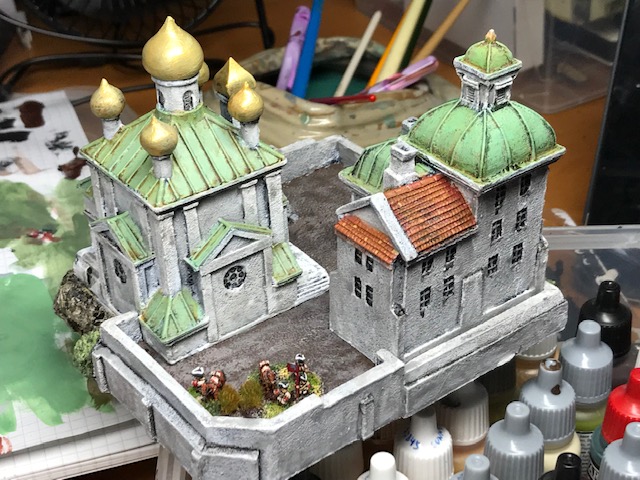
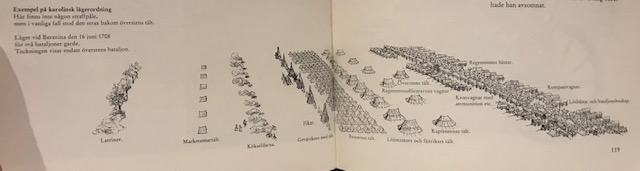
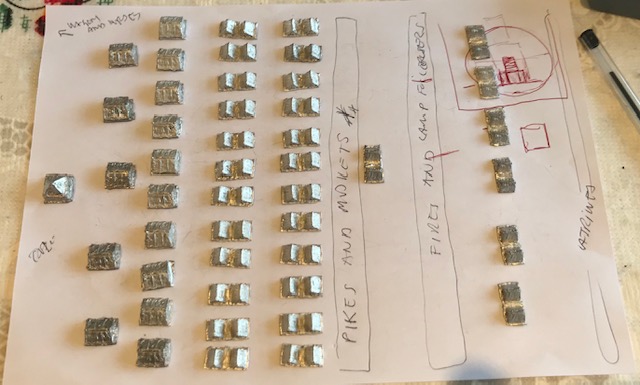


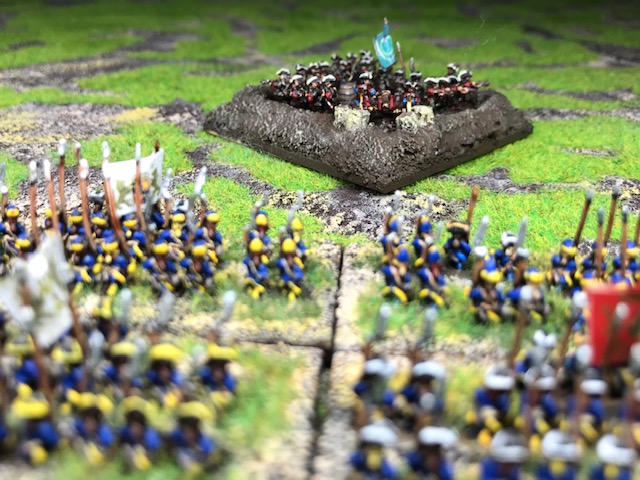


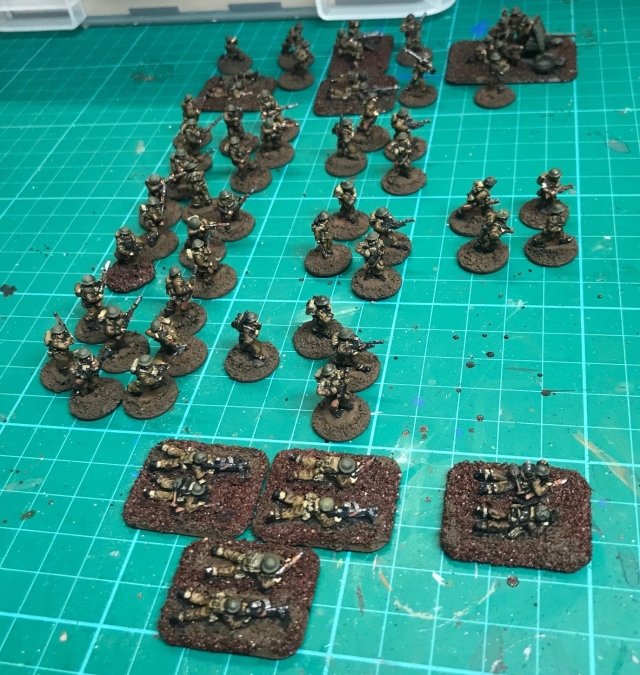
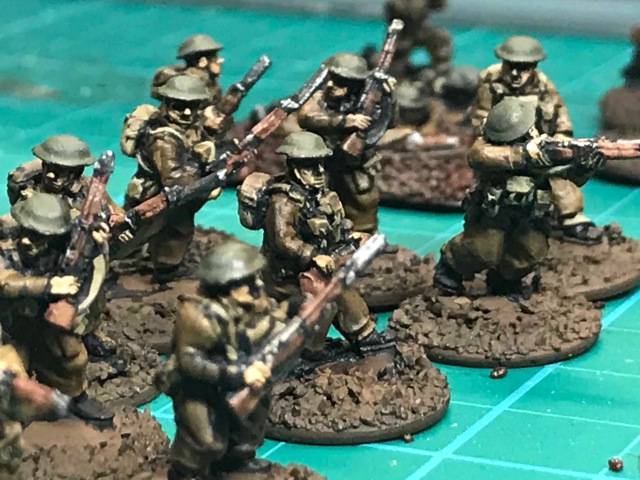
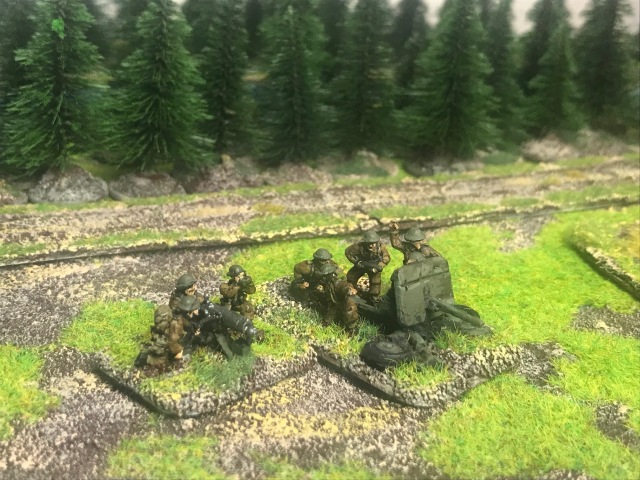
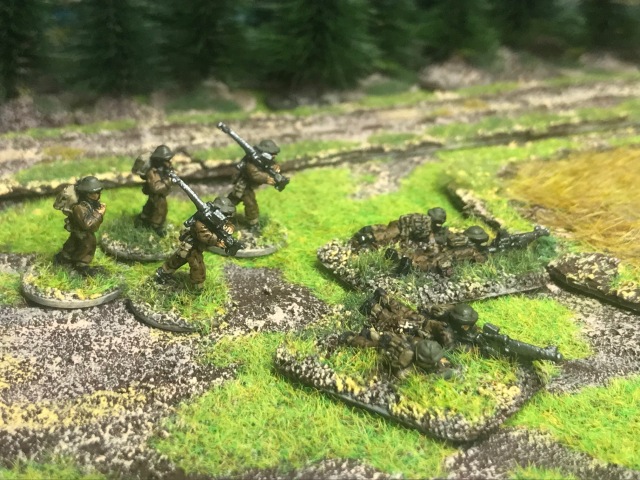
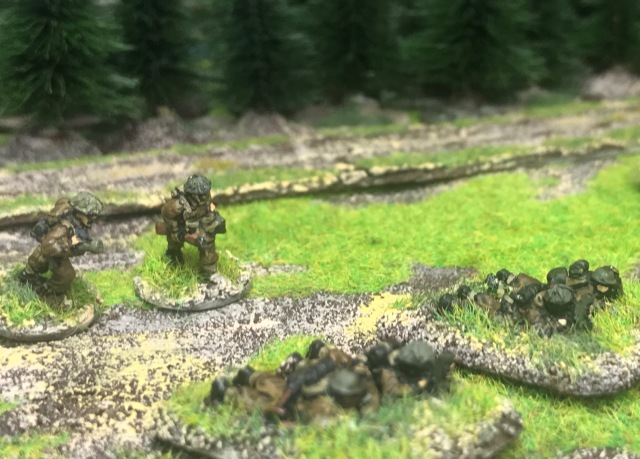
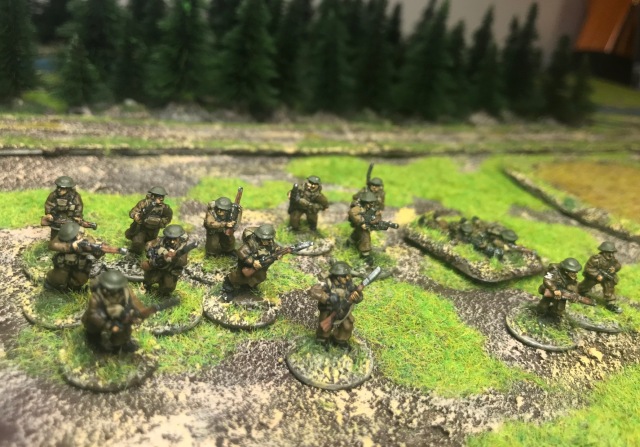
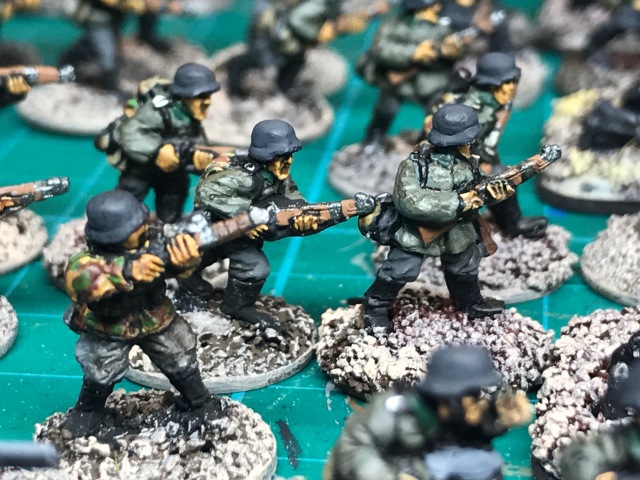
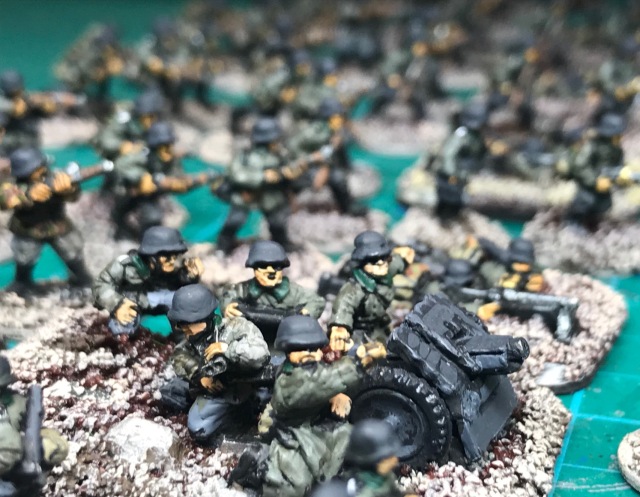
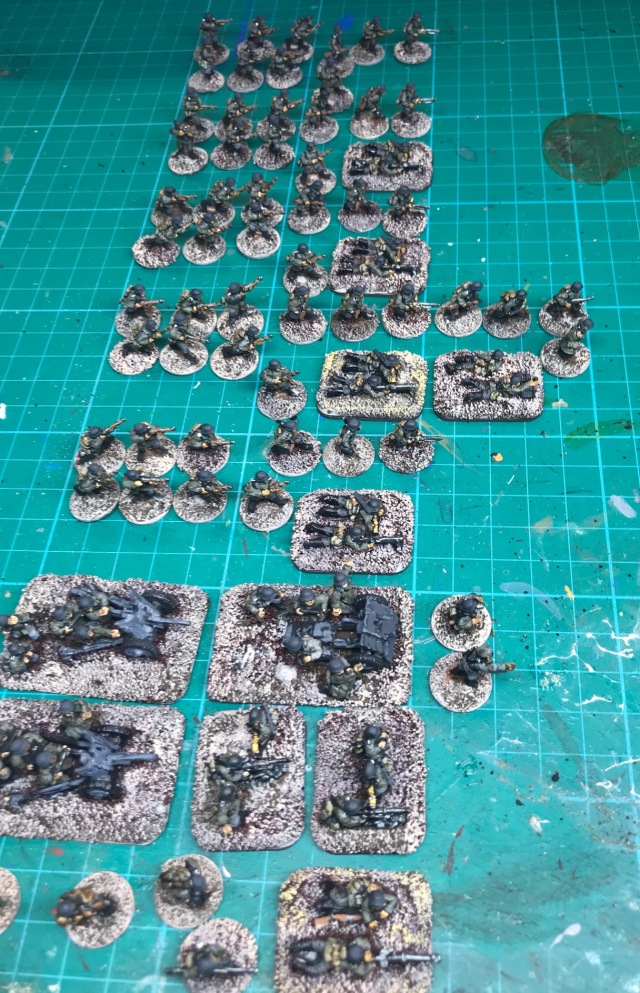
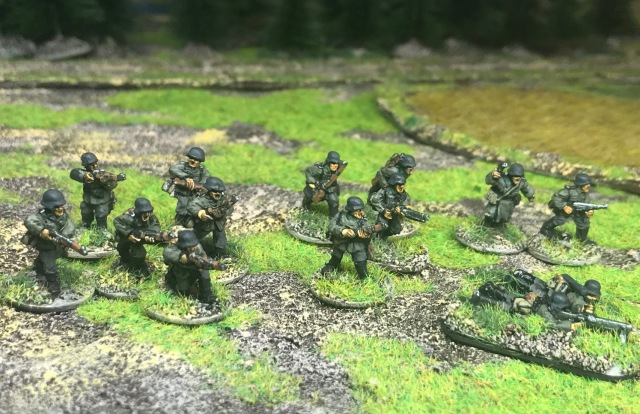
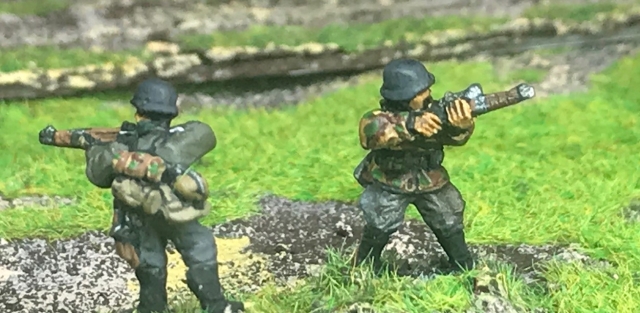
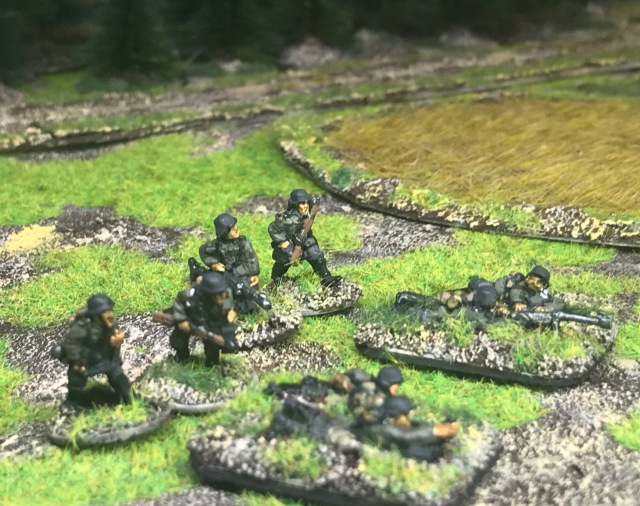
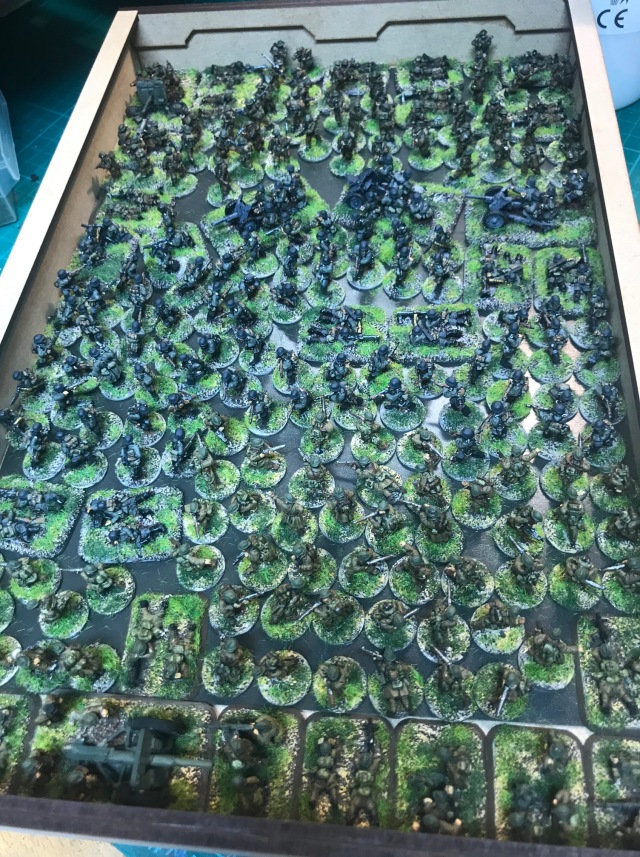
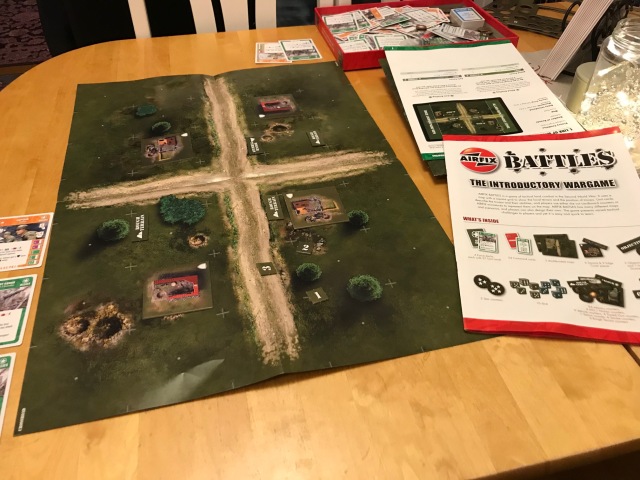
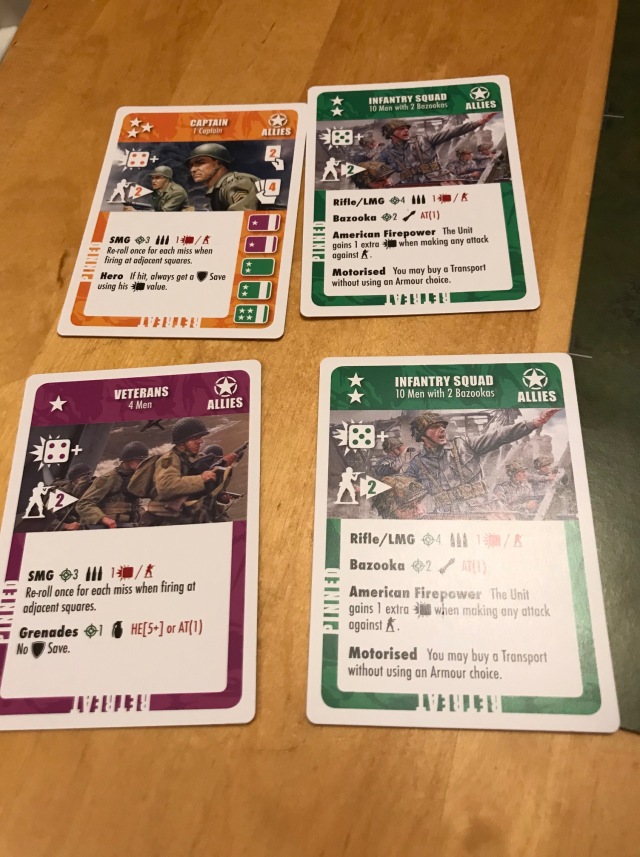
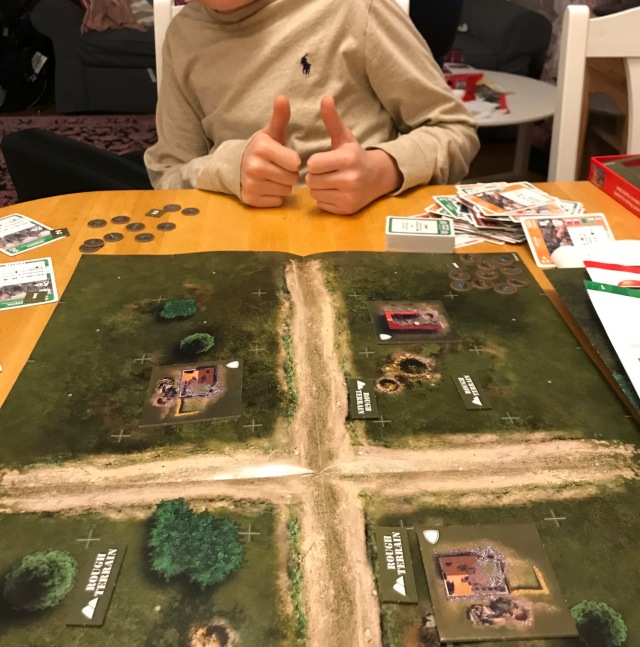
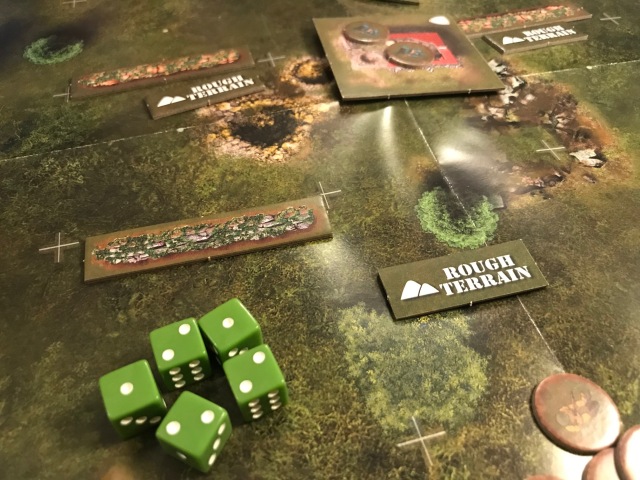


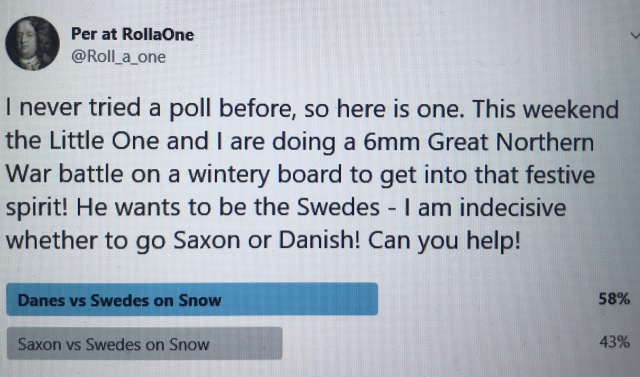
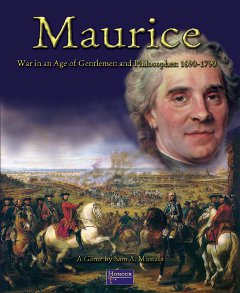 Maurice is an excellent game by Sam Mustafa and you can download some information on his webpage, including a lite version that you can play with (link