NOTE the file contained in this post have been updated in a later post – link here.
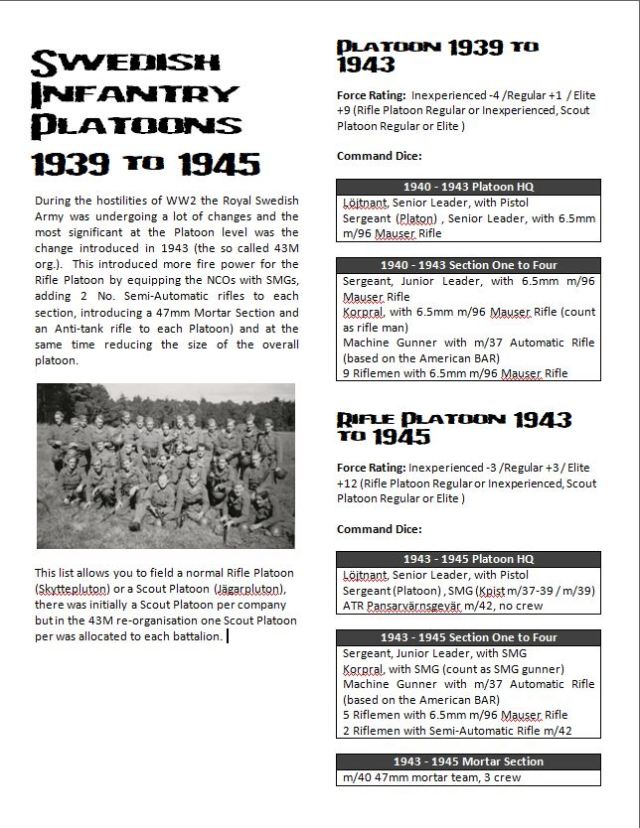
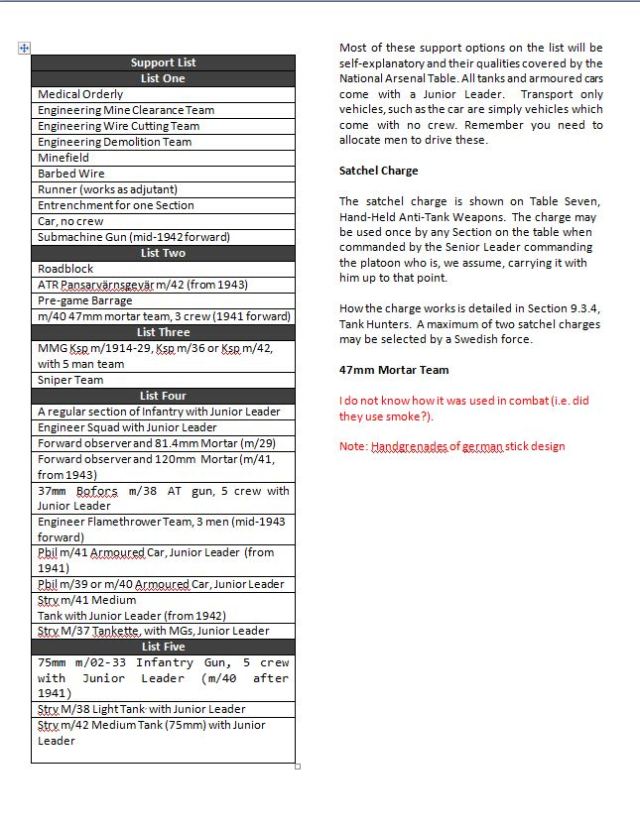
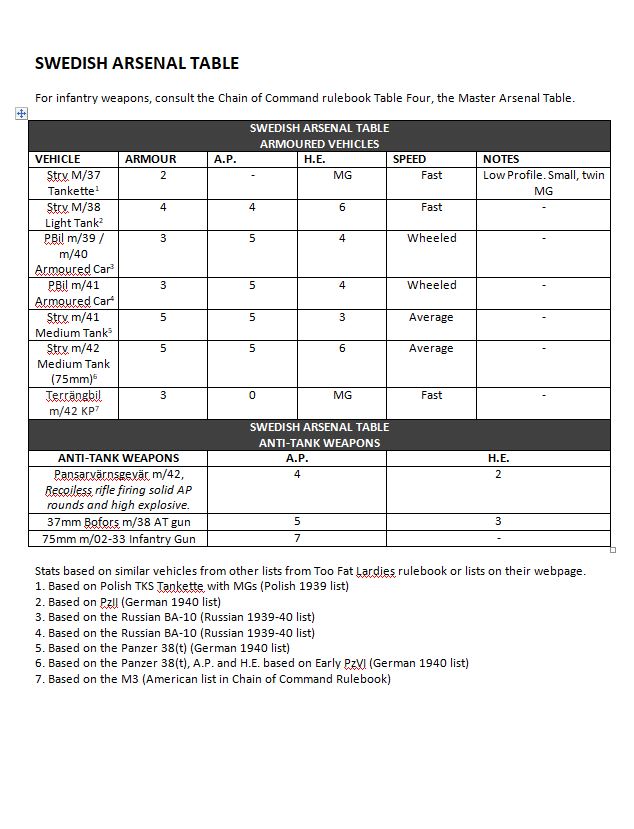
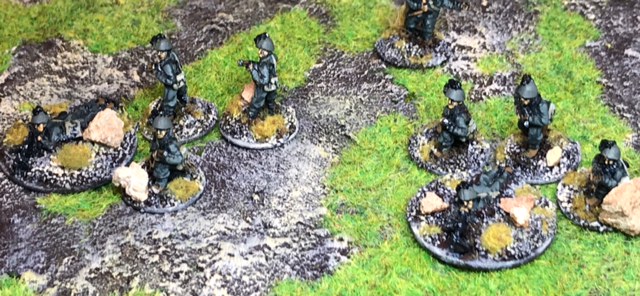
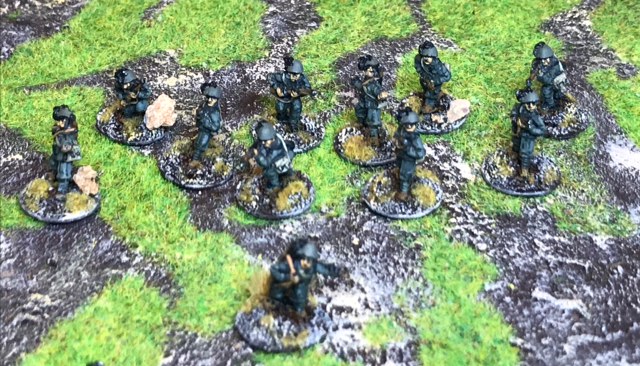
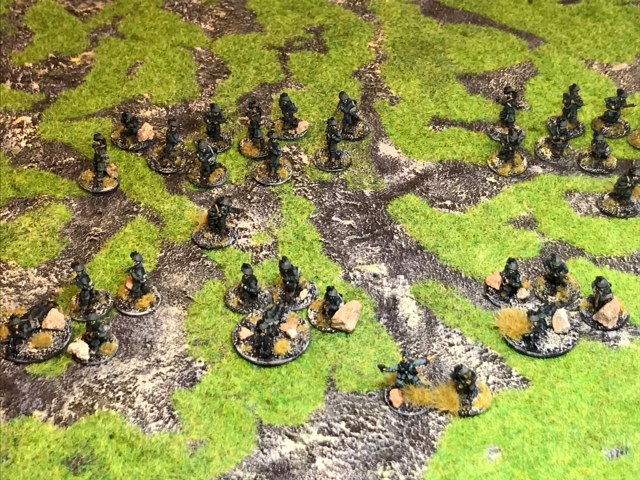
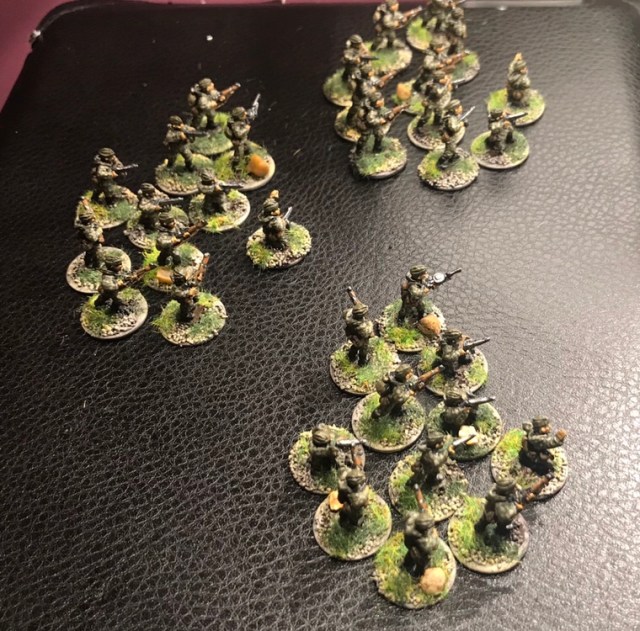
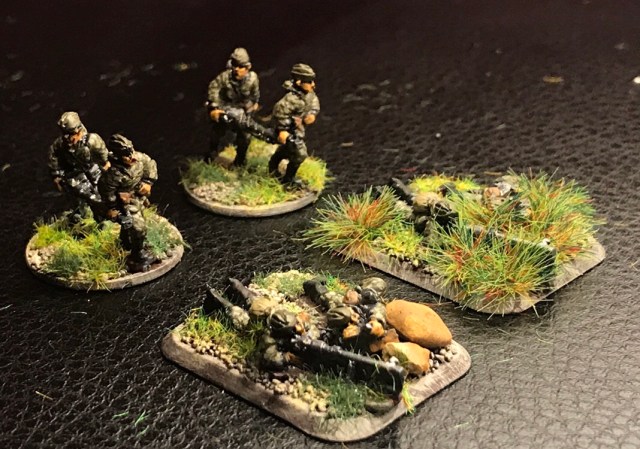
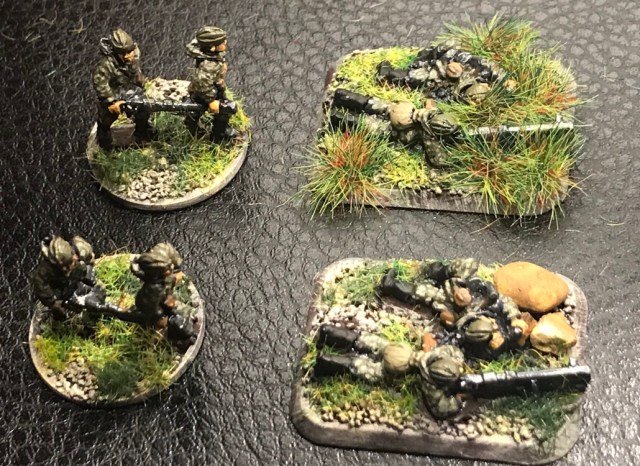
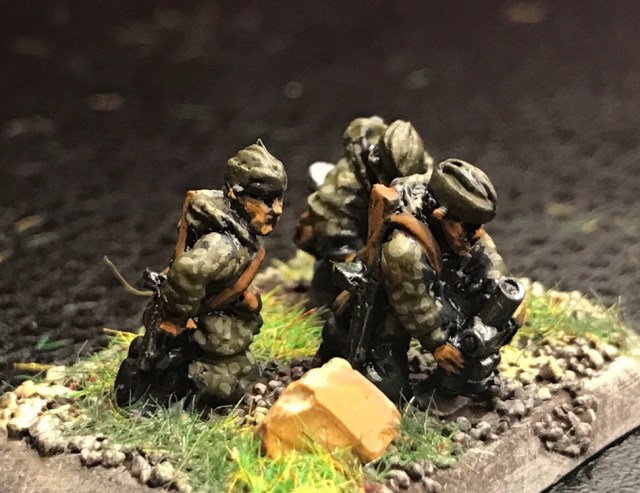
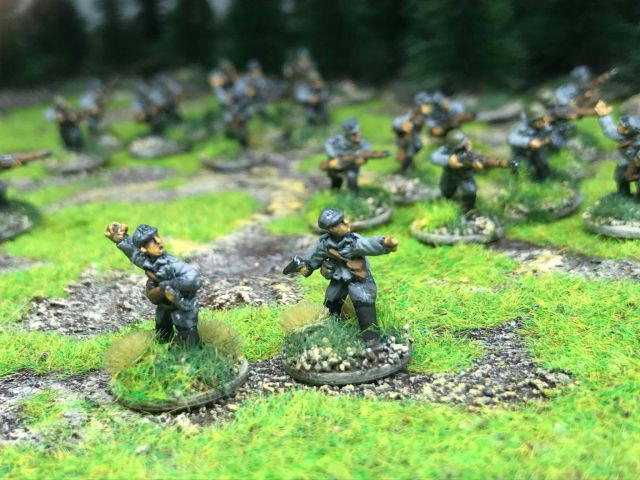
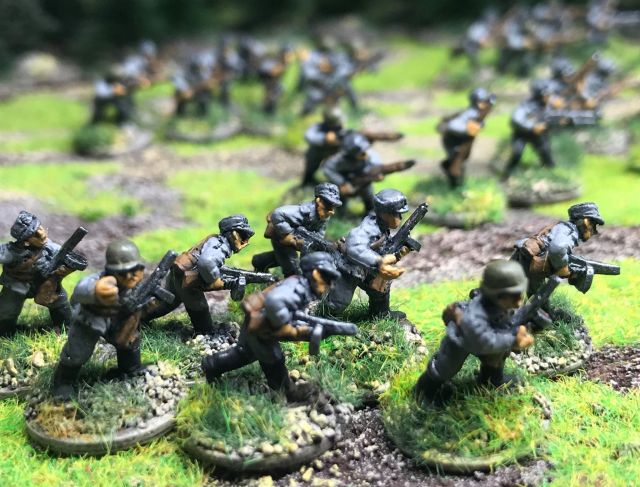
This is a holding blog post for yet another diversion and show the bare bones for playing a Swedish Platoon in WW2 using Chain of Command (or any other Platoon based WW2 rules). It is a work in progress but as there is some recent interest on Twitter for this I decided to do write-up to get us started in doing some men and machines for the table top. This will be fleshed out with further blog updates moving forward, including:
National characteristics to be added to the platoon list – see notes below on this process.
Suggested ‘what-if’ scenarios for using the Swedes – potential German invasion in 1940 or 1943, the Swedish Army fighting the Soviets in Finland (early or late war, in an official capacity), an Allied attack in Northern Sweden on the iron ore mines, etc.
Modelling the Swedes – a note on what models can be used for Proxy Swedes and Equipment. In general Italians, polish and Japanese can all be used in some form or another for this purpose. There is some great inspiration out there as some people have already done some spectacular projects and others are in process.
Some more detailed presentation on Swedish weapons and vehicles available during the war years.
Vilken Stridsvagnsfanjunker! – a What a Tanker list for the Swedish bidding panzer ace – even more done just for fun.
Before I forget a big thank you to the ‘Swedes’ on twitter (you know who you are) who has helped this along.
This post seek to present a typical Swedish Rifle Platoon that you can use during the war years for some “what-if scenarios”. I have organised this in the way Too Fat Lardies does their platoons for Chain of Command – however, you should be able to transform this to whatever rules you are using. As for support options I have gone full in and based it on what was available at various times. Some of the options may not be logical from a geographical location, but I have left it for you to have some fun – it is a what-if situation anyway. If you do specific historical scenarios you may have to do some research on where different regiments were stationed (e.g. for armoured units) and modify your support options accordingly.
On the Too Fat Lardies webpage there is an article about designing platoon lists for Chain of Command and so far we have achieved the first two steps required (the organisation and the support), but I have not yet developed national characteristics for the platoon.
“Finally we need to look at national characteristics. This is a more time consuming process as it involves significant research into the way that the troops were trained and fought. Only with this research can we allocate characteristics to our forces which are based on the way they actually fought, rather then on some rather dodgy stereotypes.”
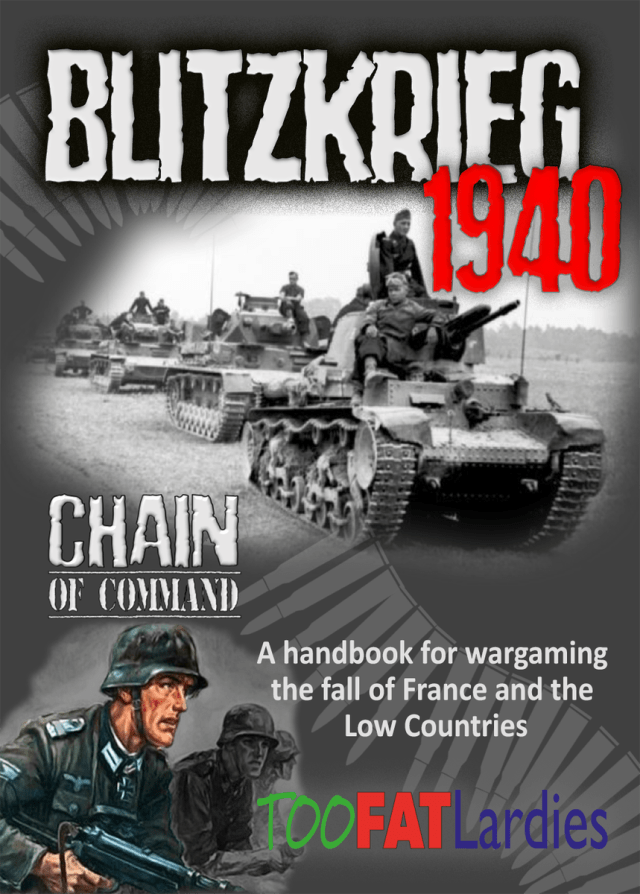
I mentioned in an earlier blog update that Too Fat Lardies have their new Blitzkrieg supplement on pre-order (link here). Have a look at the large amount of platoon lists available and the statement “ the manuals that the armies of the period issued to their troops. The French Tableau d’Effectifs de Guerre, the German KsTN lists, the Dutch Handboek vor den Soldat and Officier series and many others issued throughout the 1930s and up to 1940. These manuals tell us not just how troops were organised, but how their training prepared them for war and their doctrines.” Hard work has gone in to that supplement and if you are interested in gaming the early war give it a go.
So given this and to get a better understanding of the Swedish Platoon, I have ordered some old Swedish manuals and books from the 1930s and 1940s, that I hope will give me some further insights to develop some characteristics and a note on tactical doctrine. I want to avoid doing some national characteristics like “The Spirit of Gustavus Adolphus” or the “Tactical Brilliance of Charles XII”, in lieu of reading through these – but they are yet to arrive and then it is a matter of finding the time to review them.
Anyway, I have a word file and the pdf file for download here, that you may use as you wish. These are version 2 of this list as I will update the list and will make further versions available on this page. Please, if you do have any corrections or views let me know. As indicated, I am interested in how these men would have fought as a unit. The infantry tactica available on the Too Fat Lardies webpage here is an example of what would be ideal to have in a Swedish context – that is our target.
I recommend that you read the first part from last week (link here, that contains a little bit of an intro) as this is a rather short update if you have not already and if you are interested in the context of this.
I learned this week that Major General Earle who died at the Battle in 1885 is standing outside George’s Hall in Liverpool (where he was born in 1833). A very elegant statue that was unveiled in 1887 by Lord Wolsey, the Commander of the British Forces in Egypt.
Earle had started his career fighting in the Crimean War and fought gallantry at Alma and Sevastopol rising to the rank of Lieutenant. He later served in Gibraltar, Canada and India. In 1880 he was granted his Major Generalship and was sent to Egypt in 1882. Here he was the commander of the garrison at Alexandria. In 1884 he was in command of a campaign (the British Nile Column) to support General Gordon in Khartoum (Sudan). The city was under siege by Mahdist. Earle and his soldiers did not arrive in time and Khartoum fell in the beginning of 1885.
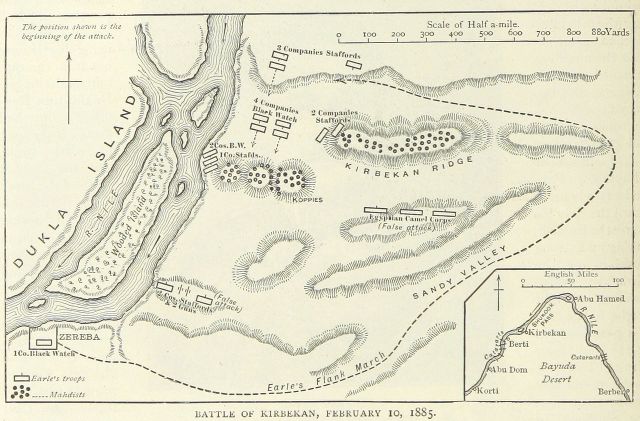
On the 10th February 1885, Major Earle, and part of the British Nile Column stormed the hills at Kirbekan and routed Mahdist force. Unfortunately Earle, as stated above, was killed in the battle together with about 60 British soldiers, including Lieutenant Colonel Philip Eyre of the First South Staffordshire Regiment.
So, to hang on to Lt Col Phillip Eyre for a moment, this week I did the second large British unit at the Kirbekan Battle 1885.
The South Staffordshire Regiment
The regiment was sent to Egypt in 1882 as part of the invasion and in 1885 it travelled as part of the unsuccessful column to lift the Siege of Khartoum, but came to play an important part in the battle at Kirbekan. Following Garrison duties it was later sent to fight in the Boer War. I let you read more about the regiment and its further adventures during the Great War and World War 2 on Wikipedia (link here).
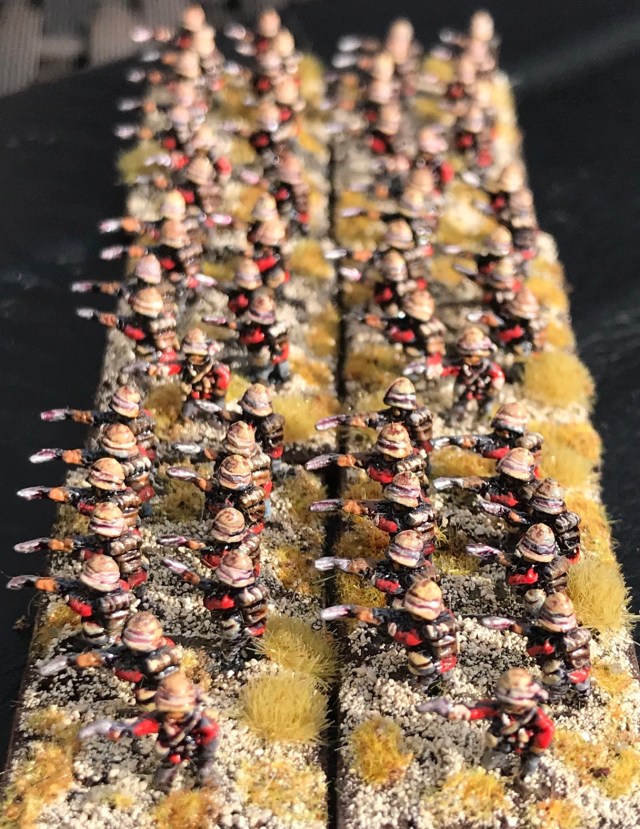
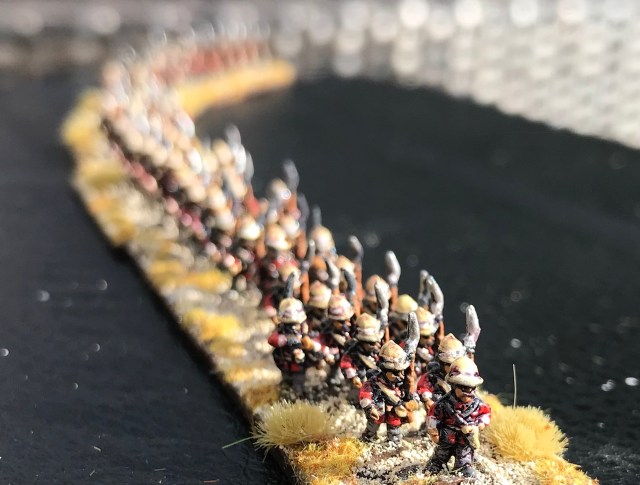
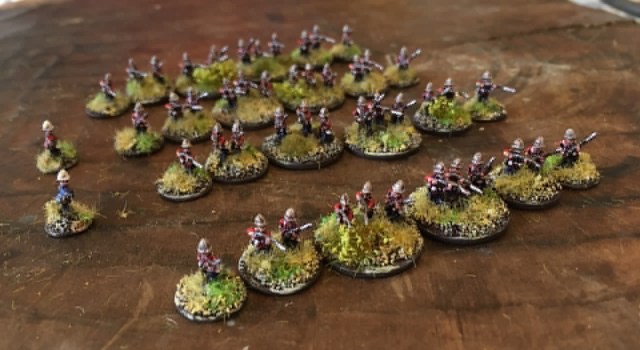
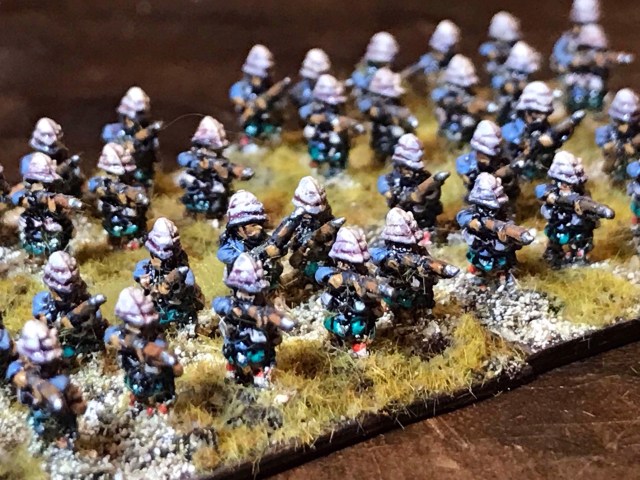
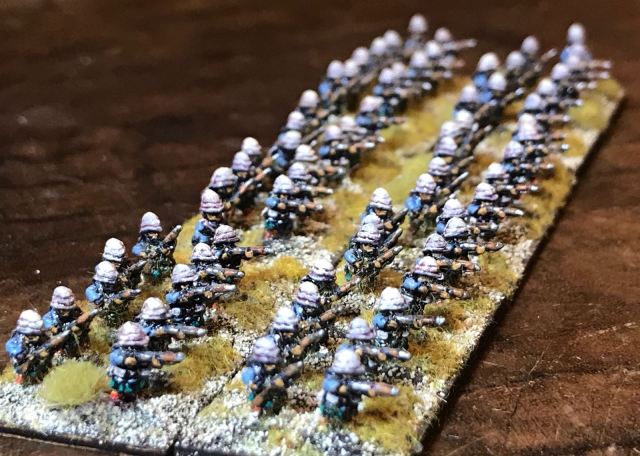
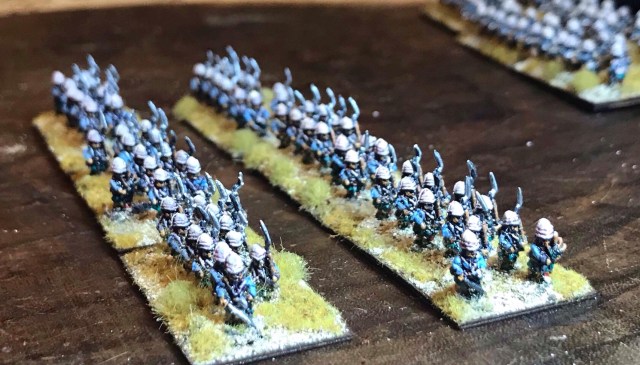
As I did last time I used the excellent Perry Painting Guide from their webpage (link here). I made six bases (40 by 20 mm) with firing poses and six bases with Marching poses – as the British did a lot of marching and I fancy a long column of soldiers in the end. Of course when I checked this out I realised that the South Staff Regiment and the Black Watch were ordered to wear red at the Kirbekan Battle – I painted mine with the grey/blue uniform last week – Oh well perhaps the Scots did not listen to the English commander, or I have to do another set of them in red!
14. South Staffordshire Regiment This regiment and the Black Watch were ordered to wear red to storm the ridge at the battle of Kirbekan, 10th February 1885
From the Perry Painting Guide
Anyway, here is how the South Staffordshire gentlemen turned out (they are 6mm Baccus from the their colonial range, link here).
/ Hope that was of some interest, next time I will do some Mahdists I think.
My friend Peter Riley who has written a number of Wargames rules, including the Polemos American Civil War (ACW) and the Franco-Prussian War (FPW), sent me a copy of his unpublished colonial rules “A Steady and Deliberate Fire” a long time ago to try out and give him some feedback. Doing something and giving them a try is long overdue.
By the way Peter is one half of the Wargamer Collection Calculator Crew that I have talked about before on this page, check them out here.
Screenshot from their page
In addition they are doing a Little Big Horn Project in 6mm that I have been following with some interest (here is a good starting point).
I did acquired a large amount of 6mm Baccus Colonial miniatures in a “bring and buy” sale many years ago and have wanted to find some inspiration to do something with them. I did some colonial stuff using the Men Who Would be King rules for 6mm Skirmish (link here, here and here). That was really fun and The Little One and I have had fair amount of fun table time with those.
Redcoat Infantry, modelled for Skirmish and the 1-2-3 basing, that allows individual figure removal (I let you figure it out)From one of the actions, some Zulus closing in!
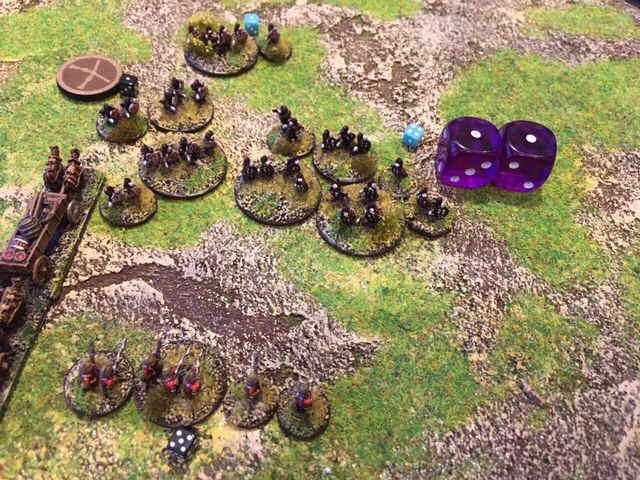
However, I wanted something for bigger battles – and skimming through the rules Peter had sent me last week I found the Kirbekan Battle in 1885 (link here) that would require about 30 bases to play on a 6 by 4 table using 60mm frontage, and with 40mm bases it could be played on a normal kitchen table, on a 4’6″ by 3″ table.
The rules are extensive and although I have not yet understood them I have decided, as a little side project, to do the two sides of the battle and use it as a vehicle to learn the rules. In future posting I will write more details about the actual Battle and these rules.
With regards to basing (from the rules):
a base of Infantry represents an Infantry Company, about 65 to 180 men.
A base of Cavalry represents a Cavalry unit of about 65 to 130 men and horses.
Support Weapon bases represent and group of 1 to 3 guns.
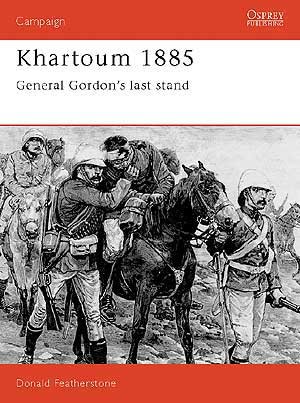
According to Donald Featherstone’s excellent Khartoum book (published by Osprey) The British General Earle had the following force available at the battle (the book also contain the typical Osprey 3D map of the Kirbekan battle):
The Black Watch – 437 men.
South Staffordshire Regiment – 556 men.
A squadron of 19th Hussars – 83 men.
A half company of Egyptian camel company – 47 men.
Egyptian Camel Battery (2 guns) – 24 men.
This translates to the following set-up in the rules:
The Black Watch – 437 men – 6 units (bases)
South Staffordshire Regiment – 556 men – 6 units (bases)
A squadron of 19th Hussars – 83 men – 1 unit (bases)
A half company of Egyptian camel company (Camel Corps) – 47 men – 1 unit (bases)
Egyptian Camel Battery (2 guns) – 24 men – 1 unit (bases)
I thought I start with the British Side and from the top..
The Black Watch (Royal Highlanders)
The regiment was created in 1881 in an amalgation of the 42nd (Royal Highland) Regiment of Foot and the 73rd (Pertshire) Regiment of Foot (more here and here).
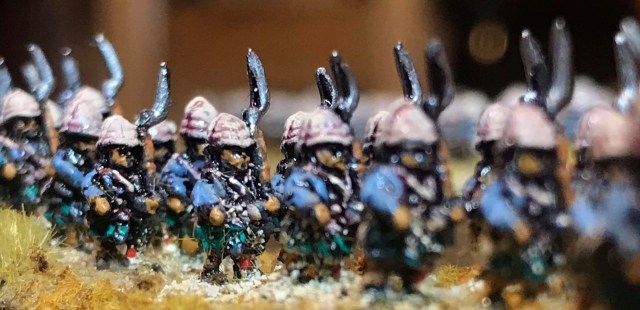
The regiment fought extensively in the Anglo-Eqyptian and Mahdist wars at the Battle of Tel el-Kebor 1882, Battles of El Teb 1884 and the Battle of Kirbekan 1885. The regiment also fought in the Second Boer War.
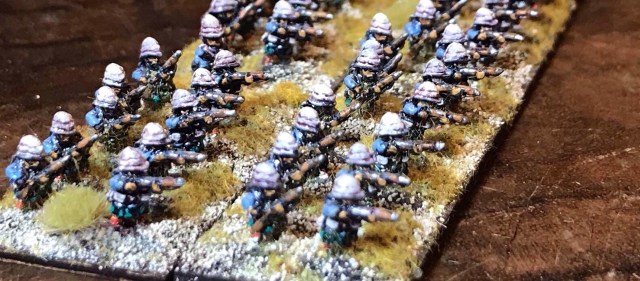
As for painting them I consulted the very good resource on Perry Minatures webpage written by Michael Perry about the Sudan 1883-85 (link here). It has a uniform guide that includes the Black Watch (the grey I have used is perhaps too blue, because I used blue).
Each base represent a company of men, I made them in Marching and Firing poses on 40 by 20mm bases.
Next up the South Staffordshire Regiment, at some point in the future.
Soviet Platoon/Company for Chain of Command (Finnish Continuation War)
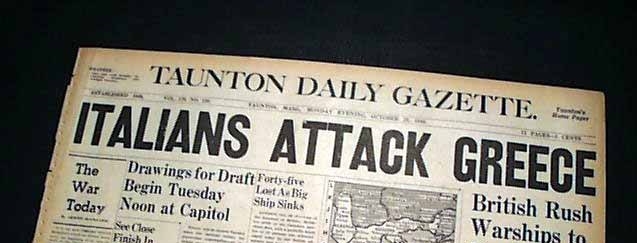
Bersaglieri Platoon for Chain of Command (Greek 1940-41)
My lighting solution(s) for my travel rig
Soviet Platoon for Chain of Command (Finnish Continuation War) with Support
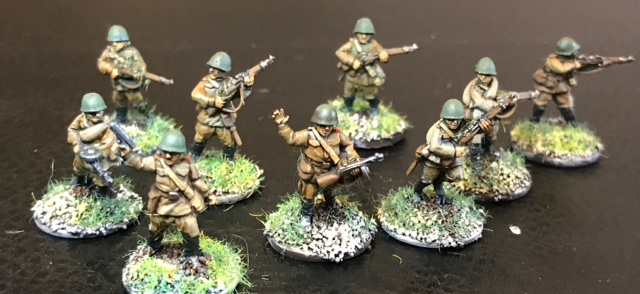
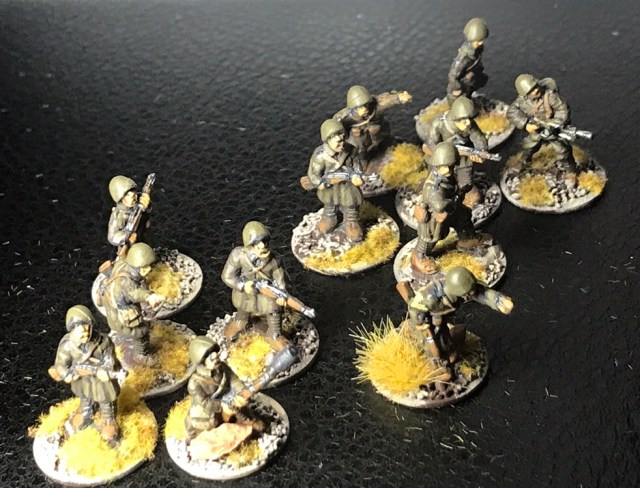
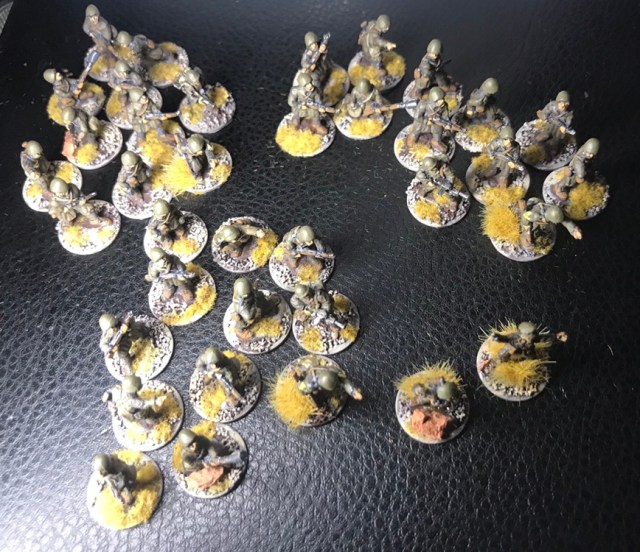
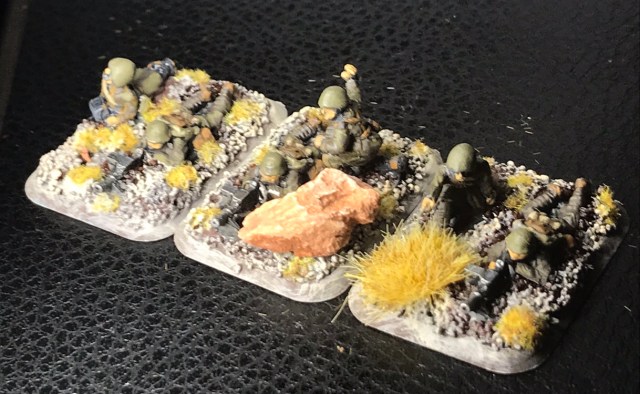
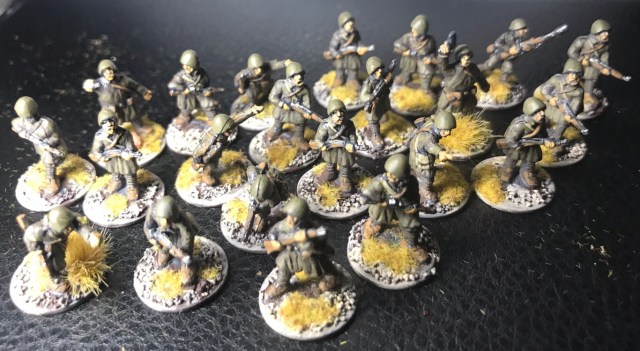
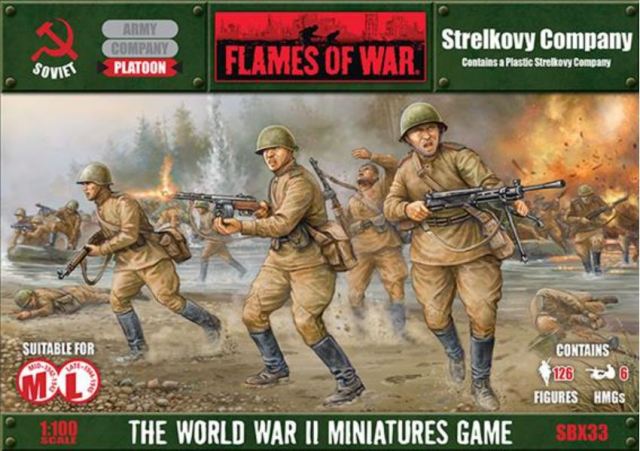
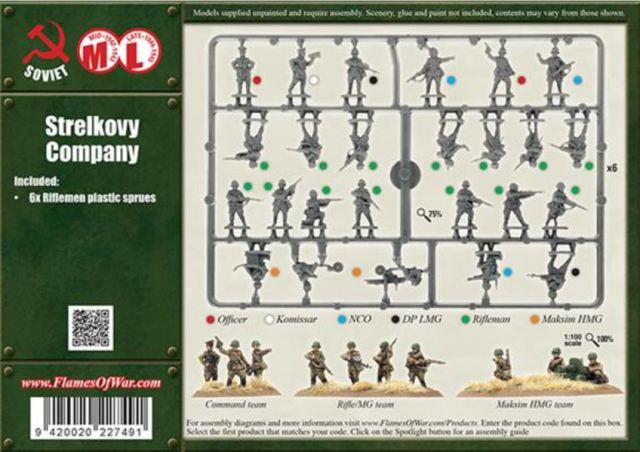
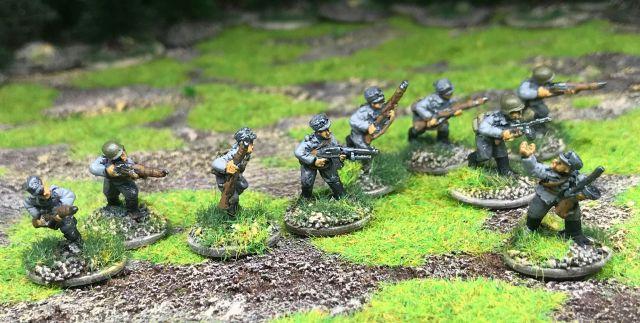
Had some marathon sessions last week to paint up a company box of plastic Russians/Soviets from Battlefront (Product code SBX33 Strelkovy Company in Plastic, at £28, but I got mine cheaper on ebay), with some additional miniatures from Skytrex (LMG second men, AT Rifles), Mortars from Peter Pig and further SMG men from Battlefront. I did the photos after having based them so there is still some static grass on the figures in some places – sorry!
These guys will fight the Finnish Platoon I made earlier (link here).
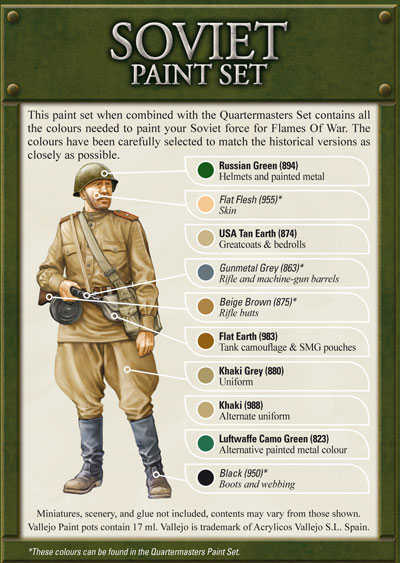
This is an overview of some of the Poses (go back to my earlier posting here as there is a link to a review of these miniatures there from another blog highlighting some issues – I agree with this review). Great models to paint.I used this as a guide for the painting for the helmets, the two uniform colours (drybrush it first then highlight with the same colour) and the boots. However for the bedrolls I used German Camouflage Beige (821 Vallejo) and the for the bread bags (Plague Skin from Warpainter). I gave them a light wash of brown at the end.
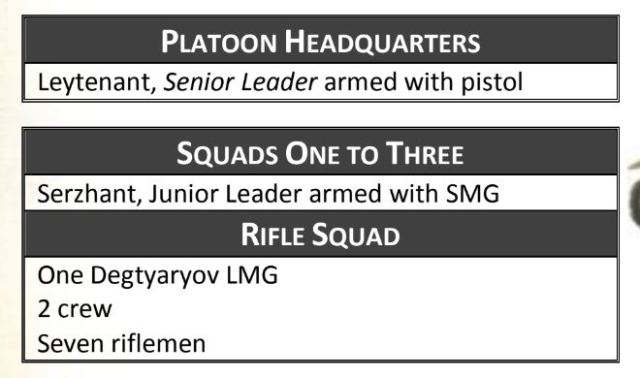
Using the list from the Chain of Command book we find the following information for a Russian Rifle Platoon.
Screen capture from the Chain of Command Rulebook
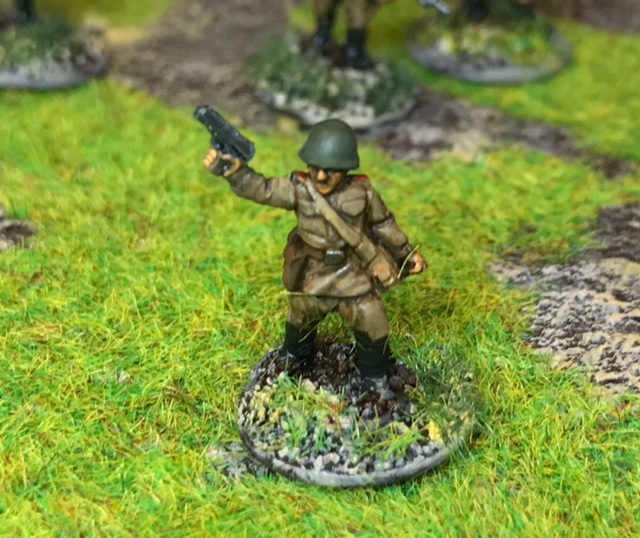
So let us start with that Leytenant
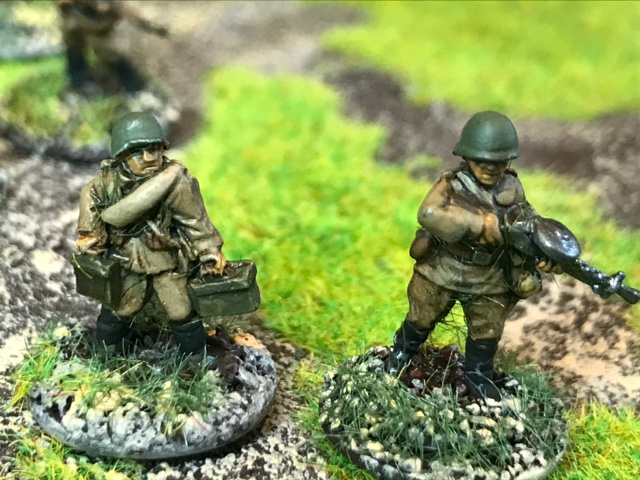
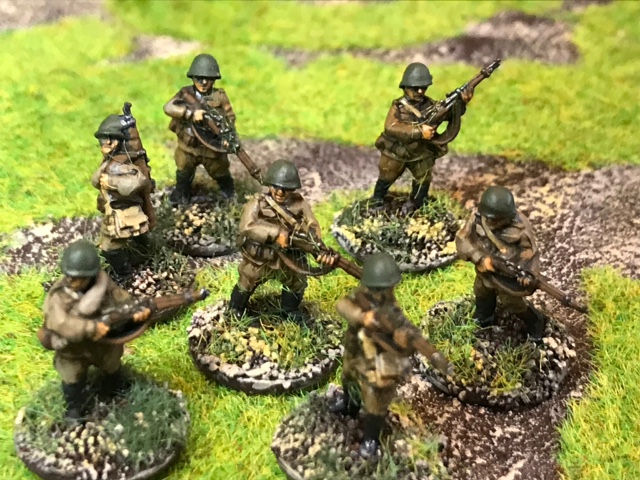
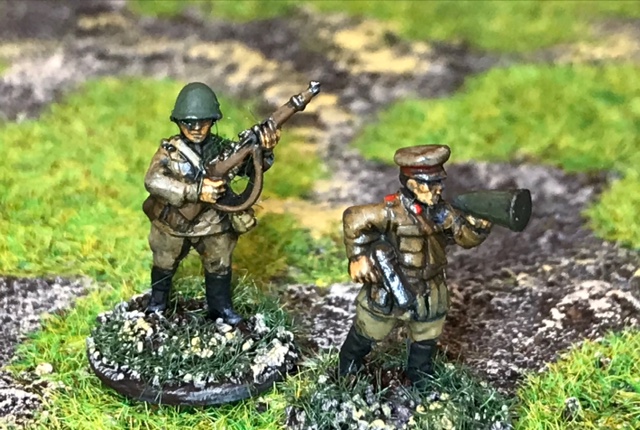
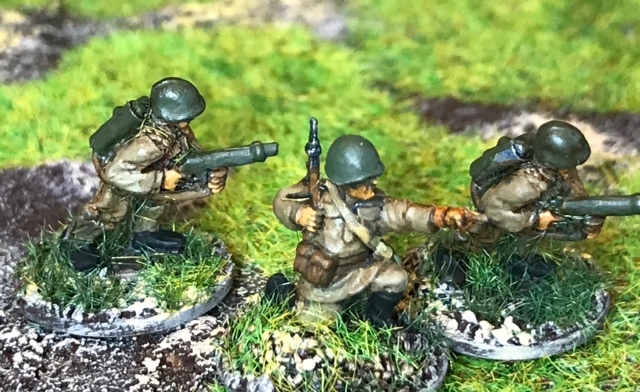
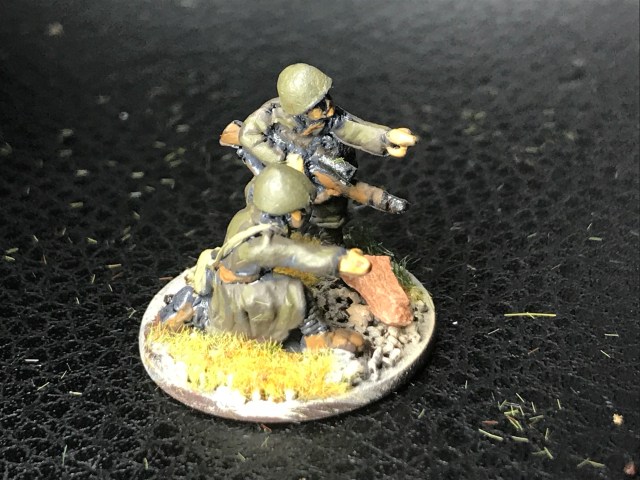
A LeytenantA SerzhantA 2-man LMG team (the ammunition carrier is an old Skytrex miniature I had lying around – they are cleary from different districts of the Great Motherland – but it works. Try it by standing up and carefully taking 5 steps back and have a look)The rest of the Squad, the Seven Riflemen
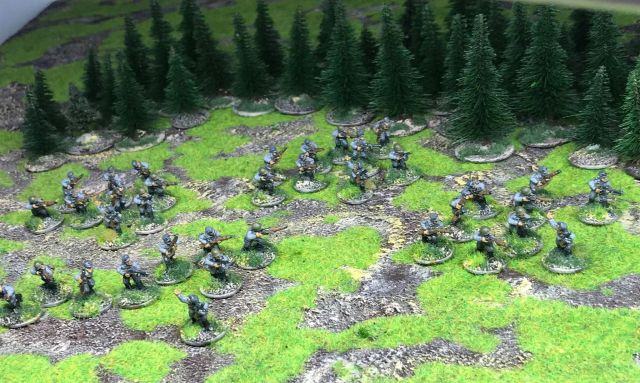
Add two more squads and we have our Rifle Platoon (I did 4 or these Platoons)
Some of the support options I made this week (in addition I have plenty of tanks from my What a Tanker stuff I made earlier this year, just need to add some Infantry Gun and Anti-tank Guns:
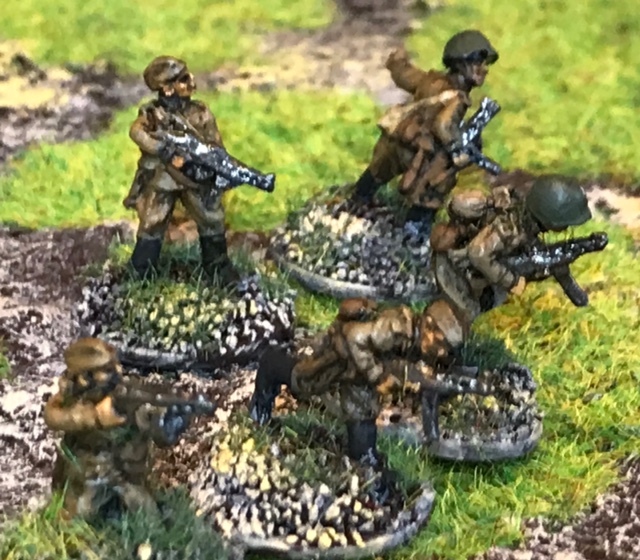
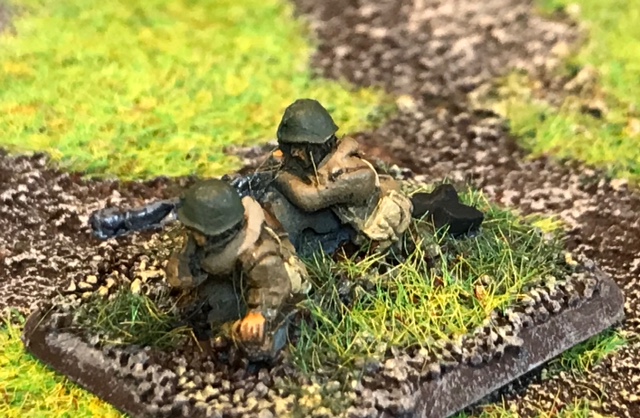
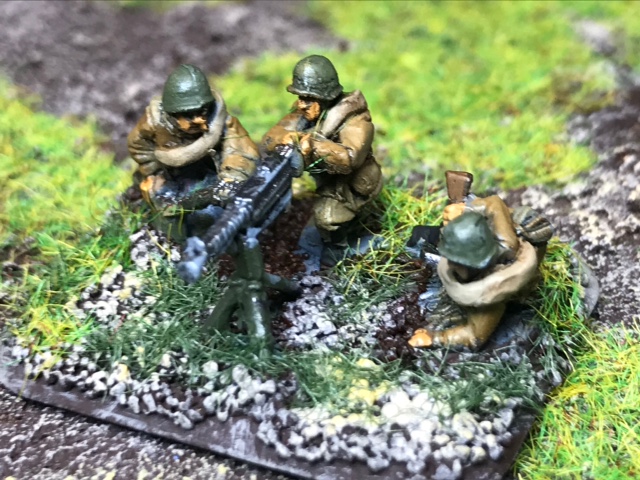
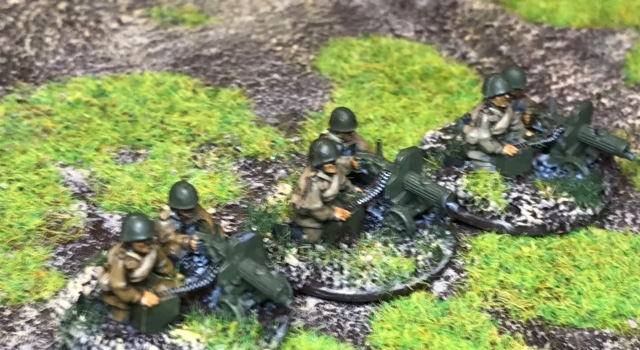
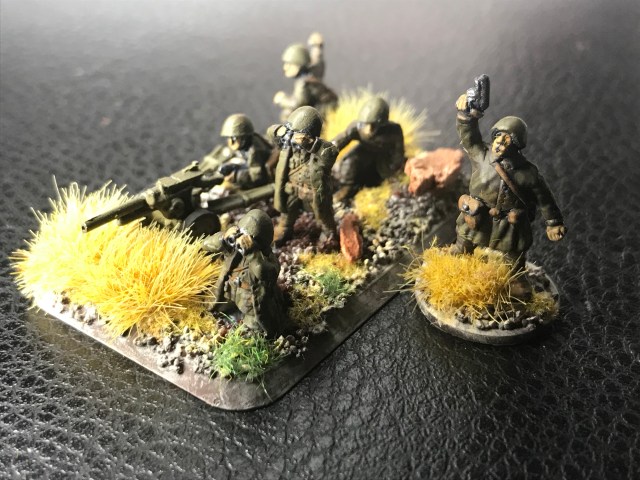
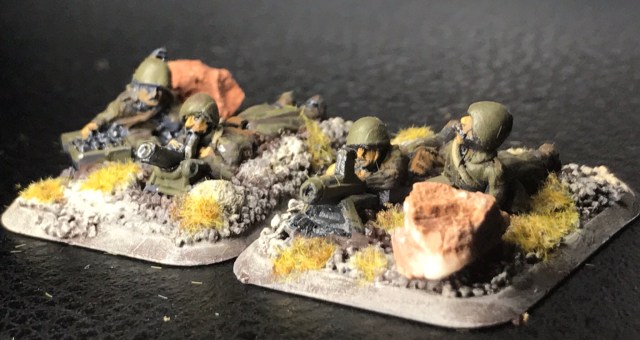
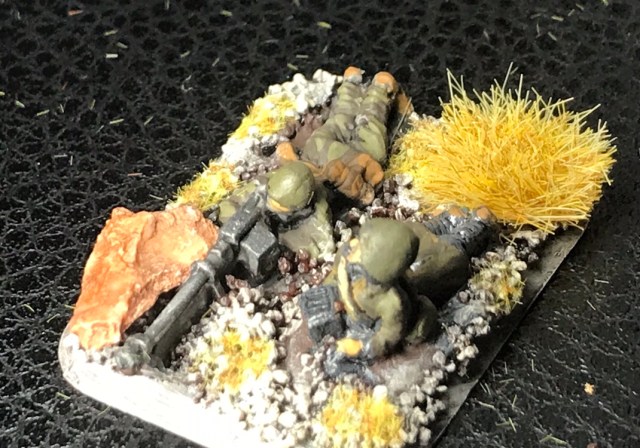
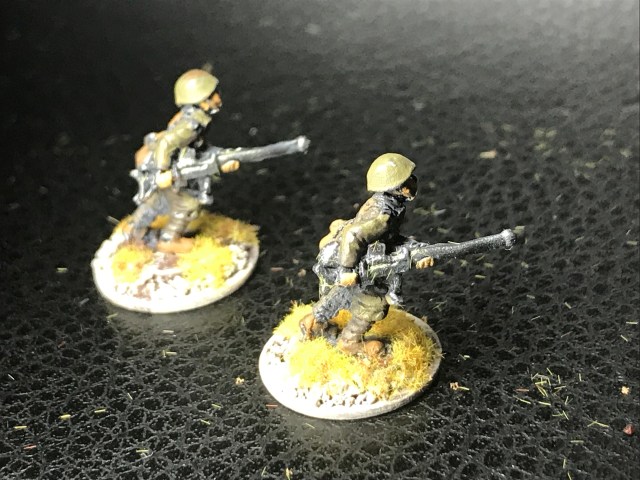
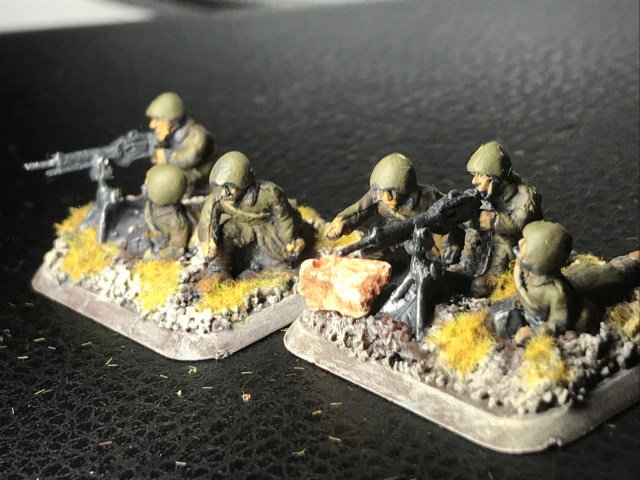
A Commissar teamSome extra Sub-Machine Gunners (these were from a separate Battlefront Pack)An anti-tank rifle from SkytrexHeavy Machine Gun from SkytrexMedium Machine Gunners (from the Plastic Company Box)Mortar teams (Peter Pig and Skytrex)Flamethrower team (Peter Pig and the pointer from the Platoon Box)Anohter Anti-tank rifle from Skytrex with the pointer from Battlefront (I had lying around)Forward Observer
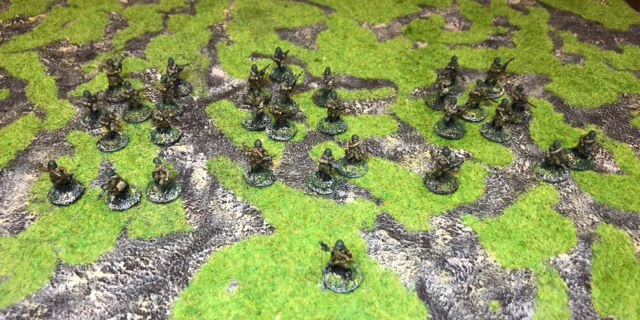
Having placed all that on the table I still had this left.
So there is enough for more Platoons for a large game of Chain of Command, or even a IABSG.
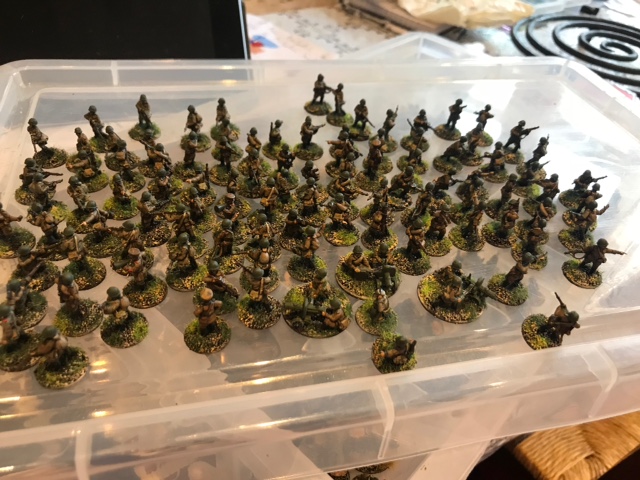
Bersaglieri Platoon for Greece 1940-41 with some Supports
Whilst I was on holiday in Rhodes, Greece, I painted a Greek Platoon that I had lying around on the lead mountain (here is a link to that one). Below some picture of this platoon.
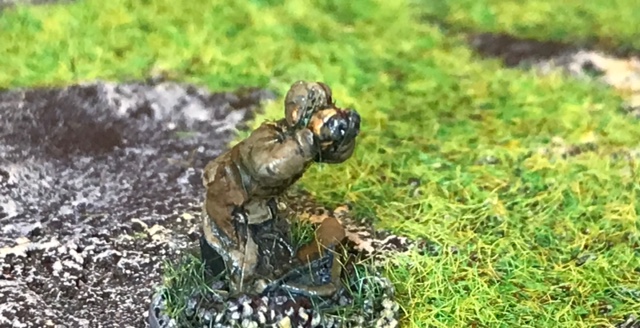
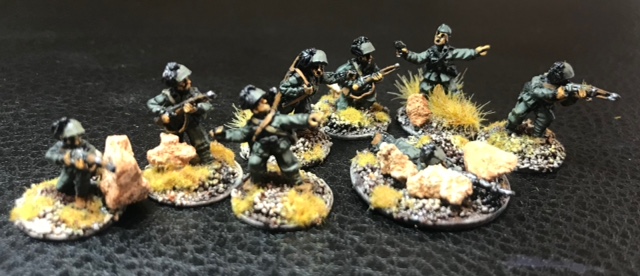
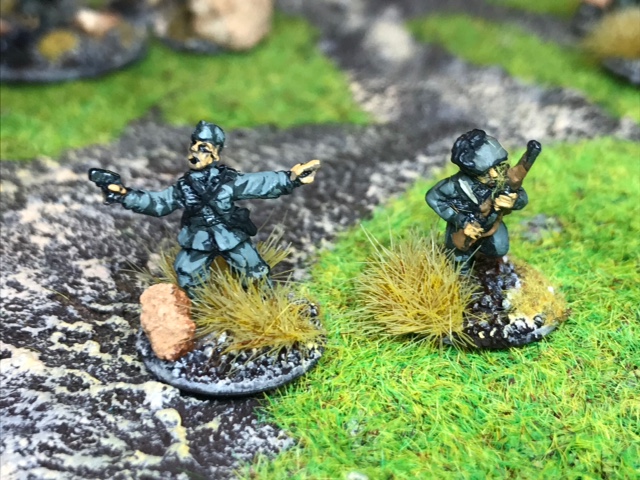
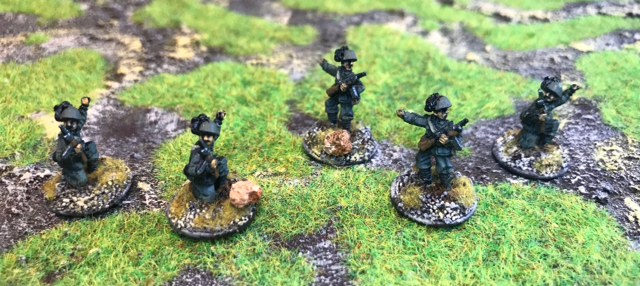
I got really inspired and decided to paint up a platoon of Italian Bersaglieri – Italian light elite infantry with those cool black feathers (actually capercaille feathers). To fight these brave Greeks. By the way Bersaglieri means marksman.
I love the intensity in this video showing them in action in the beginning – it is a propaganda video and I have no idea what they are saying and I especially like the part where they are pulling the AT Gun up the slope about 30 seconds in – quality.
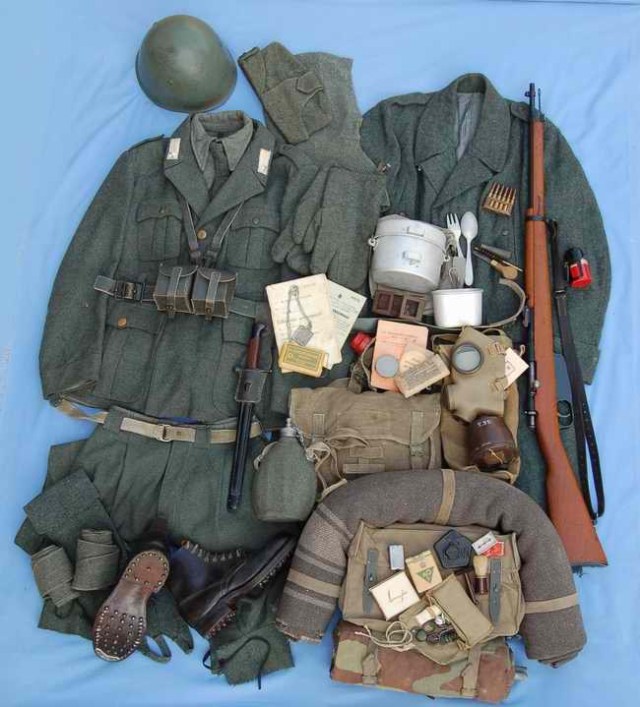
I have seen these previously on the wargames table in the North African Theatre with the tropical helmets and light coloured uniforms and later in the war during the Italian campaign with a light khaki top and brown trousers. However for the Greek campaign the sources I found suggest a much darker uniform at this point and I have gone for this in doing these. I guess this uniform would work for the attack of Southern France in 1940 as well as for Barbarossa.
I had this picture on my laptop but not sure where I got it. It is the colour I was after but I made the shoes in a lighter brown. For the uniform I dry brushed heavily the uniform with Vallejo German Camouflage Dark Green (879) and then highlighted with the same colour mix with Stone Grey (884) at a ratio of 2 to 1 (2 parts 879 and 1 part 884). I painted the helmet in German Field Grey (830). The bread bag was painted in Khaki (988). This is similar to what is advised by Battlefront.
I got the models from Battlefront and I used the following packs (unless stated otherwise stated in the text) to make the platoon and the supports (prices in british pounds from Battlefronts webpage, I got mine about 10% cheaper from ebay). I really like the models but there is some flash especially on the two firing rifle poses and some of the rifles are a little bit weak so be careful.
I need to get some more infantry Guns and perhaps a small tank, anyway this is the platoon and the support option at this point in time.
Overview Picture
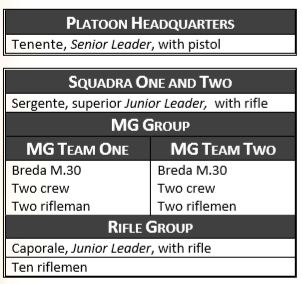
As a basis for the platoon I used the list from the Too Fat Lardies webpage (link here), however this is a list for a Fucilieri platoon in Africa so may not be correct (if yoy know it is not and are reading this could you please let me know through the contact or comment on this blog). Anyway it is an assumption for now.
By the way Too Fat Lardies are soon to issue a new supplement for Chain of Command that maybe will contain further information on the Bersaglieri at this point in time. I am very excited about this as I have painted platoons for Germans, French and BEF (and a few on the lead mountain). In addition they will include rules that will be useful for my Continuation War scenarios as there will be rules for bikes (remember Lt. Eero Perkolas platoon in the movie Ambush [ Rukajärven tie] ) and boat assaults (see this link, if you do not understand why I am excited about this).
So really looking forward to this one, for many reasons.
…back to the Italians.
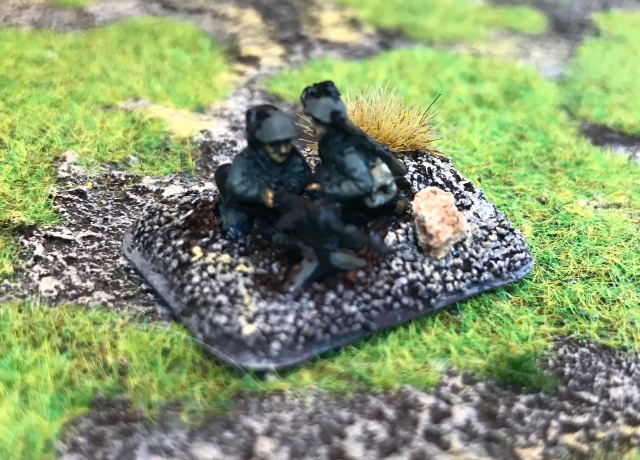
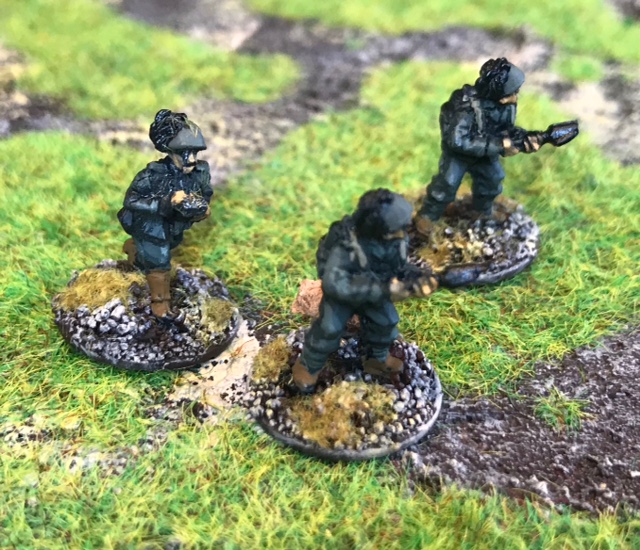
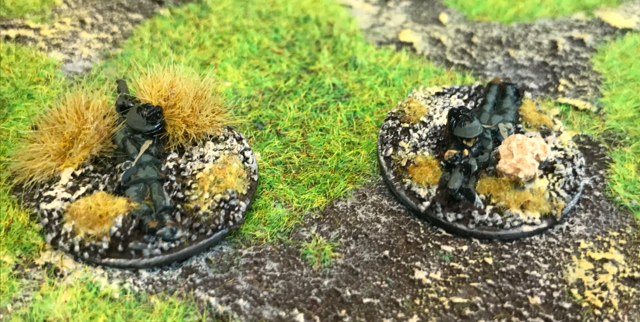
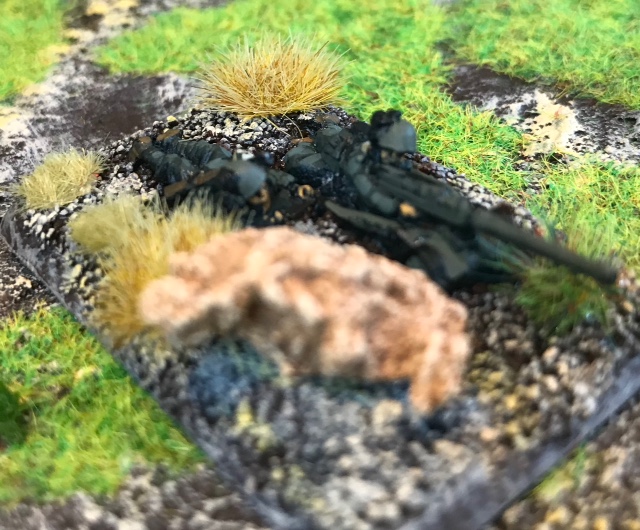
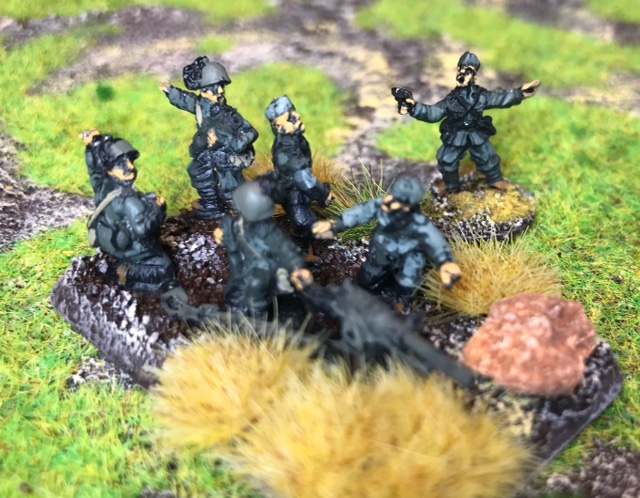
The Tenente and one of the Sergente.Two Light Machine Gun teamsA Caporale with his Rifle GroupThe Platoon with the two Squads (sorry for the half second squad and the missing Sergente.Anti-Tank Rifle, I made by cuting the head of the normal Italian AT Gun from Peter Pig and replace with one of the head from the battlefront models, and added a Battlefront as a number two.Some SMG armed gents – for later war?Medium Machine Gun team (not very good picture)Flamethrower teamMortarAnother Anti-tank rifleSniper team (kind of)An AT-Gun made from a Peter Pig AT-gun and then some left over figures from the packs. Not very happy with this one, but good for now.
Let there be light!
Earlier (link here) I wrote about my current work situation requiring me to stay away form home in hotels a few evenings every week and about taking back the hobby time in bringing a “painting and basing rig” with me.
From the earlier blog
However there was an issue and I made a promise.
Light is a problem in hotel rooms and I have invested in a travel led lamp that will be a very welcome addition to the “rig!” but it is waiting for me in the house at the moment. I will get back to you with my verdict.
I find it difficult to focus if I paint in a poor light environment and I quickly get tired – affecting both quality (can’t see properly) and output (can’t do it for long). So something needed to be done.
I actually “splashed” out and bought two slightly different lamps and what follow is a little bit of a discussion or a review if you wish. I did not do any research prior to buying these so there may be better and more cost effective ones – this is just my view on the two I did buy. I have no technical knowledge of light and it is just based on my opinion and what seems to work for me – have I caveated myself sufficiently?
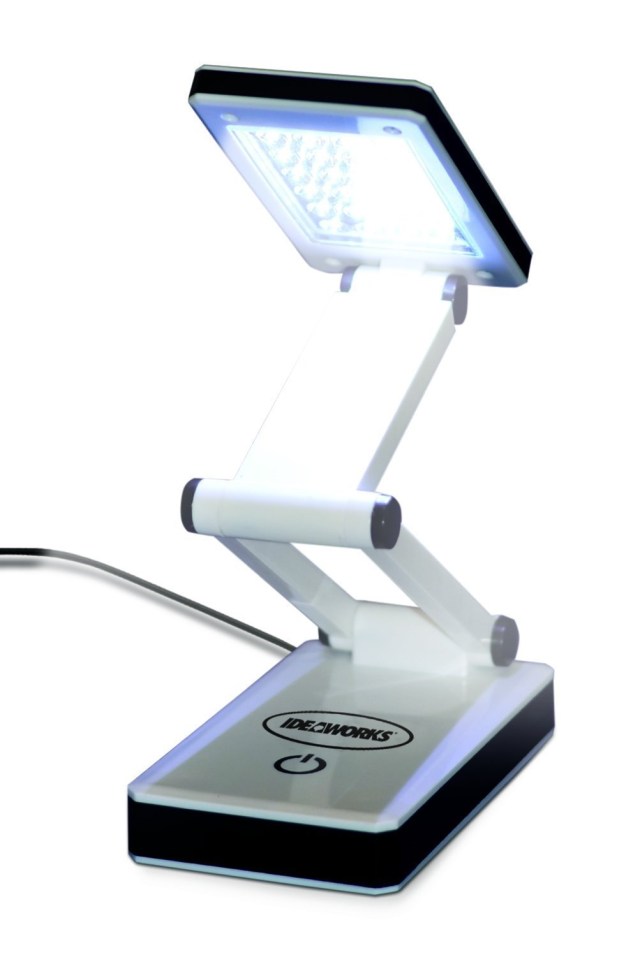
First out is Ideaworks super bright portable LED lamp, I call this one Gimli.
Gimli – £9.27 from Amazon UK
This one folds into a little compact box (13 X 7 X 4.5cm) and is powered by 4 No. AA batteries or by USB cable. I have only used this one using the USB cable so I do not know how long the batteries will lasts. There are also three levels of light that can be used 30%, 50% and 100%.
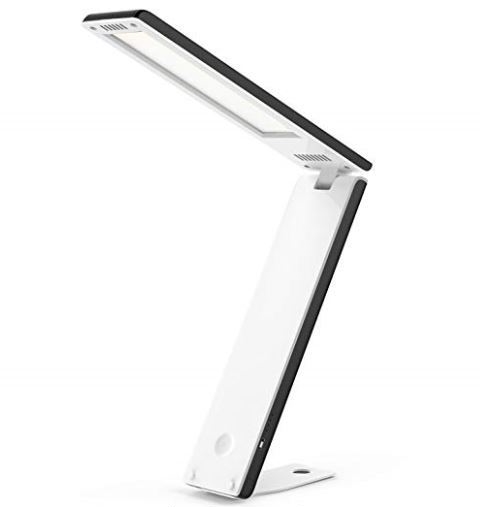
Second is the taller but with more sleek design, MoKo Portable LED Desk Lamp, I call this one Galadriel.
Galadriel – £22.99 from Amazon UK
This taller but slimmer lamp (23 x 5 x 2.5cm)has an internal rechargeable battery and can also be powered via USB cable. The battery can also be used as charger for your other gadgets (2800 mAh, this in theory is more than sufficient to charge an iPhone from 0 to 100% once) – so a handy additional feature. Further the battery lasts for about 7-8 hours according to the product blur (but there is a deterioration of strength during use).
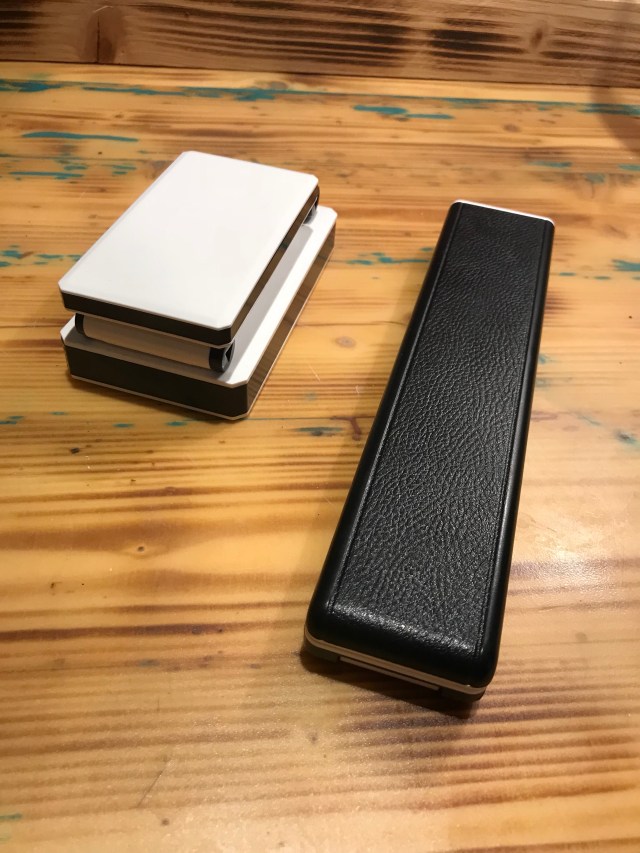
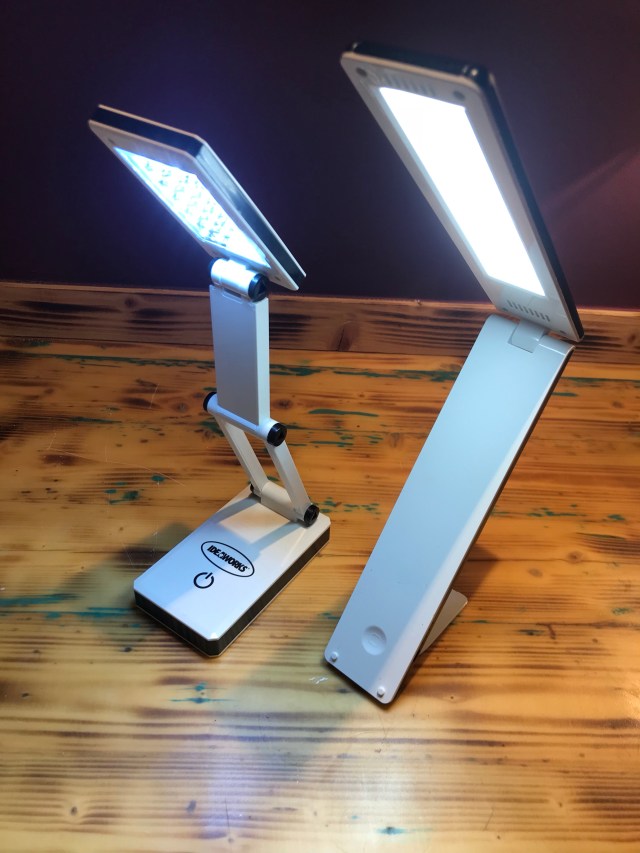
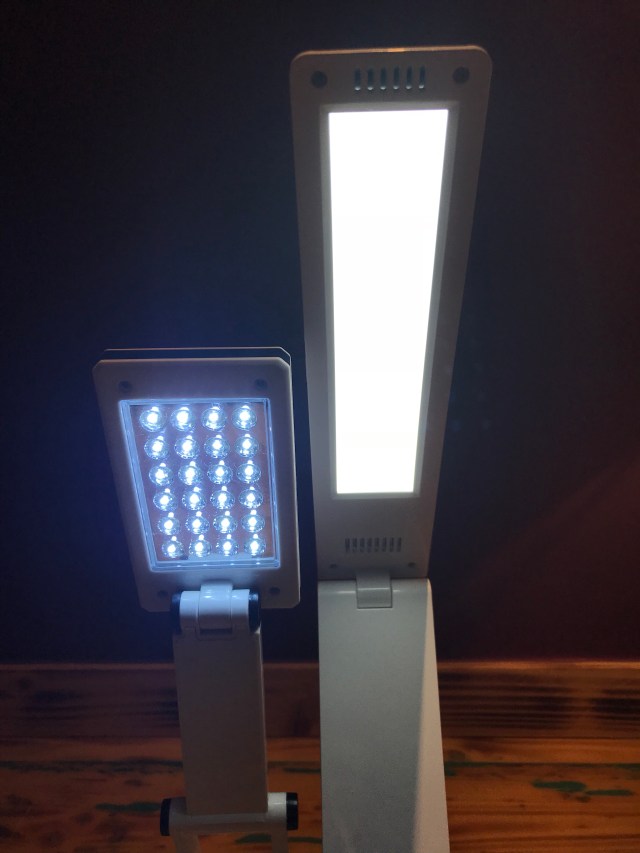
Compacted versionsSide by Side – brutal vs elegant (however Galadriel may be a little bit unstable on uneven surfaces).This picture sums it up – Galadriel is the brightest and the most pleasant light – the key criteria for me.
So overall I am most happy with Galadriel as the light is better, but in addition she takes less space (they both weight about the same, when Gimli has the 4 AA batteries added) and further she has the added feature as a back-up power bank. I recall one of my University Lecturers saying that price is an information carrier and in this instance it is correct. I used it whilst on holiday and I am more than happy with the product.
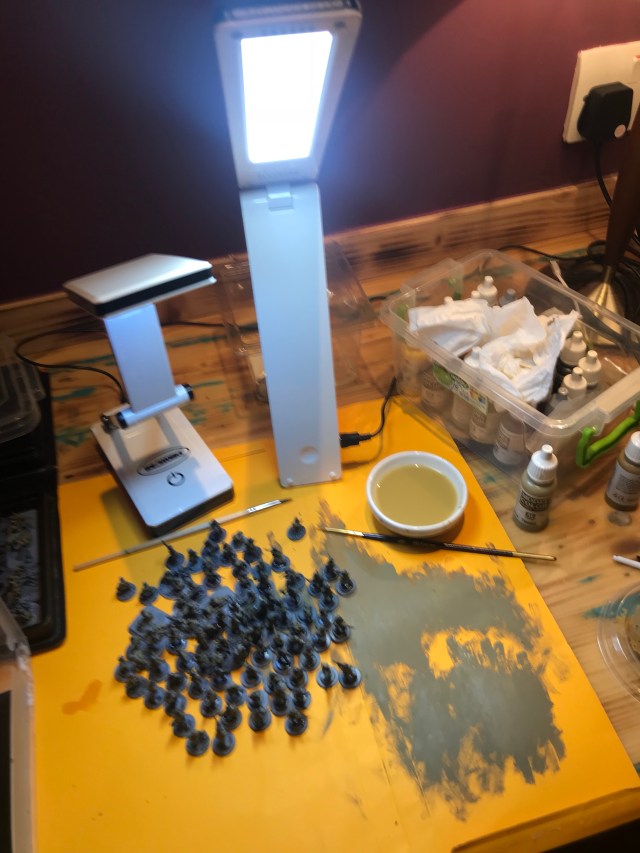
However, as I now have them both I think I will use them together as this gives the even a better light experience. They are my two Towers.
Two Towers in action – great stuff.
“Dark is the water of Kheled-zâram, and cold are the springs of Kibil-nâla, and fair were the many-pillared halls of Khazad-Dûm in Elder Days before the fall of the mighty kings beneath the stone. She looked upon Gimli, who sat glowering and sad, and she smiled. And the Dwarf, hearing the names given in his own ancient tongue, looked up and met her eyes; and it seemed to him that he looked suddenly into the heart of an enemy and saw there love and understanding. Wonder came into his face, and then he smiled in answer.
He rose clumsily and bowed in dwarf-fashion, saying: „Yet more fair is the living land of Lórien, and the Lady Galadriel is above all the jewels that lie in the earth!
from the Two Towers by Tolkien
The point is whether you are painting at home or roaming the land, make sure that you have good light as it make the experience easier, more enjoyable and less tiring.
/ Hope that was of some interest, time to put on a few colours and then switch off the light. By the way here is a picture from the movie I referred to earlier Ambush/Rukajärven tie showing the Finnish soldiers with their bikes.
“Direct your fire over there Pössi!, the clearing is full of Russians”
I often see posts like “What movies/books inspires you to Wargame” on forums and it is an interesting question and very often the answers leads me to find new and interesting potential projects. As I have mentioned on a number of occasions I went to the Cinema when I went “home” to Sweden over Christmas last year to see “Unknown Soldier” based on the book by Linna. It is one of the most famous Finnish books and is set during the Continuation war (you can read more about the book here) 1941 to 1944, between Finland and the Sovietic Union (or Russia if you prefer) – you can find out more about this war here.
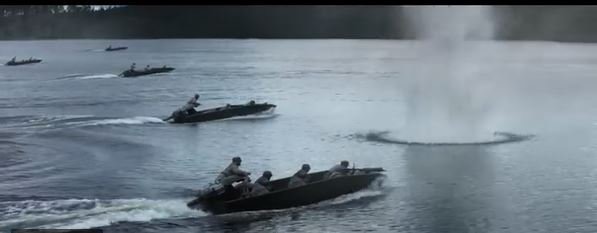
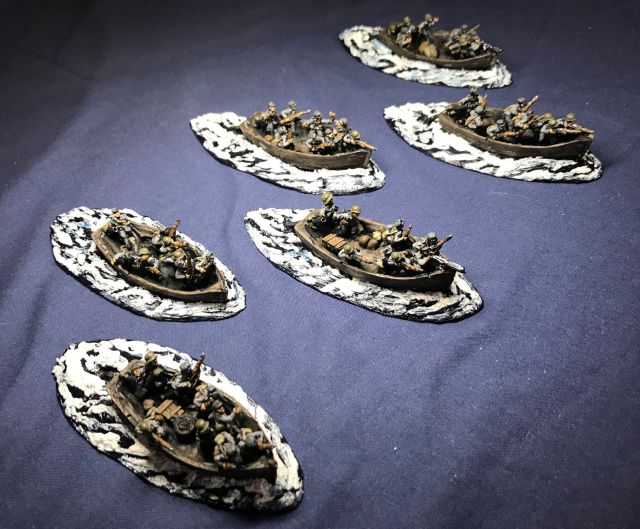
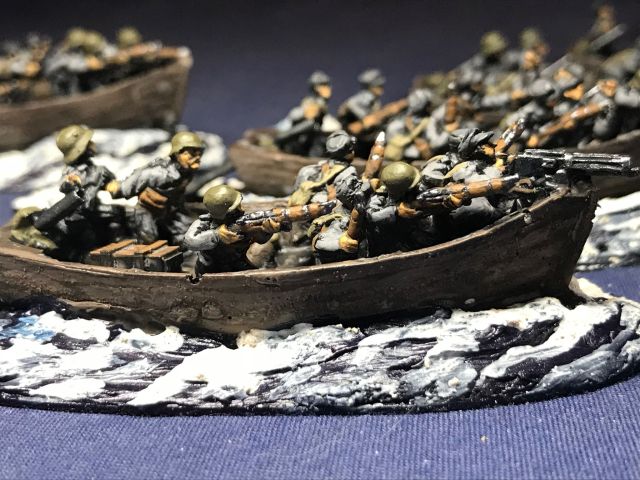
One of the scenes in the Unknown Soldier movie shows a Finnish attack using assault boats – I really found this scene inspiring and have been thinking about doing a scenario starting with a reinforced infantry platoon, and a half Machine Gun platoon, in six boats pushing forward during a Finnish Barrage off the opposing side (with unknown effect) and with a chance of individual boats being hit by enemy fire, with some possibility of doing the Russian side some further damage with the Machine Gun or perhaps even Rifle fire. Then the boats would be used as initial Jump-off Points and then the scenario would play as a normal Chain of Command (or Bolt Action or whatever platoon based rule set you prefer), with the possibility of having lost units/men on both side before the actual engagement.
Here is a screenshot of the scene from one of the movie trailers on the net.
Here is the picture. Looks very scary.
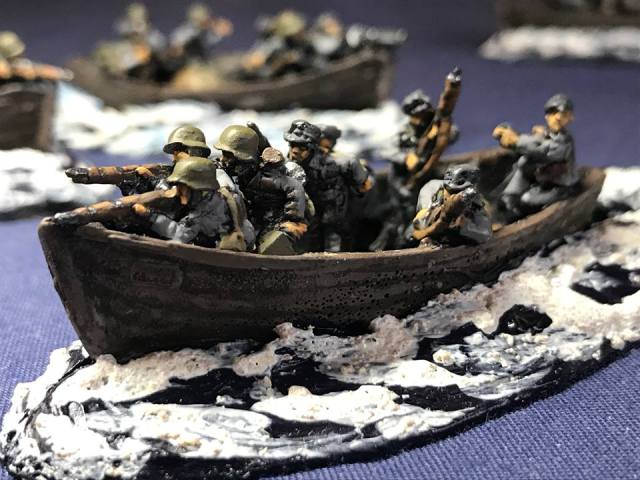
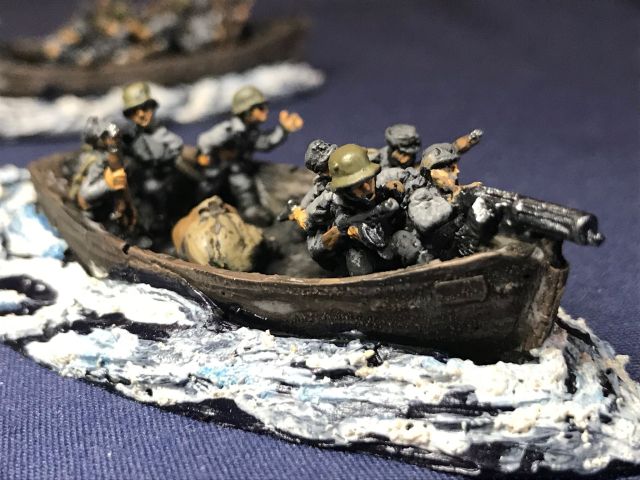
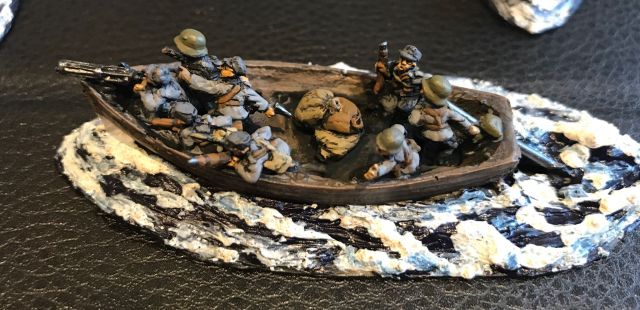
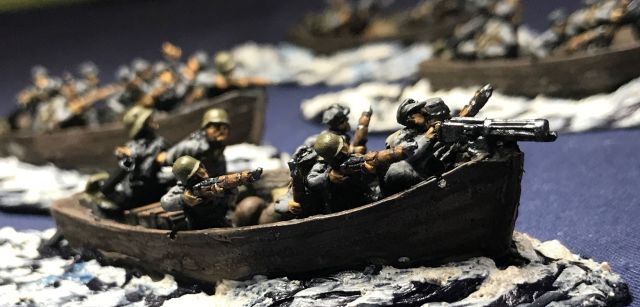
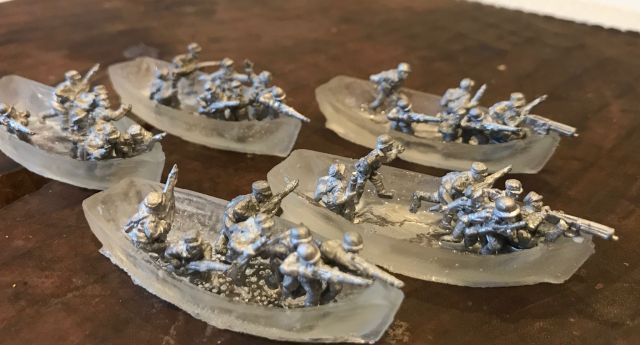
I recently did a Finnish Rifle Platoon in 15mm (here is a blog write-up) and have got enough miniatures to do another one, however in doing this I ended up with a pile of Finnish Soldiers I did not need. I also had a few boats I had made for another project some time ago (do not ask, but it involved making molds and using clear resin). These boats are not based on the Assault Boat in the pictures and the men, as you will see, on them are more dynamic and all-over the place than would be the case in reality. but I felt inspired yesterday so they had to do – and what the lack in historical or procedural accuracy I think they make up in looking cool!
Here are a few pictures on how they ended up, for anyone interested there is a little discussion after this on how they were made and the painting (more writtten as I guide for myself, if I want to do more).
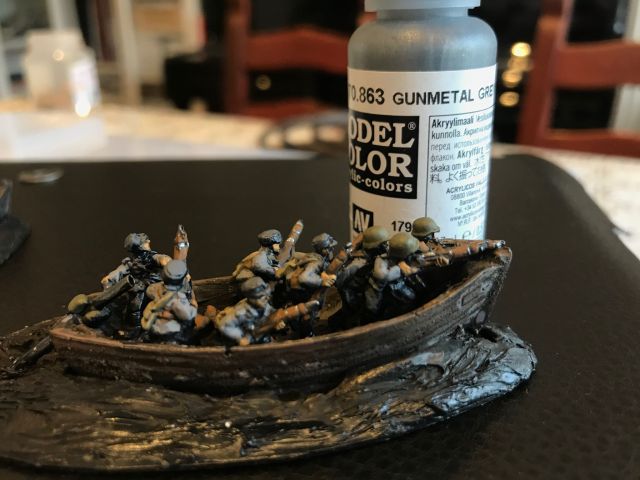
Here we go… (all miniatures by Battlefront, from their Finnish range, 15mm scale). I think they are good enough for a game.
Thanks for hanging on so far, now some notes on how they were made and some notes for me on the painting.
Assault Boat Notes
I had six boats I had made previously lying around and I still have the mold somewhere to do more if I need – I used a clear casting resin I had used for some water effects. I cut off the bases on the miniatures and bent some legs when required and tried to get a look of some action maybe just as the boat enters the “final destination” and the section are ready to jump off and attack.
I made six boats (yes one is missing), two representing a machine gun team and four representing rifle squads.
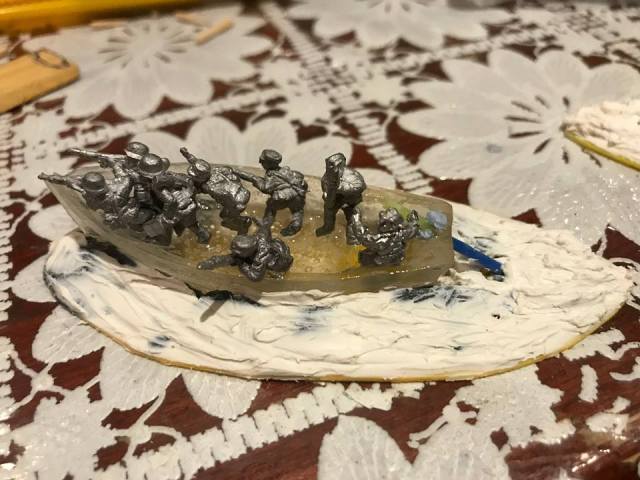
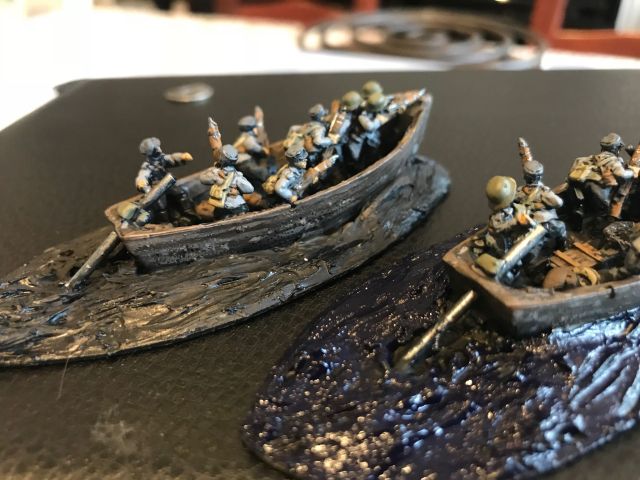
I then glued each boat on a plastic base (I used two dvd covers) with the front end slightly elevated. I then added some filler around and tried to give it some irregular shape and waviness!.
I also added the driver and an very crude engine (using some very thin drinking straws). I will work out something that looks better at some point.
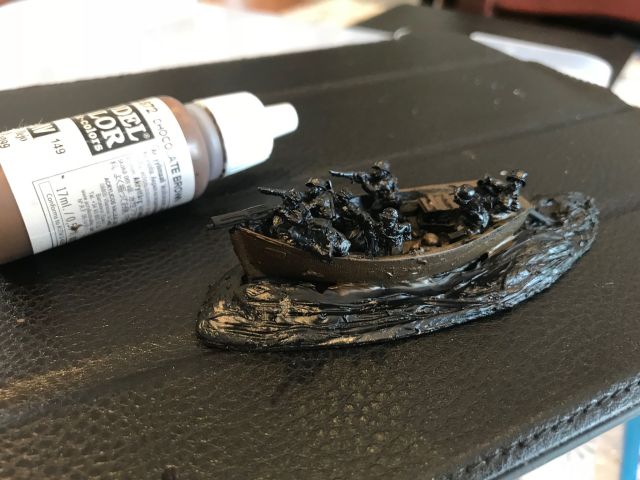
Next priming black. let dry and get on with it.
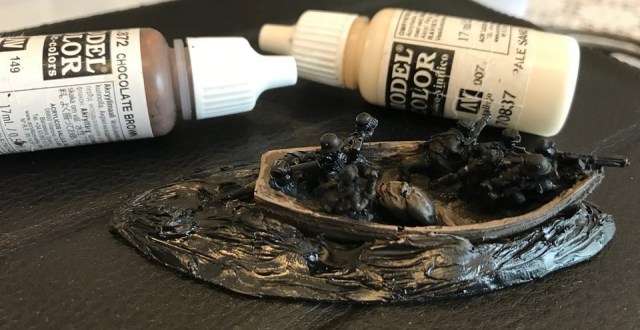
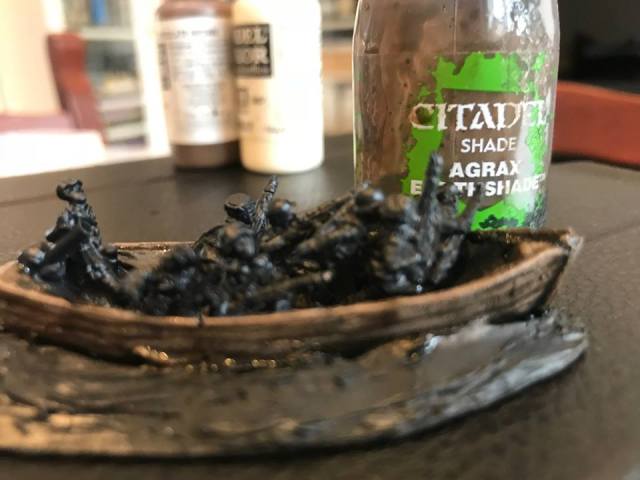
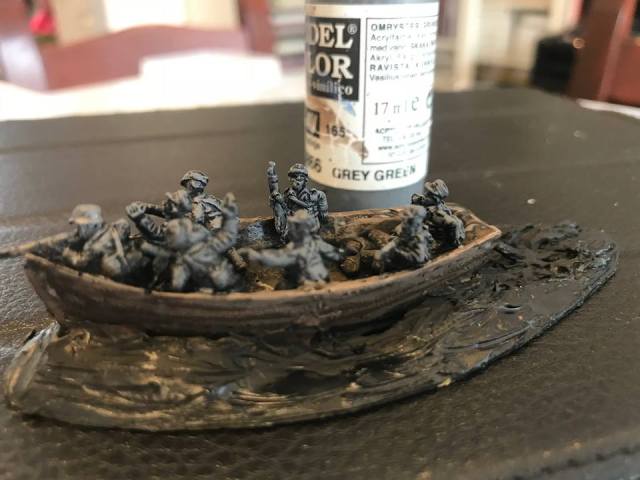
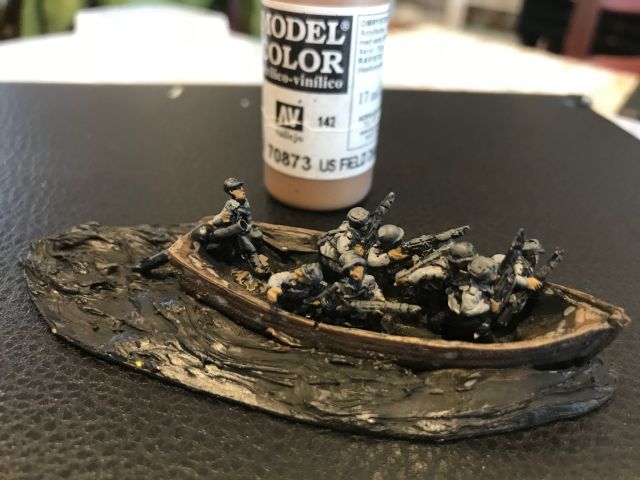
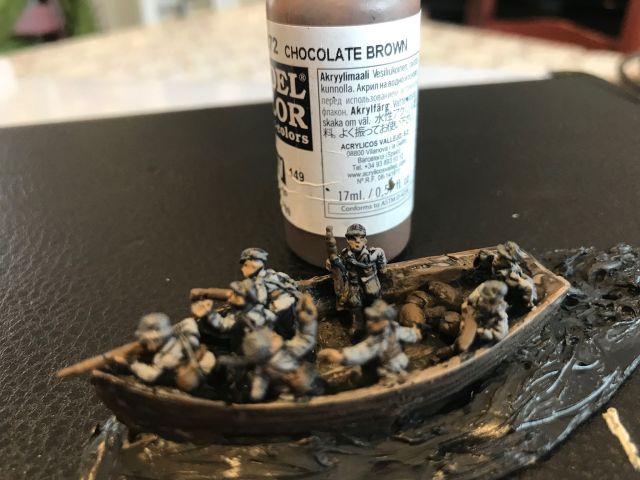
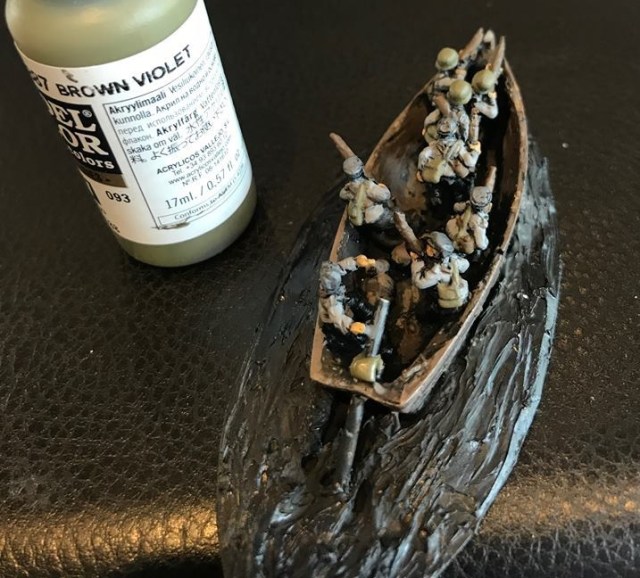
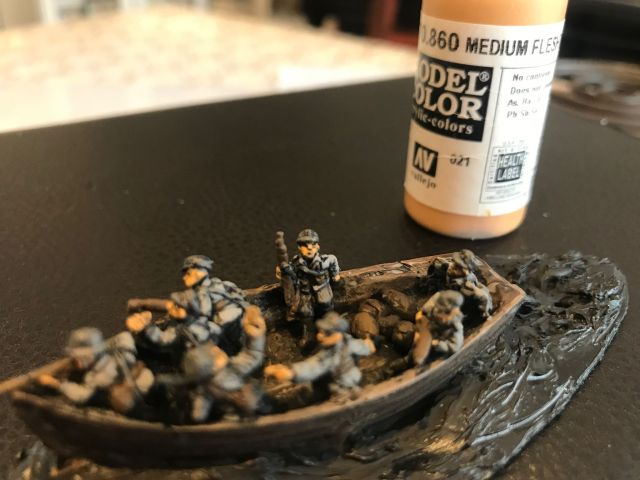
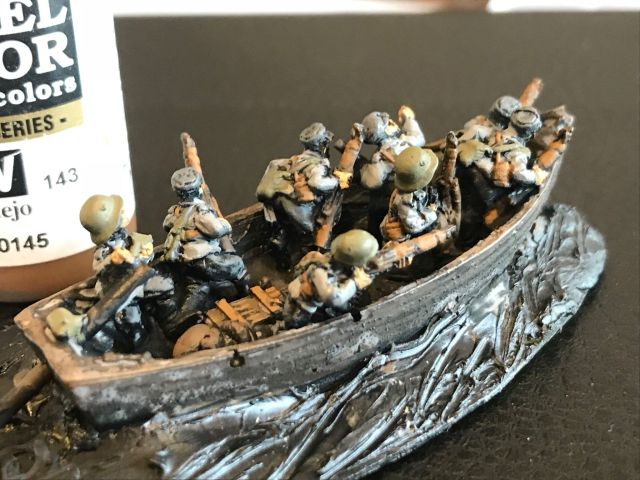
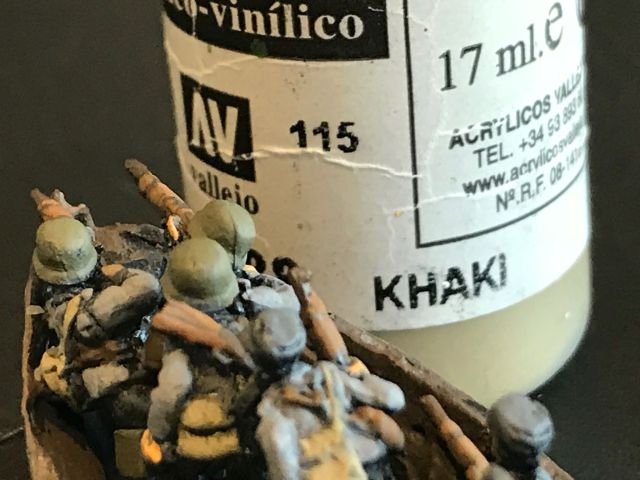
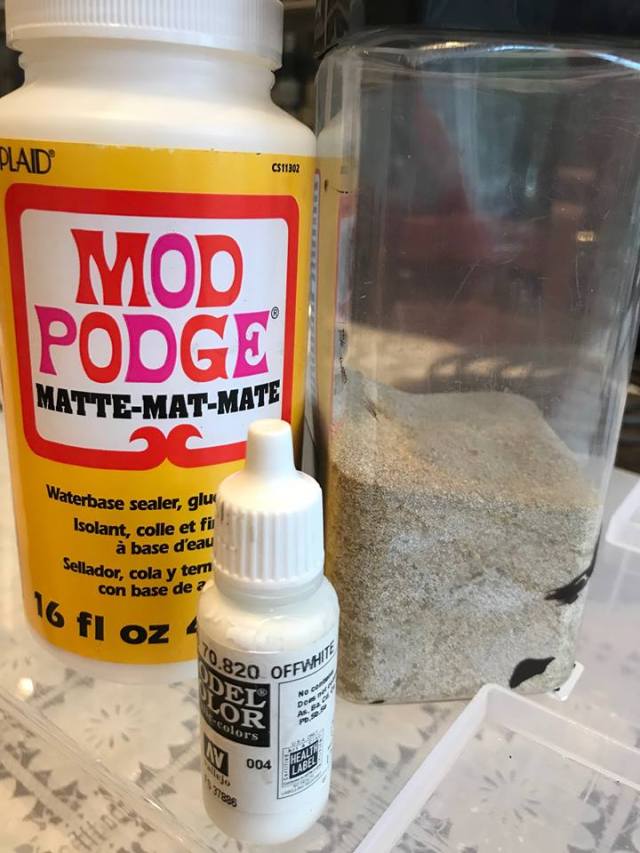
Boat painted in Chocolate brown (rough brush or wet brush). I had also added some boxes and bags in the boat and painted these Chocolate Brown too.Mix down the brown a bit and make some detailing making it look a little bit more like a wooden boat. Make rough lines on the side.Add some brownish wash.Drybrush the soldiers with Grey Green (Dark Grey that will be the base for the jacket, be the trousers and the hats). Avoid the boots (let them stay black).Paint the Jackets in a lighter grey.Paint skin in US field drab.Paint leather and rifles brown (note the bread bag is not leather – see notes below).Paint Helmet and breadbag Green (or Brown Violet!).highlight flesh with FleshHighlight Leather and Rifles with Flat Earth (lighter brown really)Highlight breadbag in KhakiGunmetal on Rifles and SMG, also the makeshift engine.Paint the base in a dark blue.Next I mixed Mod Podge (but perhaps PVA will do), some white colour and chinchilla sand.
Apply the mixture to represent the “disturbed water”. The Sand creates a little bit of an effect that could be mistaken for some foamy water (if you have a good imagination).
/ that is all for this time, hope it was of some use.
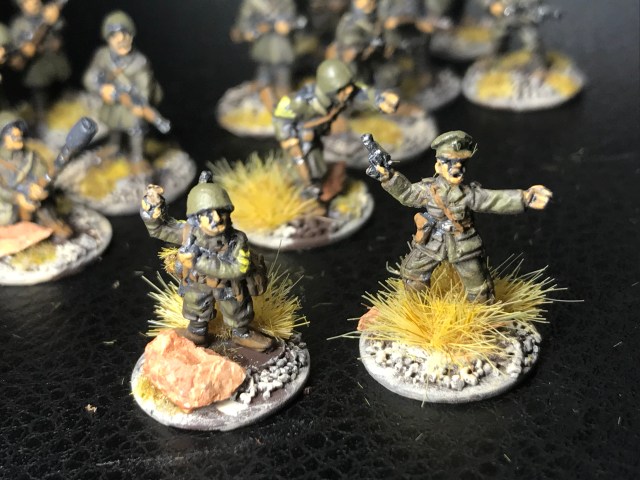
Spending a few days in Greece, so I thought I would do a Greek Rifle Platoon based on some Burns 15mm miniatures from the lead mountain, I also had bought a pack of Flames of War Greeks in the past (there is a HQ pack or something). In trying to make what I had into a platoon with some supports, I bought some Italian LMGs (walking and lying down) and AT Rifles and an AT Gun from Peter Pig. Although not strictly the same type of uniforms it did not bother me so I lived with it. As for all these Platoons I am doing I have decided to get them done quickly and the painting is done in that fashion – 2 to 3 sessions per platoon and support – that is it.
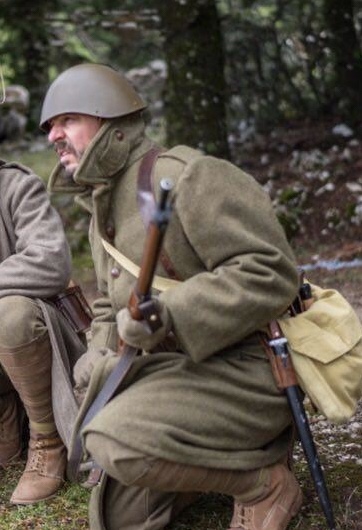
I based my painting on some great re-enactor images I found on the net (link here). The uniform I painted was basically Vallejo US Olive drab highlighted with Brown Violet.
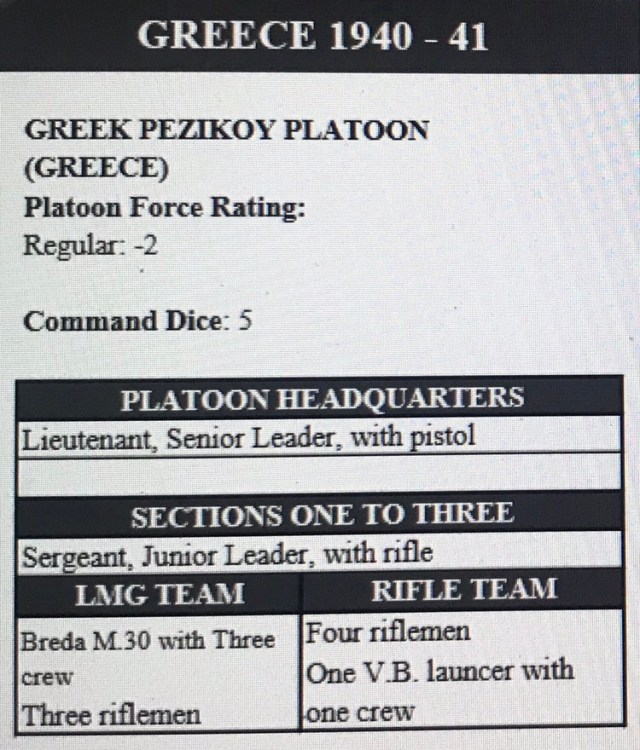
The platoon composition I found on this (link here) really good source that contains a lot of different platoons.
Here is the one for the Greek Platoon.
And here are the models I made…
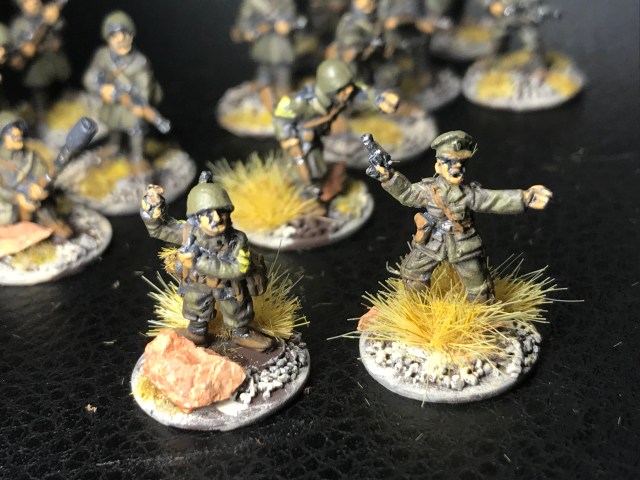
The Platoon HQ – Lt. with a gun and I did a second in command as I did not read the list correctly (ignore him for now).
One of the three squads.
All of the squads
Lying down LMG teams
Support options
Some extra rifle-men
Anti-tank gun
Mortar Teams
Anti-tank Rifle teams
Sniper Team
HMG Teams
Good enough for the table!
/ Hope that was of some interest, now I am doing s##t all for a while.
Next up some Russians to fight the Finns, then perhaps some Italian Bersaglieri to fight these Greeks.
This week, actually the last few days, I have been working on a 15mm Scout/Recon Platoon for Chain of Command to fight the Finnish platoon I did last week (see here). The organisation of the platoon is based on the list found in the Too Fat Lardies Christmas Special 2016 (link here). They are all from the Peter Pig (link here) range and are in 15mm scale. I really enjoyed painting them and I think they are really nice models. If you are not familiar with Peter Pig, go and have a look at what they do – they have a very comprehensive WW2 range and a lot of specials like different type of Uniforms, Sniper, engineers, etc.
In addition Peter Pig has a lot of ranges covering War of the Roses, Samurai, English Civil War, Pirates (and even small 1/450th pirate ships), American War of Independence, American Civil War (and again some naval ships in smaller scale), Vikings & foes, colonial, wild west, great war, Spanish civil war, Vietnam and Modern Africa. Further they sell Scenery and some fantastic rule sets (http://www.peterpig.co.uk/).
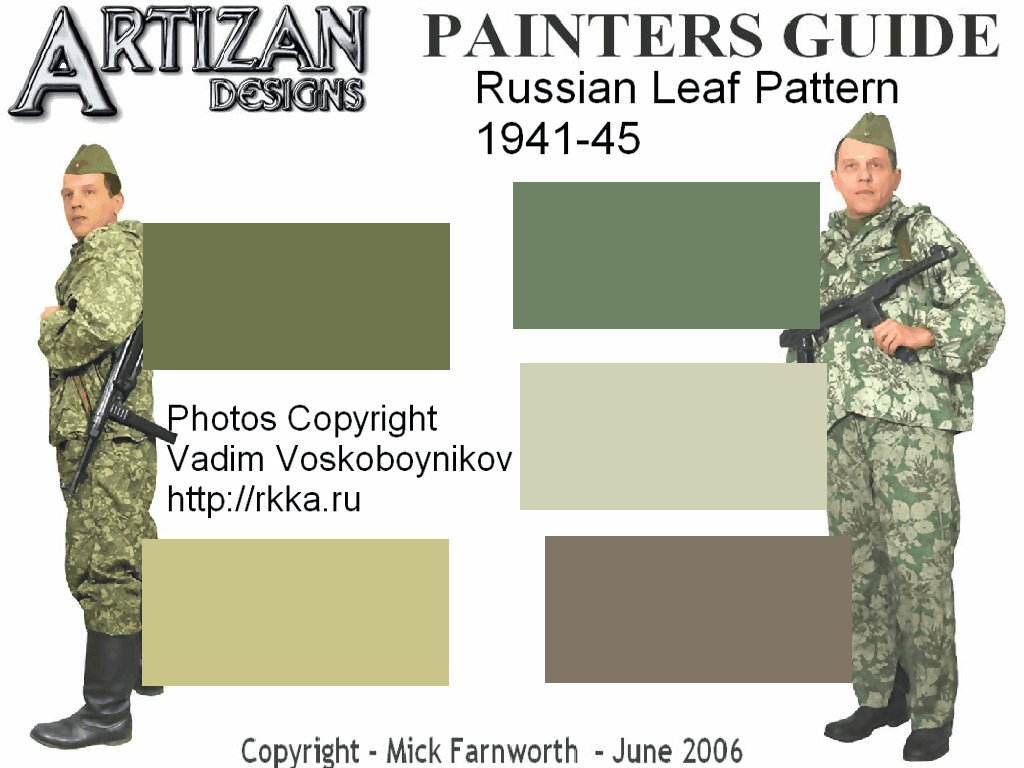
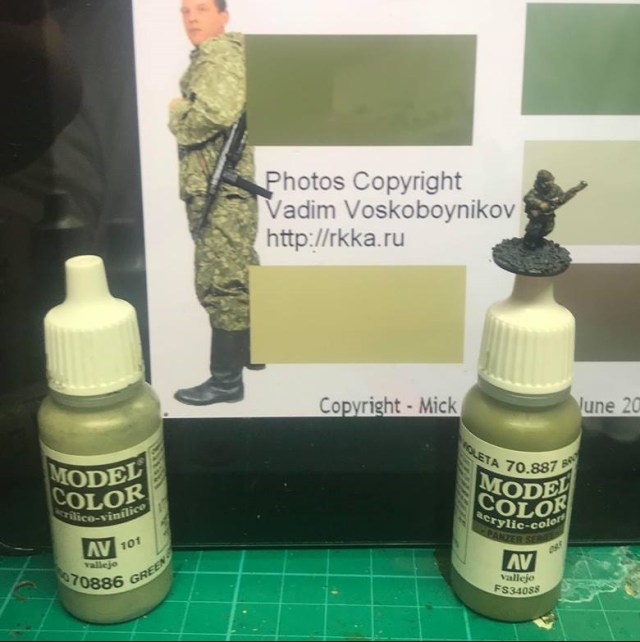
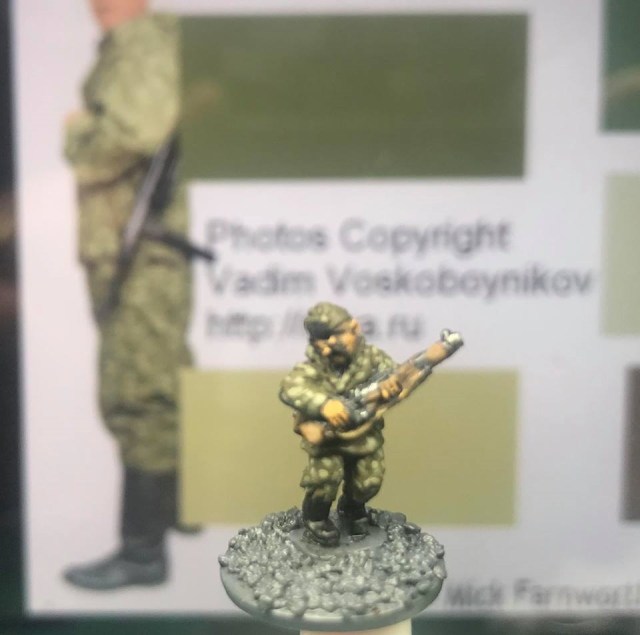
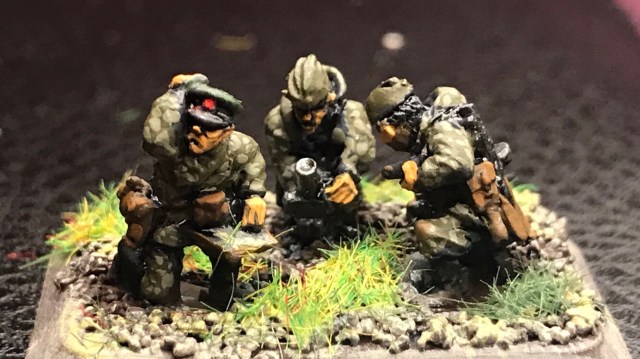
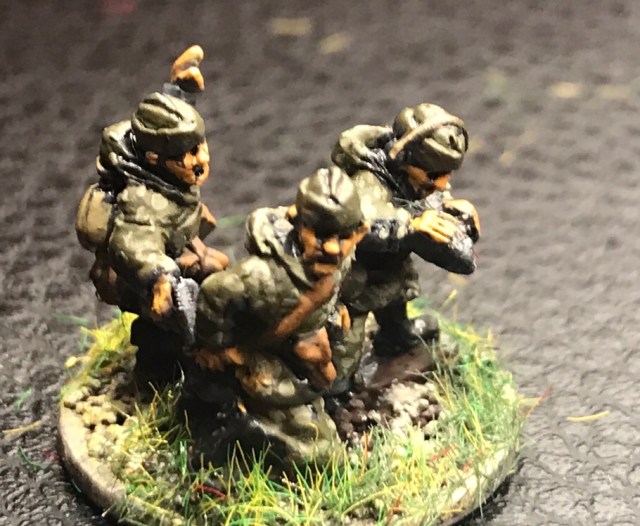
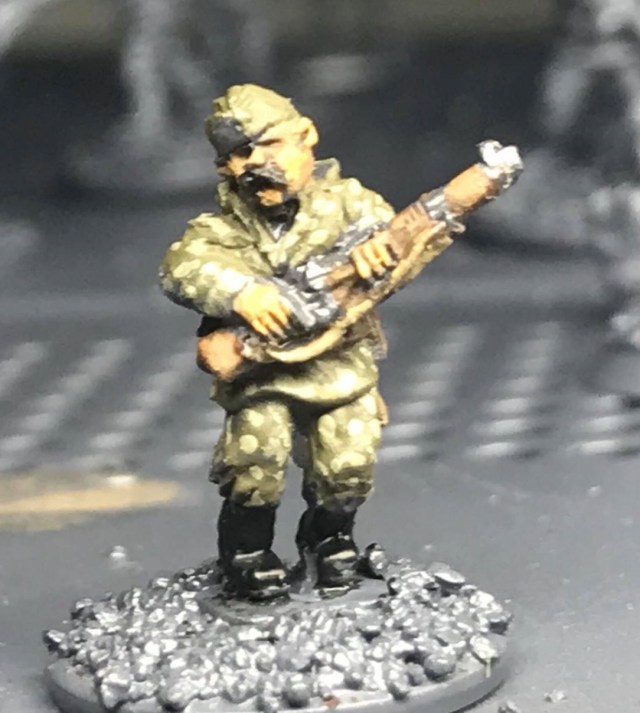
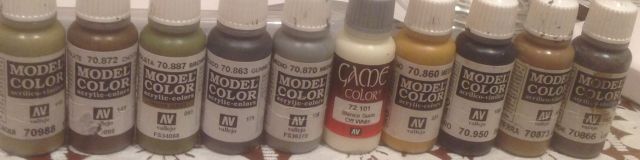
I could have painted the Scouts in a one colour uniform but were keen to have some kind of camouflage to make them look a little bit cooler. Artizan design have some very useful Painting Guides produced by Mick Farnworth on their webpage (link here), I found one showing Russian Leaf Patterns that I liked (link here) with only two nice contrasting colours. I then found two good colour matches (Vallejo 886 Green Grey and 887 Brown Violet – it may be called US Olive Drab nowadays).
It is great to have these kind of guides. I just place paints until I find matches.
Then I painted the Uniform in the 887 and made small random dots with 886 on top and I think it looks good from the distance they will be looked at.
Very happy with the test model. It certainly looks like he has some kind of camouflage on him and it looks good enough from here (yes I have since sorted the moustache from that skin tone). Black boots, some gun metal, light brown on dark brown for leather details and the rifle. US field drab on skin, highlighted with Medium Skin tone. Relatively quick to do but be careful with the dots – I used a fine detailed brush for this.
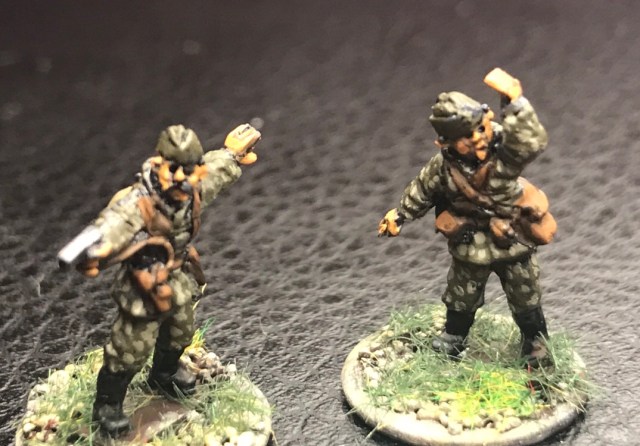
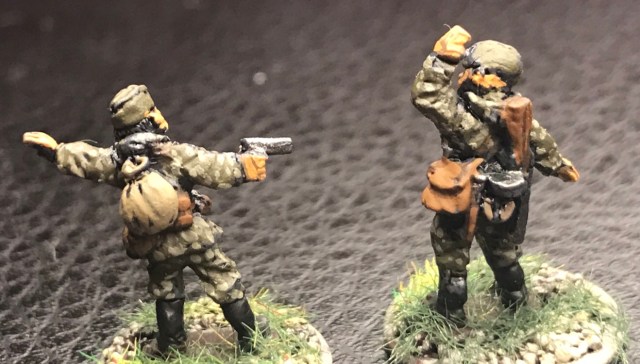
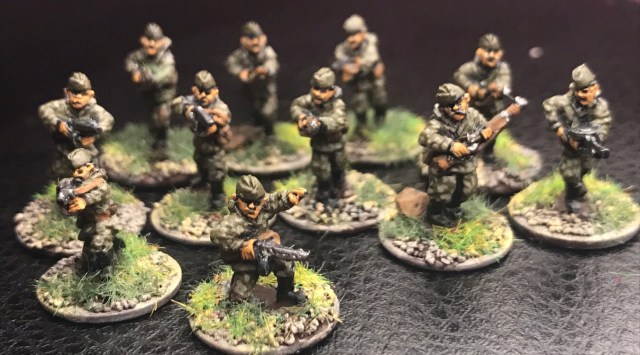
Anyway, here are the completed miniatures.
Platoon Headquarters
Leytenant, Senior Leader, with Pistol
Serzhant, Junior Leader, with SMG
3 Squads each consisting of;
Serzhant, Junior Leader, with SMG
Light Machine Gun (LMG) with 2 crew
4 No. Submachine Gunners
4 No. Semi-Automatic Rifle Men (SVT40, not sure the models are, but hey!)
Support Options
Anti-tank rifle teams
50mm Mortar teams
Generic Engineering team (more a marker)
Commissar, to give the troops a kick in the arse (sorry, I meant to increase their morale)
Mid-week Paining Solution – Getting my Hobby time back
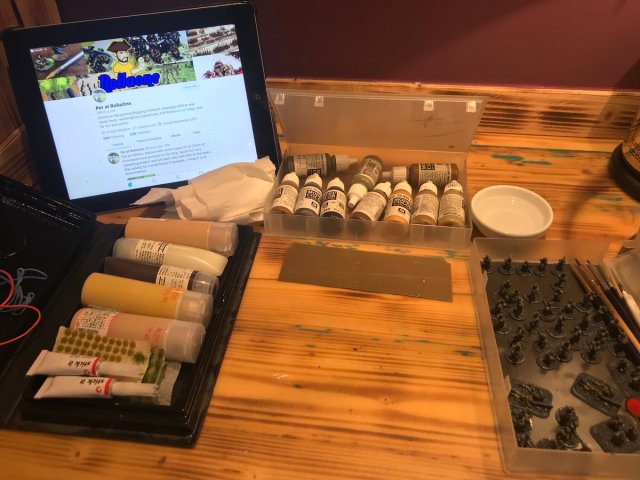
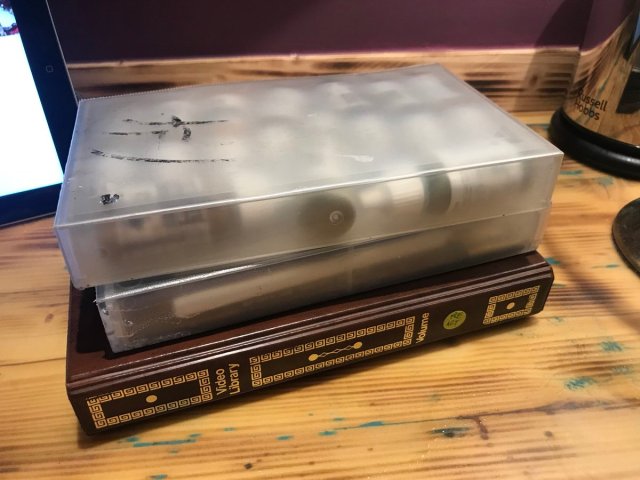
Due to work I currently spend about 2 nights every week in hotels – it is a little bit of a change but I thought I make the best of it. I am already getting tired of hotel bars. I have decided to do some painting on these evenings, if I can, and have set up a little “paint-rig!”. Not very high tech and based on three old VHS boxes, and the system is modular as you can add more boxes ;).
The three VHS Boxes The set-up! – (1) basing box on the left. The dark brown base, the three tone for dry brushing on top of the base layer, pva/water mix for static grass, superglue for tufts, tufts and 2 colours of static grass in bags under the paints! (2) Colours needed for current paint project in the middle box (10 Vallejo bottles can easily be fitted) and (3) the brushes and miniatures (magnetic sheet in the bottom, magnetised washers for bases, primed grey and black washed, ready for painting). Piece of plastic for the paint, a little bowl of water and some paper, and your favourite podcast or audiobook on the iPad.
Light is a problem in hotel rooms and I have invested in a travel led lamp that will be a very welcome addition to the “rig!” but it is waiting for me in the house at the moment. I will get back to you with my verdict.
With regards to Podcast there is a new one out from the Wargames Soldiers and Strategy team that I enjoyed whilst painting yesterday, it is about participation games (link here). I wrote a blog a few weeks back that relates to this about engagement at wargames shows (link here). Give it a go.
Future Plans
I also plan to do 4 No. platoons of normal Strelkovy/Russian Infantry and I won a new box of Battlefront plastic 15mm Russians for £18 including postage from Ebay (they retail at about £26). I checked them out and I like them and think they will paint up nicely. I also looked at Plastic Soldiers company pack but decided to start with the Battlefront ones – perhaps I get a PSC box in the future. Since then I found out that the Battlefront ones are bulkier than the PSC ones and may not work together that well (thanks Ignacy Kurowski).
To do 4 No. Platoons I will need:
4 No. Senior Leaders with Pistol (there are 6 No. in the pack)
12 No. Junior Leaders with SMG (there are 12 No. in the pack).
12. No. LMG with 2 crew (there are 12 LMG soldiers in the pack but I would need 12 more Russian riflemen. I have some lying around I think).
84 Riflemen (there are 84 No. in the pack)
In addition it comes with 6 No. MMG. These should keep me busy for a while!, but I will not start it until my Greeks are done (another story) and I have enjoyed a few weeks of leave.
If you follow this blog you are aware that most of my projects end up getting some kind of Nordic twist in the end. The Little One and I have enjoyed the What a Tanker rules (link here). We have been playing this during the 1944 Summer offensive of the Finnish Continuation war. In two earlier blogs I wrote about a Finnish Career ladder based on tanks actually available as well as tanks that could have been (more in the links here and here). In doing this I felt that I wanted more continuation war so I have painted up a Platoon of 15mm Finns from Battlefront (the same guys who makes Flames of War) and some supports, that I intend to use for playing Chain of Command by Too Fat Lardies (link here, but I suppose that the platoon can be used with any WW2 Platoon based rules).
Incidentally Osprey’s book vote this month offers the following potential title (with only a few days left).
Soviet Rifleman vs Finnish Infantryman: Continuation War 1941–44
From June 1941, Finnish troops fought alongside German and other forces against the Soviets. After recovering territory lost in 1940, the Finns participated in the siege of Leningrad before facing a renewed Soviet onslaught in mid-1944.
In my option there is far too little produced on the Continuation War in English – if you find this period interesting please click and vote here. Back to the platoon.
From the excellent Jaeger platoon webpage (link here) we find the following information on the Infantry Company from 1943 to 1944 (there is also information there if you would like to run a Machine Gun platoon or an Anti-tank platoon, both these could offer some interesting battles):
Command Squad
Gas Protection Section
Antitank Squad
3 Rifle Platoons (4th Platoon usually only on paper), in each rifle platoon
– 8 men (light machinegun + submachinegun + 6 rifles)
Relatively straightforward, here is a Rifle Squad.
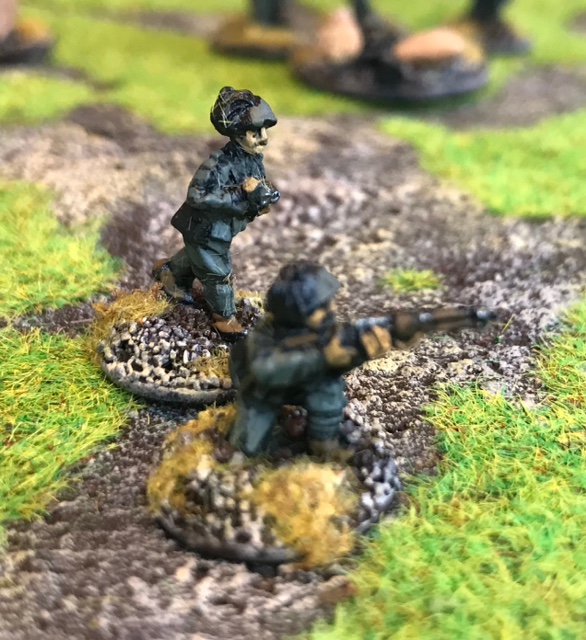
The Finnish squad, the Alikersantti (Corporal) in the Front with a Suomi Submachine gun, leading his squad of six rifle men, submachine gunner and a light machine gunner (the domestic Lahti, that was relatively unpopular but since I do not have any with captured Russian LMG this will have to do). The LMG comes in the Jalkaväki Platoon (FI702), this is standard infantry, see more below of what the pack contains (however I have had some variation in the content for the packs I have bought). To get sufficient amount of SMGs you need to buy the Jääkari Platoon (FI703). This will give you what you need.
and all of the squads
I made all the squads the same combination of miniatures.
…and finally the company command (note that the runners are not included as per normal Chain of Command praxis).
Vänrikki Ruotsalainen and Kersantti Pössi
In a discussion on the Too Fat Lardies forum the potential of more Submachine Guns in the squads were discussed (link here), so I did a few more submachine gunners (some of them have very big hands!).
Some extra Submachine Gunners
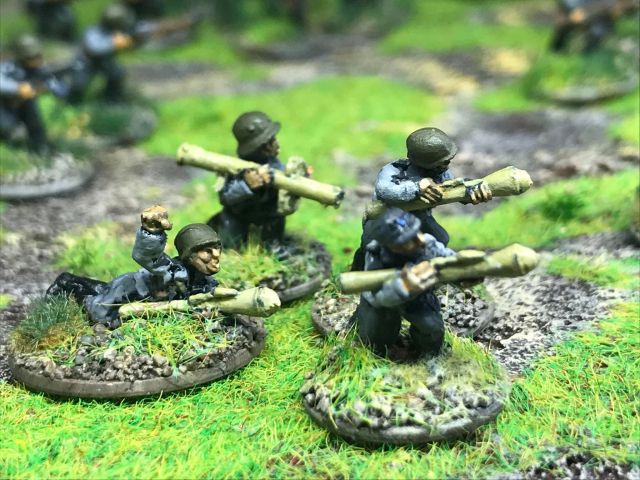
In addition the Finns were equipped with both Panzerfaust and Panzershreks in the Summer of 1944.
Some punch against those Russian Monsters! (They were being used from June 1944). The Panzershrek was called Panssarikauhu by the Finns and the directive was to repaint them in Finnish Camouflage Colours before being used – I need to rectify that or pretend it was pressed into service without a repaint. The Panzerfausts were called Panssarinyrkki. Before this (and after) the Finnish infantry man would have used Anti-Tank Mines, Anti-Tank Rifles, logs and Molotov cocktails in trying to stop the metal machines.
I also some did some other supports,
Sniper Team
Some Medium Machine Guns
A medic (a artillery chap with a green stuffed bag on the front)
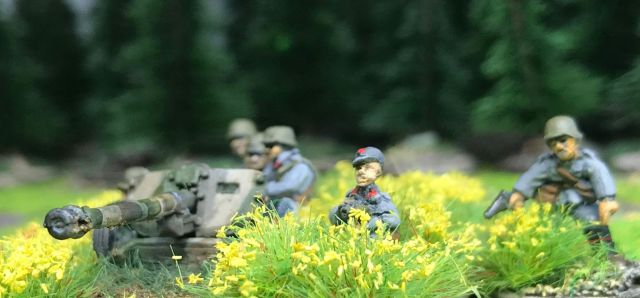
An anti-tank gun
I will try to get some more types of anti-tank guns and also some Anti-tank rifles, but in combination with the tanks I already have (see the link above) the force is ready to go and try to stop the Russian Onslaught.
Here are the contents of the various platoon packs from Flames of War (to build the platoon above you need to get FI703 and FI702) :
FI703 Jääkari Platoon – 1 Officer with a Pistol, 1 Officer with SMG, 5 No. NCO men (I think, 3 Rifle and 2 SMG), 1 No. SMG man with AT Grenade, 8 SMG Men, 24 Riflemen
FI702 Jalkaväki Platoon – 3 officers (one with pistol, the other with binoculars), 5 NCOs (I think, 3 Rifle and 2 SMG), 1 SMG man with AT grenade, 4 LMG, 29 Riflemen.
FI706 Pioneer Platoon: 1 officer, 5 NCOs (I think, 3 Rifle and 2 SMG), 13 Pioneers with AT grenades, 18 Riflemen, 2 Flame-throwers.
In addition I got the following packages for supports:
You can buy this directly from the Flames of War website, your favourite retailer (like element games) or occasionally get some good deals on ebay. The total cost for the above, excluding the Pioneer Platoon, is about £55, excluding postage. This gives a lot of spare miniatures but I have a cunning plan for those at a later date – it is from one of the scenes from the recent Finnish 2017 blockbuster “The Unknown Soldier”.
Here is a trailer that contains the scene in question., 54 seconds in.
I actually bought the Pioneer Platoon pack, but as for variety and uniqueness it only offers the flame-thrower model. For £12 to £14 for a pack it is perhaps not really worth it, anyway here is a flamethrower team.
I also have some gents carrying Anti-tank mines, they can also serve as an engineering team, or part of a anti-tank hunter section (with the Panzer knockers! above).
The platoon can now report for service, where is the enemy?.
A lonely man is observing the advancing FinnsHe stays hidden and signals frenetically towards the Roller of Ones
Ok, ok, I only have painted one of the opposing side yet. I thought I start out with some Russian Scouts and make a Recon Platoon (as presented in the Lardies Xmas special 2016). But in writing this I have only done a test miniature. This one is from Peter Pigs excellent range of Russian Scouts (link here). But that is for next time…
Привет (Hello), Roller of Ones, Now get you act together and do my platoon!
I have attended Joy of Six every year since 2011 and have presented a game on the show since 2012 with the Wyre Foresters spearheaded by Nick Dorrell (except in 2016 when Neil Shuck and I was running two tables of Saga in 6mm) presenting various battles from the Great Northern War. We have done Fraustadt 1706, Klissow 1702, Kalisz 1706, Gadebusch 1712, Lesnaya 1708 and this year Horka 1708 (I wrote about that one in the last blog update here). Next year will be a very special game for us as we will do Poltava 1709. The Welsh Wizard called me Lord of 6mm the other day on Twitter, if that is so, then the Joy of Six should really be referred to as the House of 6mm Lords.
The show has grown over the years and so has the quality and range of games on offer. I know it is a typical thing to say, but I truly think the latest show was the best to date. I was scared about the move to the new location at the University but if felt like it was coming together nicely and I believe there is room to expand. The food arrangements were brilliant. I did not have/took the time to get involved in any of the other games but I took a few pictures that I will share (however contrary to my earlier post about shows – link here – I did not really do what I preached, but to my defence is the fact that I did put on a game). At the end of this short post are a few links to some very useful blog posts to get a better overall impression of proceedings – I suggest you have a look at these.
Shout Outs
First a big shout out to a few of the people I met up with including Commodore Rob, Pete, Dan, the Wyre Foresters, Derek & Son, The Wargames Calculators, Vlad, Mike (Welsh Wizard), Neil Schuck, “6mm Sceptic” Dave, Dave Luff, Trevor Crook and the Other Mad Gamers and Simon. Some of these I had only known through the blog or twitter and it is really nice to put a face to a name. It honestly makes my day every time. I have inevitably forgotten a few, and I am sorry for this as my mind was somewhat spinning during the day. It is after all a little bit emotional to put your baby up for public display, especially as I had not done it before.
The Baccus/Wargames Emporium crew (i.e. people involved in the event, spearheaded by Peter Berry but with strong support) are always nice to see and they do a hell of a job. Also to the Little One who hanged around the table most of the day and joined in managing the Russian Elite Infantry (Golitzins Brigade/Command). Also to my daughter who has helped at Joy of Six for the last few years and the Better One of Course.
Speaker at the House of 6mm Lords – Mr Peter Berry
I thought the bring and buy was handled well and I managed to sell a few GHQ stuff, some board games I never play and even a few Flames of War StuGs. There were a mixture of scales on offer and some books, etc.
As for traders I think it is nice to have such a good number of specialised vendors in one place allowing you to see what the scale has to offer, traders attending were (with a link to their webpage):
Special mention to our new friends who came all the way from Poland, GM Boardgames, as promised here are some of the Polish Forces, including Winged Hussars, Pancerni and the Polish Camp we used for the Klissow and Kalisz battles.
Dr Mike’s painting clinic could not make it due to some logistical issues which is a shame because apart from showing you how to paint 6mm miniatures, Mike has the warmest smile on the wargames circuit and was sorely missed by me and I think many others – hope to see you next year Mike.
One of Mike’s many nice creations. Models from Rapier
Seminar(s)
The first seminar was about Baccus itself and what the plans are moving forward. I did not go to this one but an overview is provided in one of the links below.
The second Seminar was a panel moderated by Peter Berry, with three brilliant panelists being Neil Shuck and Mike Hobbs from the Meeples and Miniatures Podcast (link to them here) and John Treadaway who is the editor of Miniature Wargames (here). The initial question was whether 6mm had a bad reputation, but I think the general conclusion was that it did not have a bad reputation but a low profile. Both the 6mm manufacturers, wargames press, and most importantly the hobbyists themselves have a shared responsibility. What I took away personally from it, with my afterthoughts added to it, was:
Spread the Joy of Six – blog about it, write articles and send them to the wargames press. John Treadaway left his card for anyone interested to contact him at miniaturewargames@warnersgroup.co.uk , and I suppose you could try the others too, you know who they are. Nick and I decided to do a write-up on the Horka table and see how it goes. With this blog I have tried to highlight some different approaches and uses for the scale – mostly mass battle but also space efficient and easy to set-up skirmish gaming. As Neil Shuck says be passionate about it! It will shine through and people will get it.
Show others what we can do – take your stuff to other events – I have put up two 6mm tables at Salute. It was a different experience than Joy of Six and the average interest is somewhat different but there is enough interest for you to have a good day and if it looked good at Joy of Six it will look good on another show. We will make sure Horka get some other outings.
Enhance the signal by supporting each other – there is a 6mm community out there and I think we could encourage each other more and trying to do links in blogs, mentions on Facebook, retweets on twitter etc to make sure that we enhance the signal of the smaller scale stuff. This hobby is far from a competition, it is a co-operative game – if you like 6mm it is in your own interest to promote the hobby on a wider scale – more interest, more sales, more ranges, more Joy of Six (these things of course applies to other scales and aspects of the hobby).
In addition the issue of taking photos of 6mm games were raised and I agree that it is difficult. However, what are we taking pictures off? – men or battles?. Remember the painting from the last blog (here) – it provoked a life-long interest for at least one little boy I know very well.
Just a few Games (Sorry)
Finally a few games that I took pictures off.
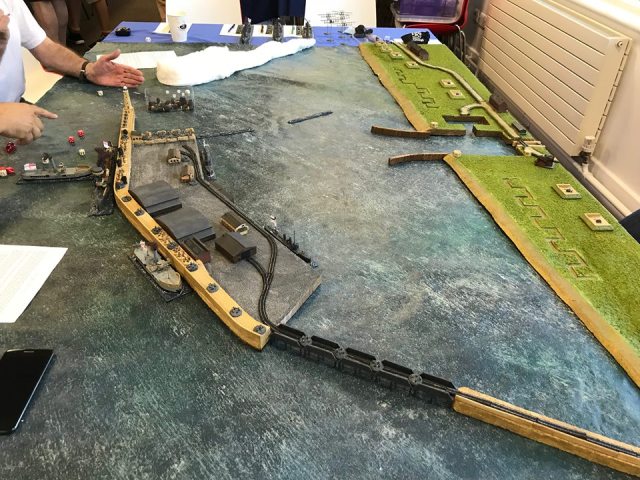
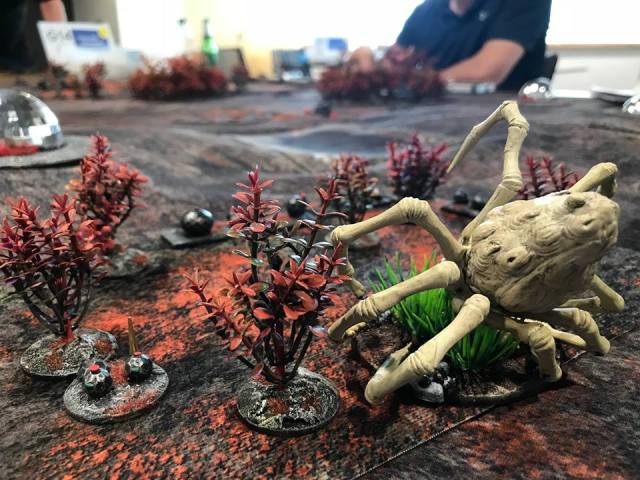
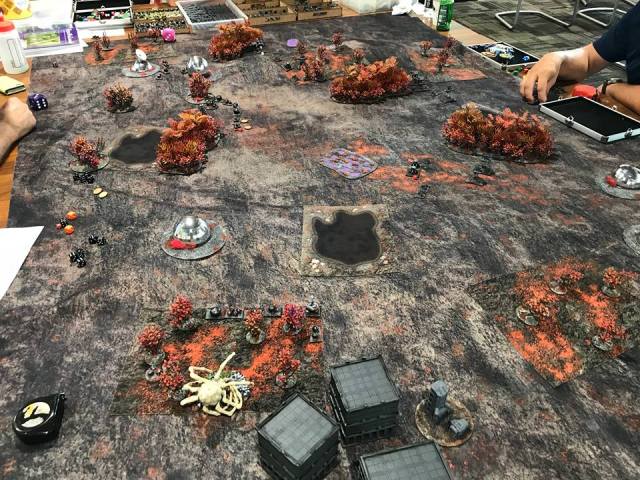
Zebrugge Raid 1918 – a very nice table and grand. You may recall the excellent 28mm game from Salute covering the same raid (see more here) – this was a totally different spectacle and told a wider story. Presented by the Naval Wargames Society.Daniel Hodgson, who runs Reveille Studios and does a lot of fantastic 6/10mm stuff, inspired me with his Sudan War stuff at Joy of Six 2011. I hold him responsible for giving me the courage and inspiration to put mine first one on in 2012. This one being the action at Gilly 15th June 1814 (part of the 100 days campaign). I really like they way he has worked the Kallistra bases. If you need something 6mm beautifully painted I think you should send him a line …. Daniel Hodgson on Facebook, reveille miniatures. Hats off again Dan!The Mad Gamers always put on an interesting and beautiful battle – last few years we have seen 18th century stuff, Zulus, WW2 at Joy of Six. This year some Sci-Fi with a fantastic overall colour scheme and some pretty innovative terrain and some home-made miniatures (being, but not looking, cheap) mixed with some traditional 6mm sci-fi stuff. Using Future War Commander rules.
Had a Burger on the Way up to the Show at Milton Keynes, but did not know that their Wargames Society had this fantastic meal on their Menu. This was Rome vs Barbarians DBMM Ancients – I really like that mass of barbarian warriors in the centre. That looks like a proper battle at least in the way I envisage them.That is really impressive!
For a lot more pictures, click on this link to the Beast of War Webpage with excellent pictures and some commentary by CommodoreRob – https://www.beastsofwar.com/project/1227711/
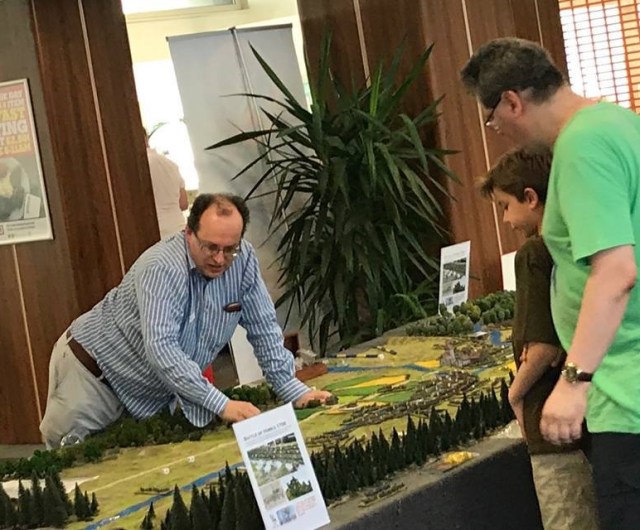
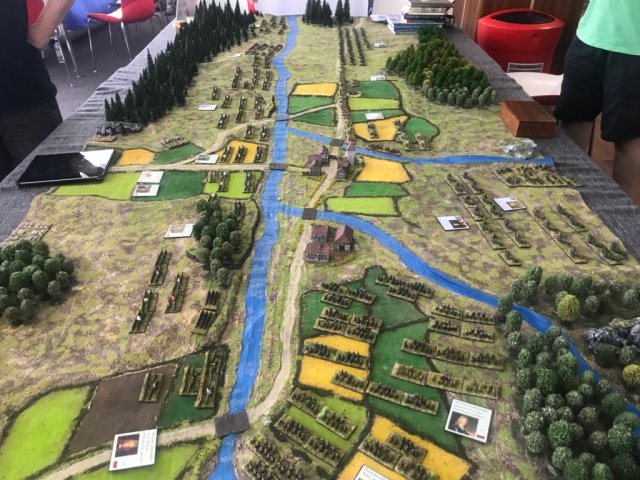
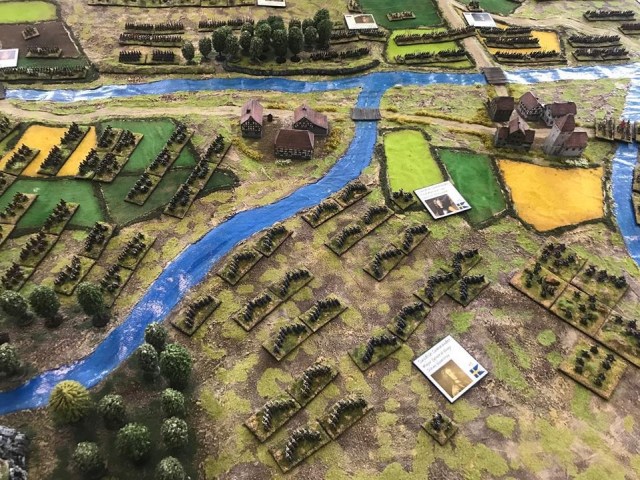
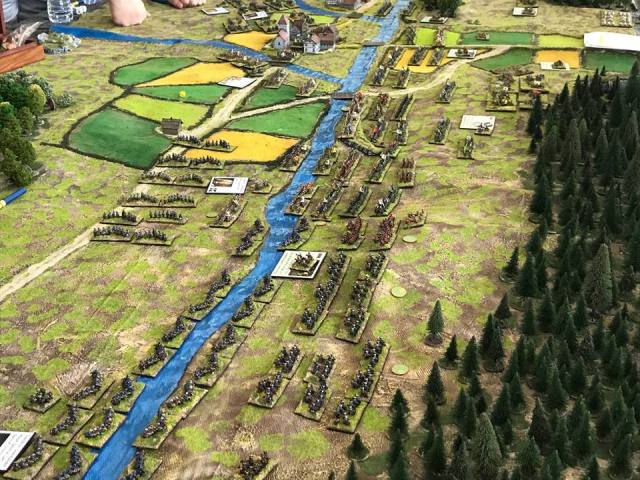
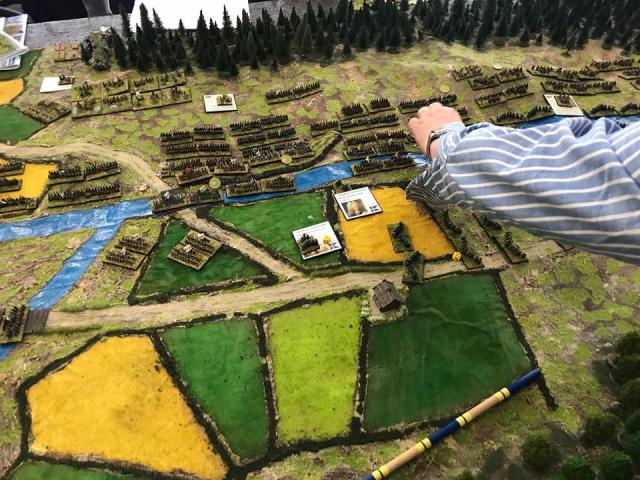
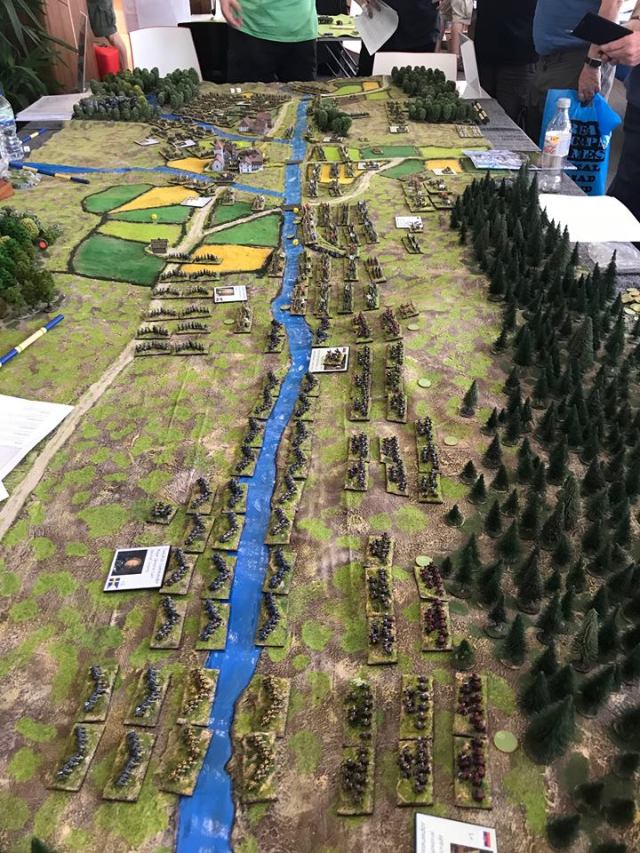
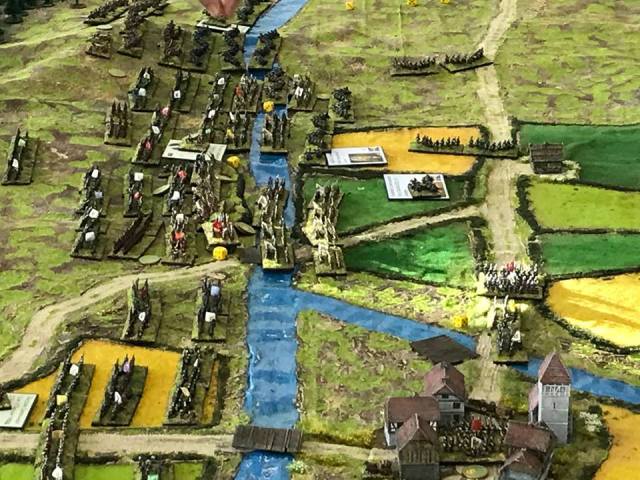
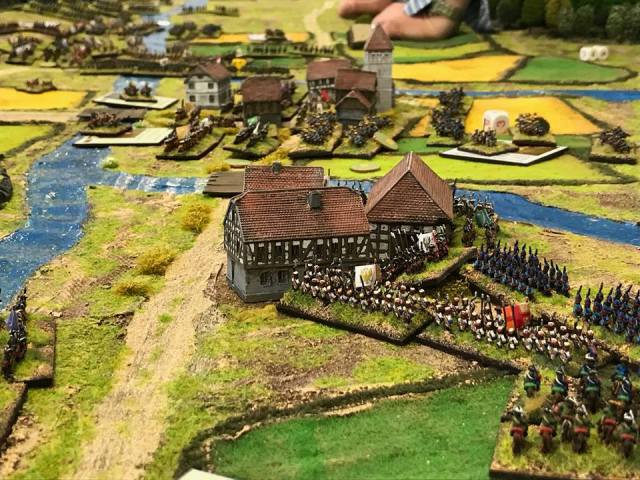
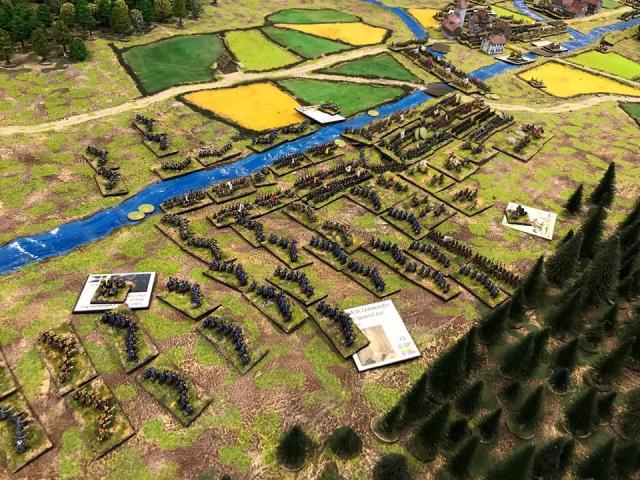
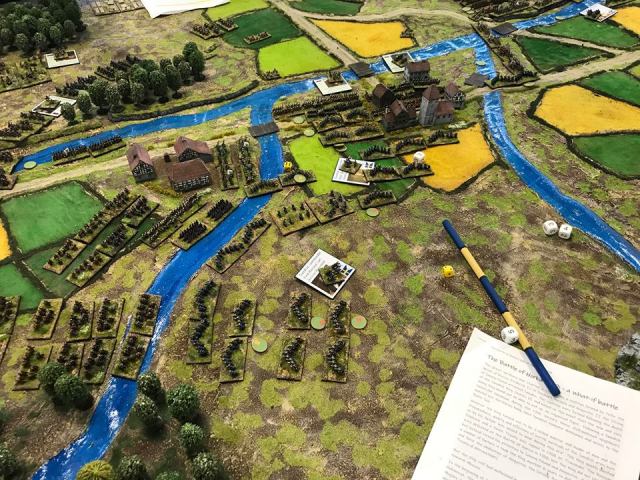
Yesterday, the Wyre Foresters and I had the pleasure of presenting Horka 1708 at the Joy of Six. We have discussed the background to the battle before and I have attached a handout that contains some background on the idea of the battle, the rules we used (Twilight of the Sun King) as well as an list of the forces used on the day:
It could be useful to read this one before pushing on.
Following a nice family Saturday in the Derbyshire Dales, visiting the impressive Crich Memorial for the Sherwood Foresters Regiment and the nearby Tramway village, we went to Sheffield and attended the famous BBKBCE – Baccus Balti King Beer and Curry Evening. This is a chance to meet some old a new friends on the eve of the many battles being fought at the Joy of Six.
The Doors at the Joy of Six opened at 10am, but by this time I had been trying to set up the table since 8.30am. It took me a few minutes more – I always mess up some of the regiments in terms of placement and being pedantic with regards to these things knock-on effects on the schedule are inevitable. The mat worked reasonably well, but I had some issues with the sides and I may want to use some duct tape when I roll it out again. I am still in two minds on how I will do the Poltava battlefield next year as it has some interesting elevation – perhaps reverting back to boards or a mix of elevation pieces and a mat – I have a few more months to worry about that.
Having put it all on and taking a step back I have to admit that I said a little “wow”, and reflected on the fact that this is why I do this. Not to stare at an individual miniature being nicely painted (because that is not really my forte, but I do like nicely painted larger scale stuff), but to stare at something that resembles a battle when you take a step back – a battle from one of those many pictures the old man used to show me when I was a little boy and an aspiring General.
The Battle of Poltava, 1726, by Denis Martens the Younger. One of those paintings that really inspired me. It is the grandeur and the drama, Peter the Great in the middle front with his entourage fighting their way forward, the Russian camp on the left and the first Russian Line of infantry and battalion guns giving fire towards the oncoming Swedish force, the smoke, the intensity – just brilliant!
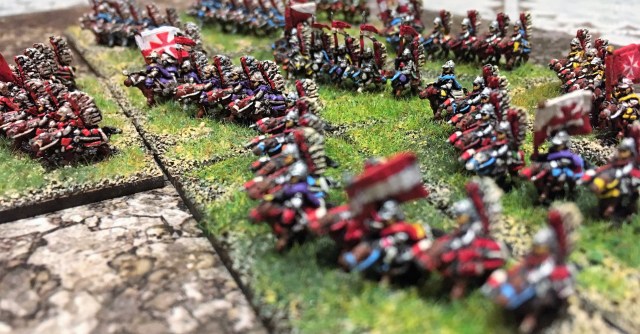
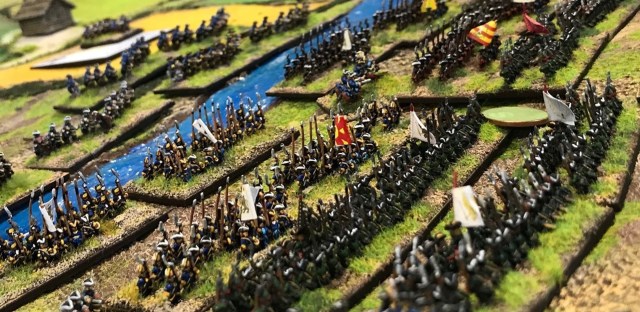
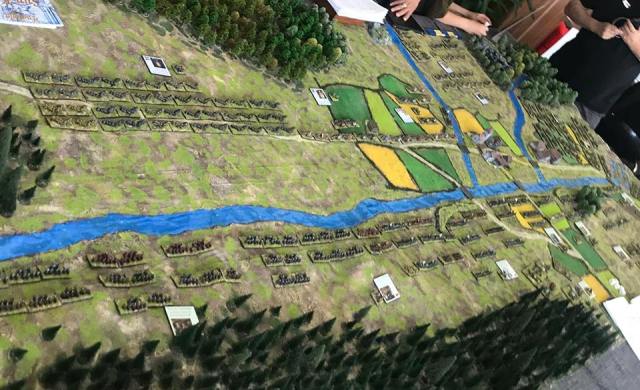
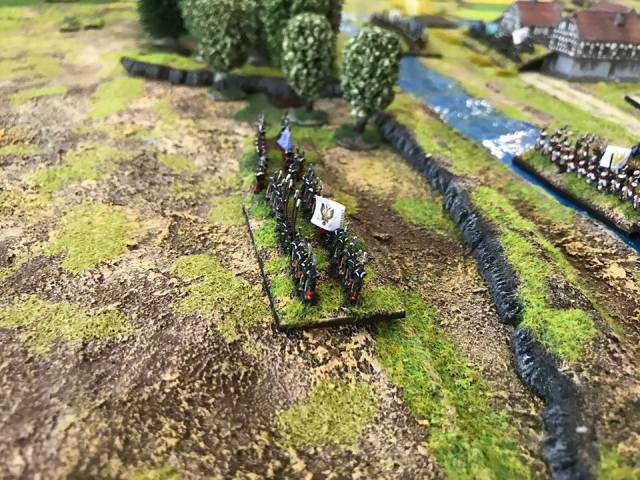
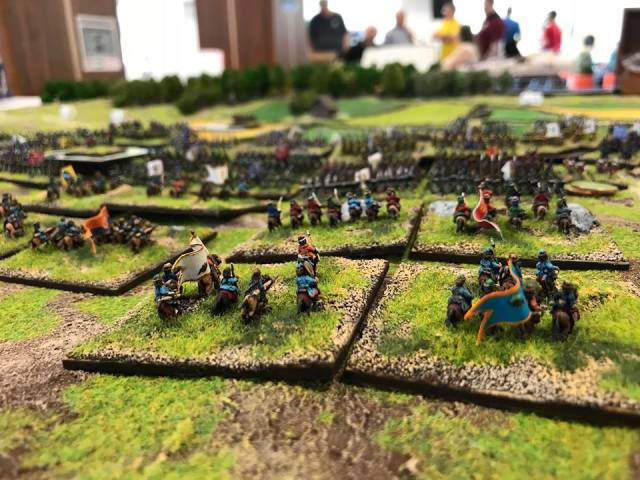
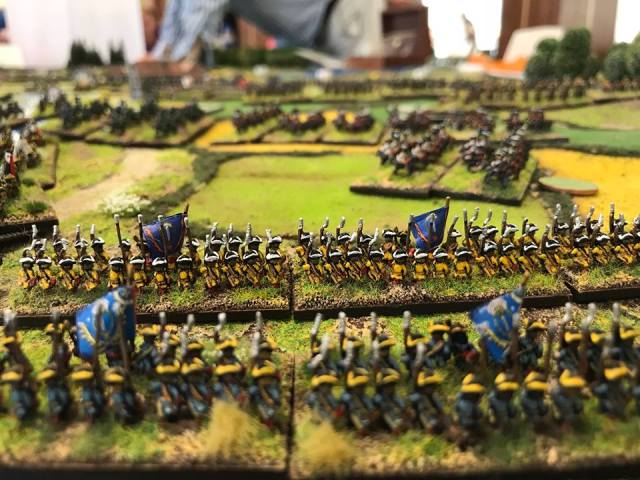
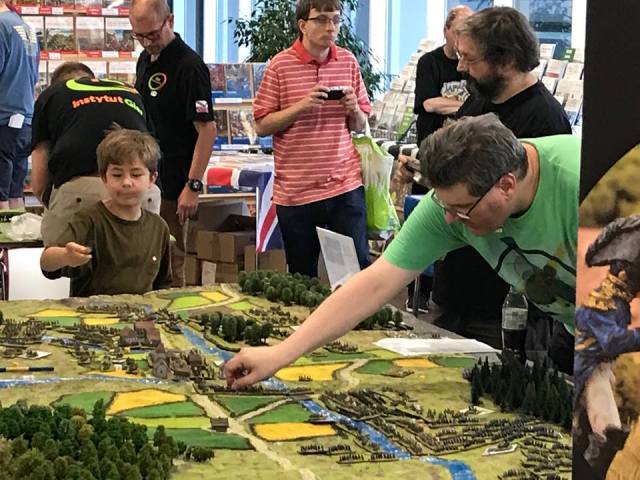
Admittedly not your average evening game weighing in at 12 by 5 feet, more than 3,700 miniatures on more than 270 bases – but at Joy of Six – why not! Here is Horka 1708. I dedicate this game to my Dad, who I hope is feasting in Valhalla!
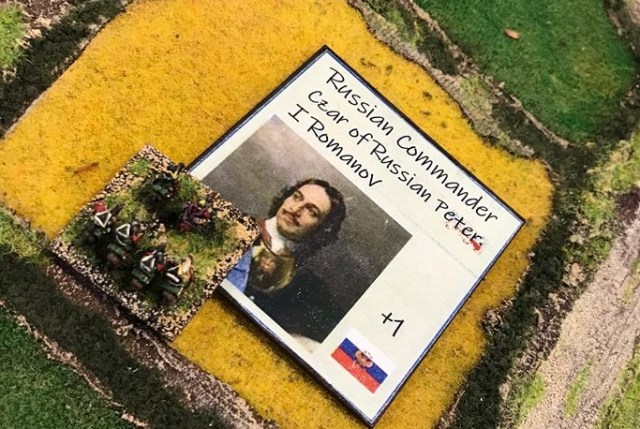
The squares (65mm) are “Command Cards” – 5 for the Swedes and 10 for the Russians. I printed these on sticky labels and put them on MDF bases. It adds a little bit of flair to the game – I think – and also indicates the rating of the Commander. From Poor (+0) to Exceptional (+3).
The actual battle worked out great for the Swedes. The Russian left cavalry flank collapsed under the pressure of Major-General Creutz relentless cavalry attack on the other side of the river, combined with the strong push of the centre. The Tsar himself died heroically in the Battle. Surprising Field Marshall Rehnskiöld with the finest of the cavalry regiments was struggling on the Russian right. It was a decisive Swedish victory. In a re-fight setting we would probably consider making the Russian position stronger with defences and perhaps treat the waterway as more treacherous. So the next refight may be more desperate for the Swedes than this first go indicated.
However, for now, the Swedes won at Horka in 1708.
I will do a general update about the show itself later this week – but I actually did not have time to do very much. It is how it works out when you have table to attend to. There are however some things I need to mention, a few shout outs to people, the seminar I attended and a few of the tables that caught my eye (and I actually took some photos but only a few) but that is for another time.
/ Hope that was of some interest, a few more pictures of the battle.
Many thanks for passing-by, next year we are doing Poltava 1709 (I think that if you look at my flowery shirt long enough and then stare on a white sheet of paper you will see something very special!).



 I recommend that you read the first part from last week (link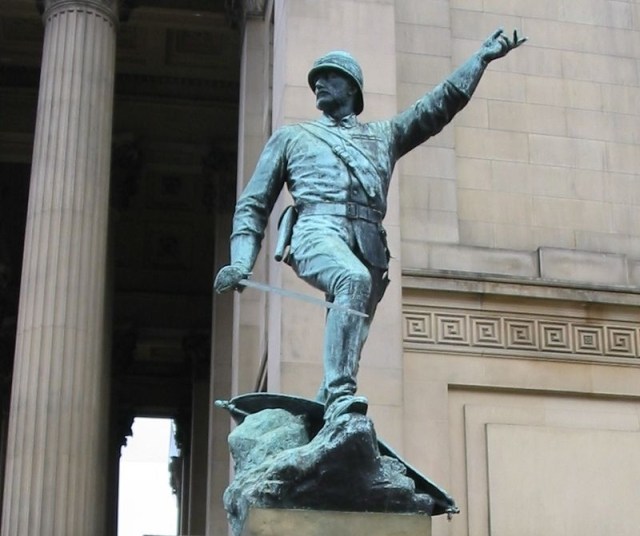































 Roll a One - Wargaming Blog