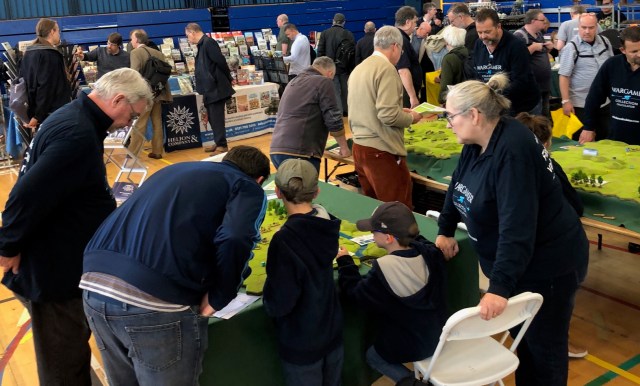
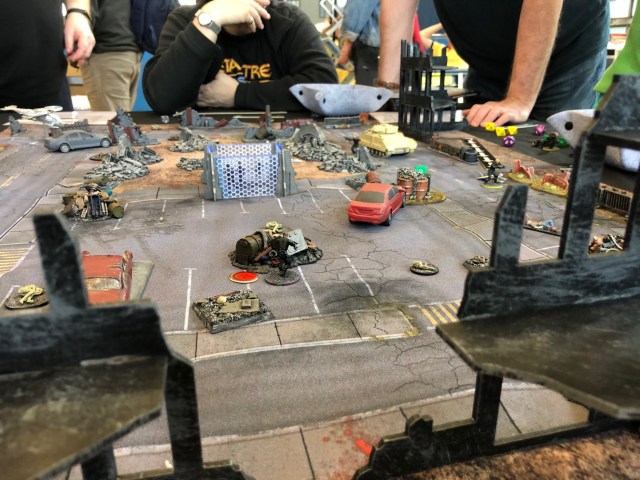
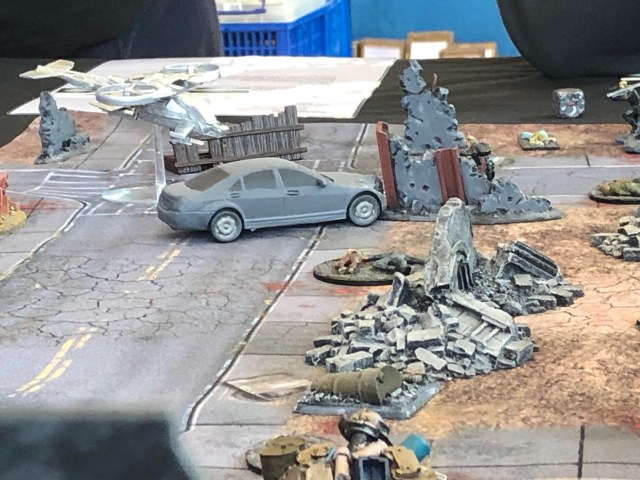
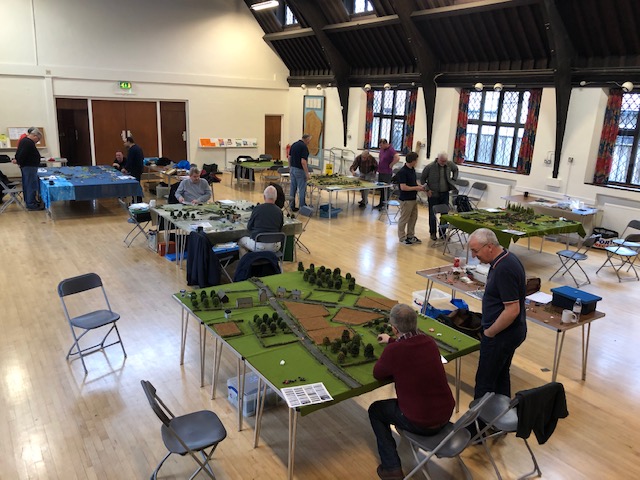
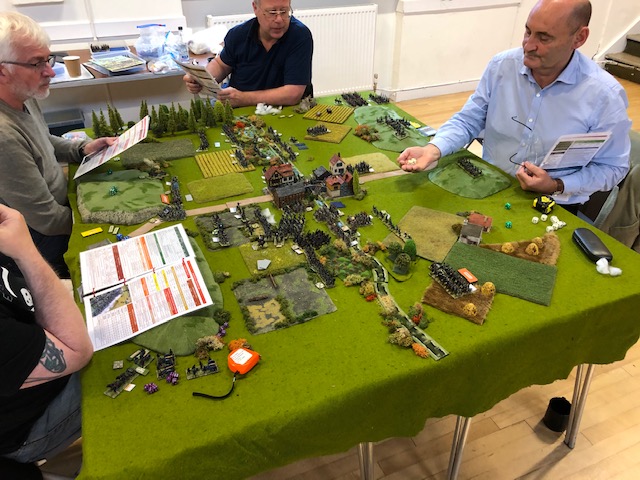
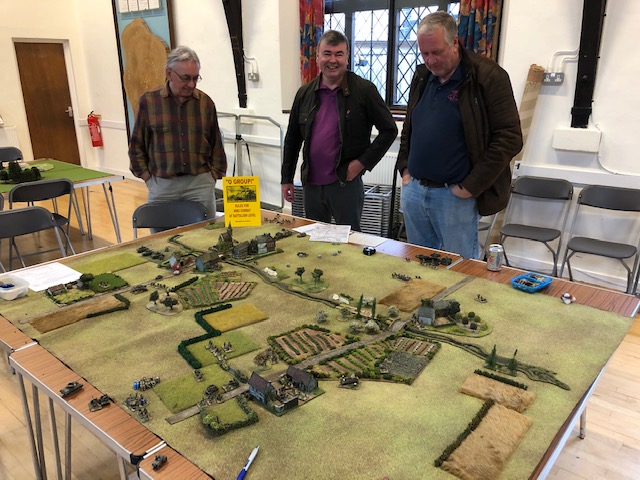
The Little One and I went to the SELWG wargames show today – it is our local show. We both had a great time and it always has a nice mix of games in different scales. Here follows a dump of some of the photos I took with some notes here and there. I do hope it gives some kind of impression of the games that were laid out (I may have missed a few of the games – sorry!).
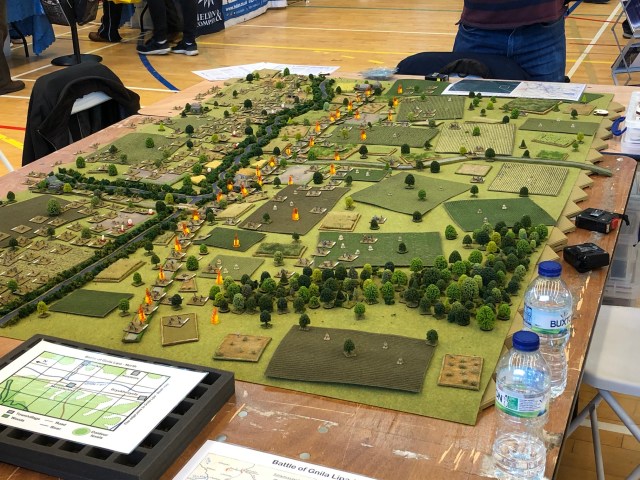
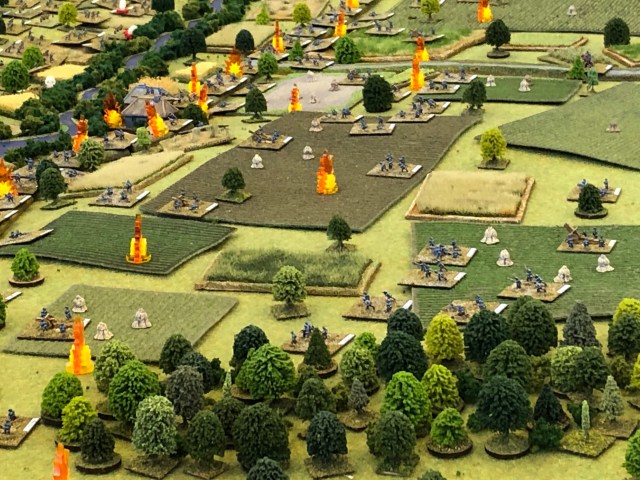
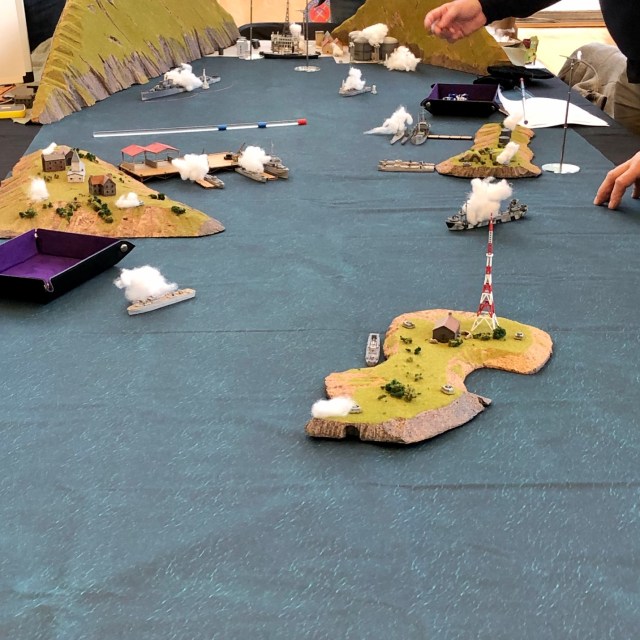
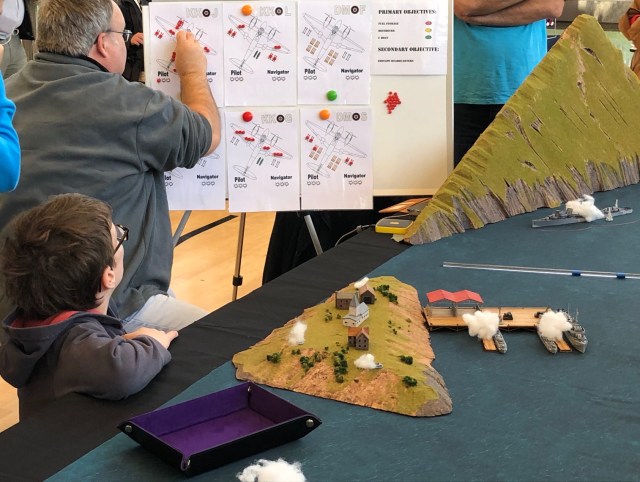
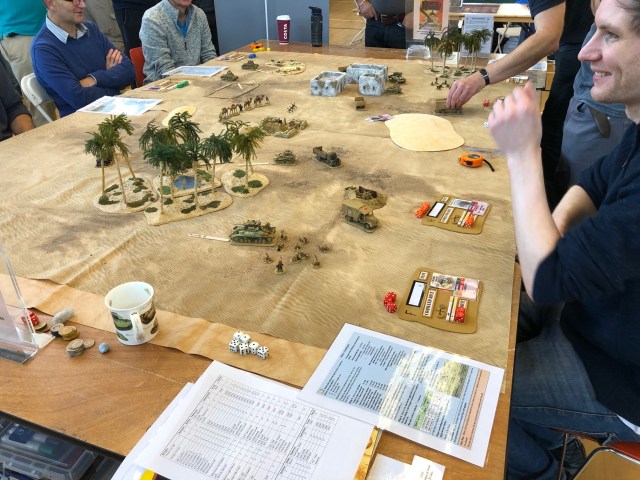
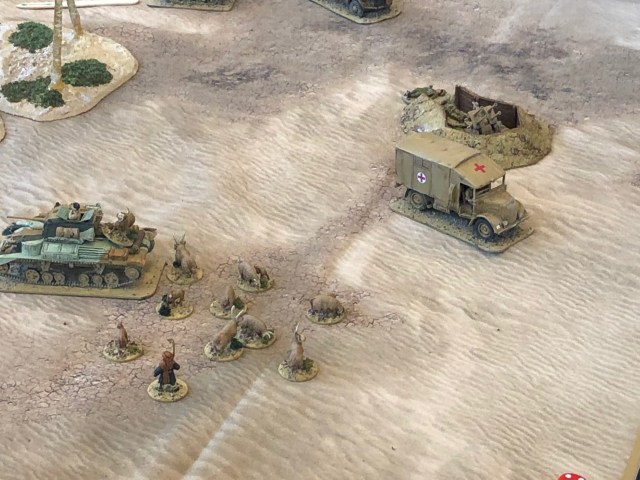
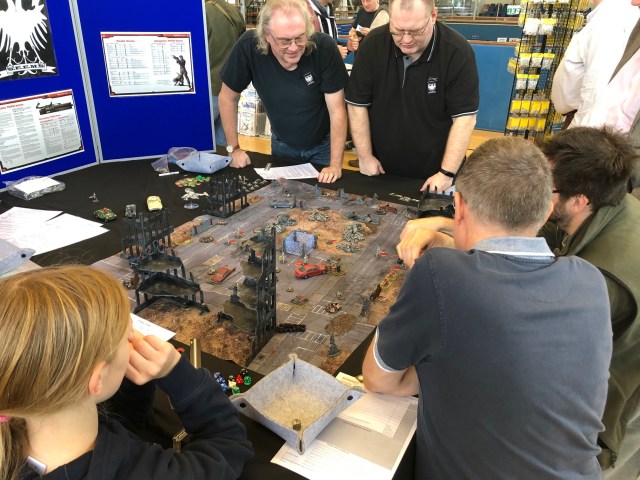
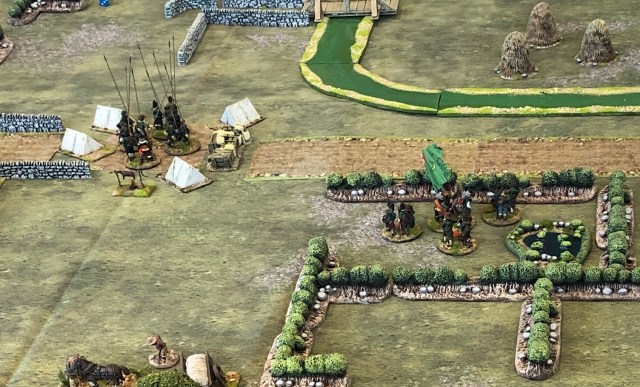
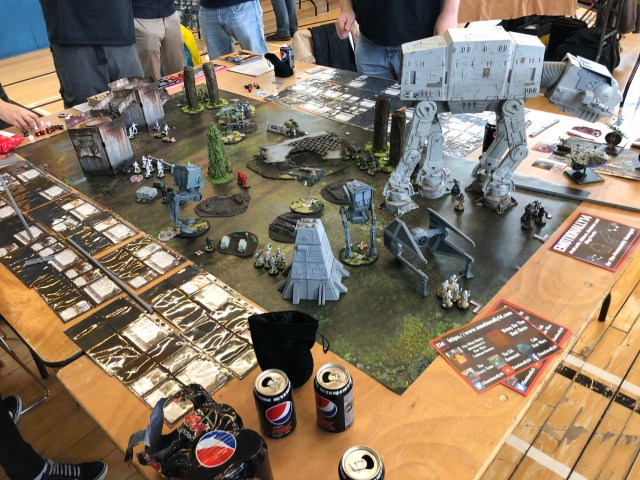
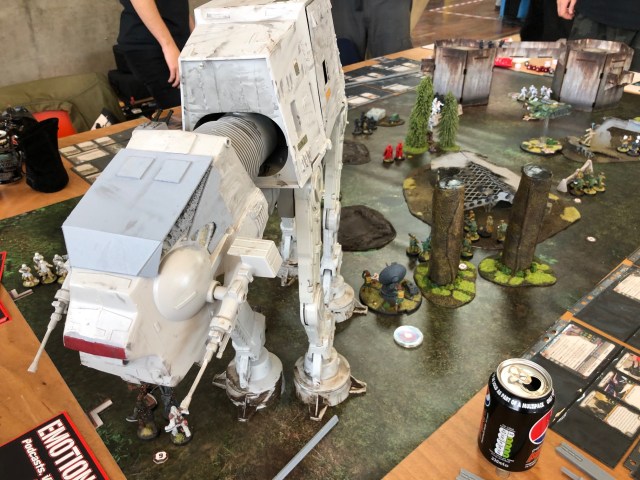
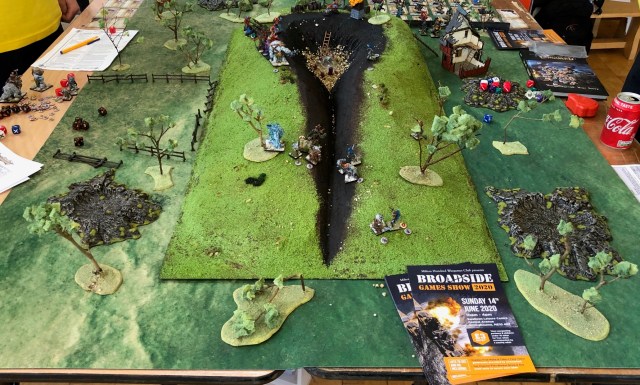
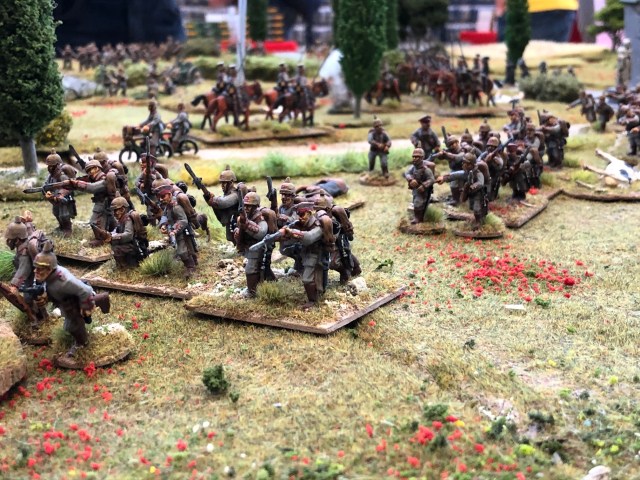
First out Robert Dunlop’s fantastic Great War Battle of Gnila Lipa (the North Section) – the passion Robert has to his subject and these battles are inspirational. We had a good chat and if you really want to treat yourself go and listen to the 3rd episode of the Gods Own Scale where Sean Clarke interviews Robert – it is one of my favourite episodes of that and any other podcasts (link here).6mm miniatures from Baccus using Spearhead WW1 rules.Next up Mosquito strike Norway, it looked really fun!It excited both young and the little bit less young!A What a Tanker north Africa Table!Lots of small detail on the table!A Terminator Game – Man vs Steel! (we will come back to this one later)A Game of Pikeman’s Lament set During the English Civil War (GLC Games).Excellent hedges!Real time Wargames always has some interesting stuff, this time Northern Frontier Game (“An’ go to your gawd like a soldier”). I bought their Italian Wars ruleset last year and it is still something I am thinking about doing!
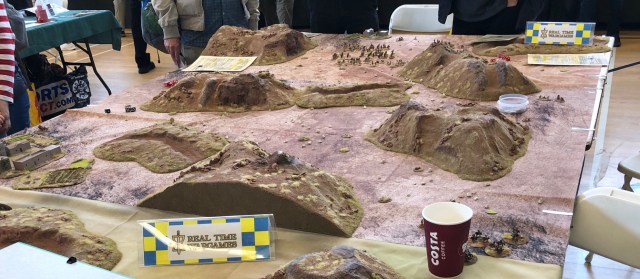
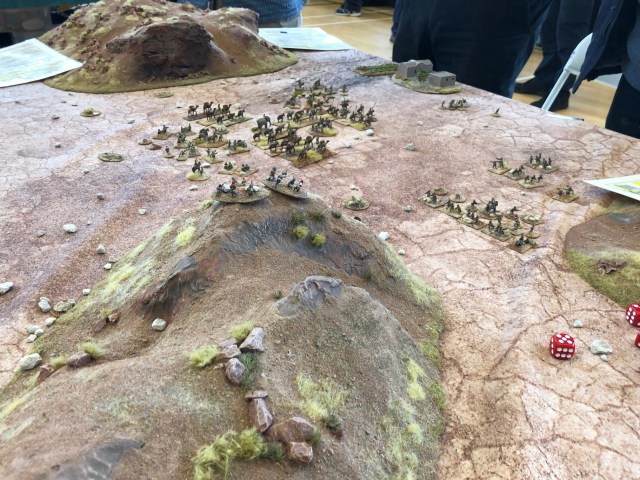
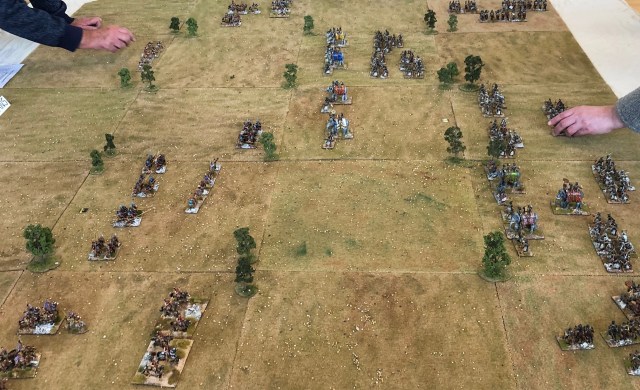
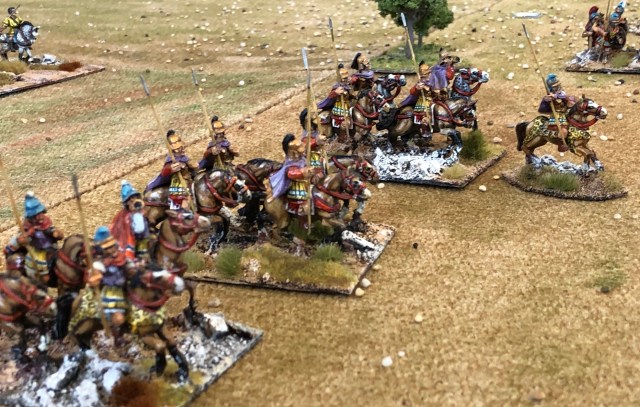
Next Hydaspes 326 BC – I really liked the look of this game. Large impressive and some really nice units.
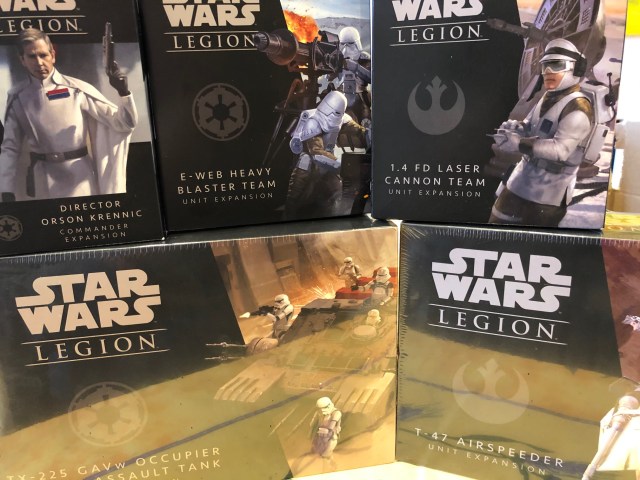
A game of Legion that looked as busy as London Bridge Station at 08:15 every bloody weekday! – the Little One loved it.
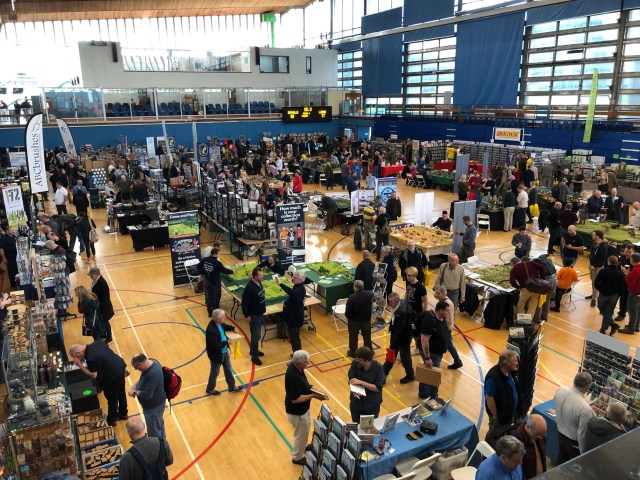
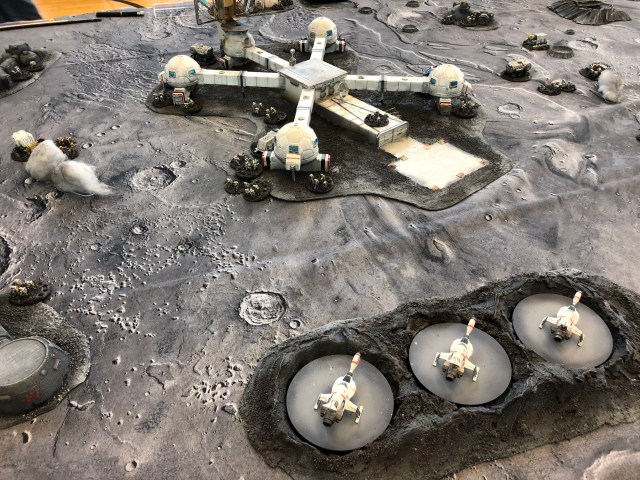
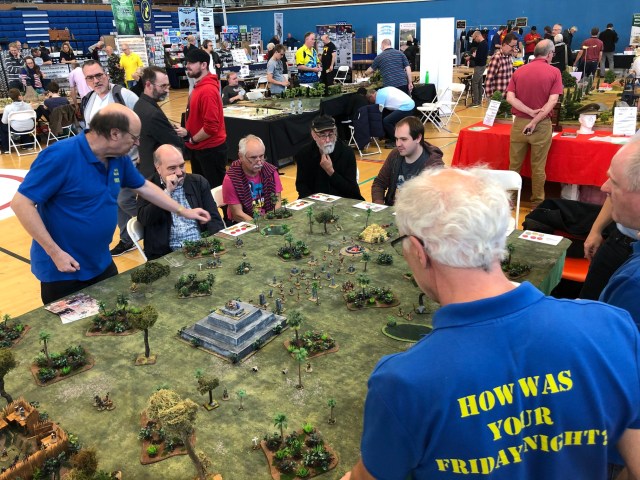
Milton Hundred Wargames Club put on a Kings of War Vanguard GameThis is the famous overview shot from the upper smaller hall!South London Wargames put on their Darkside of the Moon game from Salute this year.The rules!!Lots of Dinosaurs…
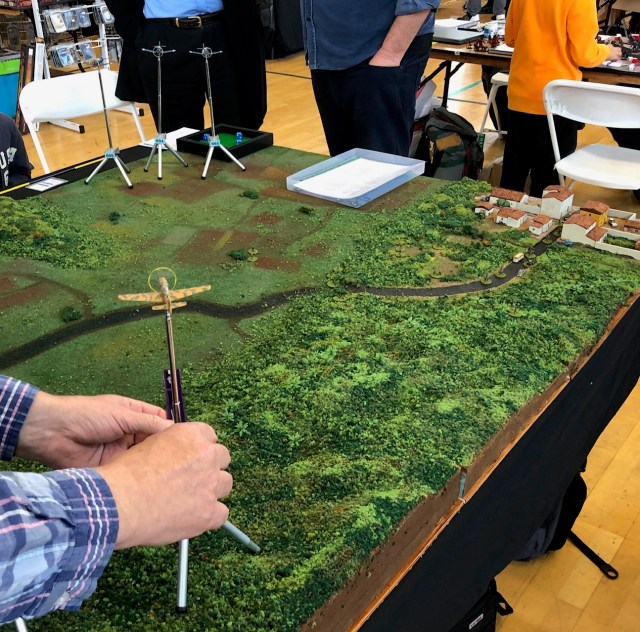
Maidstone Wargames Society put on Dogfight 69, a X-wing (rule wise) inspired game during the 100 hours war, an aerial game showing the last piston-engine dogfight. This was a war in 1969 between Honduras (with Corsair F4U05s) and El Salvador (fielding P51D Mustangs).
The ever so Busy table of the Wargames Collector Calculator (that we have reported on before) – it was nice to see the guys again! This is the Battle of Little Big Horn, You can read more about this fantastic game here. The collector calculator are doing some really interesting stuff and when you have finished the Dunlop interview I linked to above go and listen to the one with Peter Riley of the Wargames Calculator. Peter was telling me about the book he is working on Building Rules for Gaming Battles (BRfGB) that will allow you to design rules for your own battles. “The aim is that these the rules will be playable and fun for all ages of player – from the grognards, through club players and the newbies. We are also hoping that clubs may see this as a way of engaging and enthusing younger players into the wargaming community. We hope that the rules wargamers will be able to generate from these guidelines will provide a simple, fast and easy way of getting people into gaming. If you have always wanted to design a game that you want to play from any period or if you like a particular battle then use these guidelines to design it.” (from their recent news section, more here)
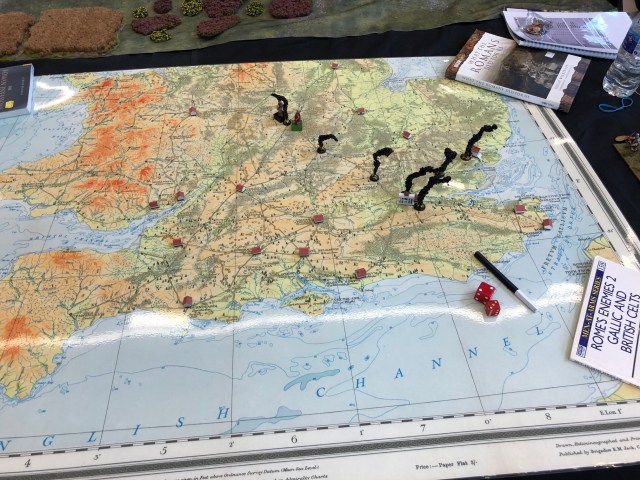
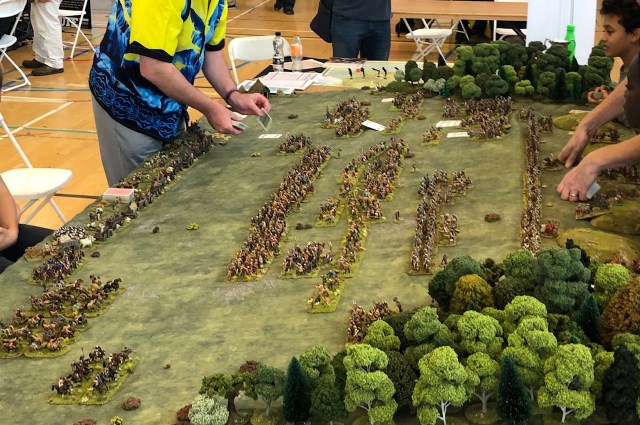
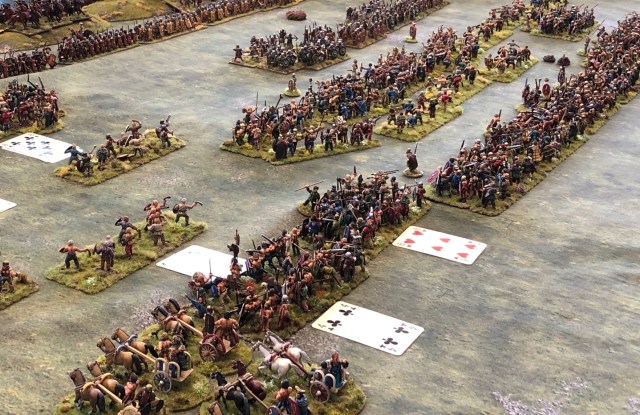
Britain in flames and war is raging!To the Strongest by Simon Miller showing the battle between Boudicca and Gaius Suetonis Paulinus (in AD 60 or 61?)I just let this play a few pictures…
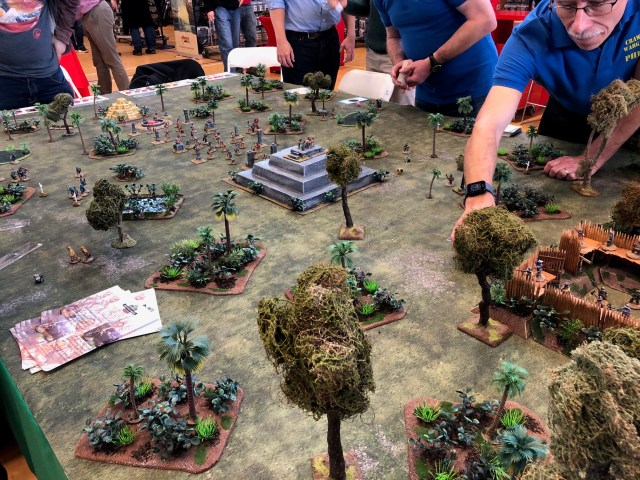
Crawley Wargames Club put on their fantastic Aztecs Game
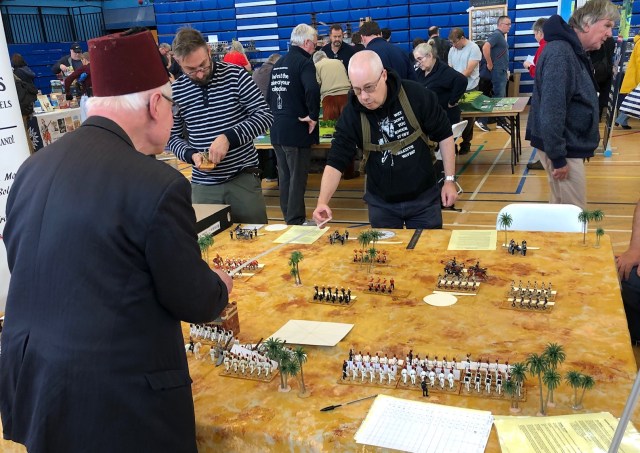
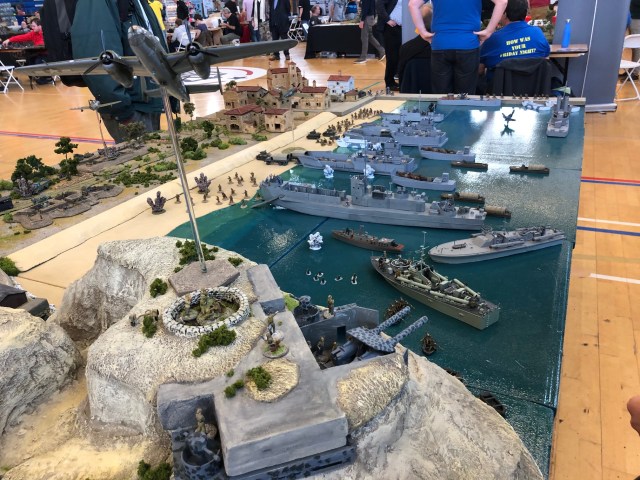
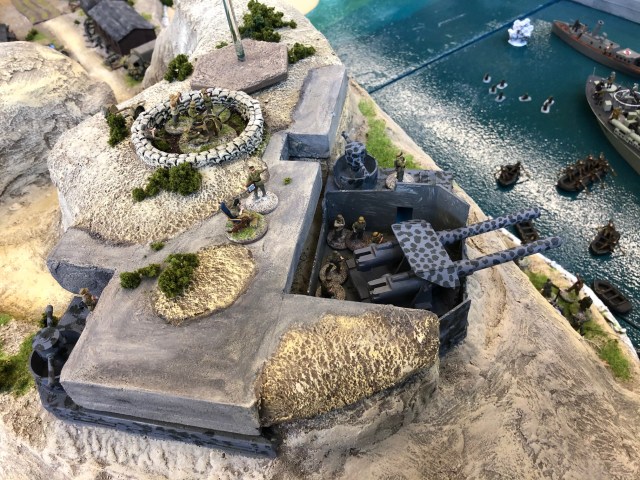
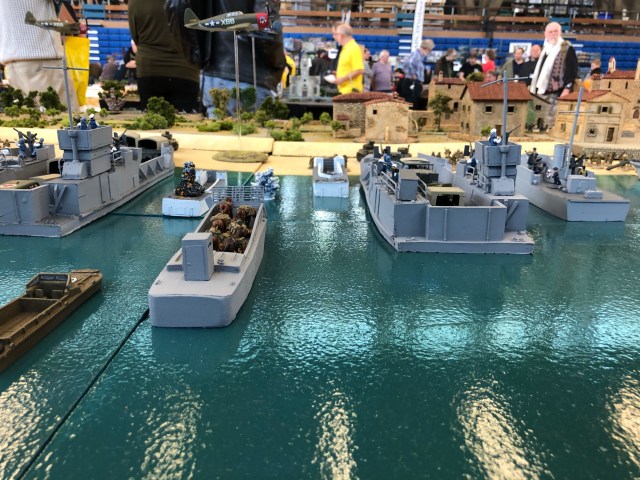
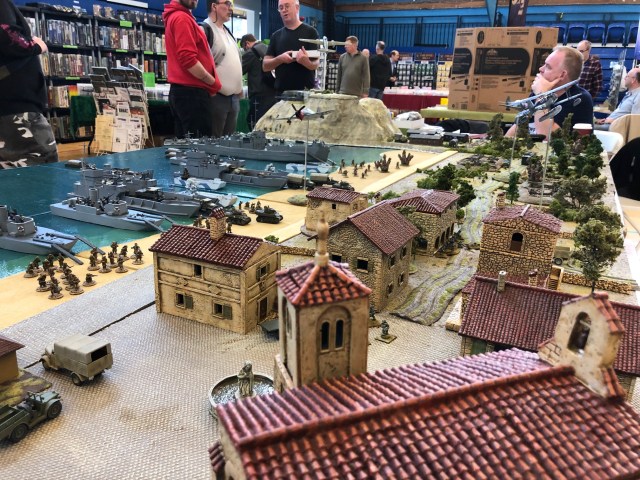
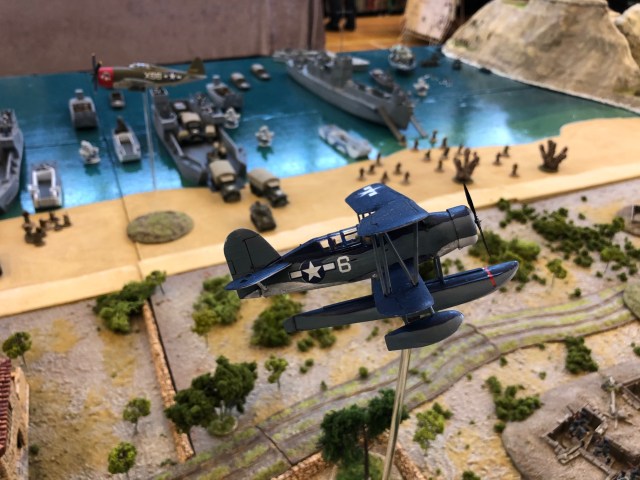
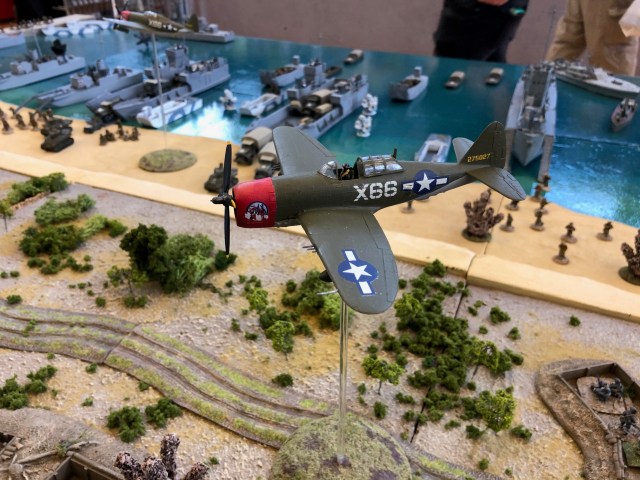
Deal Wargames Association put on a really beautiful game showing the invasion of Elba, 16-20 June, 1944.
e
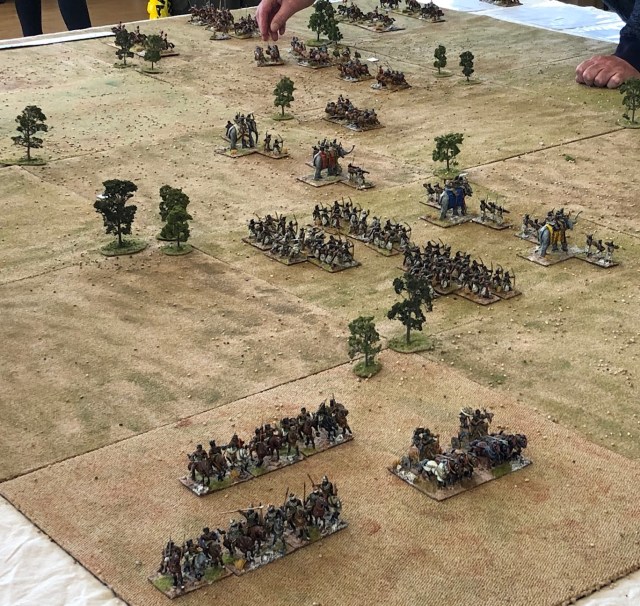
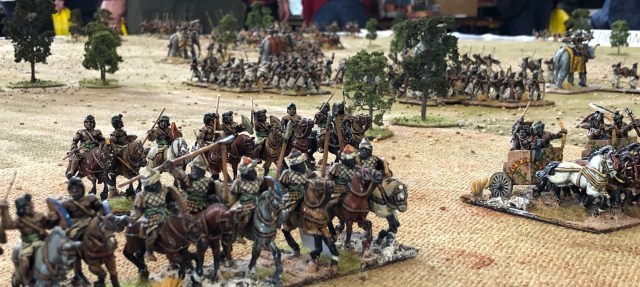
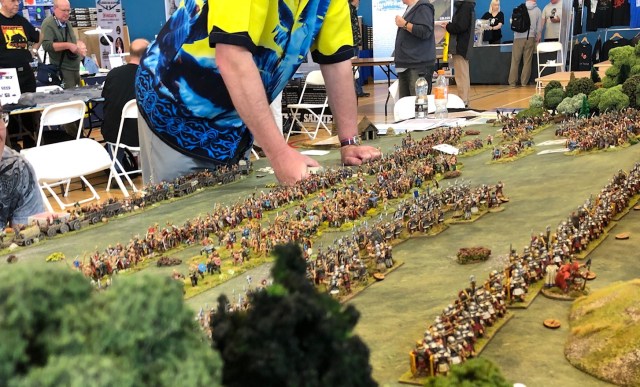
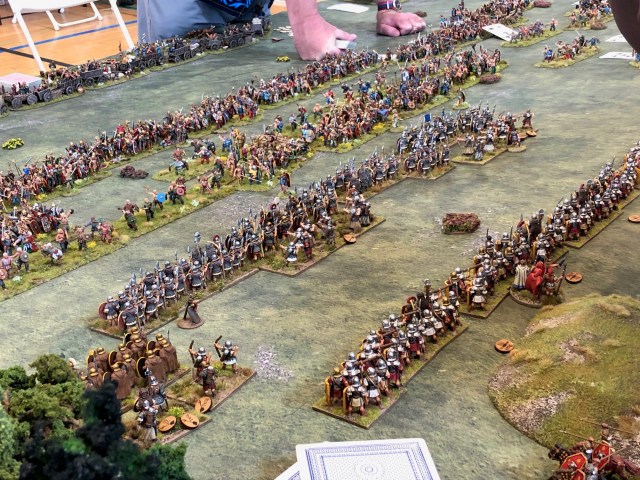
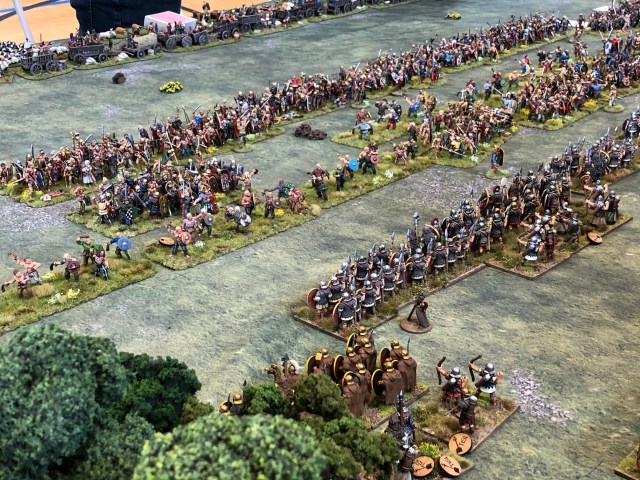
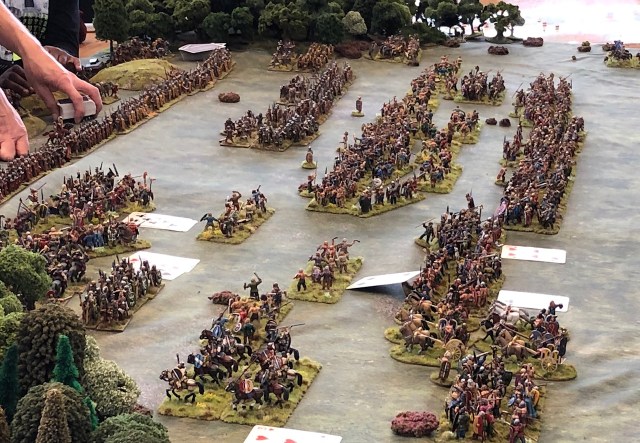
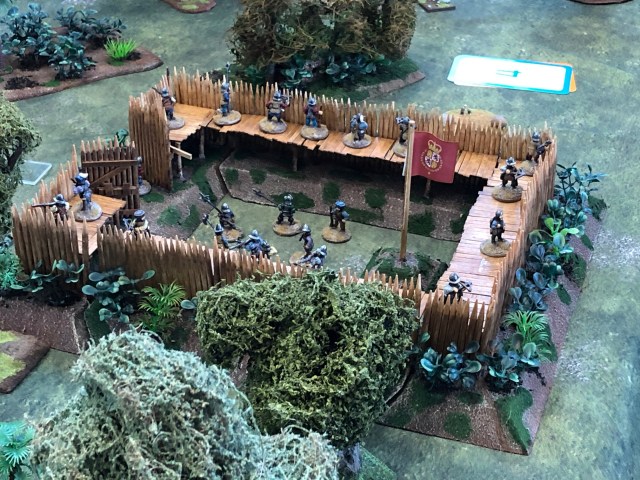
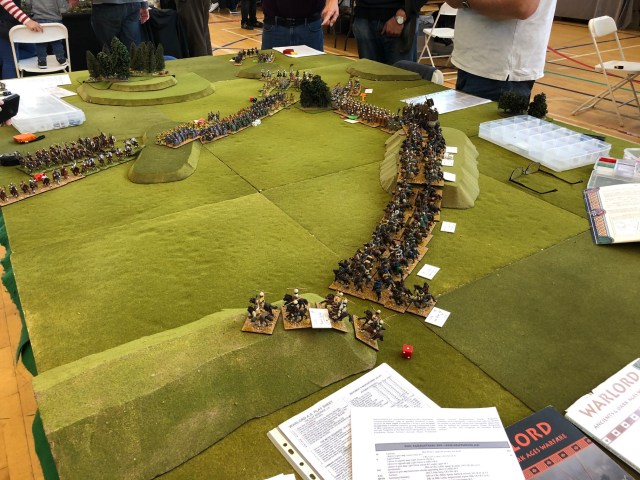
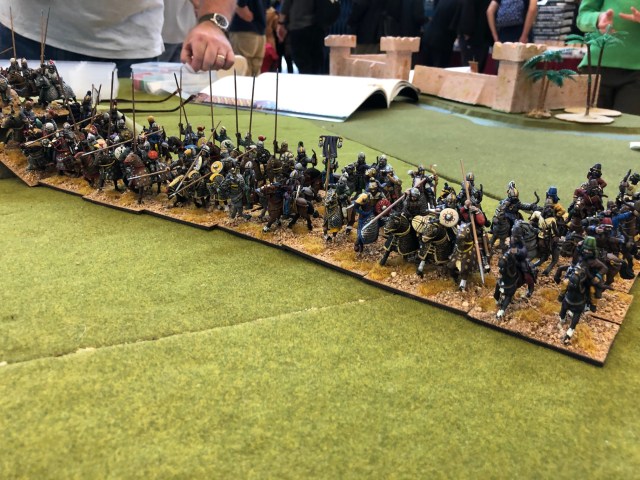
Tonbridge Wargames club put on a Boxer Rebellion game.Rome vs Sassanids by Newbury and Reading Wargames Society
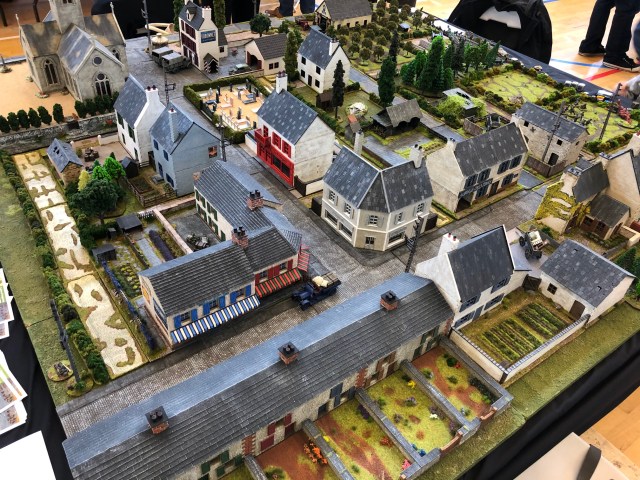
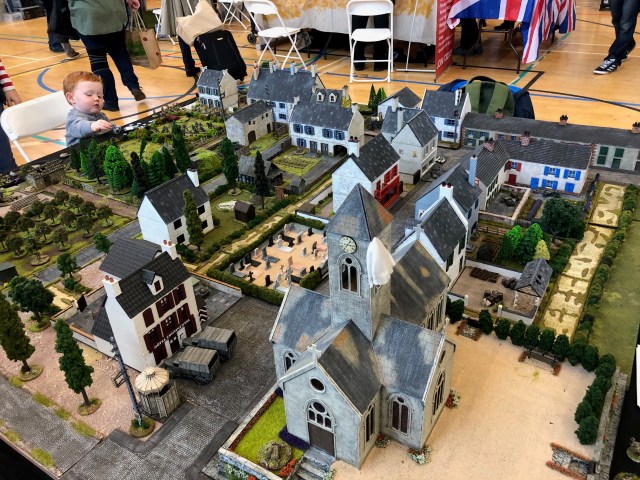
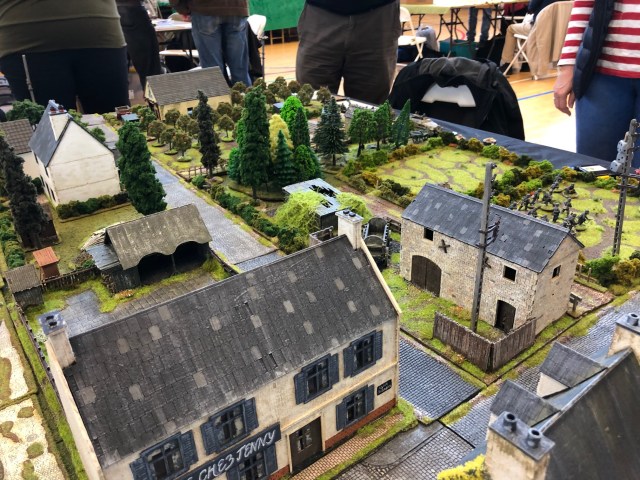
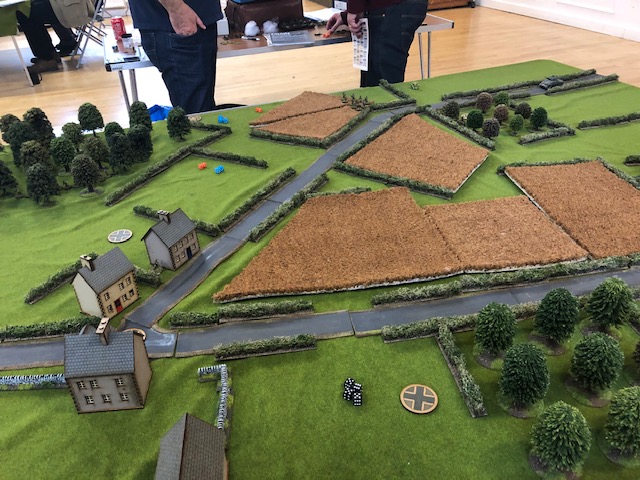
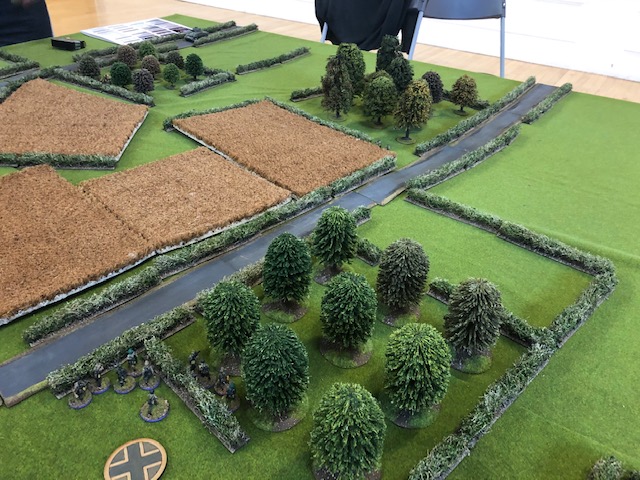
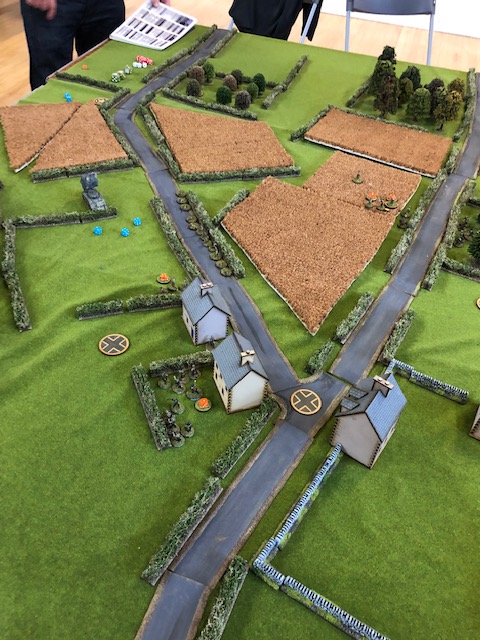
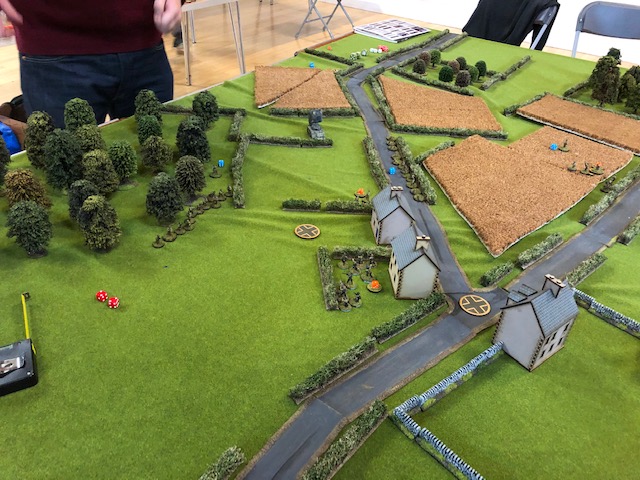
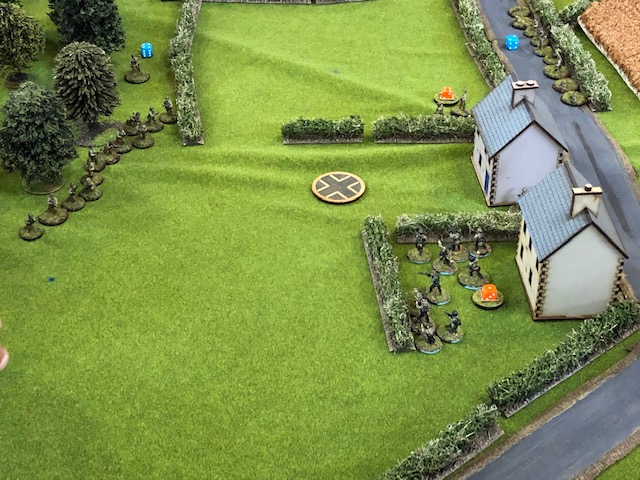
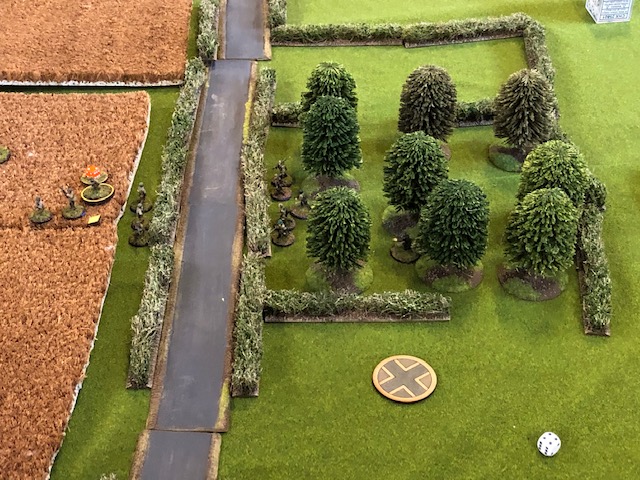
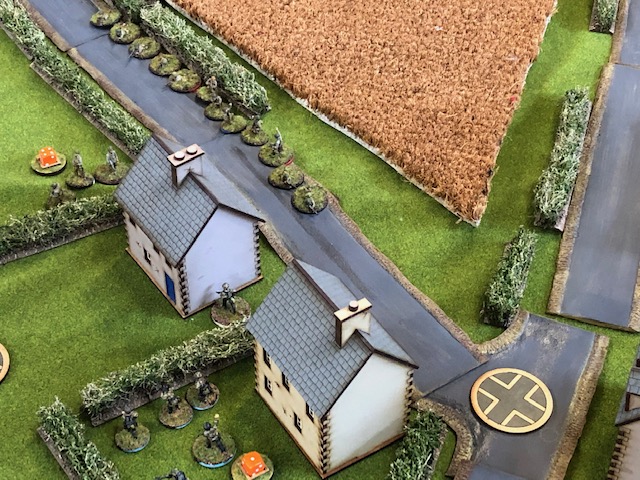
Gravesend Wargames Club (yet again!) put on a fantastically looking game of Chain of Command – the objective being to get Vandy to his Command Post at St Mere Eglise Church (in Normandy). Vandy is of course Lt. Col. Vandervort that was played by John Wayne in the longest day!
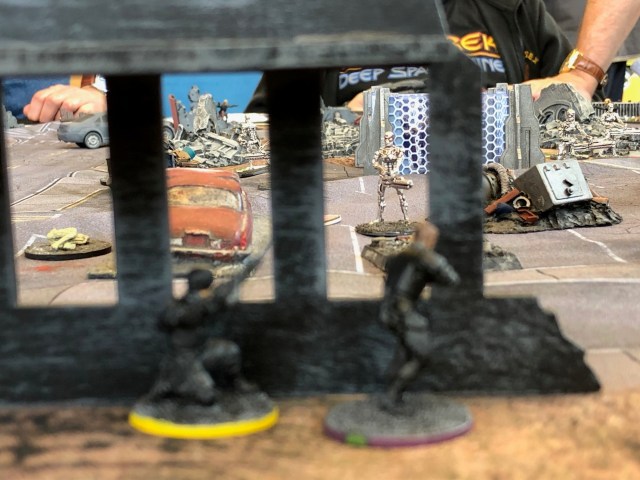
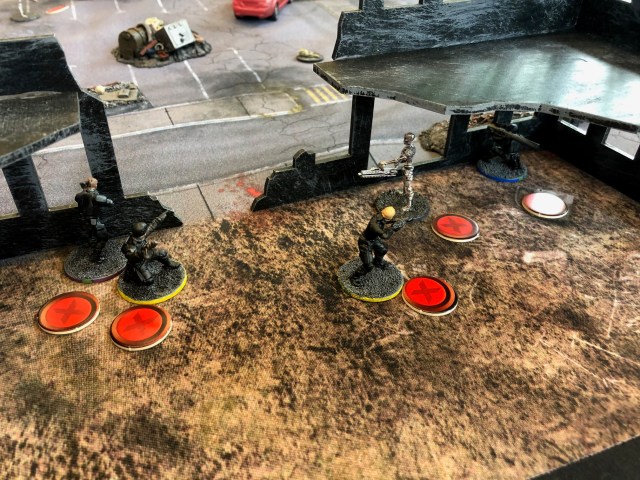
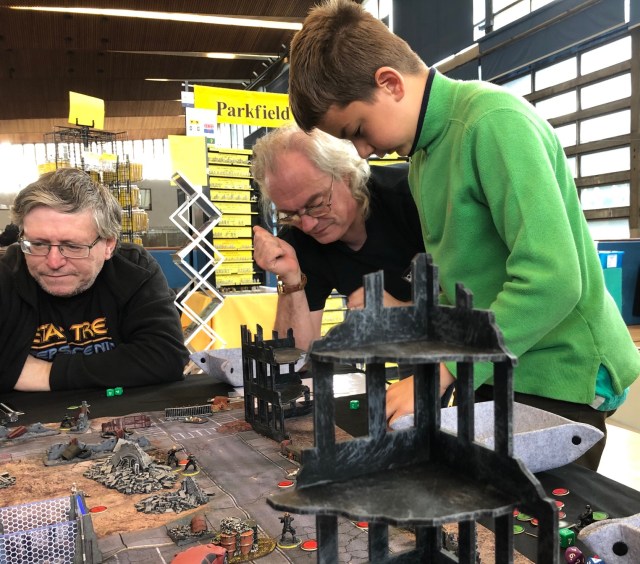
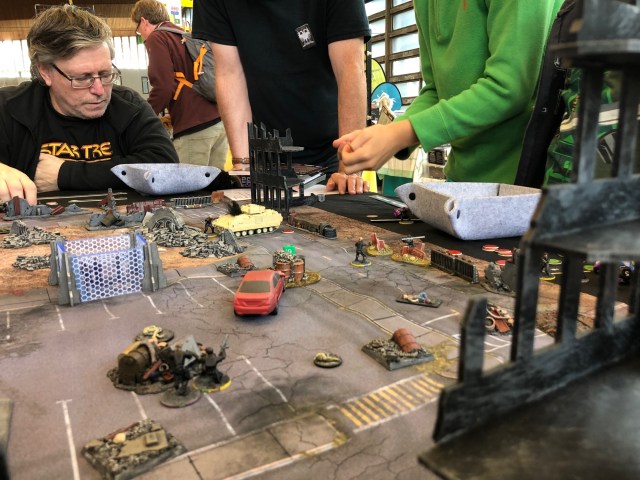
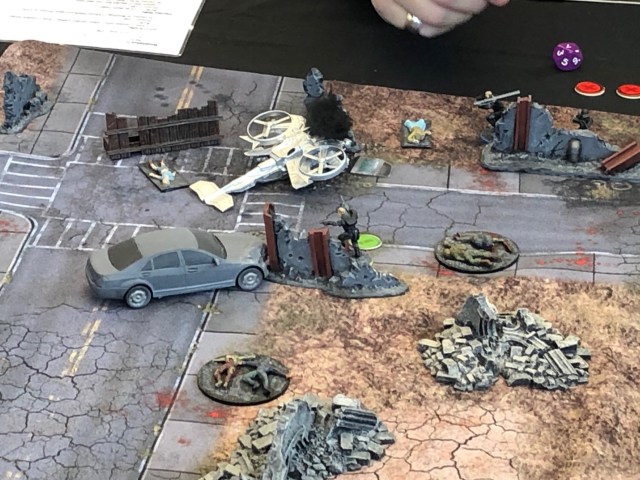
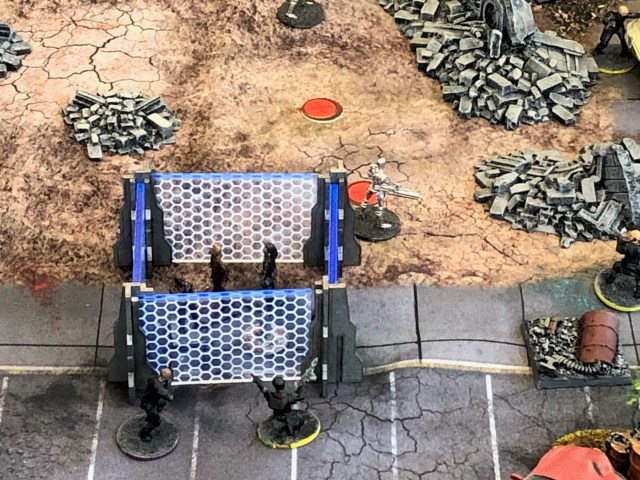
We had a go at Playing the Terminator Game and it is always a blast seeing the Little One engaging with people, the rules and the game!
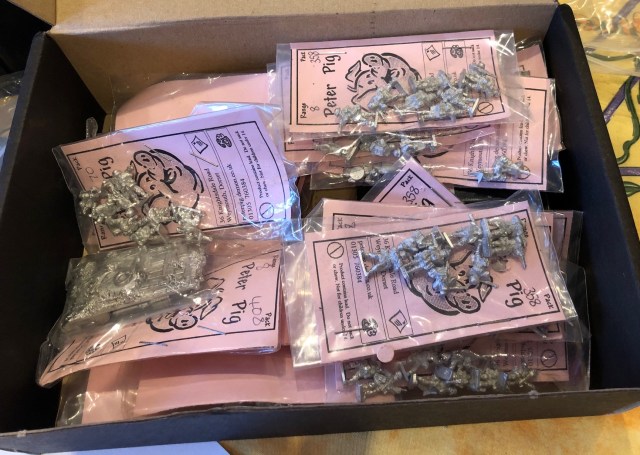
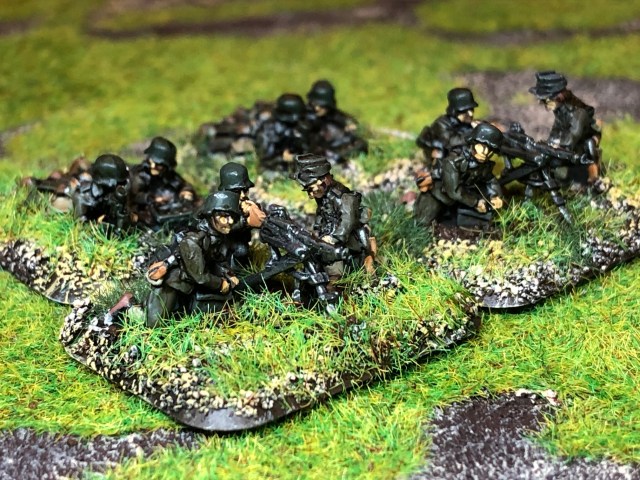
A big thanks to the gents from SEEMS for having us – we both had a blast and we actually won a game!All I got were some late war Germans in the bring-and-buy (enough for two platoons and then some) and some 15mm WW1 Maxim Machine Gun teams I am going to use for those crap platoons, I meant late wave ones, in the Too Fat Lardies 1940 Blitzkrieg book.The Little One was the big spender of the day but we got some 50% of the RRP deals for Legion stuff – too good not to miss!
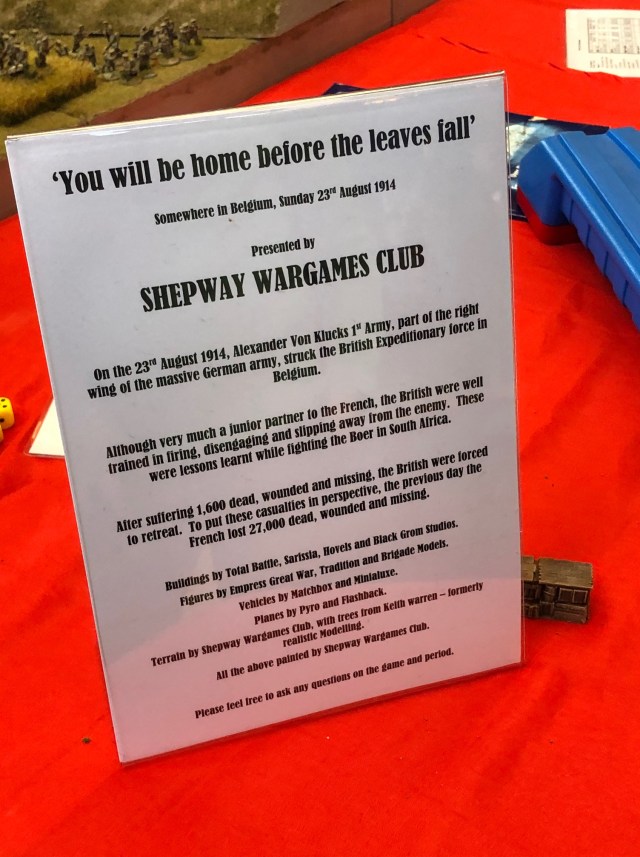
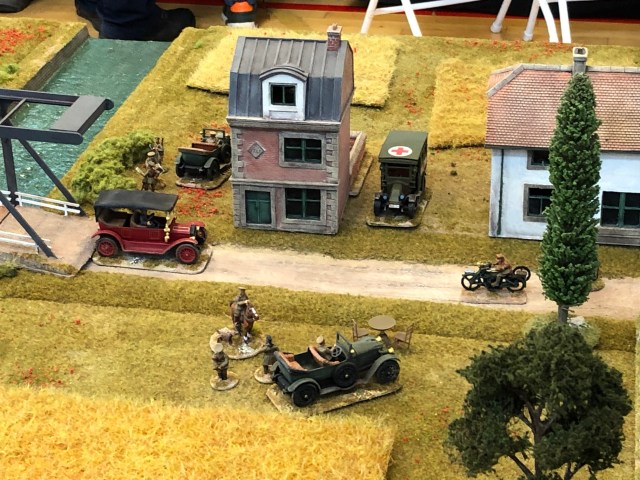
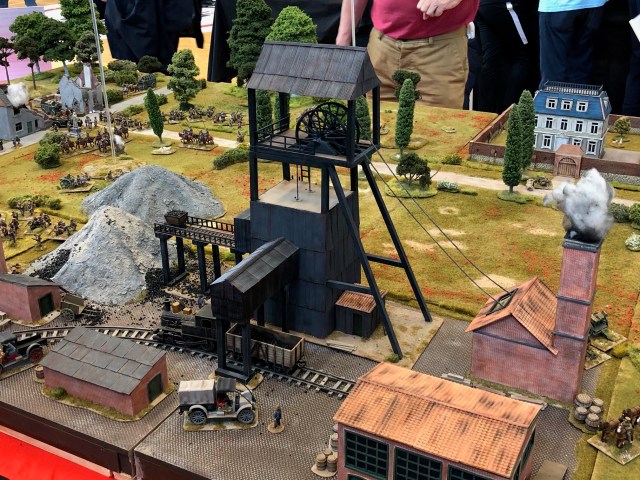
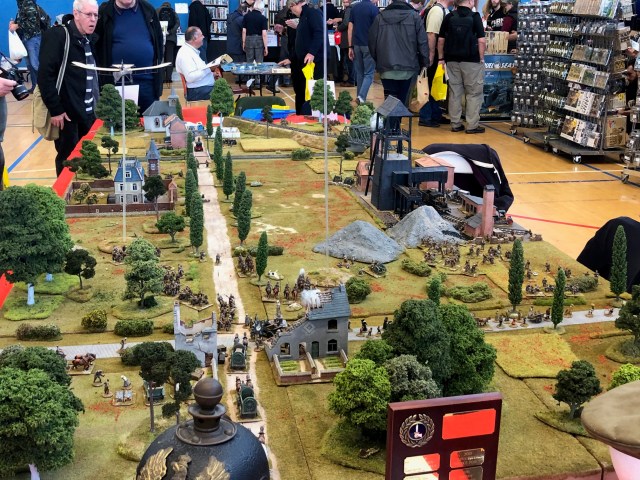
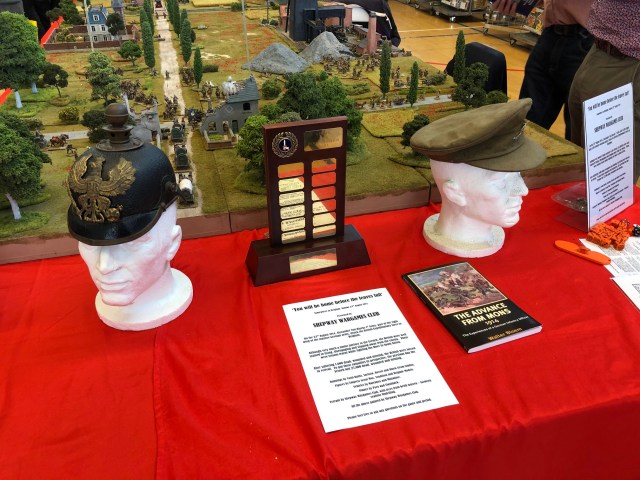
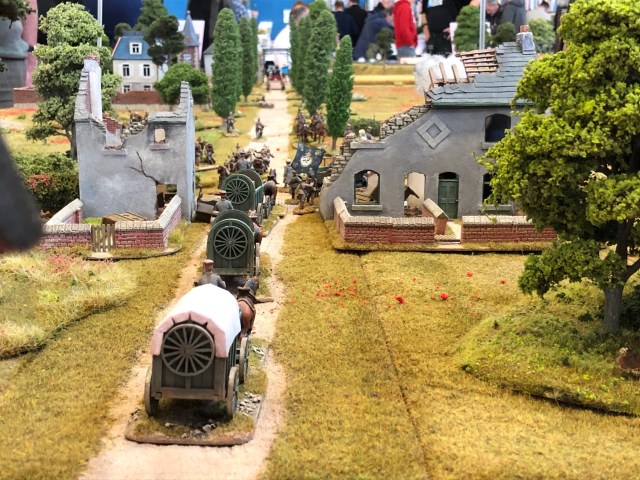
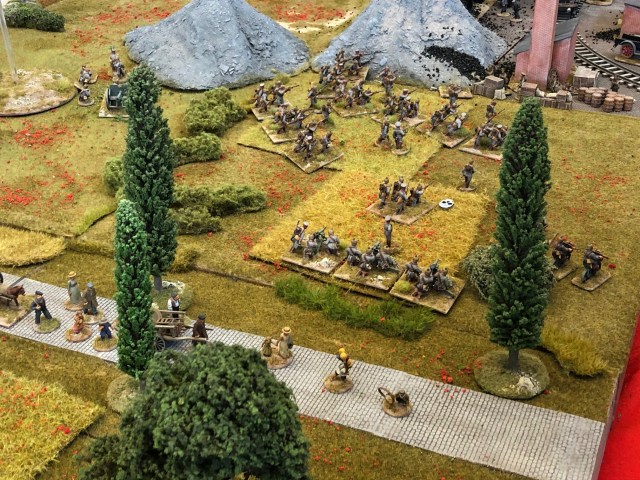
Special mention and my favourite of the day goes to Shepway Wargames Club’s WW! game “You will be home before the Leaves fall”. I hope the pictures conveys some of the goings on…
Thanks SELWG, we had a fantastic day and we were especially delighted to see so many dads and mums having brought their children and were allowed to engage with the games.
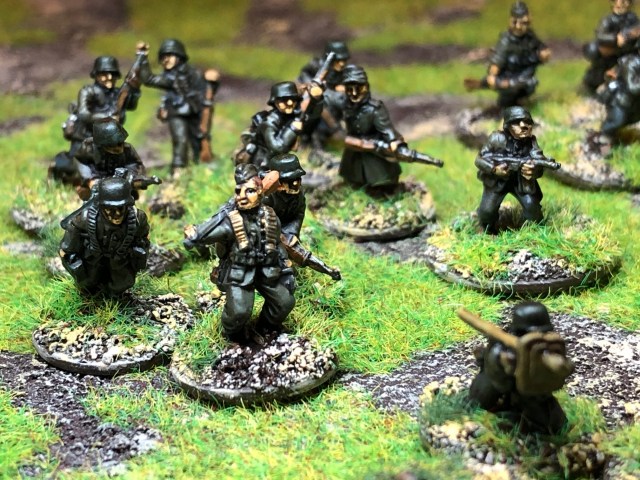
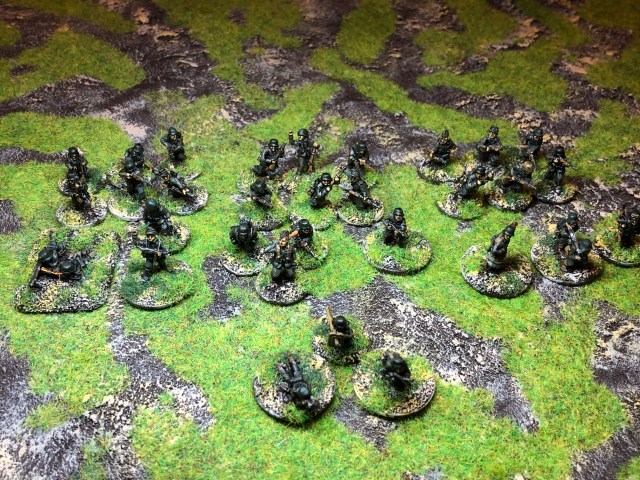
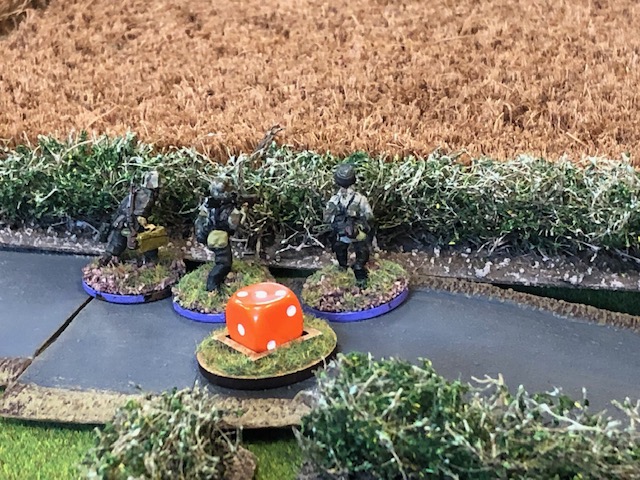
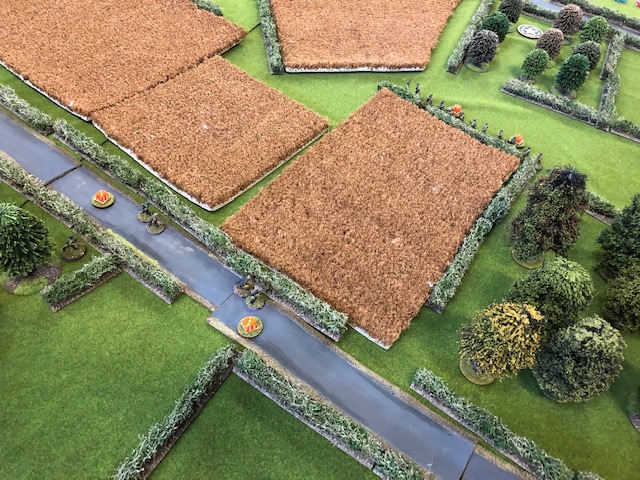
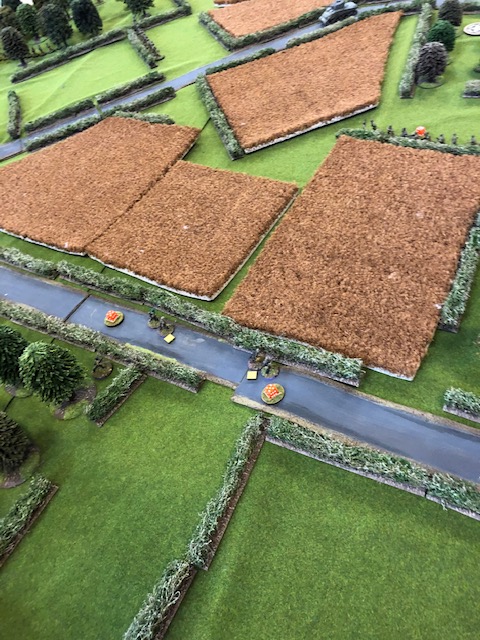
I based the two German Platoons I made last week for the Swedish 1943 Tourist Season (this being the What-if German Invasion of Sweden in 1943) on Sunday evening. These are the Skytrex 15mm ones that form part of the first part of the Campaign – the Northern Approach through Dalecarlia. This part of the Campaign will be infantry vs infantry with limited options for heavier support (perhaps an armoured car for the Germans, etc). I have a few ideas that I think will work well in a setting like this. Anyway here they are:
Focus of the two Planned Campaigns
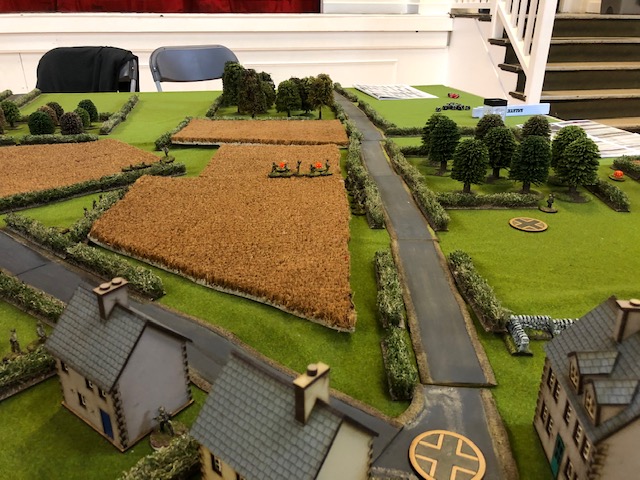
On Saturday I was invited to play a game of Chain of Command in Dulwich by Iain Fuller. This was one of the South London Warlords Saturday game days – they run these on the second Saturday every month – on this occasion a few Too Fat Lardies games were played. It was a really good game and although I lost I had the best of times. It was tense and hang in the balance more than once, more than a few bad rolls but then again a few good ones too. Chain of Command is a very enjoyable game! Below a few pictures from the day. it was nice to meet up with Iain Fuller and his chums, seeing Dave Brown again and having a chat with Rich Clarke. I may have a solution for playtesting the Swedish Campaign stuff thanks to Iain and Des – I will get back to you shortly.
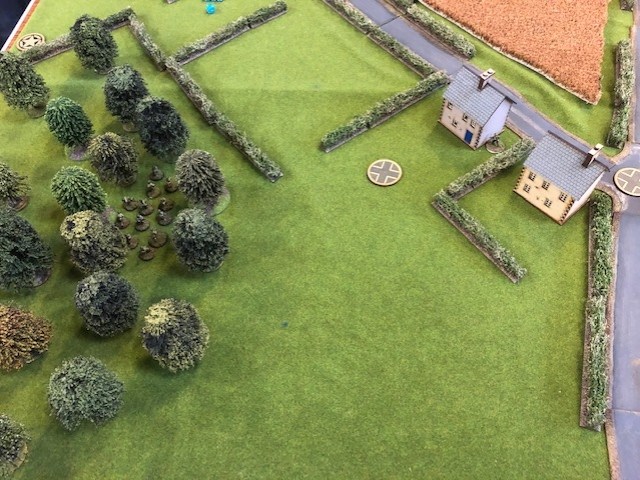
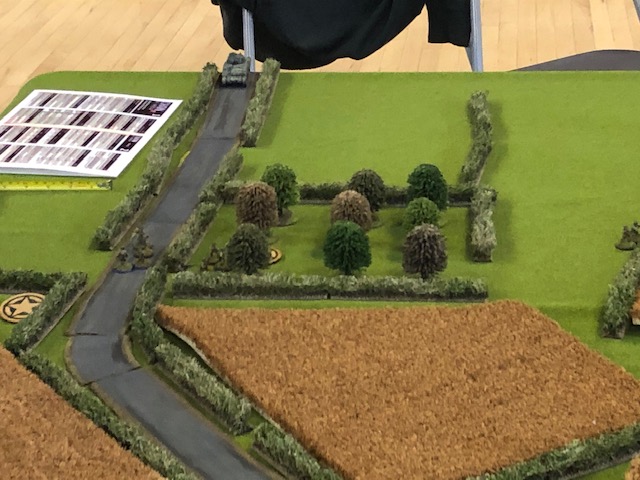
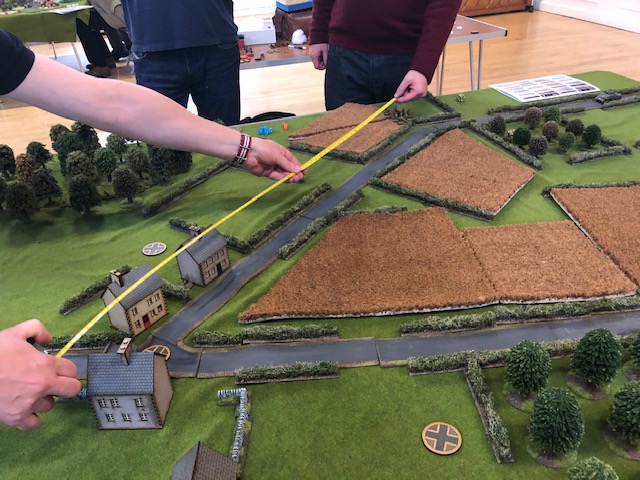
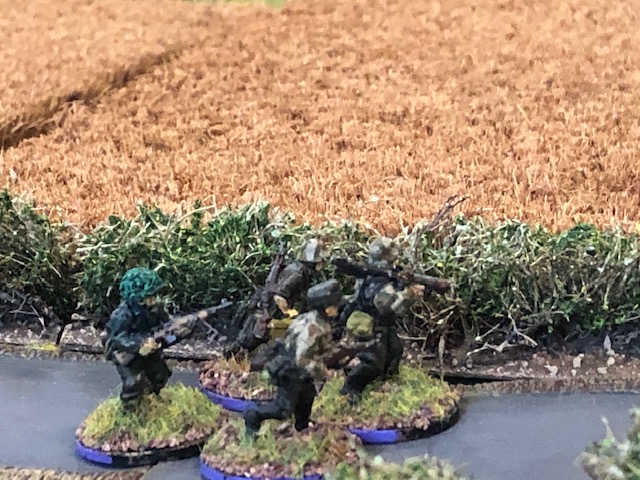
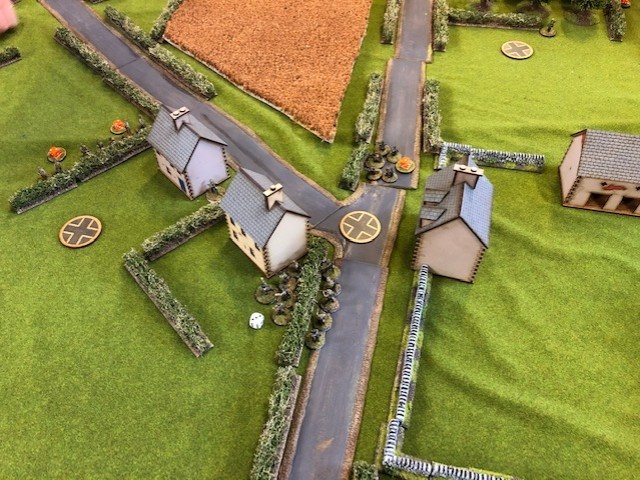
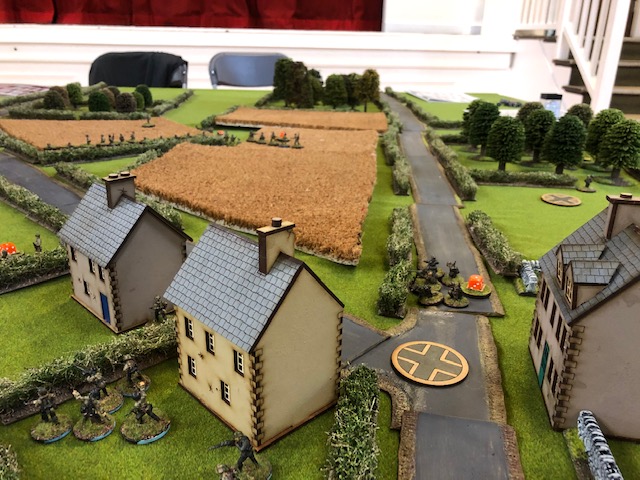
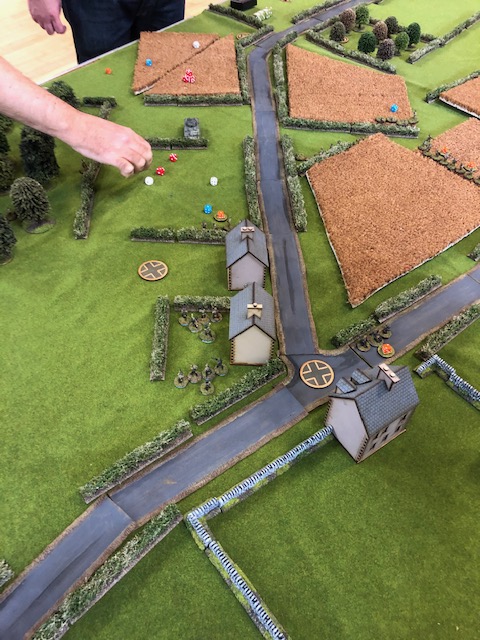
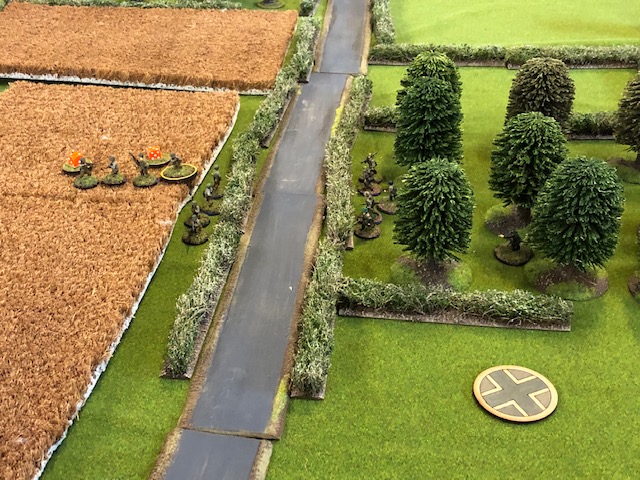
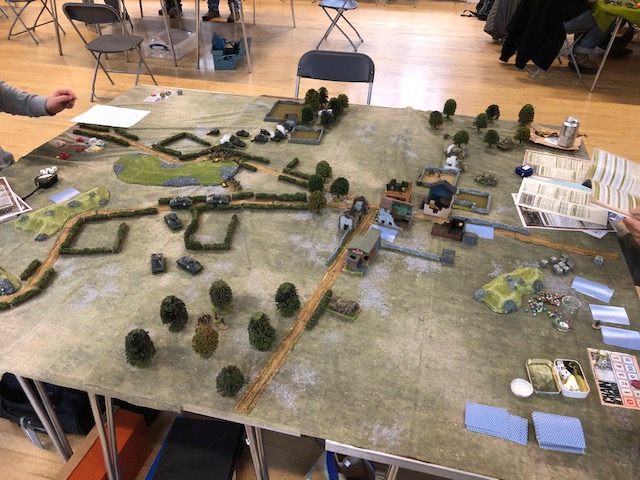
The table for the Day – I and Iain were playing the Germans – we had a Panzergrenadier Platoon with three squads with 2 No. MG-42 each, we also had a Panzershrek team and Tripod MG-42 team as well as a Pz IV tank. We played against Dan and Glenn who had an American Platoon and a Sherman tank for Support. We were defending.The Americans quickly got a squad into the forest threatening the defensive position. A squad of Germans were sitting on the first floor with their LMGs aimed at the forest – a dash would be daring and deadly.Then came the tankThe MMG was set up in one of the houses covering the approach road.All the Germans deployed in buildings at this momentThe Americans sent out a scout platoon provoking an activation of another squad.
A fierce fire fight broke out between two sections over the field.
In spite of overwhelming fire power the rolls did not favour the Germans this time and they ended up withdrawing to the forest to recover some Shock.
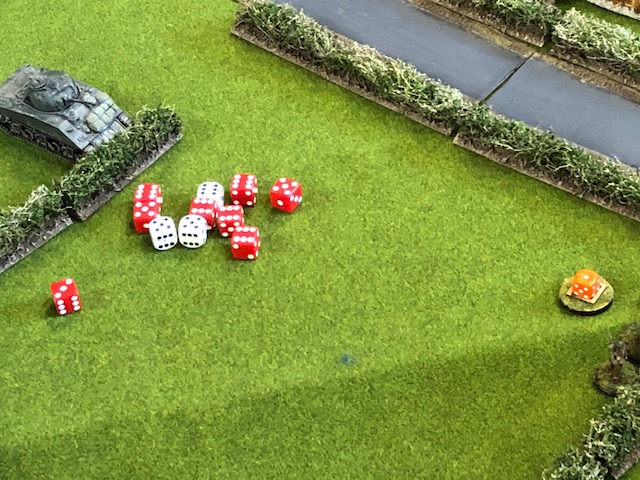
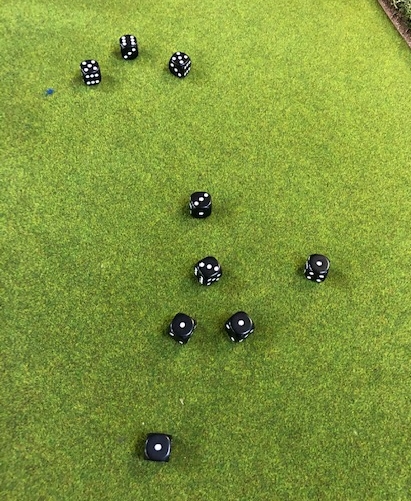
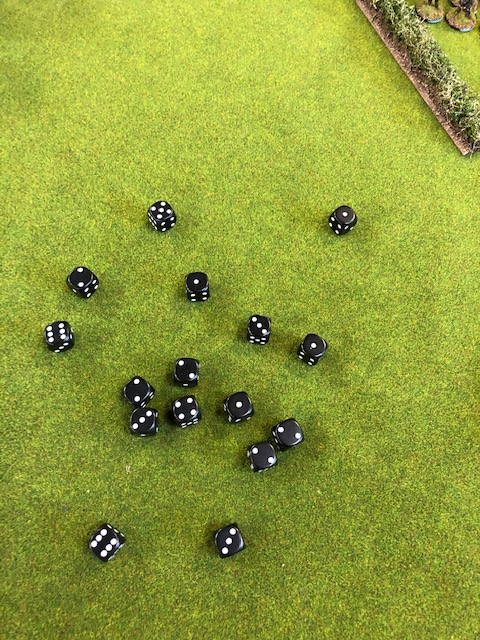
Glenn rolled really well at times! 5 and 6 to hit!
I rolled less well!
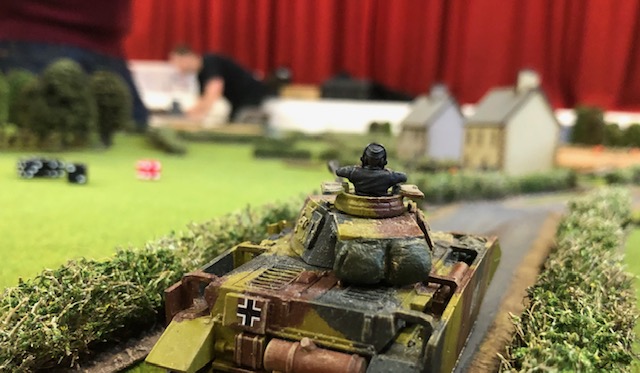
My favourite moments was the Pz IV shot…
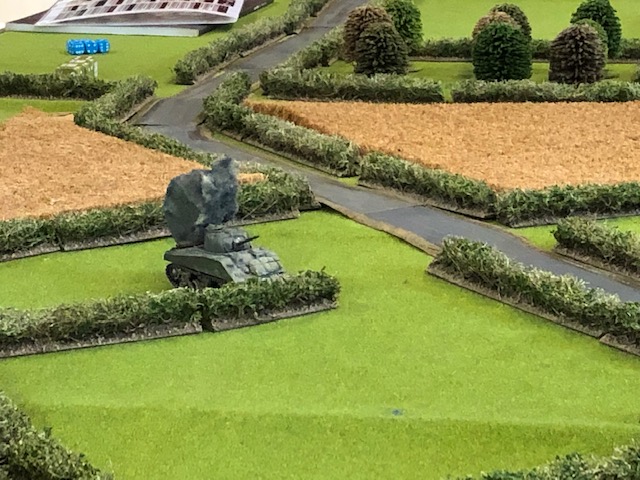
….that made the Sherman smokeWhat is superior firepower worth when you roll like this?
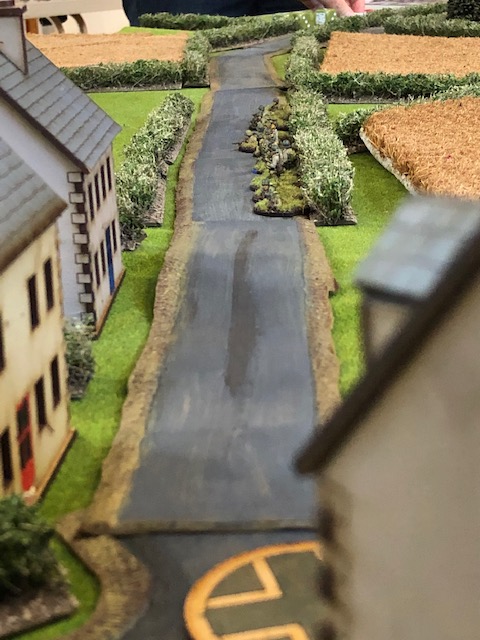
Americans advancing down the road towards the objective of their success.
Overwhelmed, unlucky the Germans slowly weakend!
Seconds before the Americans overran the Jump Off point and ended the turn! – game over.IABSMGeneral D’ArmeePlaytesting of the upcoming O-Group rules!
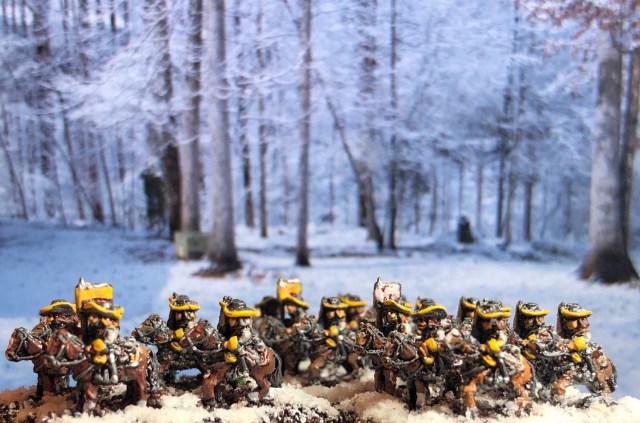
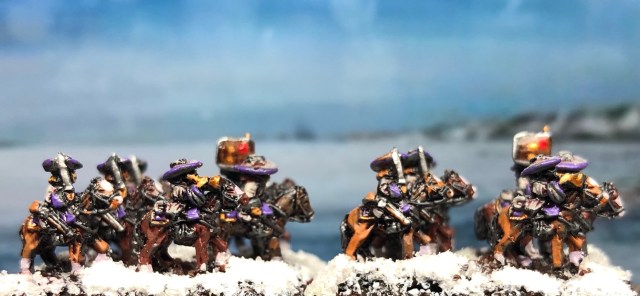
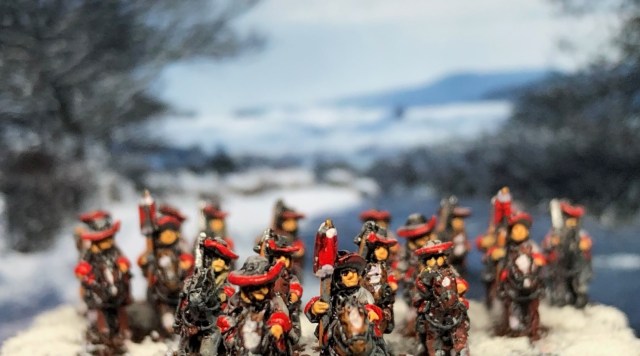
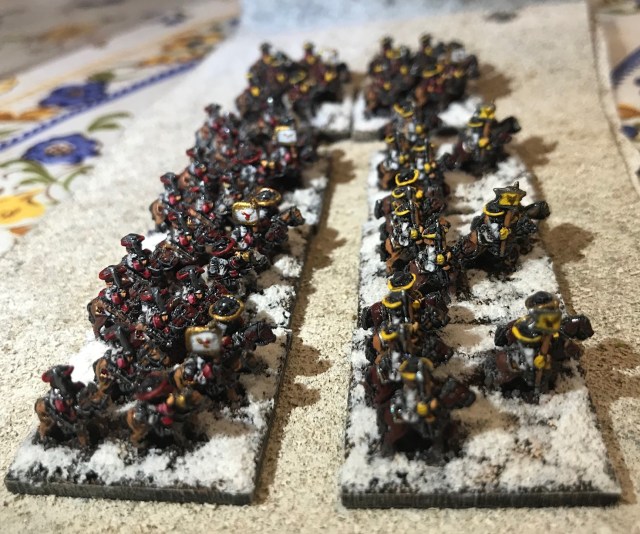
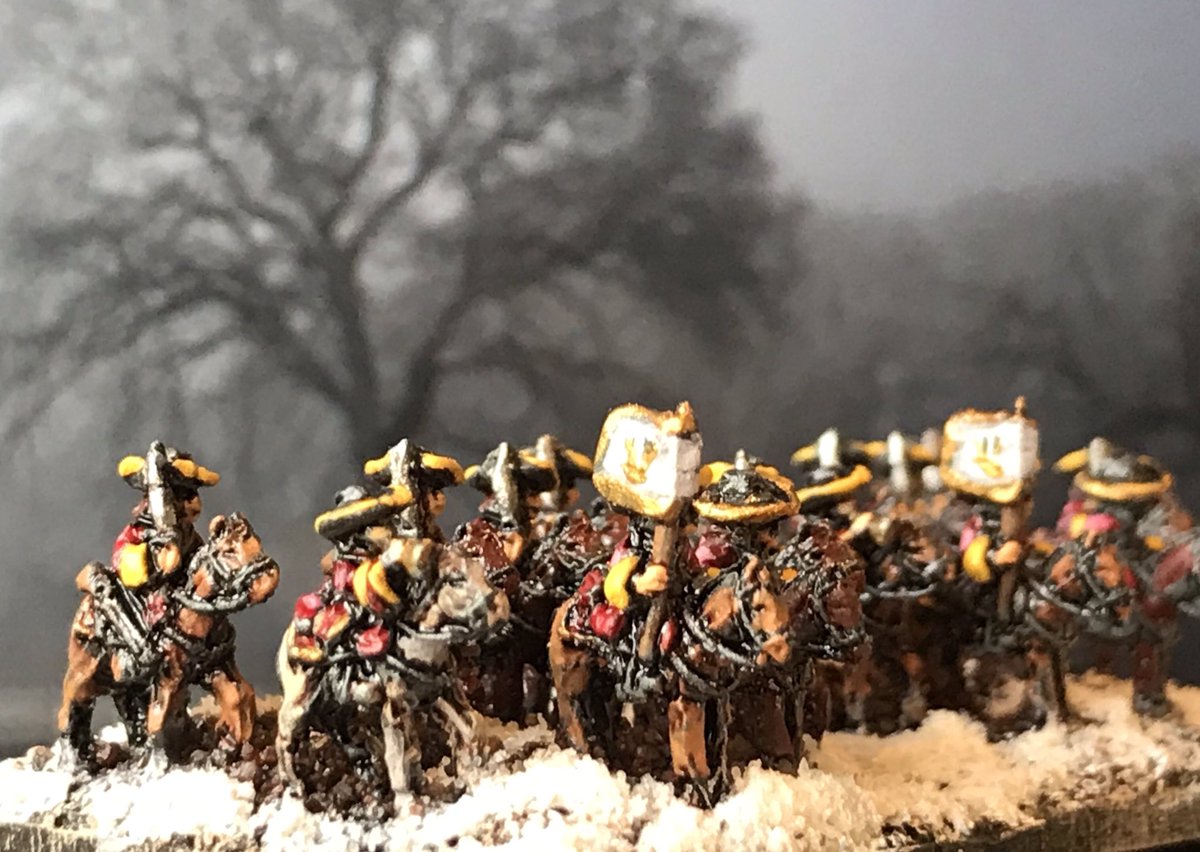
A few more completed bases of the Danish Cavalry at Lund. All models from the Baccus Sun King range, link here.
1. Fynske Nationale Rytterregiment – 3 squadrons (Col. Kristof Otto Schack)
2. Sjællandske Nationale Rytterregiment – 3 squadrons (Col. Ditlev Rantzau)
1. Sjællandske Nationale Rytterregiment – 3 squadrons (Maj-Gen F. Arenstorff)
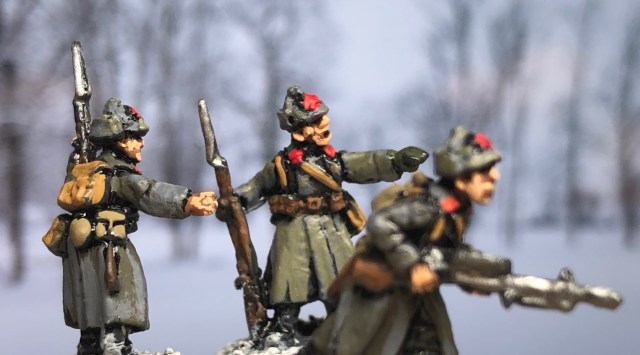
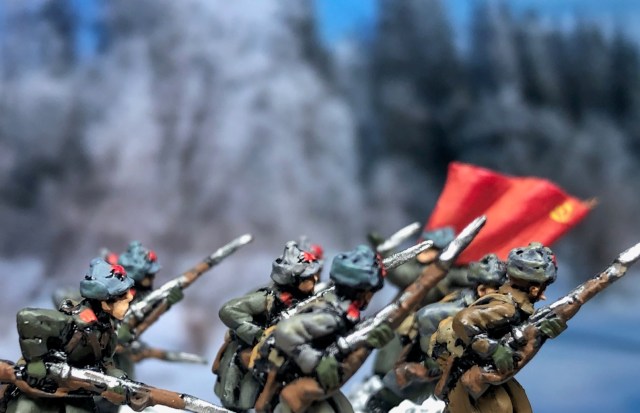
Soon 80 years ago the Winter War started
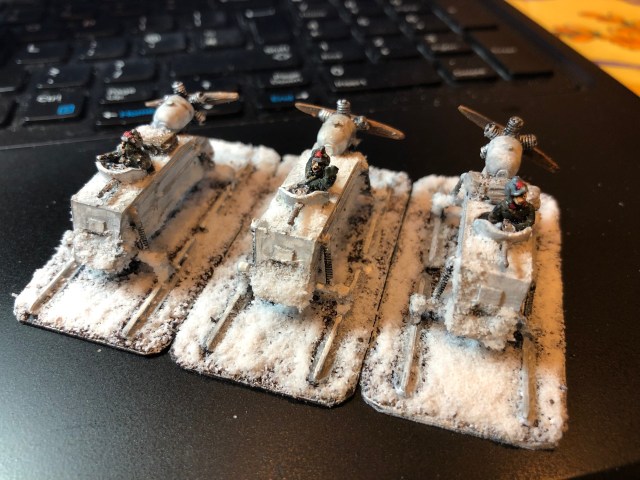
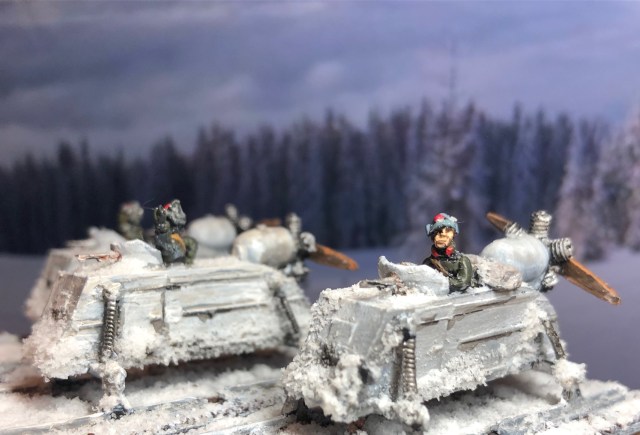
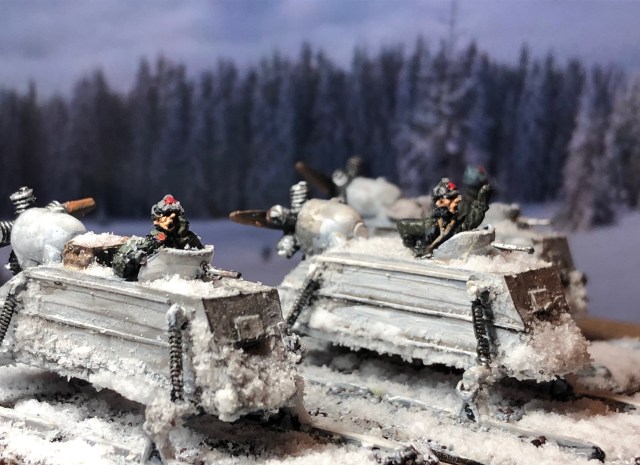
In other news it is soon 80 years ago the Winter War between Soviet and Finland started (30th November 1939). The 30th November this year is on a Saturday so the Little One and I plan on running a Winter War battle on that day. I am not sure we will need these excellent 15mm Aerosans from QRF (link here). They are excellent little models and I have had them on the soon to be finished shelf for far too long.
A few picture to get us in that Winter War mood! (miniatures from Battlefront).
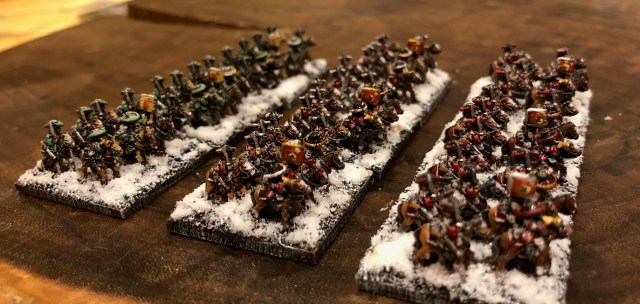
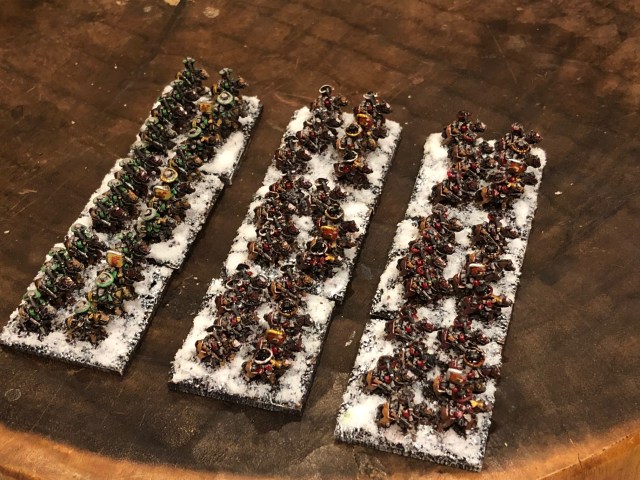
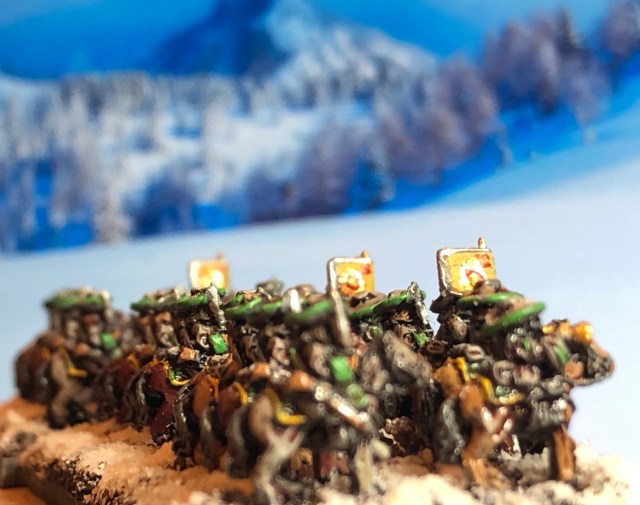
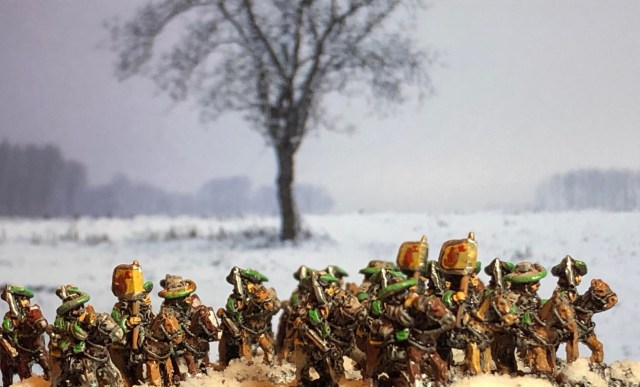
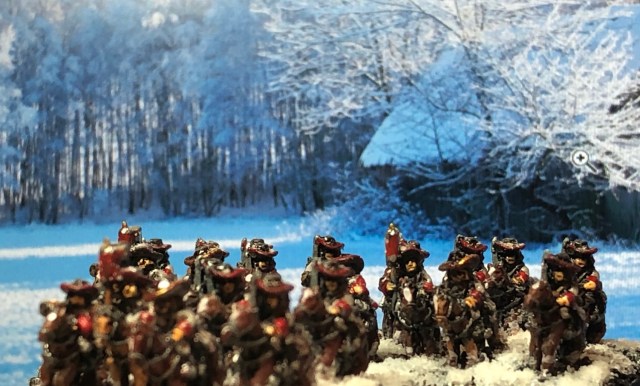
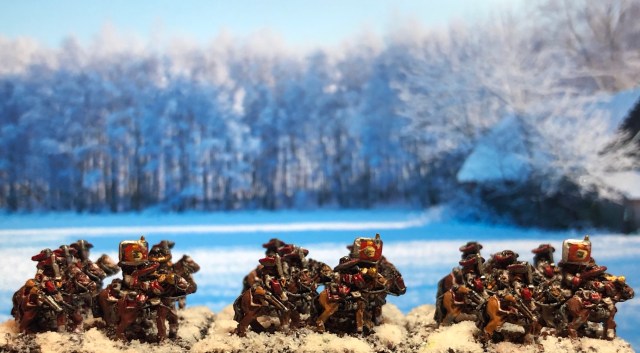
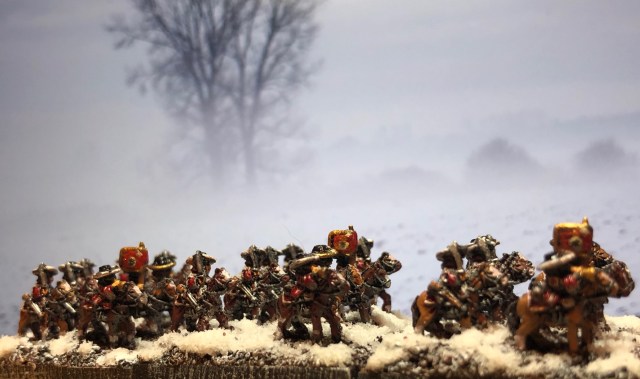
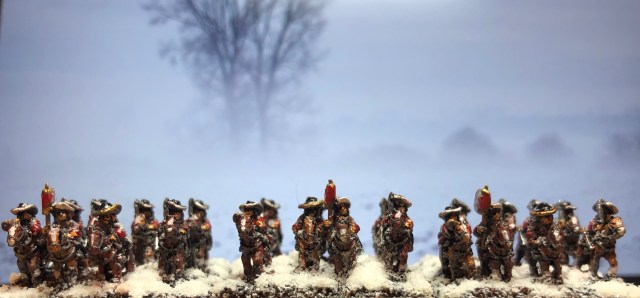
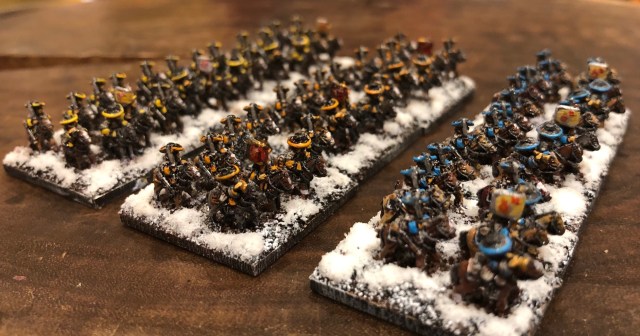
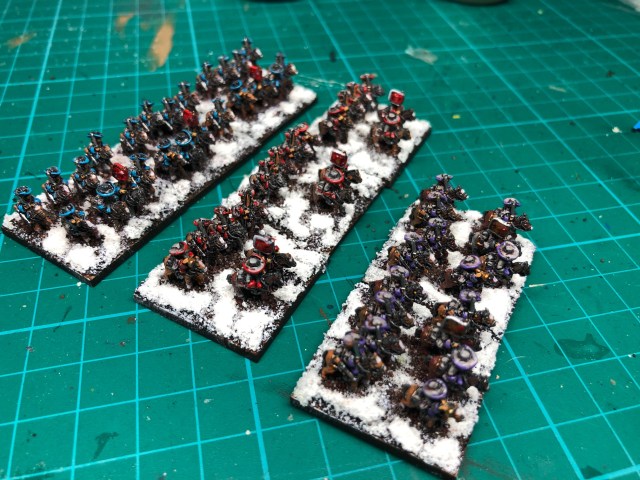
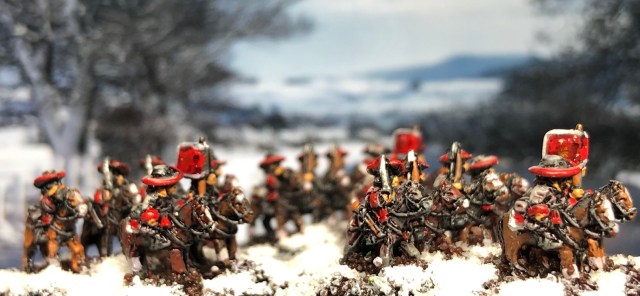
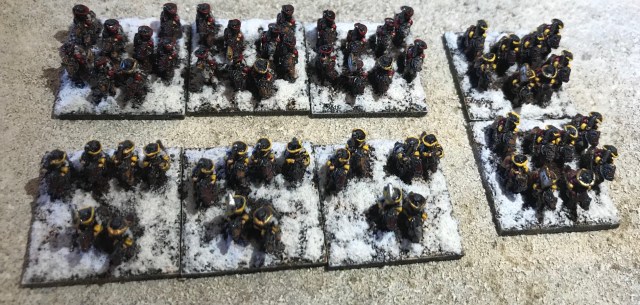
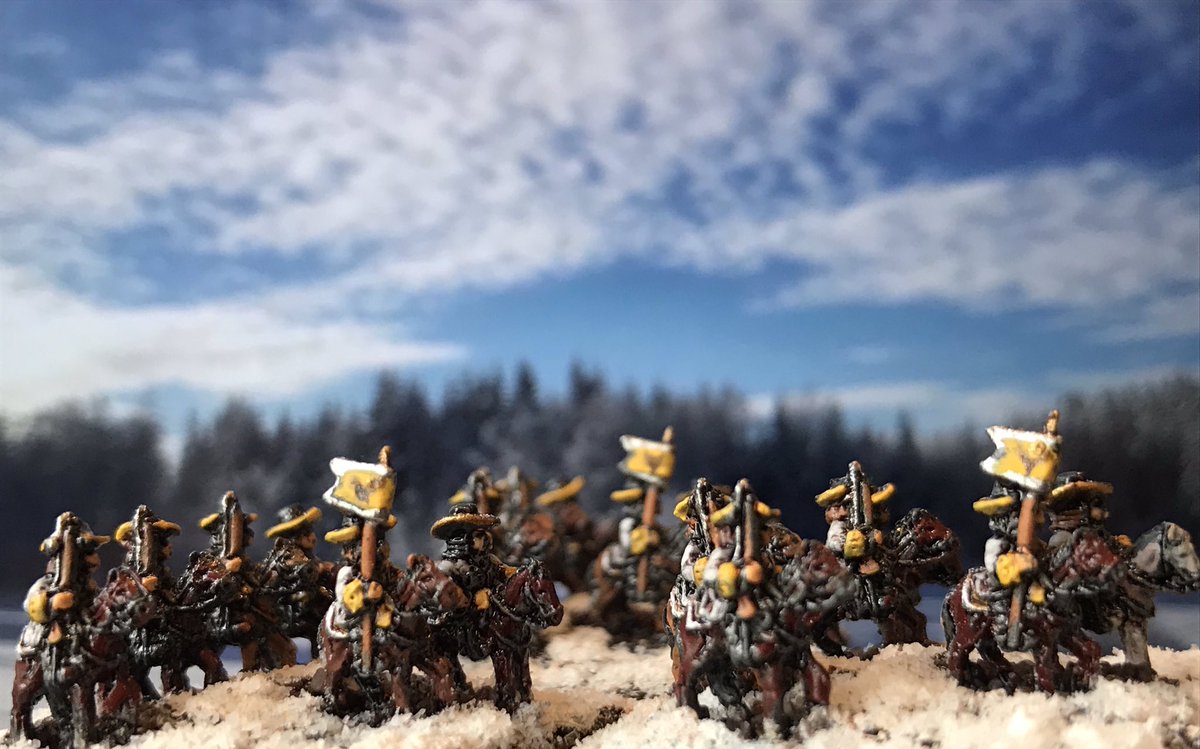
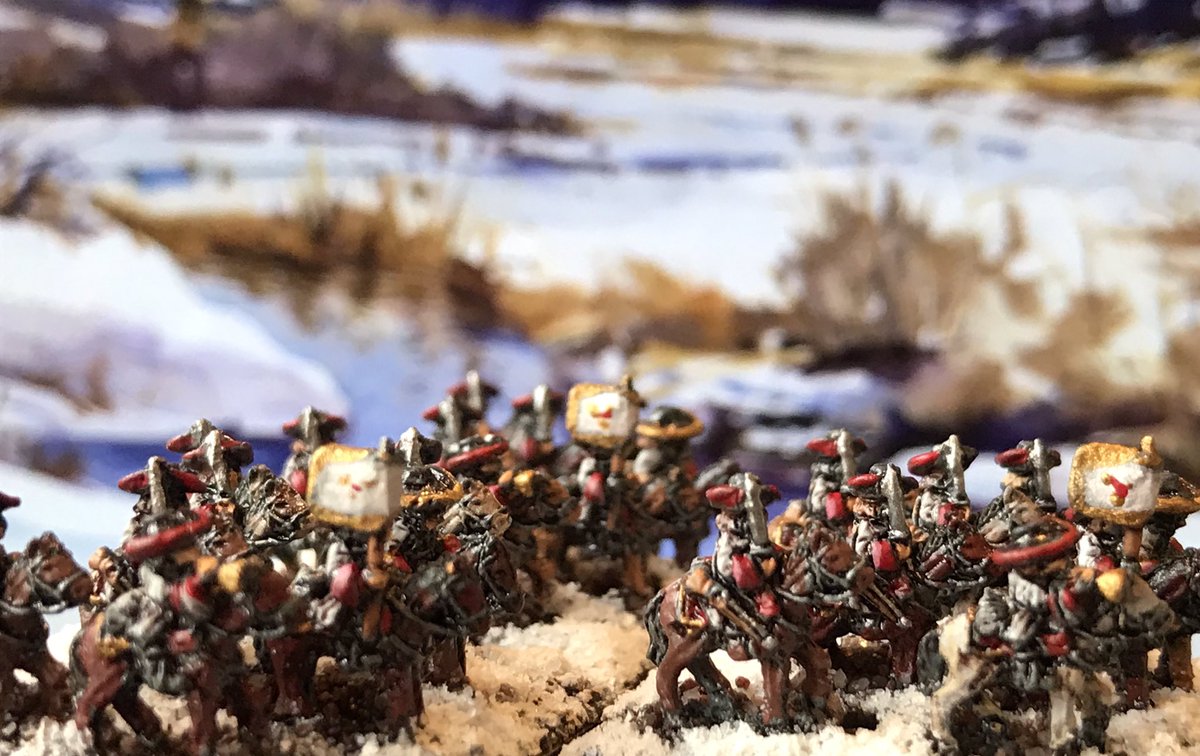
3 more Danish mounted regiments for the Battle of Lund (Here are a few others in previous blogs here and here) in addition a note on how I do the winter basing on these at the end.
3. Jyske Nationale Rytteregiment – 3 squadrons (Col. A Sandberg)
Slesvig-Holstenske Nationale Rytterregiment – 3 squadrons (Col. Henrik Sehested)
2. Jyske Nationale Rytterregiment – 3 squadrons (Col. Jakob Bülow)
sssss
Winter Basing
This is how I base these miniatures.
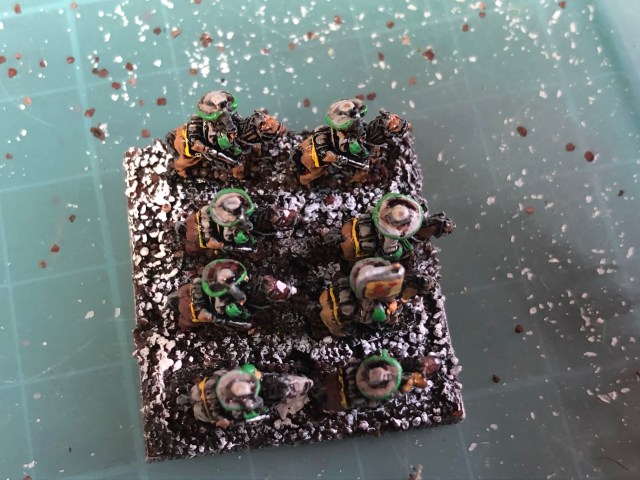
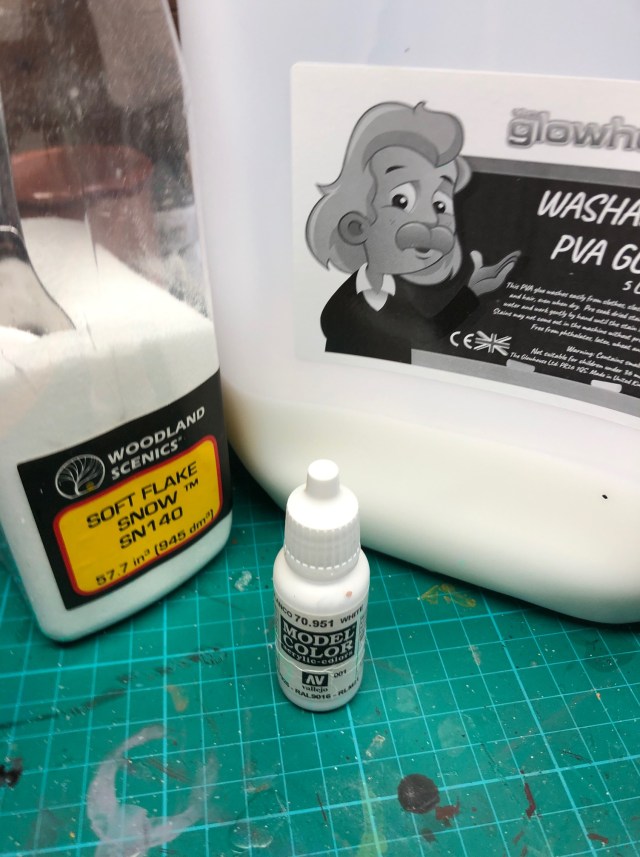
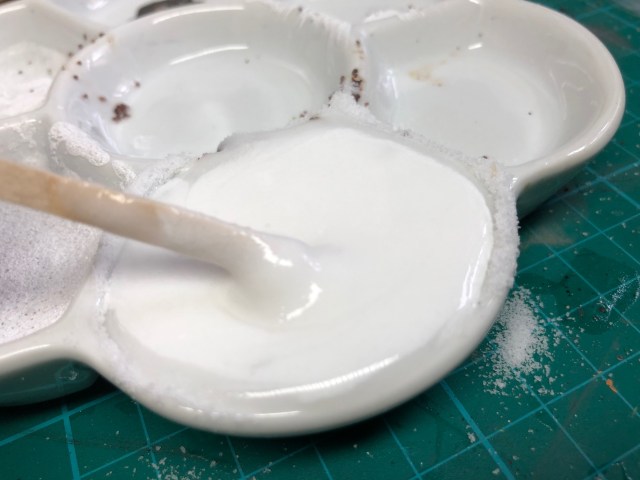
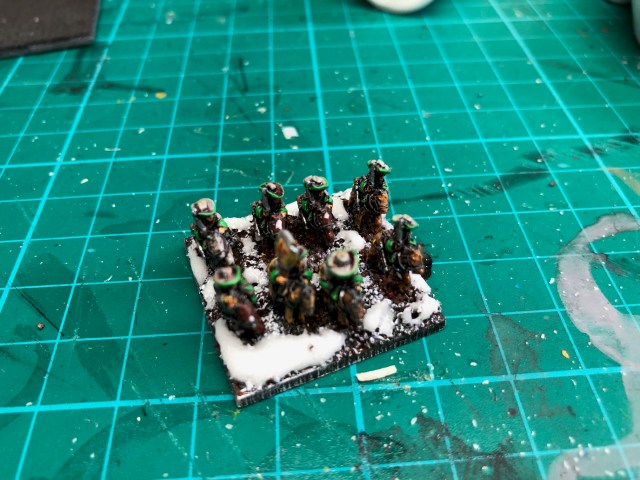
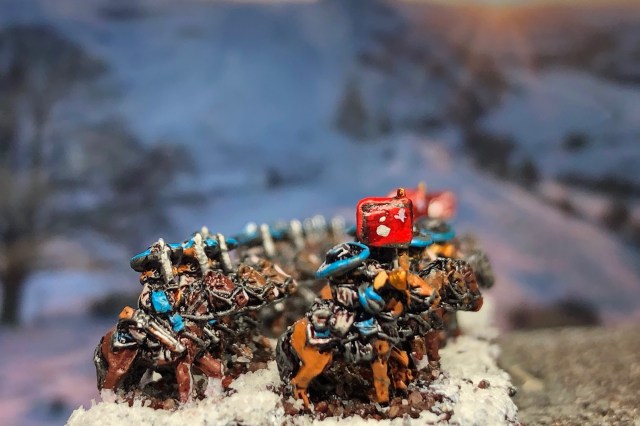
I start with a dark brown base, I use chocolate coloured sand, but you could use normal sand and use a brown wash to colour it brown.When applied and dry, I dry brush the base with wihte.Be careful but try to do it everywhere possible, remember that the base will be seen from above mostly so if you only do the edges it will look very dark in the middle.Ingedients for the next – some artificial snow, pva glue and a white colour (use cheaper paint, I normally have some poster paint I use for this).Mix the snow with the pva glue to a mix with the consistency of say ketchup – not runny. This is based on a teaspoon of snow. Add a little bit of white paint – you do not need a lot.Apply the past on the base, do not cover all of say 80% of it. You can hide any ugly areas where the base has not been covered by the sand and it looks weird – just cover it with the mix.
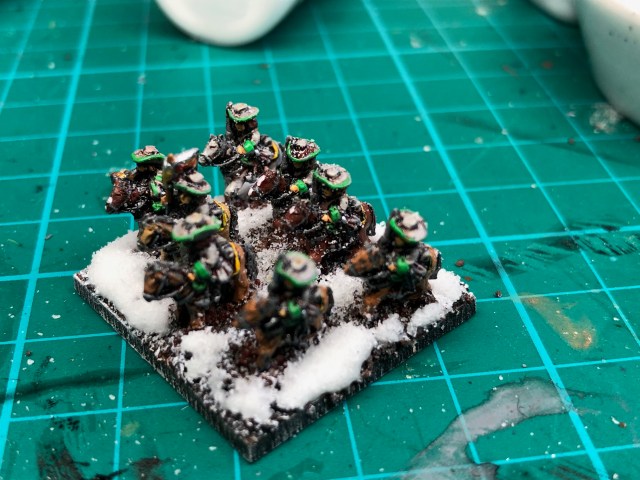
Sprinkle some of the snow scatter on top. This helps to add some reality to the final snow as the mix tends to dry to something that looks a little bit more like something dry than snow, the white colour (you added before) also helps avoid the snow getting too dark.Let dry and enjoy! Of course this is a generalisation and done for effect rather than realism – but it works much better than something that is just white!
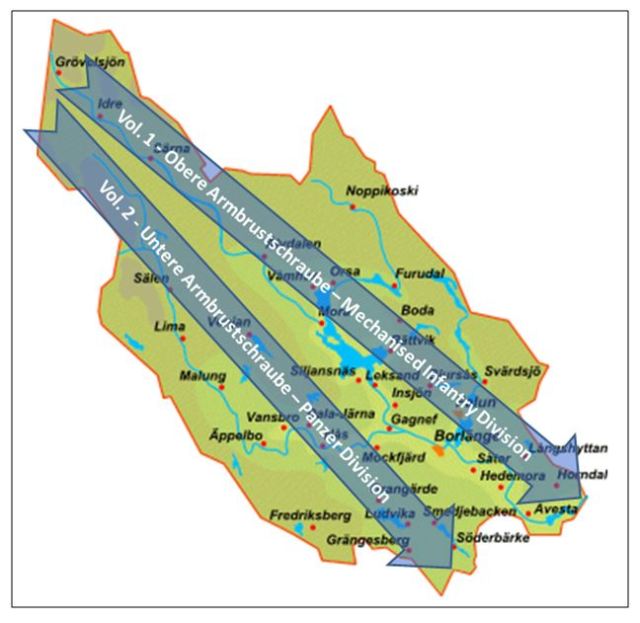
As you may be aware I want to start playing a few scenarios based on the 1943 Swedish invasion plan made by Adolf Schell (that of course never happened). Part of this plan had two of the lines of advance going through Dalarna (the county where I was born) in Sweden and it would be interesting to place some of the action here – the first campaign will follow a mechanised infantry division and the other a Panzer division.
The Dalarna (Dalecarlia) county in Sweden showing the two advances – Obere and Untere Armbrustschraube.
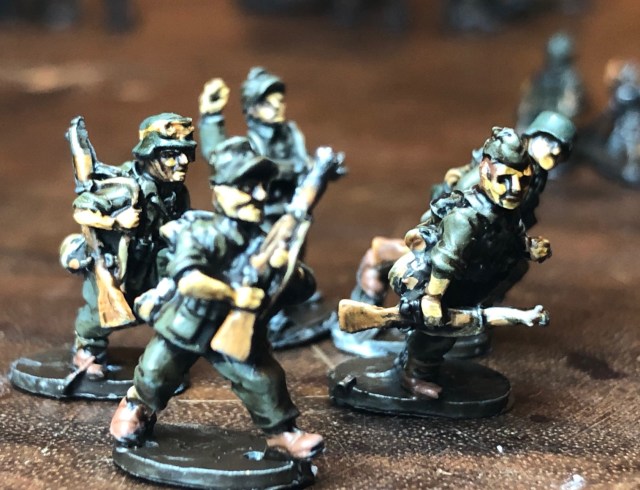
I only had early war Germans in 15mm so I needed to find some miniatures to build two regular infantry Platoons and some to do two Panzergrenader platoon. I will discuss the regular infantry in this post.
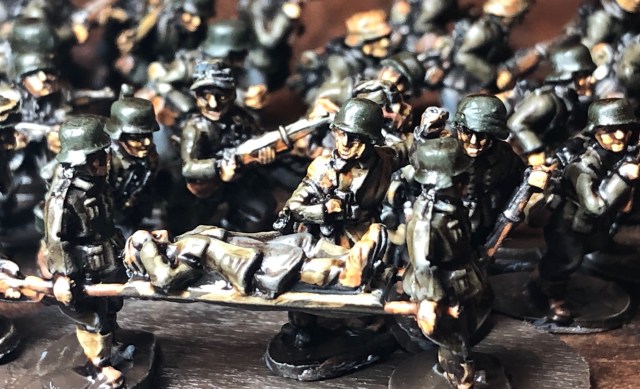
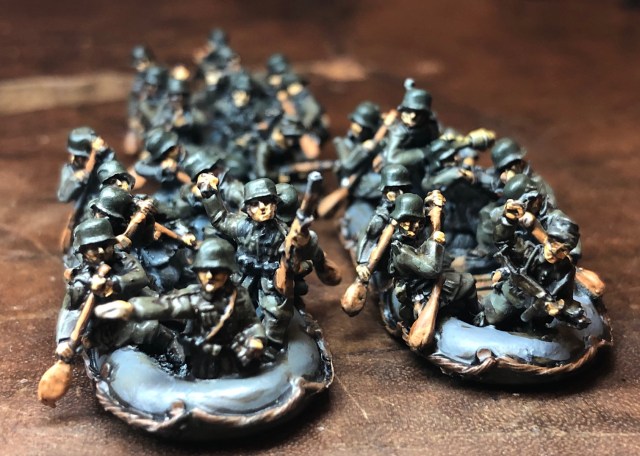
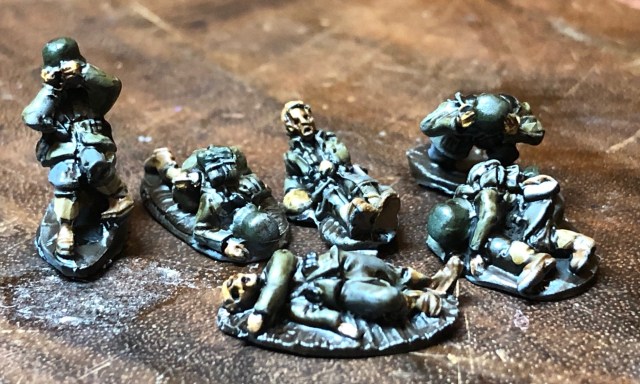
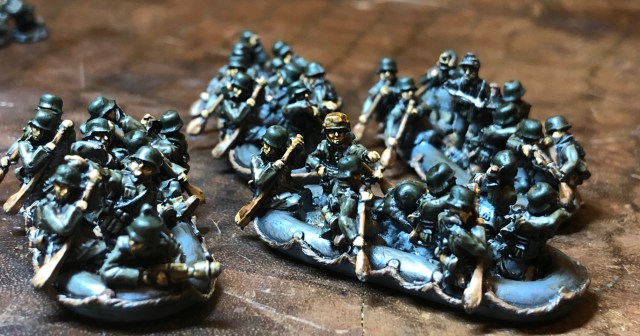
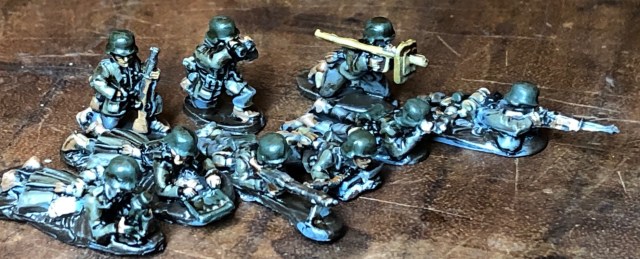
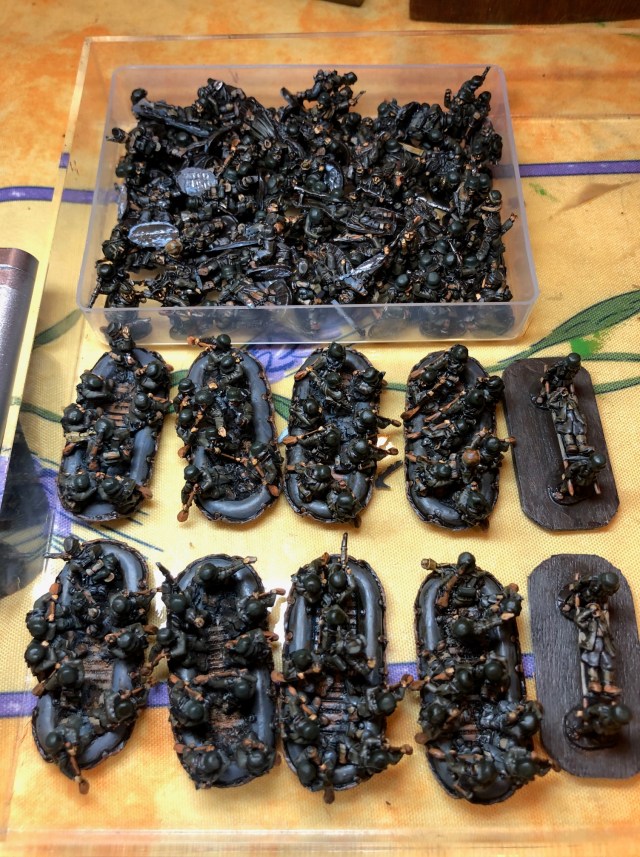
One of the scenarios will be focusing on a river crossing and for this I needed to have some rubber boats. Looking around I could only find one producer that make rubber boats with crew in 15mm and it was the Command Decision range from Skytrex (link here, I think these are sold by Old Glory in the US). I also got enough squads for two platoons and some extra sections, some machine guns, mortars and stretcher bearers.
I painted them as follows (use alternatives as almost all manufacturers have had a go at some of the German colours) with normal Roll a One approach – splash rather than finesee:
Grey base coat, ink washed (diluted ink)
Paint face, hands, paddles, wood on rifle, and rope around rubber boat in Beige Brown (Vallejo 875)
Paint uniform jacket and trousers in German Field Grey (Vallejo 830, it feels more green than grey), leave some of the blackened recesses shine through – I painted about half of the trousers with a normal grey colour (London Grey 836).
Paint helmet in Dark Green (Vallejo 979)
Paint Anti tank weapons with panzershrek and panzerfaust in Dunkelgelb (I have a MIG paint, called RAL 7028)
Let dry and wash with GW’s Agrax Earthshade – a dark brown wash. This give a nice dark shine to the model.
Detail skin with flesh (I used Vallejo Sunny Flesh 845) – let some of the brown shine through.
Highlight uniform and helmet with original colour used as per 3. and 4. above.
Webbing black, breadroll khaki, brown for waterbottle, various brown for shoes.
Highlight rifle and paddles with Light Brown (Vallejo 929)
Vallejo Air Silver for spade, mix with black for rifle, smg and lmg metal.
Paint the rubber part of boat in London Grey – leave some of the darker grey to shine through.
Let dry
Give it all a wash of Army Painter Soft Tone
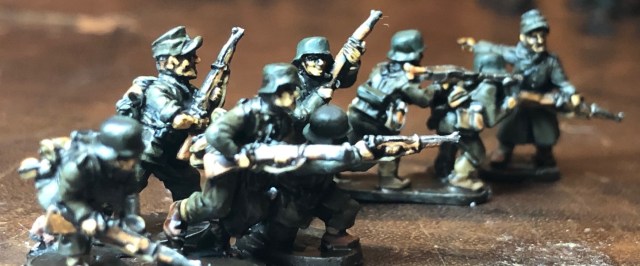
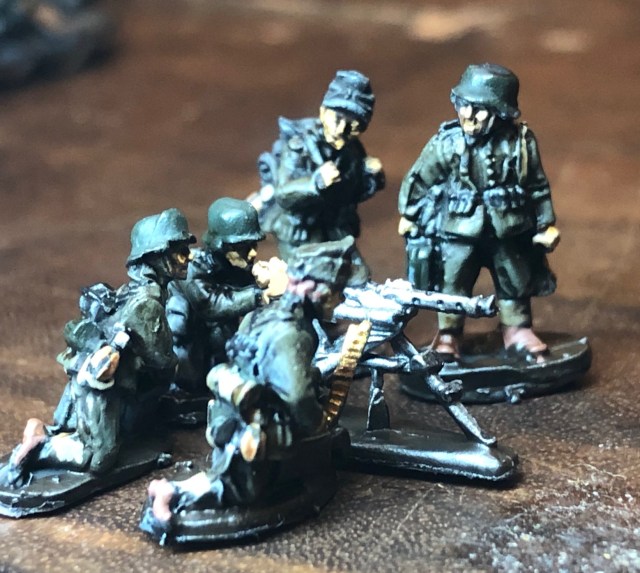
Here is how they came out, although this is an old range I think there is a lot of character in these and I am very tempted to give their Afrika Korps miniatures a go just for fun.
First Platoon in Rubber BoatsSome classical posesHMG teamLove these models – full of character.Some casualtiesSecond Platoon in RubberboatsA wounded comrade is carried away but the fight must go on!Some 5cm Mortars, a prone LMG team, a Panzershrek team and a lying rifleman (that will be used as a Sniper).Done! Very happy, next the Panzergrenadier Platoons that I will be using some Battlefront models to build.
I have been ploughing on with the Danish Cavalry during some evenings when I have been staying away from home. I have had some good going and will present them here for the record as I get them based. As noted in Part 1 (link here) these have been based on small 30 by 30 mm bases representing a squadron.
The miniatures are from the Baccus 6mm Sun King range (link here) and an absolute joy to work with.
So in no particular order.
4. Jyske Nationale Rytteregiment – 3 squadrons (Gen. Carl von Arensdorff)
Carl von Arensdorff was the Danish Army Commander at the Battle, he had served as a Swedish General in the Second Northern War 1655-60. He was wounded at Lund, and his brother Friedrich took over command, and Carl died shortly afterwards. I will write more about the Battle of Lund in future installations.
Detleff Rantzaus Dragonregiment (Col. Georg Brochenhuus)
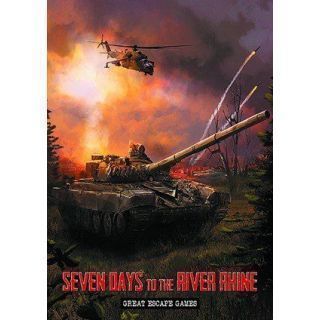
I recently ordered the Seven Days to the River Rhine rule set from Great Escape Games (link here) and have ordered a few Soviet and Swedish cold war tanks and infantry from Heroics and Ros to play it in 6mm.
I had a quick read-through of the rules and they seem straightforward and clear on an initial read through. There are a number of videos on how to play the game and viewing these I feel confident in running the game. There few nice mechanisms that make me eager to give them a try, like the activation / reaction / change of initiative rules. It has a simple but not simplistic feel to it. I also like the “damage” system where the units does not need to be destroyed but can be overwhelmed and can pull back to recover, etc.
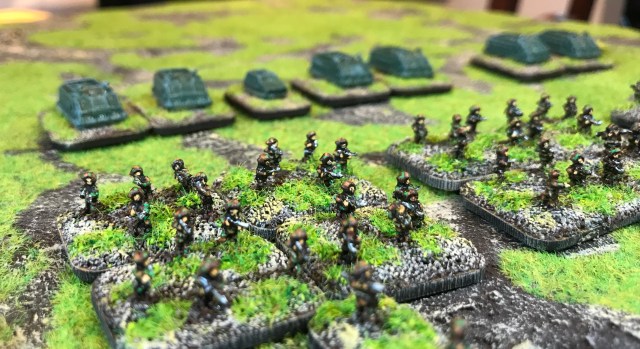
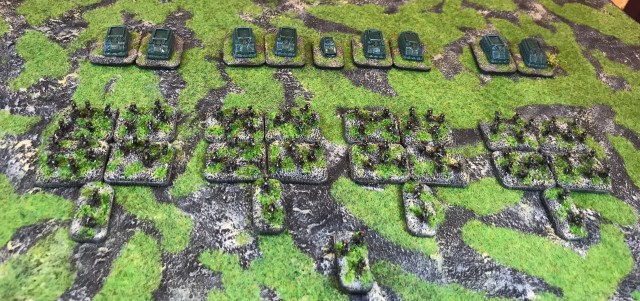
The Little One and I, decided to play a game this coming weekend but as we are still waiting for the Cold War miniatures I thought we could use some 6mm Sci-Fi Forces instead. I do not aim to do any modification to the rules, I am just using the Sci-Fi stuff in lieu of the Cold War ones.
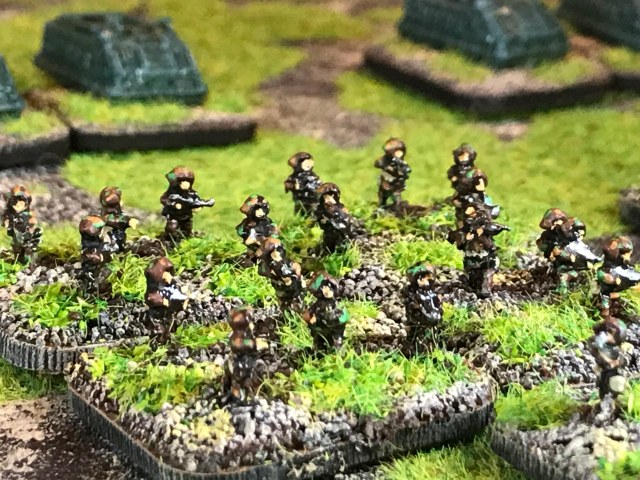
I have plenty of vehicles but a limited amount of infantry that looks ok, however I recently ordered some of the excellent 6mm Sci-Fi Polish Infantry from Brigade Models (link here).
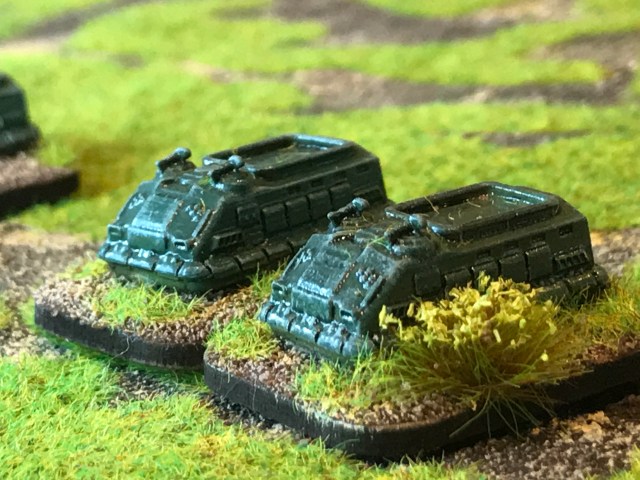
These will form part of the infantry element for our armies and then we will use some of the many 6mm Sci-Fi vehicles I have (also from Brigade Models).
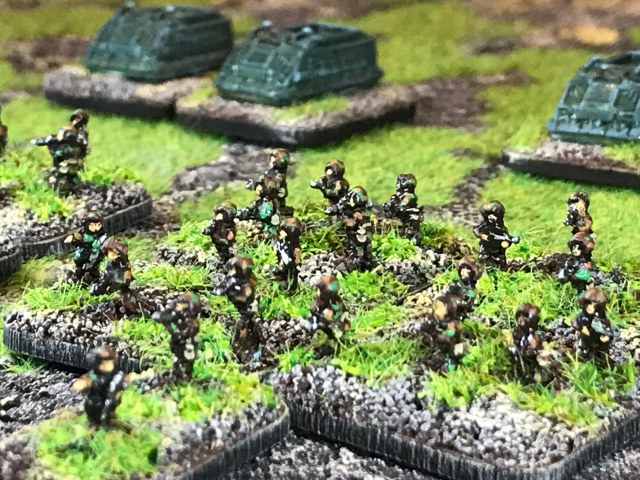
I think they work excellent as a general futuristic infantry type, not too advanced tech or combat suited (that is not what I am after for this diversion). In fact it is the best 6mm infantry of this type I have seen.
I bought four packs of infantry (the come in packs of 25) at £2.75 each, with the vehicles a total outlay of about £15. They are based on small Flames of War sized MDF bases and Commanders on smaller ones. I plan to use these for Quadrant 13 and Future War Commander.
For APC I used the Magnus APC (link here) and the Small Vehicle is a Wizard Jeep (link here).
Simple fast paint job, tried to convey the illusion of some camouflage, it works from a distance.
We will use these for both sides this weekend, unless I finish the other set of infantry I am working on from Brigade Models.
I will do a Write-up next weekend on how it went – looking forward to it. I hope they play as well as they read.
Did a little bit of painting of cavalry for the Scanian War project using Baccus 6mm new Sun King range just before our holidays, but forgot to log them here. I am really pleased with these models and there were a joy to point.
Starting with 3 of the regiments in the Right Wing – Commanded by Lt. General Frederik von Arensdorf.
The normal Polemos/Twilight of the Sun King basing I have used for my Great Northern War stuff has been 9 cavalry on a 60 by 30mm base, representing about 2 squadrons worth of riders.
For this project I decided to do one smaller bases 30 by 30mm for each squadron with 6 for Dragoons and 8 for regular cavalry – reading the accounts I want to enable the squadrons to have the ability to be an independent unit just like the battalion.
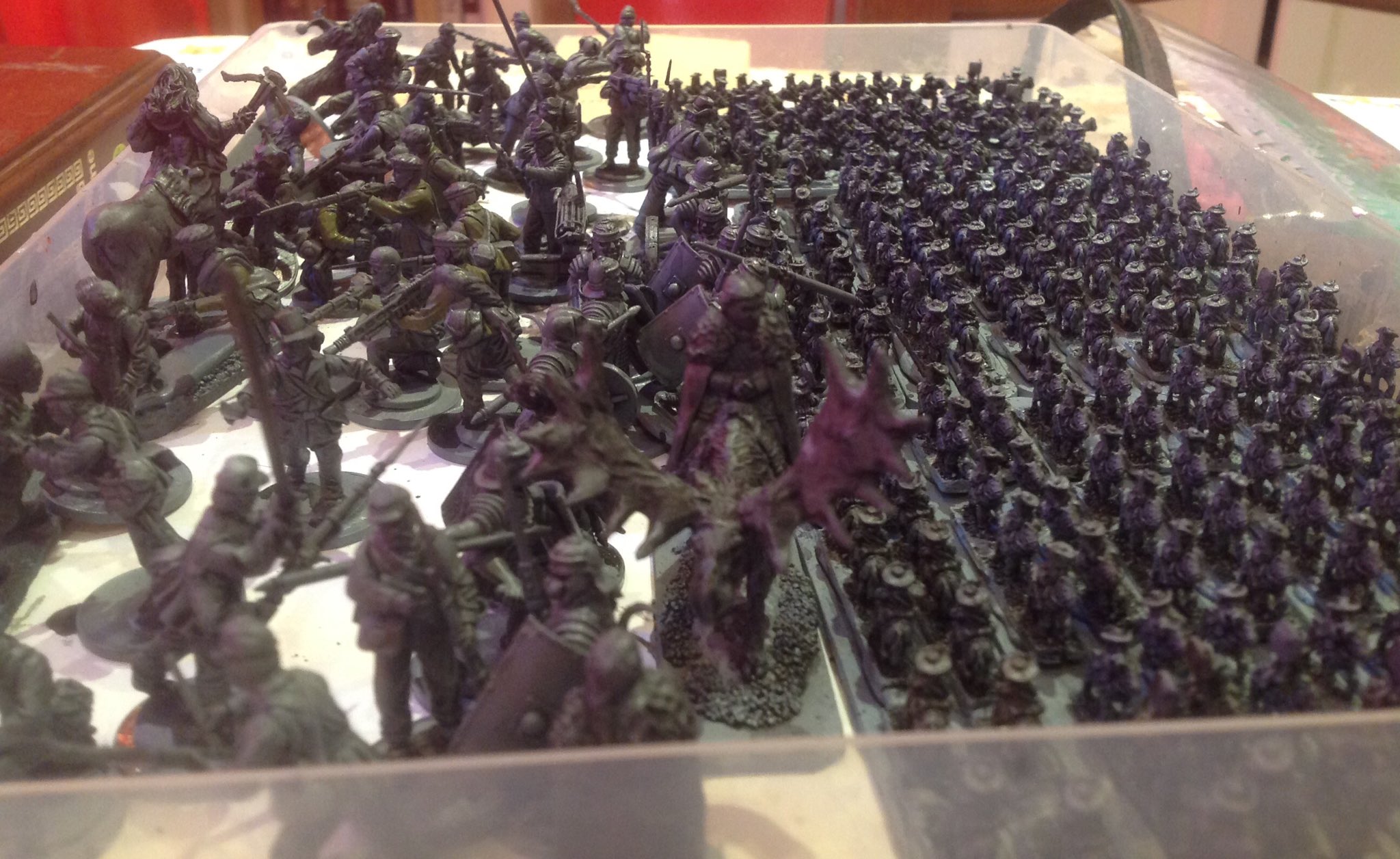
I had Friday off and had a look at my paint tray that was full of 28mm miniatures for the Mutant 1984 project as well as a lot of 6mm for the next batch for the Scanian War. I decided to try to get done as many as possible of the 28mm stuff.
Following on from my joyous time of painting the Pyri Commonwealth soldiers (Nordholmia Regiment) a few weeks ago (see here, it also includes a summary of what this Mutant 1984 nonsense is all about) I got thinking about building some bigger skirmish forces than originally intended.
These are the Pyri Commonwealth Line Infantry I did previously.
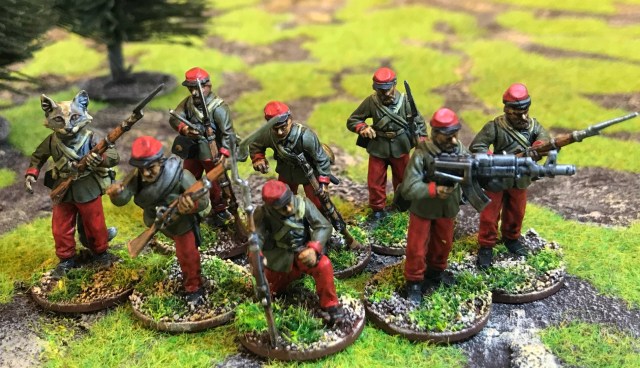
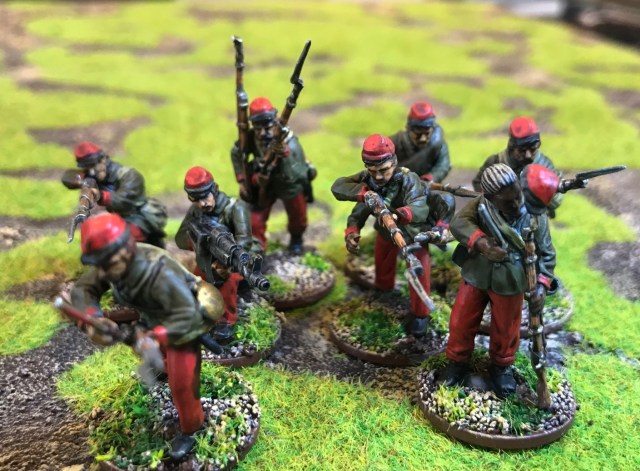
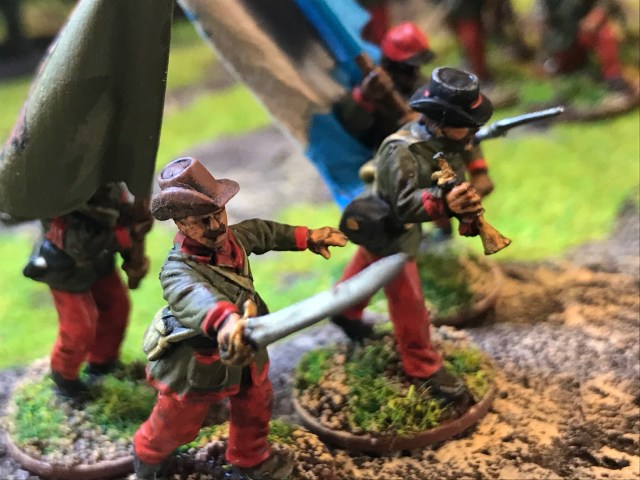
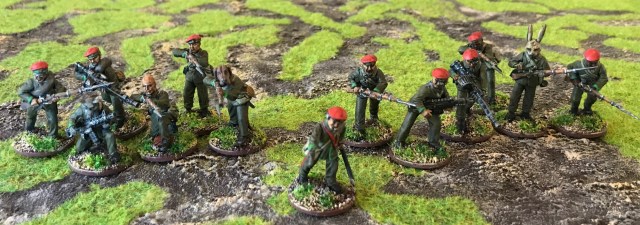
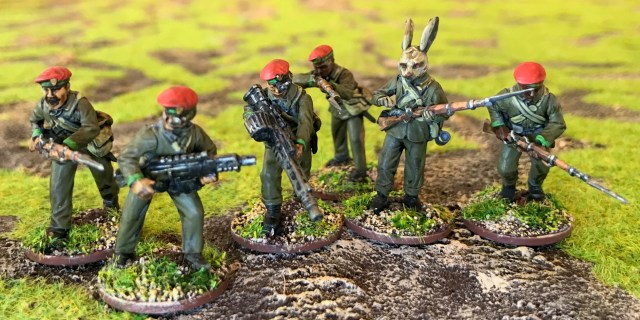
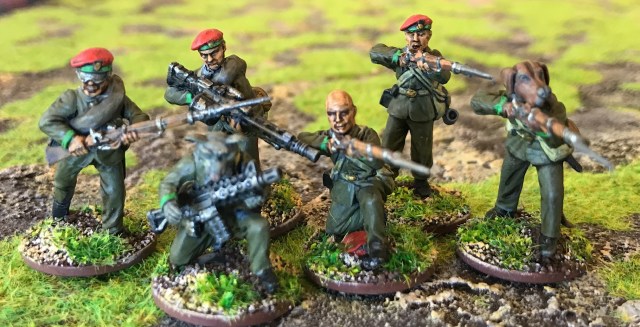
I decided to get a plastic box of some Skirmishing infantry from Perry (I bought mine at a very favourable cost from ebay). I am basically in the Business of creating two Sharp Practice forces for some Border Skirmishes, yes some of the Old Tech Weapons would require some additional thought and perhaps a Chain of Command adaptation would be better, but that is a later issue. The most common form of firearm in this period is a musket or a single shot rifle.
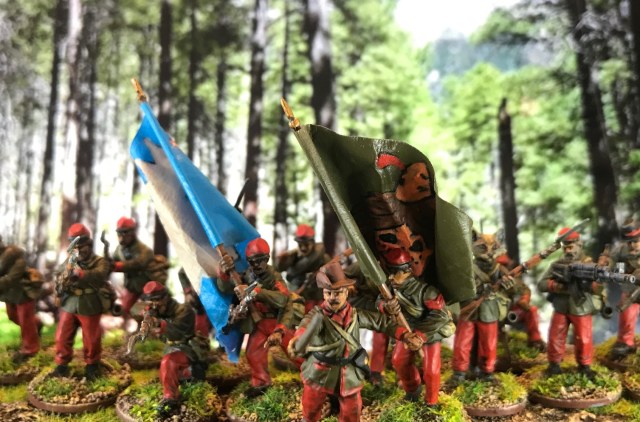
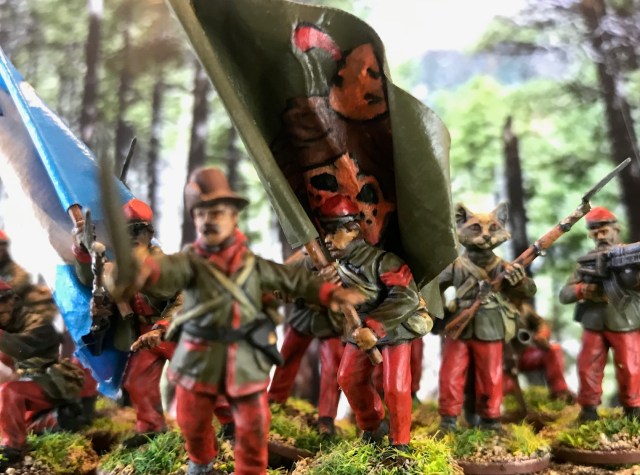
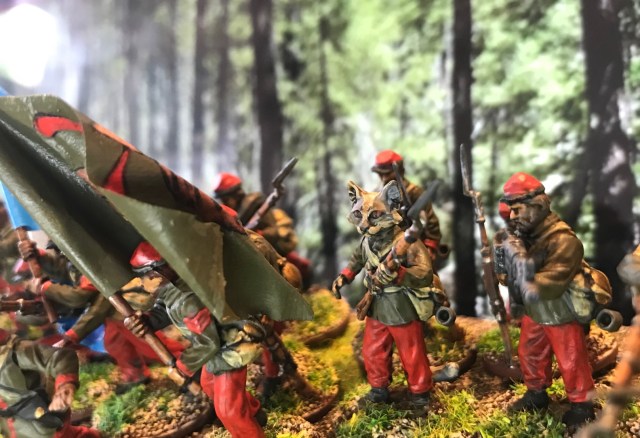
In addition I added some animal heads from Sally 4th and some weapons from Anvil Industries (as well as making some of them with extra limbs) to give that subtle Mutant 1984 feel. These together form part of a Wilderness force of the Jemtland Army – a very small country North of the Pyri Commonwealth.
The Republic of Jemtland is the Green Country in the middle of the map, in the Lords year of 2562.
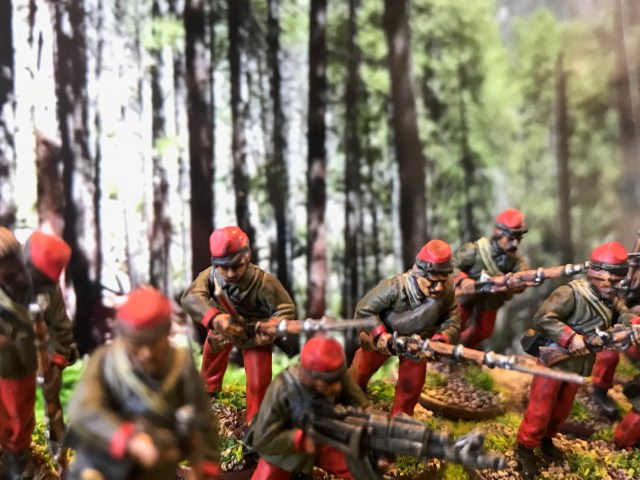
As for the actual uniforms I have no information, so I decided to go with a Green coat (with red details), red trousers and red caps for the line infantry.
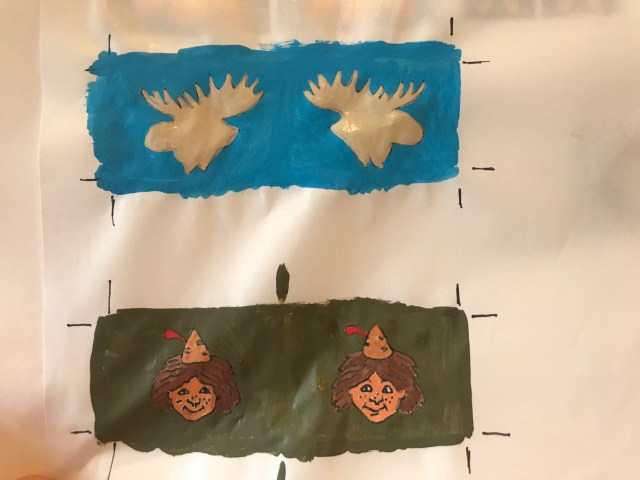
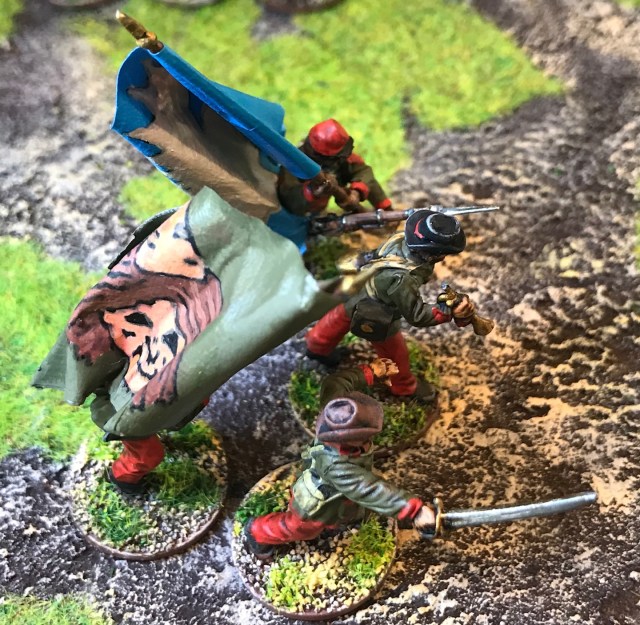
For the Flags we know that the Jemtland flag is a white Moose on a blue background. I decided that the Military flag was only showing a Moose head and that the specific flag for the Wilderness force is based on the old Skogsmulle organisation (this was the children organisation of the Swedish Outdoor association that I have some fond memories of from my childhood, and just for fun, see more here).
Adding them…
…and we also got some rangers
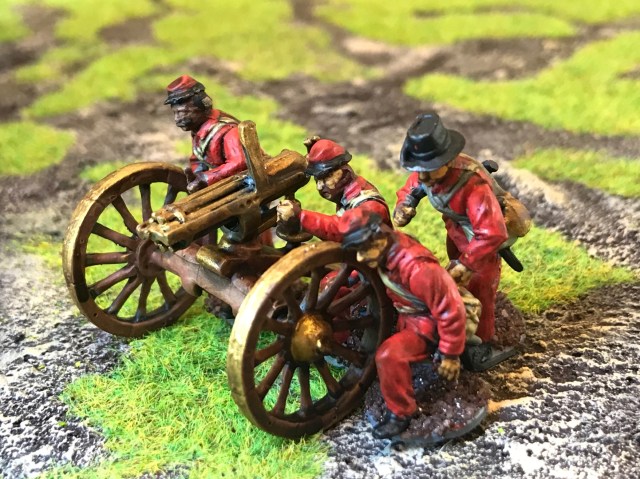
….and some Machine Gun crew (I bought the Gatling ifself from Ebay, unknown manufacturer).
…putting it all together
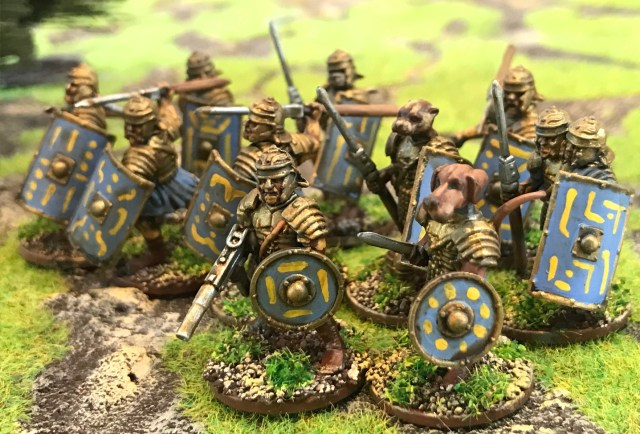
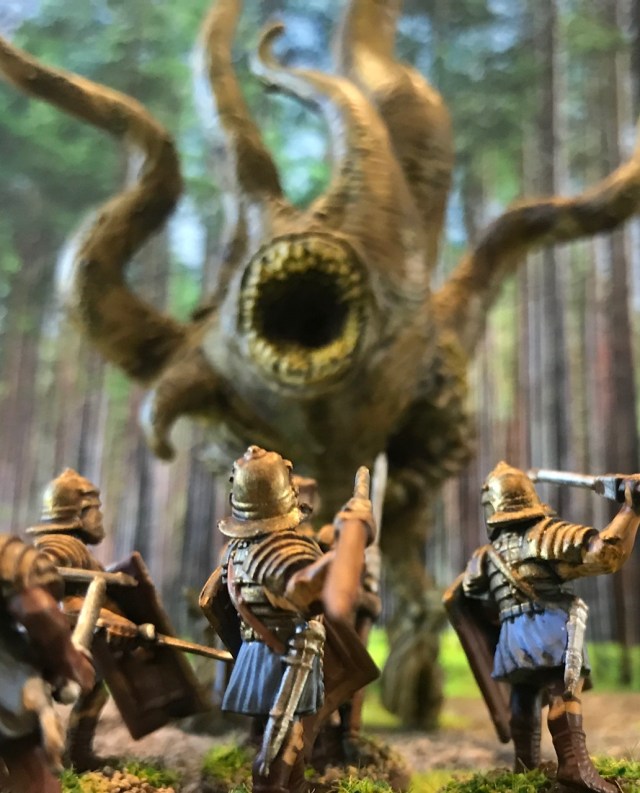
Finally I had the pleasure of being given the last issue of Wargames Illustrated by the Little One (a fantastic read I may add) that came with a sprue of Early Imperial Roman. Again having had the Mutant 1984 treatment! These are part of the Monster hunters (Monsterjägare) of the Pyri Commonwealth army – a very specialised unit. The Monstrosities that occasionally emerges from the forbidden zones needs to be taken care of.
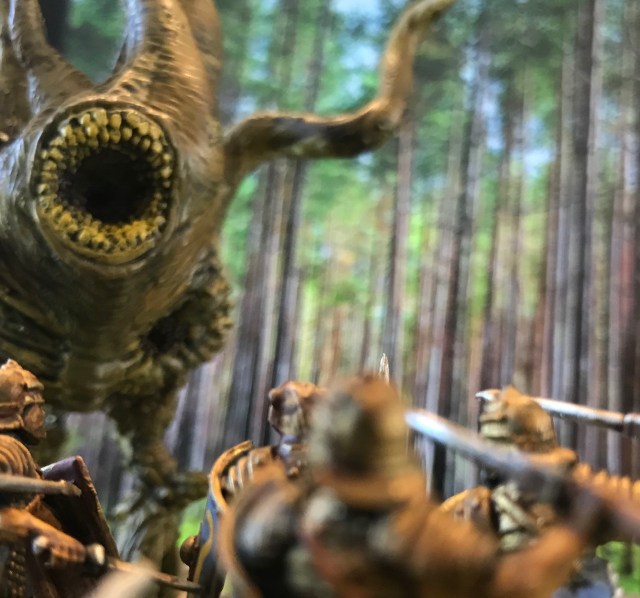
This is a fantastic model of a dark young from Fenris Games (you can find it here)I like the intensity of this picture!
That was 47 no. 28mm miniatures in a day (well, I did do the basing on Saturday the following day) – not any pieces for the museum but effectful enough on the table from the right distance! Now I have a few more things to do to flesh out the opposition.
Colour Sergeant Bourne and Others
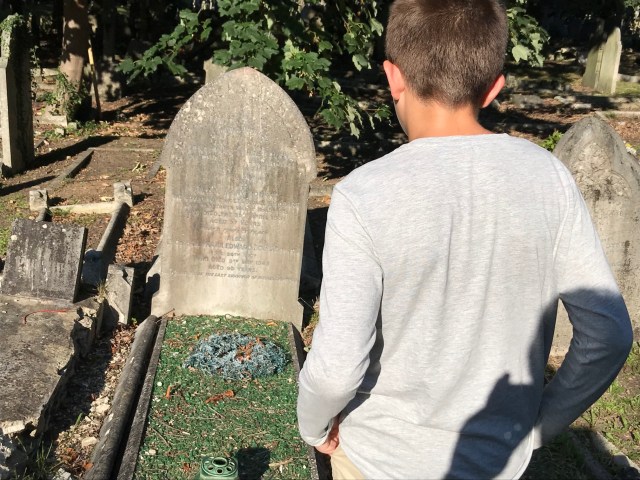
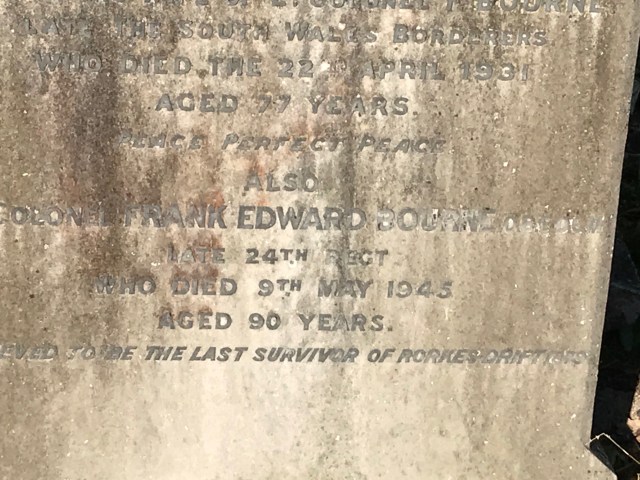
In addition the Little One and I went to find the Grave of Colour Sergeant Bourne on Friday. It was something we had planned to do for some time (Since we first played with our 6mm British and Zulus).
6mm stuff from Baccus!
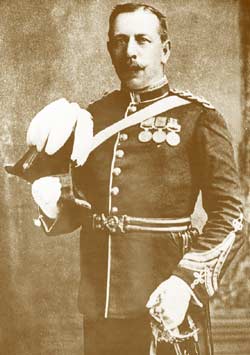
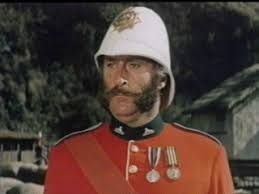
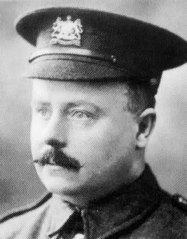
The title of this posting [see link here to the old post] – “A prayer’s as good as a bayonet on a day like this” is said by Colour Sergeant Bourne in the movie Zulu (link here). Colour Sergeant (Frank Edward) Bourne was awarded the Distinguished Conduct Medal (CDM) after the Battle at Rourke’s Drift and was, at the time, the youngest soldier in the British Army who had achieved the rank of Colour Sergeant. He ended his career as a Lieutenant Colonel and was awarded an OBE. As I read up about him I found out that he was buried not far from where I live. I think I will take the Little One and have a look for it after Rugby next Sunday. Although he was only 5’6″ tall he was certainly, in every sense of the word, a big man.
The Real Deal!The Movie Version – Nigel Green, although he was too tall for playing Bourne and also too old, he was bloody brilliant.
Here are two pictures from our visit to his grave at the Beckenham Cemetery and Crematorium.
In addition the Little One found a few more graves that told some interesting stories following some research on the Net, like this one.
Sergeant-Major Evans got a V.C. at Somme in 1916 volunteered to take back an important message after 5 runners had been killed in attempting to do so .. 700 yds of severe rifle and machine-gun fire …. dodging from shell-hole to shell-hole . Read more about it here.
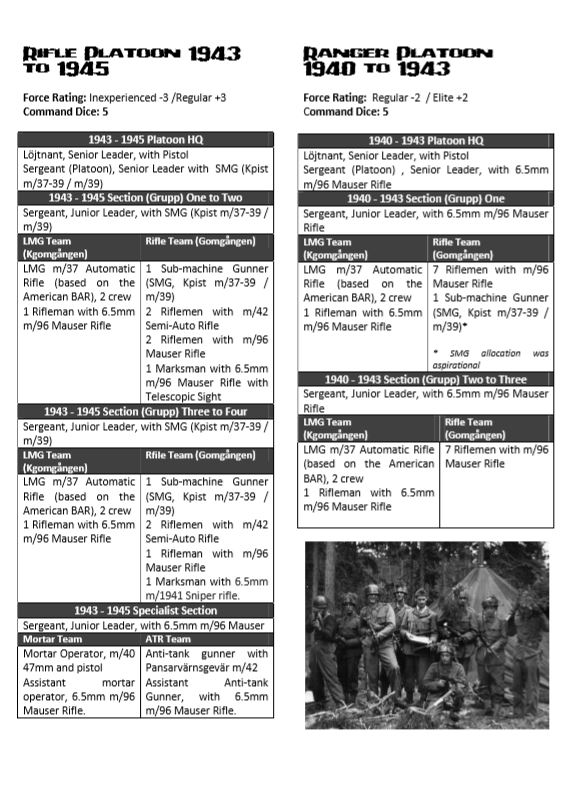
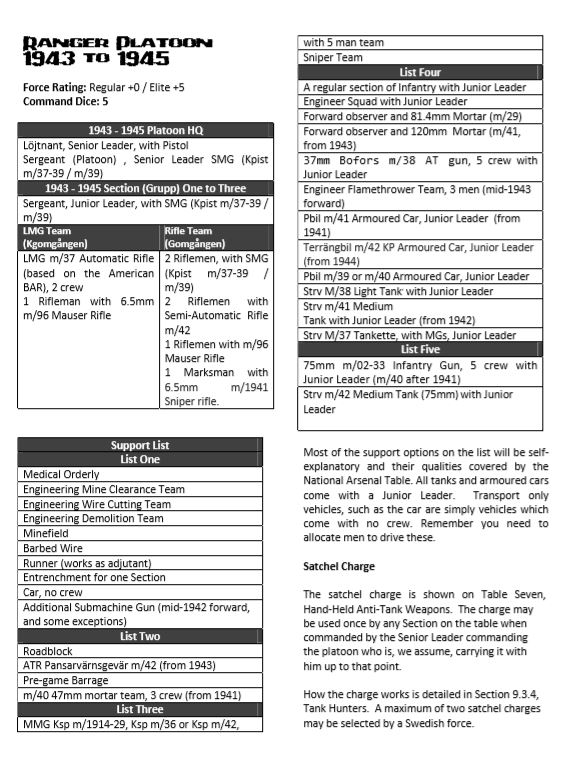
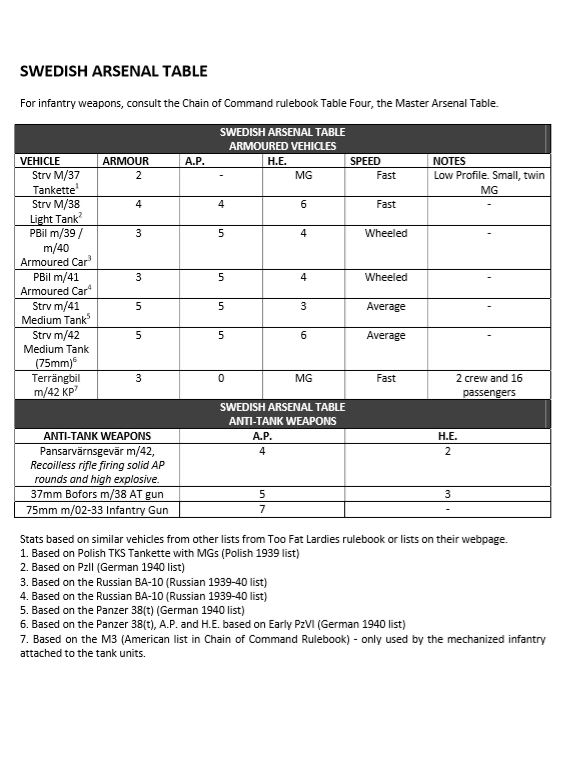
This contains an updated file to that one presented in a previous blog post (see here), some corrections and information for both Rifle Platoon (Skyttepluton) and Ranger Platoon (Jägarpluton).
POST NOTE: The Mortar team in the support option states 3 crew, it should be a crew of 2. Also the KP-bil was not equipped with a MG during the WW2 era, so is probably more a list One or Two option.
During the hostilities of WW2 the Royal Swedish Army was undergoing a lot of changes and the most significant at the Platoon level was the change introduced in 1943 (the so called 43M organisation). This introduced more power for the Rifle Platoon by equipping the NCOs with SMGs, adding 2 No. Semi-Automatic rifles to each section. Further firepower was also provided by the introduction of a fifth specialist team with a 47mm Mortar Section and an Anti-tank rifleman to each Platoon. In addition a rifleman per section was a designated Sharpshooter and had a scoped rifle.
These changes were gradual and we suggest that the player can choose to play either the 1940 to 1943 or the 1943 to 1945 Rifle Platoon for the 1943 campaign. As an example the number of sub-machine guns and semi-automatic rifles would be aspirational in 1943.
These list allows you to field a normal Rifle Platoon (Skyttepluton) or a Ranger Platoon (Jägarpluton). The latter was more than often be used to do specific recon missions and to distress the enemy. These platoons would most often march onto to the battlefield, with a platoon cart and a horse. Some platoons may be equipped with bikes and some may even be driven to the battlefield in a truck.
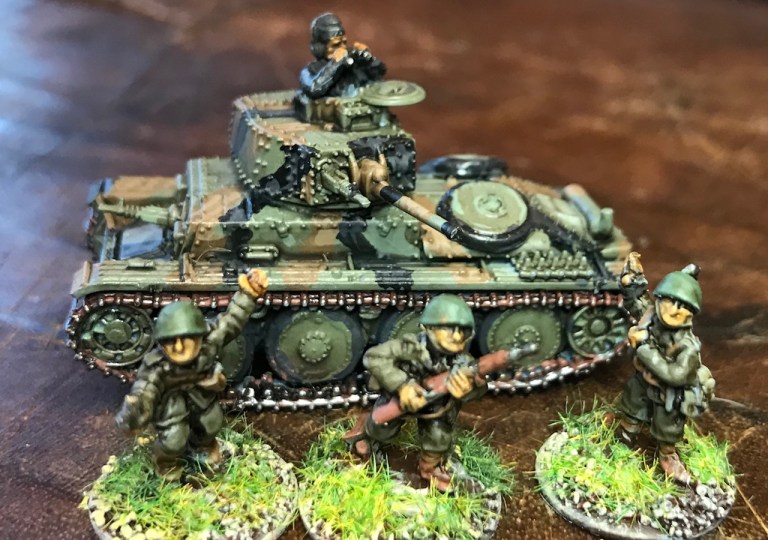
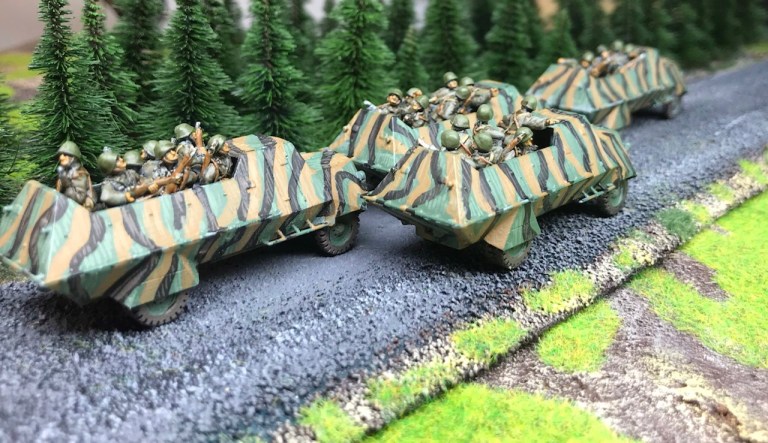
Some may even have been riding in the KP-bil (see more here)
Hope they are of some use, the file can be downloaded here.






 e
e


























 Roll a One - Wargaming Blog